Home Remedies for Dog Ear Infection: What You Can Safely Do at Home
Quick Answer: If your dog has a mild ear odor, minor redness, or light waxy buildup, a vet-approved ear cleaner and careful cleaning at home may help. If there is thick discharge, strong smell, significant pain, head tilting, or symptoms lasting more than 48 to 72 hours, you need a veterinarian, not a home remedy.
Your dog keeps shaking their head and pawing at their ear. You lean in close and notice a strange smell, some dark discharge, or visible redness. Before you reach for the phone to book a vet appointment, you want to know: is there anything you can do at home right now?
This guide gives you the full, vet-backed picture. We cover what actually works as a home remedy, what is dangerous and must be avoided, how to tell whether your dog needs a vet, and what to do right now depending on what you are dealing with.
Home Remedies for Dog Ear Infection: The Short Answer
Mild ear irritation in dogs can sometimes be managed at home using gentle, vet-approved cleaning methods. However, a true bacterial or yeast ear infection almost always requires prescription medication to fully resolve. Home remedies can reduce discomfort and slow progression, but they rarely eliminate the underlying infection on their own.
The reason home remedies have limits is simple: dog ear infections are most commonly caused by yeast (Malassezia pachydermatis) or bacteria (Staphylococcus, Pseudomonas), and both require antifungal or antibiotic treatment to be fully cleared. No vinegar rinse or coconut oil application can replace that.
Why Dogs Get Ear Infections
Before jumping to remedies, understanding the cause helps you treat it correctly and prevent recurrence.
The most common causes of dog ear infections include:
- Moisture and humidity: Water trapped in the ear canal after bathing or swimming creates the perfect breeding ground for yeast and bacteria.
- Allergies: Food allergies and environmental allergies (pollen, dust mites, mold) are among the top causes of recurring ear infections in dogs.
- Ear anatomy: Dogs with floppy ears (Cocker Spaniels, Basset Hounds) or narrow ear canals (Shar-Peis, Chow Chows) trap more heat and moisture, making them highly prone to infections.
- Excess hair in the ear canal: Breeds like Poodles and Schnauzers grow hair inside the canal, which can trap debris and restrict airflow.
- Foreign objects: Grass seeds, dirt, and debris can lodge in the canal and trigger infection.
- Ear mites: More common in puppies and dogs that spend time outdoors. Ear mites cause intense itching and dark, coffee-ground-like discharge.
- Hormonal imbalances: Hypothyroidism and other hormonal disorders can make dogs more susceptible to recurring ear infections.
Identifying the root cause is important because the wrong treatment will not help and could make things worse.
Signs Your Dog Has an Ear Infection
Not every ear problem is an infection, and not every infection looks the same. Here is what to look for:
- Head shaking or tilting the head to one side
- Scratching at the ear or rubbing the ear on furniture or the floor
- Redness or swelling inside the ear or around the ear flap
- Unusual odor coming from the ear
- Dark brown, black, or yellowish discharge
- Whimpering or pulling away when the ear is touched
- Loss of balance or disorientation (in severe or inner ear cases)
If you notice any combination of these signs, inspect the ear carefully under good lighting before deciding on a course of action.
Types of Dog Ear Infections
Treating a dog ear infection at home requires knowing what type you are dealing with. The three main types are:
- Otitis externa: The most common type. Affects the outer ear canal. Most mild cases that can be addressed with home care fall into this category.
- Otitis media: Affects the middle ear. This is more serious and almost always requires veterinary prescription treatment.
- Otitis interna: Affects the inner ear. This is the most severe form, causing balance problems, facial nerve issues, and significant pain. This is a veterinary emergency.
Home remedies are only appropriate for mild otitis externa. Any suspicion of middle or inner ear involvement means a vet visit is non-negotiable.
Home Remedies for Dog Ear Infection That Actually Help
1. Vet-Approved Ear Cleaning Solution
This is the single most effective home step you can take. A proper ear cleaning removes wax buildup, debris, and the moist environment that microbes thrive in.
What to use: Look for commercial ear cleaners specifically formulated for dogs. Products containing ceruminolytic agents help break down wax. Brands like Zymox, Epi-Otic, and Virbac are widely recommended by veterinarians.
What not to use: Do not use hydrogen peroxide, rubbing alcohol, or plain water. Hydrogen peroxide and alcohol can damage delicate ear tissue and cause pain. Plain water adds moisture and makes the environment worse.
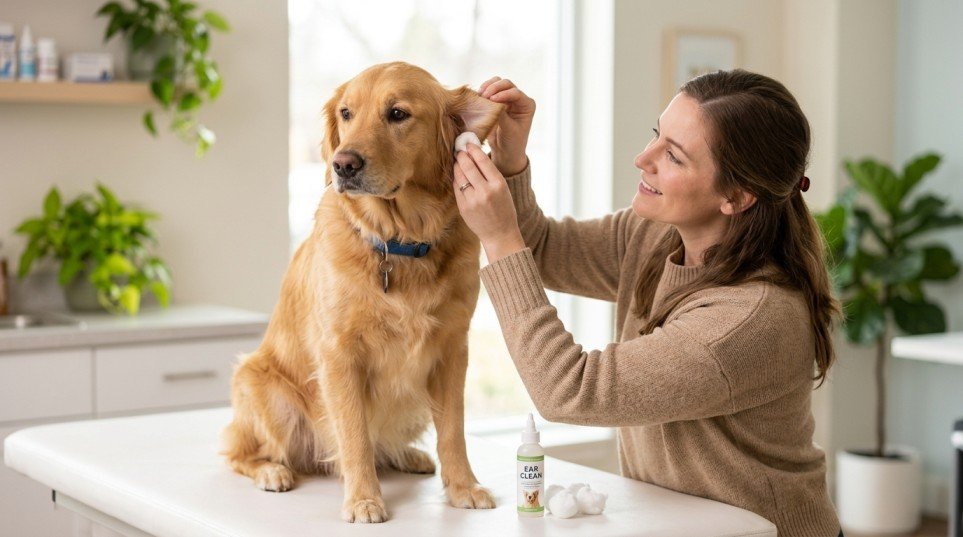
How to clean the ear safely:
- Lift the ear flap gently and check the visible canal for obvious injuries or foreign objects.
- Squeeze a generous amount of ear cleaner into the canal.
- Gently massage the base of the ear for 20 to 30 seconds to loosen debris.
- Allow your dog to shake their head, which brings debris to the outer canal.
- Use a cotton ball (never a cotton swab) to wipe out the visible outer canal.
- Repeat once daily for mild cases, or as directed by your vet.
Never insert anything deep into the ear canal. The canine ear canal has an L-shape and you can push debris further in or damage the eardrum if you probe too deeply.
2. Diluted Apple Cider Vinegar (With Caution)
Apple cider vinegar (ACV) is one of the most frequently suggested natural remedies for dog ear infections. The reasoning behind it: ACV is mildly acidic, which creates an inhospitable environment for yeast and some bacteria.
The reality: Diluted ACV can help prevent mild yeast overgrowth and serve as a general ear maintenance rinse in dogs that do not currently have broken skin or open sores inside the ear.
How to use it safely: Mix one part raw, unfiltered apple cider vinegar with one part distilled water. Apply a small amount to a cotton ball and gently wipe the visible outer canal only.
Critical warning: Never use ACV if your dog’s ear is red, inflamed, or has any broken skin. The acid will cause burning pain and can worsen tissue damage. If your dog pulls away or whimpers during application, stop immediately.
ACV is a preventive rinse for dogs prone to yeast, not a treatment for an active, established infection.
3. Coconut Oil
Coconut oil contains lauric acid, which has mild antifungal and antibacterial properties in laboratory settings. Some dog owners use it as a gentle soothing agent for mild ear irritation.
Limitations: The antifungal activity of coconut oil in a real ear canal environment is much weaker than in lab studies. It cannot penetrate deep enough to address an established infection and the oily residue can actually trap more debris if not cleaned out properly.
If you choose to use it: Melt a small amount of organic, unrefined coconut oil to liquid form. Apply a few drops to the outer canal only and gently massage. Use sparingly and only for very mild irritation, not for active infection.
4. Keeping the Ear Dry
Moisture is the single biggest factor that promotes ear infections in dogs. This is one of the most effective things you can do at home, and it costs nothing.
- Place a cotton ball gently at the entrance of each ear before bathing your dog to prevent water entry.
- After swimming or bathing, gently dry the outer ear and visible canal with a soft towel.
- For dogs prone to ear infections, use a vet-approved drying powder or ear drying solution after every swim.
- Avoid excessive bathing if your dog is already dealing with an ear infection.
5. Dietary Adjustments for Allergy-Driven Infections
If your dog experiences recurring ear infections, allergies may be the root cause. In that case, no topical remedy will provide lasting relief without addressing the diet.
Steps worth trying:
- Switch to a limited-ingredient diet with a novel protein your dog has not eaten before (such as venison, duck, or rabbit).
- Eliminate common allergens including wheat, corn, soy, and artificial additives.
- Add omega-3 fatty acids to the diet through fish oil supplements. Omega-3s reduce inflammation systemically and can reduce the inflammatory response that contributes to ear infections.
- Give any dietary change at least 8 to 12 weeks before evaluating results. Food allergy elimination trials take time.
This is not a quick fix, but it is the most effective long-term strategy for dogs that get ear infections every few months.
Dog Ear Infection Remedies: Quick Reference Table
| Remedy | Effectiveness | Main Risk | Verdict |
| Vet-approved ear cleaner | High for maintenance | Minimal if used correctly | Recommended |
| Diluted apple cider vinegar | Moderate for yeast prevention | Burns on broken skin | Use with caution |
| Coconut oil | Low to moderate | Traps debris if overused | Limited use only |
| Keeping ear dry | High for prevention | None | Always recommended |
| Dietary changes | High for allergy cases | None | Recommended long-term |
| Hydrogen peroxide | None | Damages ear tissue | Never use |
| Rubbing alcohol | None | Severe irritation, pain | Never use |
| Cotton swabs deep in canal | None | Pushes debris deeper | Never use |
What Never to Put in Your Dog’s Ear
Some home remedies circulating online are genuinely dangerous. Avoid these completely:
- Hydrogen peroxide: This kills healthy cells in the ear canal and causes intense pain in any ear with raw or inflamed tissue. It is not a safe ear cleaner for dogs.
- Rubbing alcohol (isopropyl alcohol): Alcohol is extremely drying and causes severe pain on contact with any broken skin. It can cause chemical burns inside the canal.
- Cotton swabs inserted into the canal: The canine ear canal bends at an angle. Inserting a swab can compact debris against the eardrum, or in the worst case, rupture the eardrum.
- Tea tree oil (undiluted): Concentrated tea tree oil is toxic to dogs and can cause neurological symptoms including tremors, weakness, and paralysis if absorbed. Do not apply it to any skin surface, especially the sensitive ear canal.
- Garlic oil or essential oils: Multiple essential oils are toxic to dogs. The ear canal has a high absorptive surface area, making topical exposure more dangerous than on thick outer skin.
When Home Remedies Are Not Enough: Signs You Need a Vet
Home care is appropriate for very mild, early-stage ear irritation. The following signs mean you need a veterinarian, not a home remedy:
- Thick, dark, or bloody discharge coming from the ear
- Strong, foul odor that does not improve after one cleaning
- Visible swelling, significant redness, or heat around the ear
- Your dog is in obvious pain when the ear is touched or examined
- Head tilting that does not resolve
- Loss of balance, stumbling, or walking in circles
- Symptoms that have not improved after 48 to 72 hours of home care
- A recurring infection (third or more episode in 12 months)
- Your dog is a puppy, or has a known immune condition
Do not delay a vet visit hoping the infection will clear on its own. Untreated ear infections can progress to the middle and inner ear, potentially causing permanent hearing loss or neurological complications.
What a Vet Will Do That Home Remedies Cannot
A veterinarian will perform an otoscopic exam to look at the eardrum and the full length of the canal. They will likely take a cytology sample (a swab analyzed under a microscope) to determine whether the infection is yeast, bacterial, or a mix. This matters because yeast infections require antifungal medications and bacterial infections require antibiotics. Using the wrong treatment prolongs the infection.
Depending on the case, your vet may prescribe:
- Topical ear drops containing antifungal, antibiotic, and anti-inflammatory agents
- Oral antibiotics or antifungals for deeper or more severe infections
- A professional ear flush performed under sedation if the canal is severely impacted
- Allergy testing or a food trial if recurring infections point to an allergic cause
Many ear infections clear within 1 to 2 weeks with proper prescription treatment. Delaying that treatment by relying on home remedies often means a longer, more painful recovery for your dog.
How to Prevent Dog Ear Infections at Home
Prevention is far easier than treatment. These steps significantly reduce the risk of your dog developing ear infections:
- Clean ears regularly but not excessively: For healthy dogs with no current infection, cleaning once every 1 to 4 weeks depending on breed and activity level is generally appropriate. Overcleaning can strip natural protective oils.
- Dry ears thoroughly after water exposure: This one step prevents the majority of moisture-related ear infections, especially in swimmers and dogs that are bathed frequently.
- Check ears weekly: A quick visual inspection once a week catches early signs of buildup or irritation before they develop into a full infection.
- Manage allergies proactively: If your dog has known environmental or food allergies, work with your vet to keep them under control. Unmanaged allergies are the leading cause of recurring ear infections.
- Trim hair around the ear canal: For breeds that grow hair in the canal, regular grooming reduces moisture and debris buildup. Ask your groomer to include ear hair removal.
- Use ear protection during swimming: Specially designed dog ear bands and covers are available and can significantly reduce water entry.
Frequently Asked Questions: Dog Ear Infection Home Remedies
Can I treat my dog’s ear infection at home without going to the vet?
You can address very mild ear irritation at home using a vet-approved ear cleaner. However, a true bacterial or yeast infection almost always requires prescription medication. If symptoms do not improve within 48 to 72 hours, or if they are severe from the start, a vet visit is necessary.
What is the best home remedy for dog ear infection?
The most effective home step is using a commercial, vet-approved ear cleaner to remove buildup and reduce the moist environment that feeds infections. This is more effective and safer than DIY solutions like apple cider vinegar or coconut oil.
Can apple cider vinegar cure a dog ear infection?
Diluted apple cider vinegar can reduce mild yeast overgrowth and serve as a preventive rinse for dogs prone to yeast infections. It cannot cure an established bacterial or yeast ear infection, and it should never be used on an ear with redness, swelling, or broken skin.
How do I know if my dog has a yeast vs bacterial ear infection?
Yeast infections typically produce a musty or sweet-smelling brown discharge and are more common in dogs with allergies or floppy ears. Bacterial infections tend to produce a more pungent odor and yellow or green discharge. Definitive identification requires a cytology test performed by a veterinarian. Treatment differs between the two, so guessing and applying the wrong remedy can prolong the infection.
How long does a dog ear infection last with home treatment?
Very mild ear irritation treated promptly with proper cleaning may improve within a few days. A true infection treated with prescription medication typically resolves in 1 to 2 weeks. Infections treated with home remedies alone often do not fully resolve and may worsen or become chronic.
Can I use hydrogen peroxide to clean my dog’s ears?
No. Hydrogen peroxide kills healthy cells in the ear canal and causes pain on contact with any raw or inflamed tissue. It is not recommended by veterinarians as an ear cleaner and should not be used in dogs’ ears under any circumstances.
Is coconut oil safe for dog ear infections?
Coconut oil is safe in small amounts for mild external irritation, but it is not effective as a treatment for infection. Its antifungal activity is minimal in real-world conditions, and excessive use can trap debris. Do not use it as a substitute for proper treatment.
When should I take my dog to the vet for an ear infection?
Take your dog to the vet if there is thick or bloody discharge, strong odor, significant pain, head tilting, balance problems, or if symptoms do not improve within 48 to 72 hours. Any ear infection in a puppy, senior dog, or immunocompromised dog also warrants prompt veterinary attention.
Final Word: Home Remedies Work Best as Prevention, Not Treatment
Mild ear maintenance at home can go a long way toward keeping your dog comfortable and reducing the frequency of infections. But when a real infection takes hold, there is no home remedy that reliably replaces what a veterinarian and a targeted prescription can do.
The best thing you can do at home is clean your dog’s ears regularly with a vet-approved cleaner, keep ears dry, manage allergies proactively, and check ears weekly so you catch problems early. If something looks or smells wrong, act within 48 to 72 hours rather than waiting to see if it resolves.
Your dog cannot tell you how much their ear hurts. When in doubt, get it checked.
Sources and References
- Merck Veterinary Manual: Otitis Externa in Dogs and Cats. merckvetmanual.com
- VCA Animal Hospitals: Ear Infections in Dogs (Otitis Externa). vcahospitals.com
- PetMD: Dog Ear Infection: Causes, Treatment, and Prevention (Updated Feb. 2025). petmd.com
- American Kennel Club: Dog Ear Infections: Symptoms, Causes, Treatment, and Prevention. akc.org
- ASPCA Animal Poison Control Center: Tea Tree Oil Toxicity. aspca.org
- Veterinary Partner (VIN): Ear Infections in Dogs. veterinarypartner.vin.com
- Clinician’s Brief: Otitis Externa: An Update. cliniciansbrief.com
Discover More:-
- Dog Facts: 50 Surprising, Vet-Verified Things You Never Knew About Dogs
- Fresh Dog Food in 2026: Best Vet-Approved Brands & Feeding Guide

Dr. Ubaid Ur Rehman, DVM is a qualified veterinarian with expertise in pet health, nutrition, and preventive care. He is passionate about helping pet owners make informed decisions through accurate, research-based, and practical advice. As a veterinary professional, he reviews and contributes content to ensure reliable information for dog and pet owners.