Fresh Dog Food: Benefits, Costs & Top Brands Explained 2026
Quick Answer: Fresh dog food is not automatically better than all other options, but for many dogs it offers improved digestibility, higher moisture content, and cleaner ingredients. The key is choosing a nutritionally complete product that meets AAFCO standards and suits your dog’s specific health needs.
You have been hearing a lot about fresh dog food lately. Your neighbour switched her golden retriever. Your vet mentioned it in passing. The ads are everywhere. But is it actually better for your dog, or just a premium price tag on the same old idea?
This guide gives you the full, honest picture: what fresh dog food really means, what the research says, who it genuinely helps, how to pick a quality product, and when it is not worth the extra cost. No hype, no scare tactics.
What Is Fresh Dog Food? The Short Answer
Fresh dog food refers to minimally processed meals made from whole, human-grade ingredients that have not been subjected to high-heat extrusion like traditional dry kibble. It typically includes real meat, vegetables, and grains that are either gently cooked, raw, or freeze-dried.
The fresh dog food market has exploded in recent years, with subscription-based meal delivery services, refrigerated supermarket options, and freeze-dried varieties all competing for your dog’s bowl. Understanding what sets them apart is the first step to making a genuinely good choice.
What Makes Fresh Dog Food Different From Kibble?
1. The Processing Method
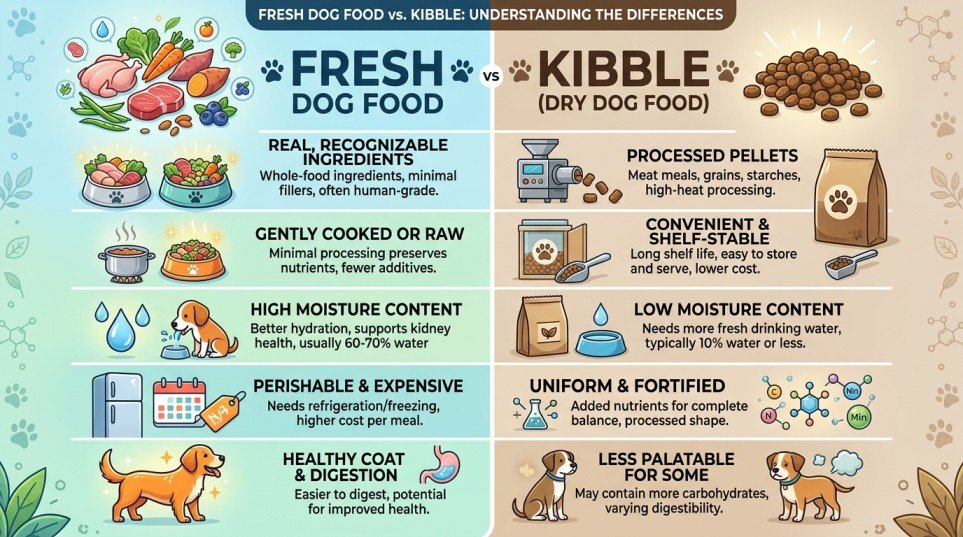
Traditional dry kibble is made through a process called extrusion, in which ingredients are mixed, cooked under extreme heat and pressure, and then formed into pellets. This process is efficient and extends shelf life significantly, but it also destroys a portion of the heat-sensitive vitamins, enzymes, and natural fats in the original ingredients.
Fresh dog food, by contrast, is either served raw, gently cooked at lower temperatures, or freeze-dried to preserve nutritional integrity. The result is food that more closely resembles what a dog would encounter in a natural diet.
2. Moisture Content
Dry kibble typically contains only 8 to 12 percent moisture. Fresh food ranges from 60 to 80 percent moisture, depending on the recipe. This difference matters more than most dog owners realize. Dogs evolved as carnivores who obtained a significant portion of their hydration from prey. A high-moisture diet supports kidney function, urinary tract health, and healthy digestion.
3. Ingredient Quality and Transparency
Most fresh dog food brands are built around transparency. Ingredients are listed clearly, sourcing is often disclosed, and portions are designed for your dog’s specific size and caloric needs. This is a meaningful shift from traditional pet food, where vague terms like “meat meal” or “animal by-products” appear frequently.
Benefits of Fresh Dog Food: What the Research Actually Shows
The benefits most commonly attributed to fresh dog food are real, but they come with important context.
- Improved digestibility: Fresh, minimally processed food tends to have higher bioavailability, meaning dogs absorb more of the nutrients from each meal. A 2019 study published in the journal Translational Animal Science found that gently cooked dog food had higher digestibility compared to extruded kibble.
- Healthier coat and skin: Dogs fed fresh diets rich in omega-3 fatty acids often show improvements in coat shine and skin condition. This is attributed both to the quality of fats and to the absence of the high-heat processing that degrades sensitive fatty acids.
- Better stool quality: Dog owners who switch to fresh food frequently report smaller, firmer stools. This is consistent with higher digestibility. Less waste in means less waste out.
- Weight management: Portion-controlled fresh meal services account for your dog’s weight, age, and activity level. This precision can support healthy weight management in ways that free-feeding kibble cannot.
- Palatability: Most dogs find fresh food far more appealing than dry kibble. For picky eaters, senior dogs with reduced appetite, or dogs recovering from illness, this can make a genuine difference in daily food intake.
Is Fresh Dog Food Actually Better for Dogs?
The honest answer is: it depends on the dog, the product, and the context.
Fresh food is not a universal upgrade. A well-formulated, complete-and-balanced kibble from a reputable brand with an AAFCO nutritional adequacy statement will meet your dog’s needs reliably. A poorly formulated fresh food that lacks key micronutrients can cause deficiencies over time, even if the ingredients look impressive on the label.
Where fresh food consistently shows an edge is in digestibility and moisture content. For dogs with chronic digestive issues, urinary tract problems, kidney concerns, or sensitive stomachs, the switch to a vet-approved fresh diet can produce meaningful improvements.
For healthy adult dogs with no specific medical concerns, the benefit of fresh food over high-quality kibble is real but incremental. Whether that increment is worth the cost difference is a decision only you can make.
Fresh Dog Food Comparison: Quick Reference Table
| Fresh Dog Food Type | Best For | Key Benefit | Watch Out For |
| Raw meat and vegetables | High-energy dogs | Enzyme-rich, unprocessed nutrition | Bacterial contamination risk |
| Gently cooked meals | Most adult dogs | Digestible, balanced, safe | Higher cost than kibble |
| Freeze-dried fresh food | Travel or convenience | Long shelf life, nutrient-dense | Needs proper rehydration |
| Homemade cooked meals | Dogs with allergies | Full ingredient control | Risk of nutritional gaps |
| Subscription meal services | Busy pet owners | Vet-formulated, pre-portioned | Subscription cost over time |
How to Choose a Quality Fresh Dog Food
Look for AAFCO Nutritional Adequacy
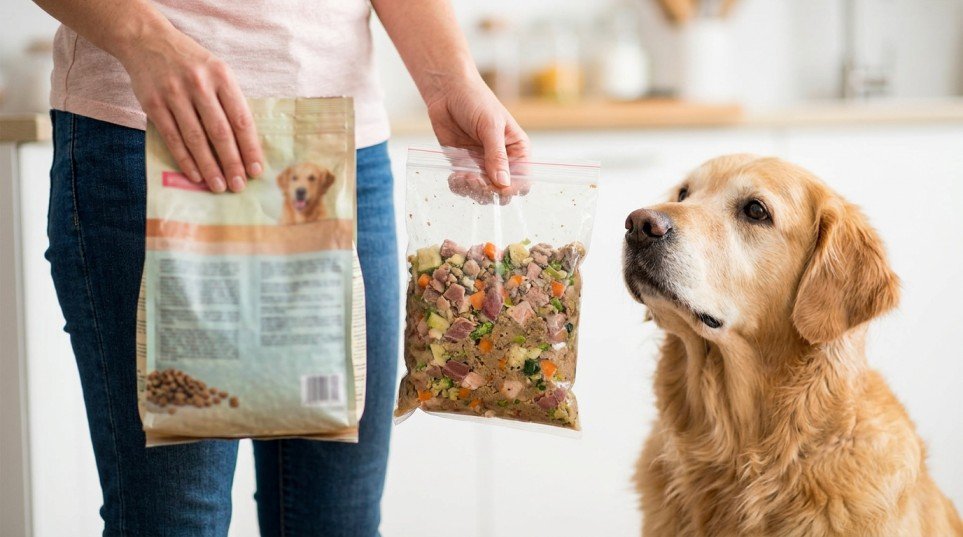
This is the single most important label check. A statement that reads “formulated to meet the nutritional levels established by the AAFCO Dog Food Nutrient Profiles” or “complete and balanced” means the food has been verified to meet minimum nutritional standards. Without this statement, you are gambling with your dog’s long-term health.
Check the Protein Source
The first ingredient should be a named, whole protein such as chicken, beef, salmon, or turkey. Avoid products where the primary protein is listed only as “meat” or “animal protein” without a specific species identified.
Evaluate the Vegetable and Carbohydrate Mix
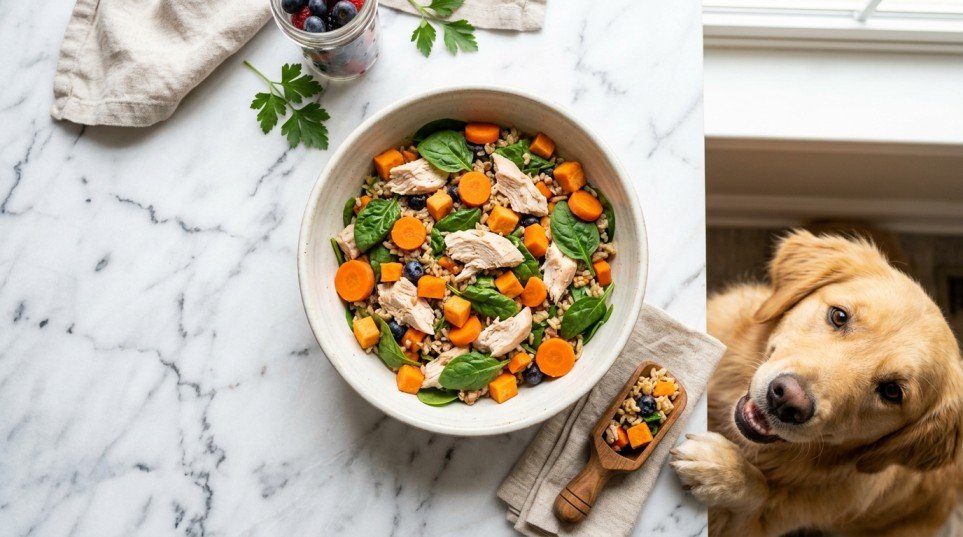
Fresh dog food should include a variety of vegetables and, depending on the recipe, whole grains or legumes. Look for recognizable ingredients: sweet potato, spinach, carrots, peas, brown rice. Avoid formulas with excessive fillers, artificial preservatives, or corn syrup.
Portion for Your Dog’s Weight and Activity Level
Fresh food has different caloric density than kibble. Feeding the same volume you used with dry food will almost certainly overfeed your dog. Most subscription services calculate portions based on your dog’s profile, but if you are buying off the shelf, use the feeding guide carefully and adjust based on body condition.
How Much Fresh Dog Food Should You Feed?
Feeding amounts vary by brand, recipe, and your dog’s individual metabolism, but a general starting framework based on body weight is:
- Dogs under 10 lbs: roughly 2 to 4 oz of fresh food per day, divided across two meals
- Dogs 10 to 30 lbs: roughly 4 to 8 oz per day
- Dogs 30 to 60 lbs: roughly 8 to 16 oz per day
- Dogs over 60 lbs: roughly 16 to 24 oz per day, adjusted for activity level
Puppies, pregnant dogs, and highly active working dogs will need significantly more. Senior dogs with reduced activity may need less. Always follow the guidance on the specific product you are using, and consult your vet if your dog has health conditions affecting nutritional needs.
How to Transition Your Dog to Fresh Food
Switching too quickly is the most common mistake dog owners make when moving to fresh food. An abrupt diet change almost always causes digestive upset. Follow a gradual transition over 7 to 10 days:
- Days 1 to 3: Replace 25 percent of your dog’s current food with fresh food.
- Days 4 to 6: Move to a 50/50 split between old food and fresh food.
- Days 7 to 9: Increase fresh food to 75 percent.
- Day 10 onward: Transition fully to fresh food if your dog is tolerating it well.
Watch for signs of digestive upset during the transition: loose stools, vomiting, reduced appetite, or excessive gas. Mild changes are normal during the first few days. Persistent symptoms beyond a week, or any blood in the stool, warrant a call to your vet.
Is Raw Fresh Dog Food Safe?
Raw food diets sit at the most controversial end of the fresh food spectrum. Proponents argue that raw diets most closely mimic ancestral canine nutrition. Critics, including the American Veterinary Medical Association (AVMA) and the FDA, flag the risk of bacterial contamination.
Raw meat, whether for dogs or humans, carries the potential for Salmonella, Listeria, E. coli, and other pathogens. In most healthy adult dogs, the immune system handles this well. The real risk lies in households with immunocompromised individuals, young children, or family members who may come into contact with contaminated surfaces, bowls, or dog waste.
If you choose raw, follow strict food safety protocols: handle raw food the same way you would handle raw chicken in your own kitchen, wash bowls thoroughly after every meal, and store raw food at proper refrigeration temperatures.
Signs Your Dog Is Thriving on Fresh Food
If your dog is responding well to a fresh food diet, you will typically notice these improvements within 4 to 8 weeks:
- Shinier, softer coat with reduced shedding
- Firmer, smaller stools with less odor
- Improved energy and alertness, especially in dogs that previously seemed sluggish
- Healthy body weight with visible waist definition
- Reduced flatulence and bloating
- Increased enthusiasm at mealtimes
Not every dog will show all of these signs, and some improvements take longer than others. If your dog shows no improvement or develops new symptoms after 6 to 8 weeks, the diet may not be the right fit. Schedule a conversation with your vet.
Warning Signs to Watch for When Feeding Fresh Food
Step 1: Monitor the First Two Weeks Closely
- Persistent diarrhea or vomiting lasting more than 48 hours
- Significant loss of appetite or refusal to eat
- Lethargy, bloating, or signs of abdominal pain
- Rapid weight loss or weight gain
- Any blood in stool or urine
Step 2: Know When to Call Your Vet
- Mild digestive upset in first week: Normal during transition. Monitor and slow the transition if needed.
- Symptoms persisting beyond 2 weeks: Call your vet for guidance.
- Any of the above warning signs: Contact your vet promptly.
- Dogs with existing health conditions: Always consult your vet before changing diet.
Step 3: Resources
- Your veterinarian: First point of contact for any diet-related health concern.
- ASPCA Animal Poison Control: (888) 426-4435, available 24/7 if an ingredient concern arises.
- AAFCO Dog Food Guidelines: aafco.org for nutritional standards and label reading guides.
Can You Make Fresh Dog Food at Home?
Yes, but it requires more work than most dog owners expect. The most common mistake with homemade dog food is nutritional imbalance. A diet of chicken and sweet potato may look wholesome, but it will lack calcium, zinc, iodine, vitamin D, and a range of other essential micronutrients over time.
If you want to go the homemade route, your best resource is a board-certified veterinary nutritionist. They can help you build a complete recipe tailored to your dog’s age, size, and health status. The website BalanceIT.com, developed by UC Davis veterinary nutrition faculty, also offers formulation tools for homemade diets.
Avoid using generic recipes from blogs or social media. The margins for nutritional error in homemade dog food are narrow, and deficiencies often do not show up as obvious symptoms until they have been building for months.
Safe and Nutritious Ingredients for Fresh Dog Food
Whether you are supplementing commercial fresh food or preparing home meals, these ingredients are consistently dog-safe and nutritious:
- Lean proteins: Chicken breast, turkey, lean beef, salmon, sardines in water. Always cooked unless following a raw protocol.
- Vegetables: Carrots, green beans, zucchini, spinach, broccoli in small amounts, and peas. Always prepared without seasoning.
- Whole grains: Brown rice, oats, and quinoa. Well-cooked and plain.
- Healthy fats: Fish oil or flaxseed oil added in vet-recommended amounts for omega-3 support.
- Fruits: Blueberries, sliced apple (no seeds), banana, and watermelon in moderation.
- Eggs: Fully cooked eggs are a high-quality, digestible protein source.
Frequently Asked Questions: Fresh Dog Food
Is fresh dog food actually worth it?
For many dogs, especially those with digestive issues, skin problems, or picky appetites, the answer is yes. For healthy adult dogs already doing well on a quality kibble, the improvement is real but incremental. Whether it is worth the cost depends on your budget and your dog’s specific needs.
How long does fresh dog food last?
Refrigerated fresh food typically lasts 4 to 5 days once opened, or up to the use-by date on the package if unopened. Freeze-dried fresh food lasts much longer and can be stored at room temperature until rehydrated. Always follow the storage instructions on the specific product you purchase.
Can puppies eat fresh dog food?
Yes, but only if the food is specifically formulated for puppies or labeled for all life stages. Puppies have different nutritional requirements than adult dogs, including higher protein, calcium, and phosphorus ratios. An adult-formula fresh food will not meet these needs adequately over time.
Can senior dogs eat fresh food?
Absolutely, and senior dogs often respond particularly well. The higher moisture content supports kidney health, and the improved digestibility helps older dogs absorb nutrients more effectively even as their digestive systems slow down. Look for senior-formulated options or consult your vet for personalized guidance.
Is fresh dog food good for dogs with allergies?
Fresh dog food can be an excellent option for dogs with food allergies or intolerances because the ingredient list is transparent and limited. Single-protein recipes, such as just duck and vegetables or just fish and peas, make it far easier to identify and eliminate trigger ingredients compared to multi-ingredient kibbles.
What ingredients should I avoid in fresh dog food?
Avoid any product that contains onion, garlic, grapes, raisins, macadamia nuts, xylitol, chocolate, or artificial preservatives. Also avoid excessive salt, corn syrup, and vague ingredient labels like “meat meal” without a named species. These apply whether you are buying commercial fresh food or preparing meals at home.
Do vets recommend fresh dog food?
An increasing number of veterinarians support fresh food diets, particularly for dogs with specific health conditions. The key recommendation is consistent: whatever fresh food you choose must carry an AAFCO nutritional adequacy statement or have been formulated by a board-certified veterinary nutritionist to ensure it is complete and balanced for long-term feeding.
Final Word: Should You Switch Your Dog to Fresh Food?
Fresh dog food offers real advantages over highly processed kibble for many dogs. Better digestibility, higher moisture content, and transparent ingredients are meaningful benefits, not just marketing language. But fresh food is not automatically superior to every other option, and quality varies enormously across brands and recipes.
The most important step you can take is to look for AAFCO nutritional adequacy on any fresh food you consider, and to transition gradually rather than all at once. If your dog has any existing health conditions, loop in your vet before making the switch.
When chosen wisely and fed correctly, fresh dog food can genuinely improve your dog’s quality of life. And that, ultimately, is the point.
Sources and References
- Association of American Feed Control Officials (AAFCO): Dog Food Nutrient Profiles. aafco.org
- Merck Veterinary Manual: Nutritional Requirements of Dogs. merckvetmanual.com
- PetMD: Fresh Dog Food Guide (Updated 2025). petmd.com
- American Kennel Club: Is Fresh Food Better for Dogs? akc.org
- Translational Animal Science: Digestibility of gently cooked vs extruded dog food (2019). academic.oup.com
- American Veterinary Medical Association: Raw and Undercooked Animal-Source Protein in Cat and Dog Diets. avma.org
- FDA: Get the Facts: Raw Pet Food Diets can be Dangerous to You and Your Pet. fda.gov
- BalanceIT: Homemade Dog Food Formulation Tool. balanceit.com
Discover More:-

Dr. Ubaid Ur Rehman, DVM is a qualified veterinarian with expertise in pet health, nutrition, and preventive care. He is passionate about helping pet owners make informed decisions through accurate, research-based, and practical advice. As a veterinary professional, he reviews and contributes content to ensure reliable information for dog and pet owners.