How to Stop a Dog From Eating Poop: 15 Home Remedies That Actually Work 2026
Quick Answer: If your dog is eating their own feces, the most likely causes are a nutritional gap, enzyme deficiency, or learned habit. Adding fresh pineapple, a plain meat tenderizer, or a veterinary probiotic to their diet can make stool taste unappealing. If your dog is eating the stools of other animals, management and supervision are essential alongside any dietary remedy.
You caught your dog eating poop again. Whether it is their own, the cat’s, or something they found in the yard, the reaction is the same: disgust, confusion, and a desperate search for answers. Before you spiral into panic or book an emergency vet visit, take a breath. Poop eating in dogs, known medically as coprophagia, is one of the most common behavioral complaints among dog owners, and in many cases it is manageable right at home.
This guide covers every angle dog owners actually search for: why dogs eat poop, which home remedies actually work, which ones are useless or harmful, when poop eating signals a serious health problem, and exactly what to do right now depending on what you are seeing.
How to Stop a Dog from Eating Poop: The Short Answer
The most effective home remedies for coprophagia depend on the underlying cause. Nutritional deficiencies, digestive enzyme shortfalls, boredom, anxiety, and learned behavior each require a different approach. For most mild cases, a combination of digestive enzyme supplementation, dietary fiber adjustment, and environmental management will produce noticeable improvement within two to four weeks.
The debate about home remedies exists because coprophagia has multiple causes, and the wrong remedy will not help at all. Pineapple works for some dogs and not others. Enzyme supplements address a real physiological cause but only when that cause is present. Understanding what is driving the behavior is the first step toward stopping it.
Why Do Dogs Eat Poop?
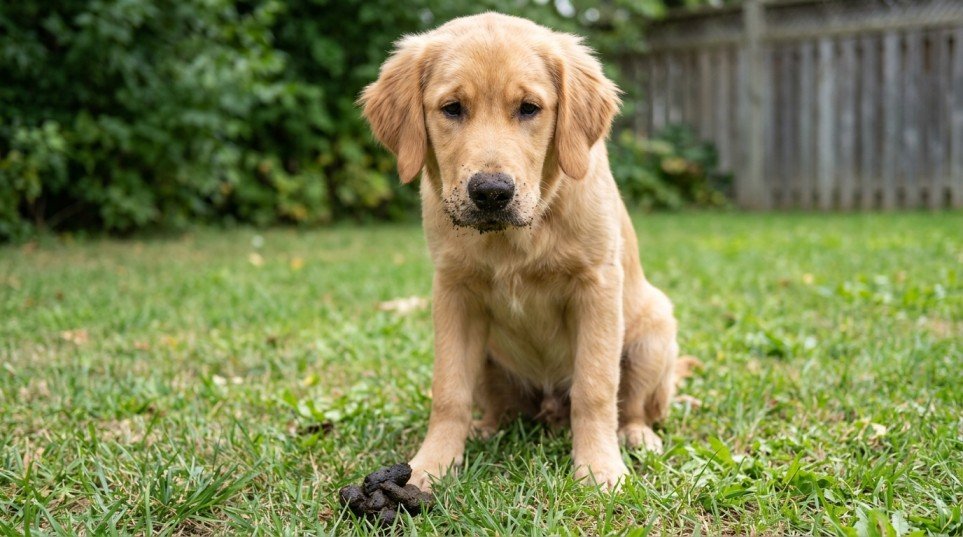
1. Nutritional Deficiency and Malabsorption
One of the most widely supported explanations for coprophagia is that dogs eat stool to recover undigested nutrients. When a dog’s diet is lacking in certain vitamins, minerals, or enzymes, the digestive system fails to fully break down and absorb nutrients from food. The stool that results still contains some of those nutrients, and instinct drives the dog to consume it.
Important: According to the Merck Veterinary Manual, coprophagia is seen most frequently in dogs fed nutritionally incomplete diets, those with exocrine pancreatic insufficiency (EPI), and dogs in conditions of food scarcity or competition. A dog eating stool in these contexts is responding to a genuine biological need, not a behavioral quirk.
2. Digestive Enzyme Deficiency
Digestive enzymes break food down into absorbable components in the small intestine. When enzyme production is insufficient, food passes through partially digested, and stool retains a nutritional profile that dogs find appealing. This is particularly common in dogs fed heavily processed kibble, which contains few naturally occurring enzymes.
Dogs with exocrine pancreatic insufficiency produce very little digestive enzyme and are among the most persistent coprophagic animals. In these dogs, no behavioral remedy will work without first addressing the enzyme shortfall.
3. Attention Seeking and Learned Behavior
Some dogs learn that eating poop produces an immediate, intense reaction from their owner. Yelling, chasing, or making a fuss all constitute attention, and for a dog starved of engagement, any attention is better than none. This pattern is especially common in dogs that spend long periods alone, are under-exercised, or live in low-enrichment environments.
4. Anxiety and Stress
Anxiety-driven coprophagia is most often seen in dogs kept in confined spaces, in shelters or kennels, or those with separation anxiety. In these contexts, eating stool may function as a self-soothing behavior, as a displacement activity when stressed, or as an attempt to keep the living space clean, which is instinctive for dogs in confined quarters.
5. Instinct: Maternal Behavior
Mother dogs instinctively consume the stool of their puppies for the first several weeks of life. This keeps the den clean and prevents the scent from attracting predators. This is entirely normal and requires no intervention. Some dogs retain this instinct beyond the maternal context, particularly those with strong nurturing tendencies.
6. Simply Liking the Taste
Studies published in the journal Veterinary Medicine and Science suggest that a subset of dogs eat poop simply because they find certain stools palatable, particularly those of animals fed high-protein diets. Cat feces, in particular, have a nutrient density and smell that many dogs find irresistible due to the high protein content of most cat foods.
Is Poop Eating Dangerous for Dogs?
This question deserves a direct answer. Eating stool is not automatically a medical emergency, but it does carry real health risks:
- Intestinal parasites: Stool from other animals can contain roundworms, hookworms, whipworms, and Giardia. A dog consuming infected stool is at high risk of infection and can transmit these parasites to other pets and humans in the household.
- Bacterial infection: Feces contain high concentrations of bacteria including E. coli, Salmonella, and Campylobacter. While healthy adult dogs have some natural resistance, puppies, senior dogs, and immunocompromised dogs are at real risk.
- Viral transmission: Parvovirus and distemper virus can be shed in the feces of infected dogs. Consuming infected stool is a well-documented route of transmission for both.
- Toxicity from medications: If the source animal is being treated with certain medications, particularly deworming drugs, antiparasitics, or NSAIDs, those compounds can be present in their stool and toxic to a dog that consumes it.
The bottom line: occasional stool eating in a healthy vaccinated adult dog is unlikely to cause serious immediate harm. Regular coprophagia, especially from unknown animals, carries meaningful and cumulative risk that warrants both behavioral intervention and a vet consultation.
Home Remedies to Stop Dogs from Eating Poop
1. Fresh Pineapple
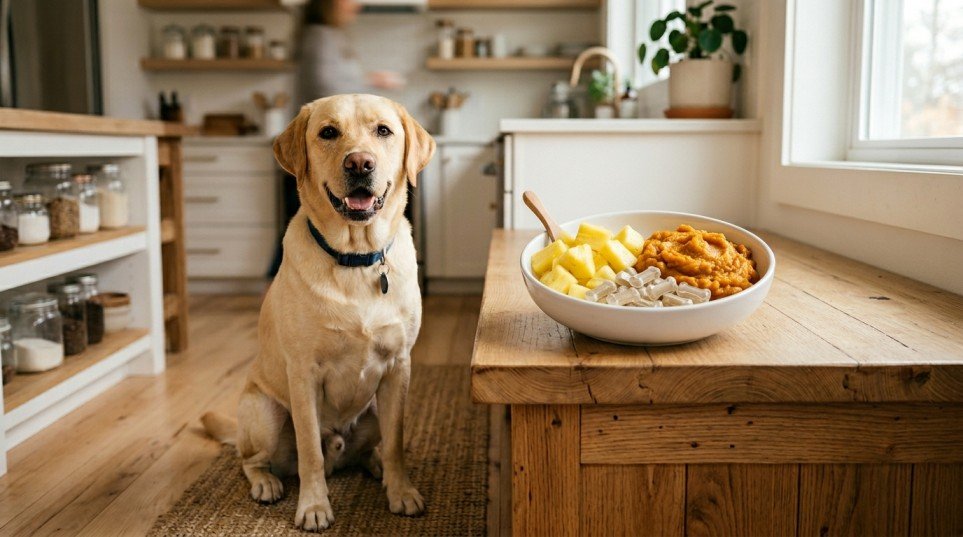
Fresh pineapple contains bromelain, a powerful proteolytic enzyme that alters the smell and taste of a dog’s stool after digestion. The theory is that bromelain changes the fecal odor profile sufficiently to make it unappealing, even to a dog that would otherwise consume it.
How to use it: Give one to two small chunks of fresh pineapple per day per ten pounds of body weight, either as a treat or mixed into food. Use only fresh or frozen pineapple, not canned, which contains added sugars that are harmful to dogs in quantity. The effect, if present, typically takes five to seven days to become noticeable.
Important caveat: Pineapple does not work for all dogs. Research and anecdotal evidence both suggest a meaningful percentage of dogs continue eating stool regardless of pineapple supplementation. It is worth trying because it is safe, but it should not be the only strategy.
2. Plain Meat Tenderizer
Unseasoned meat tenderizer, particularly those containing papain (an enzyme derived from papaya), functions similarly to pineapple by altering the smell and palatability of stool after digestion. This is one of the most commonly recommended approaches by veterinarians for dogs engaging in self-coprophagia.
How to use it: Sprinkle a small amount (roughly one quarter teaspoon per cup of food) of plain, unseasoned meat tenderizer onto your dog’s food once per day. Check the label carefully: the product must contain no added salt, garlic, onion powder, or preservatives. MSG-containing tenderizers should also be avoided.
3. Pumpkin Puree
Plain canned pumpkin is high in dietary fiber and contains natural enzymes that support digestive efficiency. For dogs eating stool due to nutrient malabsorption or hunger-driven urgency, improved digestion means fewer undigested nutrients in stool, which reduces the biological drive to consume it.
How to use it: Add one to four tablespoons of plain canned pumpkin (not pumpkin pie filling) to your dog’s food once or twice daily, adjusted for body size. One tablespoon per ten pounds of body weight is a practical starting point. Use consistently over two to three weeks to assess effectiveness.
4. Digestive Enzyme Supplements
For dogs with enzyme deficiency, this is the most targeted and physiologically sound home remedy available. Veterinary digestive enzyme supplements contain protease, lipase, and amylase, which address the root cause of malabsorption-driven coprophagia rather than just making stool taste different.
How to use it: Choose a veterinary-grade digestive enzyme product formulated specifically for dogs. Follow the manufacturer’s dosing instructions based on your dog’s body weight. Add directly to food at each meal. Consistent use over two to four weeks is needed to assess full effect. If your vet suspects exocrine pancreatic insufficiency, prescription-strength enzymes will be necessary.
Important: Digestive enzyme supplements are the single most effective home remedy for dogs whose coprophagia is driven by malabsorption or EPI. If pineapple and behavioral strategies have not helped, enzyme supplementation is the logical next step.
5. Probiotic Supplements
Gut flora imbalance can contribute to poor nutrient absorption and may play a role in poop eating. A quality veterinary probiotic restores beneficial bacterial populations in the digestive tract, improving overall gut function and reducing the nutritional incomplete digestion that can trigger coprophagia.
How to use it: Use a probiotic product specifically formulated for dogs. Strain selection matters: look for products containing Lactobacillus acidophilus, Bifidobacterium animalis, or Enterococcus faecium. Follow weight-based dosing and give consistently for at least three to four weeks. Plain unsweetened yogurt with live active cultures is a food-based alternative but delivers far fewer colony-forming units than a concentrated supplement.
6. Apple Cider Vinegar in Water
Raw, unfiltered apple cider vinegar (ACV) added to drinking water may help by improving stomach acid levels and gut pH, creating conditions less favorable to the bacteria that make stool appealing. Some proponents also claim ACV changes the taste of stool directly, though evidence for this specific mechanism is limited.
How to use it: Add one teaspoon of raw, unfiltered ACV to your dog’s water bowl per thirty pounds of body weight once daily. Introduce gradually over several days to avoid digestive upset. Always provide plain water alongside the treated bowl so your dog can drink without the ACV if they find it off-putting.
7. High-Fiber Diet Adjustment
Dogs that eat stool due to hunger or rapid gastrointestinal transit benefit from a diet higher in digestible fiber. Fiber slows digestion, increases satiety, and allows more complete nutrient absorption before food passes through. This addresses both the hunger component and the nutritional completeness of each meal.
How to use it: Add cooked vegetables high in soluble fiber to your dog’s existing food: plain cooked sweet potato, green beans, or plain cooked carrots are all well-tolerated options. Alternatively, speak with your vet about transitioning to a high-fiber commercial diet formulated for weight management or digestive health.
8. Commercial Deterrent Supplements and Sprays
Several commercially available supplements are designed specifically to make dog stool unappealing. These typically contain a combination of bitter compounds, digestive enzymes, and proprietary plant extracts. For outdoor use, yard sprays that coat fecal matter with a bitter or hot-tasting compound can interrupt the behavior at the point of contact.
How to use it: For supplements, add to food per the label instructions and assess over two to four weeks. For yard sprays, apply to known fecal areas in the outdoor space. Note that sprays require reapplication after rain and are less effective in wet climates.
Home Remedy Quick Reference Table
| Remedy | How It Works | Best For | Verdict |
| Pineapple Chunks (fresh) | Bromelain makes stool taste bitter | Coprophagia from own feces | Worth trying, safe |
| Meat Tenderizer (plain) | Changes stool odor and taste | Own-stool eating | Effective for some dogs |
| Pumpkin Puree | Improves digestion, reduces urgency | Nutritional deficiency driven eating | Very safe, use plain only |
| Apple Cider Vinegar | Improves gut pH, adds bitter taste to stool | Mild digestive imbalance | Dilute in water only |
| Digestive Enzyme Supplement | Fills nutritional gap triggering behavior | Malabsorption, enzyme deficiency | Highly recommended |
| Probiotics | Restores gut flora balance | Post-antibiotic or chronic GI issues | Highly recommended |
| High-Fiber Diet Adjustment | Slows digestion, increases nutrient absorption | Dogs eating stool out of hunger | Works long term |
| Deterrent Sprays (yard) | Coats feces with bitter agent outdoors | Outdoor access dogs | Effective short term |
What to Avoid: Remedies That Will Not Work or Can Harm Your Dog
Not every suggestion circulating online is safe or effective. These commonly recommended approaches carry real problems:
- Hot sauce or pepper on stool: While the logic seems sound, capsaicin irritates mucosal tissue and can cause significant GI distress if your dog ingests treated feces. Dogs with existing stomach sensitivities may develop vomiting, diarrhea, or gastric pain.
- Scolding or punishment after the fact: Dogs do not connect punishment to an action taken more than a few seconds earlier. Punishing your dog for eating stool you discover after the fact teaches fear without reducing the behavior.
- Muzzling as a sole solution: A muzzle prevents poop eating but does nothing to address the underlying cause. The behavior will resume immediately when the muzzle is removed unless root causes are also managed.
- Citrus juice on feces: Citric acid and d-limonene in citrus are toxic to dogs in meaningful quantities. Coating stool with lemon or orange juice creates a new ingestion risk rather than reducing one.
- Forcing confrontation with stool: Rubbing a dog’s nose in feces is an outdated and counterproductive training method. It causes stress without any behavioral improvement and can damage your dog’s trust in you.
Addressing the Root Cause: Why Remedies Alone Are Not Enough
Home remedies treat symptoms. Without addressing the underlying driver of coprophagia, the behavior will return. Here is how to identify and manage the most common causes:
For Nutritional Deficiency
- Review your dog’s current food. Is it AAFCO-certified as nutritionally complete and balanced for your dog’s life stage? If not, this is the first and most important change to make.
- Consider whether your dog is getting appropriate portion sizes for their weight and activity level. Underfeeding, even of a complete food, can drive poop eating.
- Ask your vet about adding a multivitamin or mineral supplement if dietary adjustment alone does not resolve the behavior within four weeks.
For Digestive Enzyme Deficiency or EPI
- Consistent use of a veterinary digestive enzyme supplement at every meal is the primary intervention.
- If symptoms include significant weight loss despite good appetite, chronic diarrhea, and greasy-looking stool, ask your vet to test for exocrine pancreatic insufficiency. This condition requires prescription enzyme replacement therapy, not over-the-counter supplements.
For Boredom and Attention Seeking
- Increase daily exercise. A dog that is adequately tired has less drive to engage in problematic behaviors. Most dogs require far more physical activity than they typically receive.
- Remove the reward. If your dog eats poop and you react with chasing and noise, they have been reinforced. Practice calm, immediate removal of the stool from the environment without making it an event.
- Increase mental enrichment: puzzle feeders, training sessions, sniff games, and interactive toys all reduce anxiety and boredom-driven behaviors.
For Anxiety and Stress
- Identify the trigger. Is the behavior occurring only during confinement, only when left alone, or only in specific locations? Identifying the pattern narrows the intervention.
- Gradual desensitization to the anxiety trigger is more effective than any supplement for anxiety-driven coprophagia. A certified applied animal behaviorist can help design a protocol.
- Ask your vet about veterinary calming supplements (L-theanine, melatonin, valerian root formulations designed for dogs) or prescription anti-anxiety medication for severe cases.
Environmental Management (For All Cases)
- Clean up stool immediately after your dog defecates. A dog cannot eat what is not there. Consistent, prompt removal is the single most reliable behavioral intervention available.
- Keep cat litter boxes behind a baby gate or in a location inaccessible to your dog. Cat feces coprophagia is overwhelmingly driven by opportunity.
- Supervise outdoor time until the behavior is under control. A long leash allows your dog outdoor freedom while giving you the ability to intervene before stool eating occurs.
What to Do Right Now If Your Dog Just Ate Poop
Stay calm. What you do next depends on what they ate and how much.
Step 1: Identify What Was Consumed
- Their own stool, small amount: Monitor for GI upset. Rinse their mouth with water if possible. No emergency action required for a healthy adult dog.
- Other dog’s stool: Check whether the source dog is up to date on vaccines and parasite prevention. If unknown, contact your vet for guidance on parasite screening.
- Cat feces: Low immediate risk for a vaccinated adult dog, but contact your vet if the cat is on regular medications, particularly antiparasitics.
- Wildlife feces (deer, rabbit, raccoon, fox): Higher parasite and disease risk. Contact your vet. Raccoon feces in particular can carry Baylisascaris procyonis, a roundworm that poses serious health risks.
- Unknown source: Contact your vet if any symptoms develop within 24 to 48 hours.
Step 2: Watch for These Symptoms
After poop ingestion, monitor your dog for the following signs within 24 to 72 hours:
- Vomiting or repeated retching
- Diarrhea or loose, bloody stool
- Lethargy or unusual fatigue
- Loss of appetite
- Abdominal bloating or pain
- Excessive drooling or lip licking
- Neurological signs: wobbling, disorientation, seizures (seek emergency care immediately)
Step 3: Who to Contact
- Your vet: First point of contact for any coprophagia that is frequent, involves wildlife stool, or is accompanied by GI or neurological symptoms.
- ASPCA Animal Poison Control: (888) 426-4435, available 24 hours a day, if you suspect the consumed stool contained medication residue, insecticide, or other toxic substances.
- Pet Poison Helpline: (855) 764-7661, 24-hour toxicology support for suspected toxin exposure via fecal ingestion.
When Home Remedies Are Not Enough: Signs You Need a Vet
Home remedies are appropriate for dogs with mild, habit-driven coprophagia in an otherwise healthy state. These situations require professional veterinary evaluation:
- Coprophagia began suddenly in a dog that previously never showed this behavior
- The dog is also showing weight loss, chronic diarrhea, or poor coat condition alongside poop eating
- All dietary and environmental strategies have been consistently applied for four or more weeks without improvement
- The dog is consuming stool from multiple sources including wildlife
- GI symptoms develop within 48 hours of a poop-eating incident
- The behavior is becoming more frequent or more compulsive over time
- You suspect exocrine pancreatic insufficiency based on concurrent symptoms
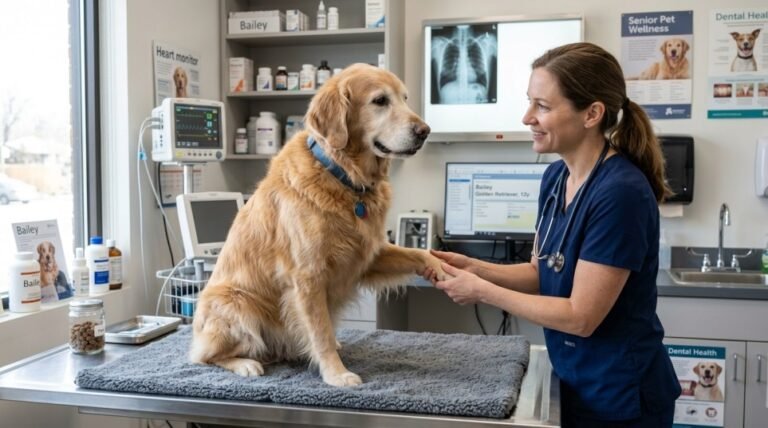
A vet evaluation for coprophagia typically includes a physical examination, fecal analysis for parasites, bloodwork to screen for pancreatic enzyme levels, and a dietary assessment. Prescription interventions such as EPI enzyme replacement or anti-anxiety medication can achieve results that no home remedy can replicate when the underlying cause warrants them.
How to Prevent Poop Eating Before It Becomes a Habit
These habits significantly reduce the likelihood of coprophagia developing or recurring:
- Pick up stool immediately after every bowel movement, without exception
- Feed a nutritionally complete, AAFCO-certified diet appropriate for your dog’s life stage
- Maintain a consistent feeding schedule to reduce hunger-driven behaviors
- Keep litter boxes inaccessible to dogs in multi-pet households
- Provide adequate daily exercise and mental enrichment for your dog’s breed and energy level
- Keep up to date with regular deworming and parasite prevention on a veterinary schedule
- Supervise young puppies outdoors consistently, as early habit formation is much easier to interrupt than established patterns
Frequently Asked Questions: Dog Eating Poop
Why does my dog eat poop all of a sudden?
A sudden onset of coprophagia in a dog with no prior history of the behavior is a more significant clinical signal than long-standing habit. Sudden onset warrants a vet visit to rule out exocrine pancreatic insufficiency, intestinal parasitism, inflammatory bowel disease, or a sudden nutritional deficit. In some cases, medication side effects such as those from steroid therapy can dramatically increase appetite and drive stool eating.
Does pineapple really stop dogs from eating poop?
For some dogs, yes. Fresh pineapple’s bromelain content does alter the smell and taste of stool sufficiently to reduce the behavior in a meaningful subset of dogs. However, controlled studies show it does not work universally. It is safe, affordable, and worth trying, but it should not be relied upon as a sole intervention, particularly if the behavior is frequent or driven by a physiological cause.
Why does my dog eat cat poop?
Cat feces is nutritionally attractive to many dogs because cats are obligate carnivores fed high-protein diets. Their stool retains a protein and fat profile that dogs find appealing. Additionally, litter boxes are at dog-nose height and easily accessible. Management is the most reliable solution: a baby gate that allows cat access but blocks dogs, or a top-entry litter box that dogs cannot reach, eliminates the opportunity entirely.
Is coprophagia a sign of worms?
Intestinal parasitism can contribute to the malabsorption that drives some cases of poop eating, but worms alone are not a consistent cause. More accurately, the relationship runs the other direction: eating stool is a risk factor for acquiring intestinal parasites, particularly roundworms and Giardia. A fecal test at your vet’s office can confirm or rule out active parasitism and guide treatment.
How long does it take home remedies to work?
Dietary supplements like pineapple, meat tenderizer, and enzyme supplements typically take five to fourteen days to affect stool palatability, and behavioral effects should be assessed over two to four weeks of consistent use. Environmental management strategies such as immediate stool removal work immediately but require consistent application. If no improvement is seen after four weeks of combined dietary and environmental strategies, a veterinary evaluation is warranted.
Can puppies grow out of eating poop?
Yes, many puppies do. Coprophagia in puppies under twelve months is extremely common and frequently resolves on its own as the puppy matures, their gut flora stabilizes, and their environment provides more stimulation. Consistent stool removal, appropriate nutrition, and plenty of exercise support natural resolution. Puppies that continue the behavior past twelve months, or whose behavior is intensifying rather than fading, benefit from more structured intervention.
Is it safe to let my dog lick me after eating poop?
It is not advisable. Dog saliva does have mild antibacterial properties, but the bacterial load following fecal ingestion is significant enough to pose a real transmission risk, particularly for children, aged individuals, and immunocompromised family members. Rinse your dog’s mouth with water after a known coprophagia incident and avoid face licking until you have had a chance to do so.
Should I punish my dog for eating poop?
No. Punishment after the fact is ineffective because dogs cannot connect a delayed consequence to an earlier behavior. In-the-moment verbal interruption followed immediately by redirecting to an incompatible behavior (a sit or a come command) can be useful as part of a training plan. The most effective tool remains removing the opportunity entirely by cleaning up immediately and supervising outdoor time.
Final Word: Should You Rely on Home Remedies for Coprophagia?
Home remedies are a reasonable and often effective first response to mild, habit-driven poop eating in otherwise healthy dogs. A combination of digestive enzyme supplementation, dietary fiber improvement, fresh pineapple, and consistent stool removal addresses both the physiological and behavioral drivers of the behavior for a large proportion of dogs. The key is identifying the most likely underlying cause and choosing the remedy that matches it.
Poop eating that is sudden in onset, worsening over time, accompanied by GI symptoms or weight loss, or that persists despite four weeks of consistent home management is beyond the scope of home treatment. A veterinary evaluation at that point is not optional. Conditions like exocrine pancreatic insufficiency and established intestinal parasitism require prescription treatment that no pantry remedy can substitute.
When in doubt, clean up immediately after every bowel movement, review your dog’s diet, add an enzyme supplement, and book the appointment. Your dog, and your relationship with them, will be better for it.
Sources and References
Merck Veterinary Manual: Coprophagia in Dogs. merckvetmanual.com
VCA Animal Hospitals: Coprophagia: Stool Eating in Dogs. vcahospitals.com
PetMD: Why Do Dogs Eat Poop? (Updated Feb. 2025). petmd.com
American Kennel Club: Why Does My Dog Eat Poop and How Can I Stop It? akc.org
Hart BL, Sung W. The paradox of canine conspecific coprophagy. Veterinary Medicine and Science. 2018.
ASPCA Animal Poison Control Center: aspca.org/pet-care/animal-poison-control
Pet Poison Helpline: Baylisascaris and Raccoon Roundworm Risk. petpoisonhelpline.com
Tufts University Cummings School of Veterinary Medicine: Exocrine Pancreatic Insufficiency in Dogs. vet.tufts.edu
Discover More:-
- Is Bacon Bad for Dogs? A Complete Vet-Backed Guide 2026
- Dog Cage in Car: The Complete Safety Guide for Traveling with Your Dog 2026

Dr. Ubaid Ur Rehman, DVM is a qualified veterinarian with expertise in pet health, nutrition, and preventive care. He is passionate about helping pet owners make informed decisions through accurate, research-based, and practical advice. As a veterinary professional, he reviews and contributes content to ensure reliable information for dog and pet owners.