First Night With a Rescue Dog: Why They’re Scared and How to Help 2026
Quick Answer: A scared rescue dog on their first night at home is displaying normal stress responses to an overwhelming and unfamiliar situation. These behaviors typically ease within 24 to 72 hours for most dogs, though some take several weeks to fully decompress. Your job on night one is not to fix the fear but to create a calm, low-pressure environment where the dog can start to feel safe at their own pace.
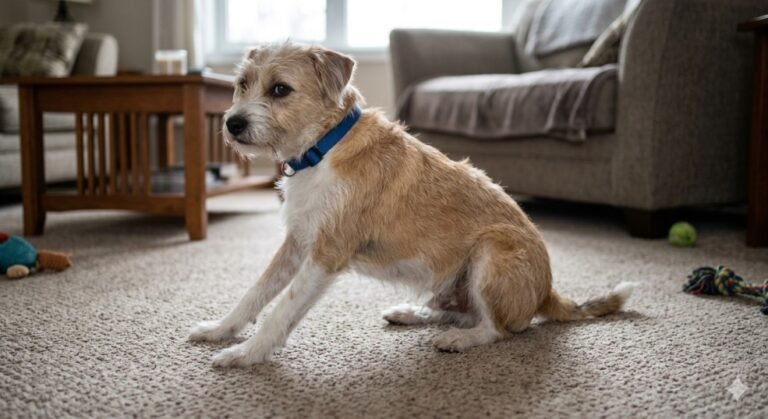
You finally brought your rescue dog home. You expected tail wags, maybe some sniffing around, possibly an excited sprint through the living room. Instead, your new dog is pressed into the corner, shaking, refusing to eat, and flinching at every sound. Before you panic and wonder if you made a mistake, take a breath. What you are seeing is completely normal, and it has a name.
This guide covers everything you need to know about the first night with a scared rescue dog: why they act this way, what the behaviors actually mean, what you should and should not do, and how long it really takes for a rescue dog to feel safe. We give you the honest, practical picture that most feel-good adoption posts leave out.
First Night Rescue Dog Home Scared: What Is Actually Happening
Most rescue dogs arrive carrying a history you cannot fully see. Some were surrendered by families they loved. Others came from shelters, hoarding situations, neglect, or abuse. Even a dog with a relatively gentle background has still just been loaded into a car by strangers, driven to an unfamiliar place, and surrounded by new smells, sounds, and people.
Their brain is in survival mode. The behaviors you are seeing, such as shaking, hiding, refusing food, and avoiding eye contact, are not signs that you adopted the wrong dog. They are signs of a stressed animal trying to assess whether it is safe.
Why Is My Rescue Dog So Scared on the First Night?
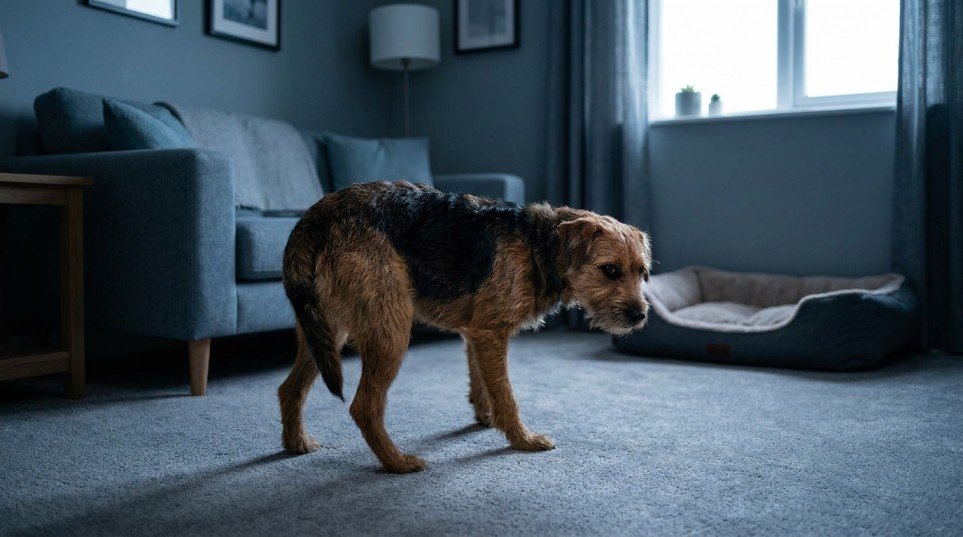
Understanding the cause of the fear helps you respond correctly. There are several reasons a rescue dog behaves this way when they first arrive.
1. Sensory Overload
Your home is full of new information. New smells, the sound of appliances, different flooring, the way your voice sounds in that particular room. A dog’s primary way of reading the world is through their nose, and your house is a completely uncharted scent map. Processing all of this at once is genuinely exhausting.
2. Loss of Routine and Reference Points
Dogs rely heavily on routine and predictability. Even if a shelter environment was stressful, it was familiar. Your rescue dog knew when feeding happened, what the kennel smelled like, and what to expect from the people around them. All of that is gone now. Disorientation is a natural response.
3. Past Trauma or Poor Socialization
Many rescue dogs have experienced neglect, abuse, or simply a lack of early socialization with humans, other animals, or new environments. For these dogs, every new person and place triggers a threat response built up over months or years. You are not doing anything wrong. They are responding to a pattern their nervous system learned before they ever met you.
4. The Car Ride Effect
For most rescue dogs, the car ride to your home was itself a stressful event. Many dogs experience motion sickness or travel anxiety. Arriving already overstimulated from the journey means the fear can be compounded from the moment they walk through the door.
Signs Your Rescue Dog Is Scared and What Each One Means
Not all scared behavior looks the same. Here is what common first-night behaviors actually indicate.
| Behavior | What It Means | How Long It Lasts | What To Do |
| Shaking or trembling | Fear, overwhelm, stress | Hours to 1 to 2 days | Soft voice, stay calm, do not restrain |
| Hiding in a corner | Seeking safety, decompressing | 1 to 3 days | Let them hide, sit nearby quietly |
| Refusing to eat | Stress response | 24 to 72 hours | Offer food, do not force it |
| Whining or crying | Separation anxiety, disorientation | Few hours to a few nights | Gentle presence, avoid long absences |
| Not using the bathroom | Stress holding reflex | First few hours | Take outside every 30 to 60 minutes |
| Pacing | Anxiety, restlessness | First night or two | Calm environment, reduce stimulation |
The one thing these behaviors share: they are all communication. Your dog is telling you what they need. Listening to that communication, rather than overriding it with affection and attention, is the most important thing you can do.
What To Do the First Night With a Scared Rescue Dog
The instinct most new dog owners have is to shower the dog with love, pick them up, sit with them, and talk to them in a comforting tone constantly. This instinct is understandable, but it can backfire. Here is what actually helps.
Set Up a Safe Space Before They Arrive
A crate, a quiet corner, a sectioned-off room with a dog bed, water, and a worn piece of your clothing all give the dog a defined territory that smells familiar and feels contained. Dogs are den animals and often feel safer in smaller, enclosed spaces than in open rooms.
Place the safe space in a low-traffic area of your home, not in the middle of the living room. The dog should be able to retreat there without being approached.
Lower the Energy in the Room
Talk quietly. Move slowly. Avoid loud music, the TV at full volume, or having guests over to meet the dog. The first night is not a celebration event. It is a decompression night. Low and slow is the goal for everyone in the home.
Do Not Force Interaction
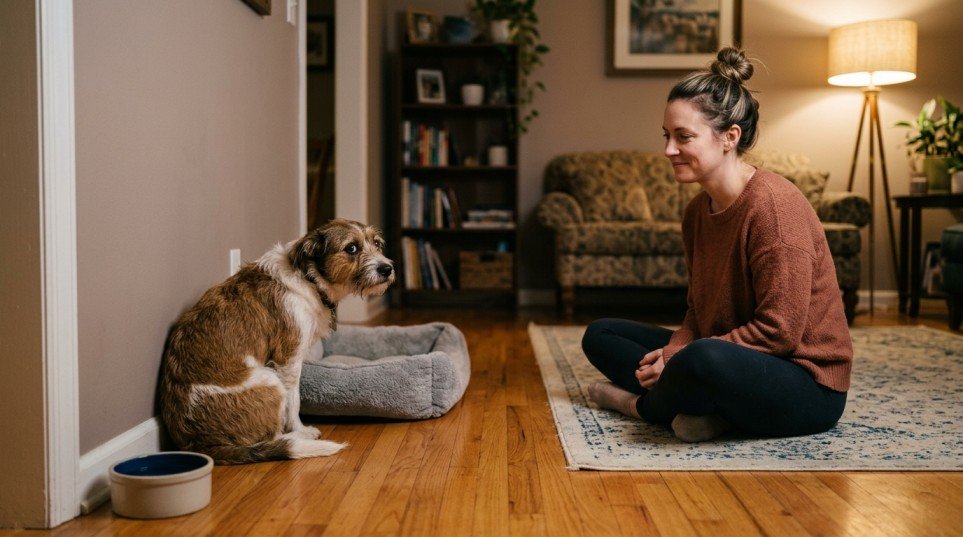
Sit on the floor at a distance and let the dog approach you if they choose to. Do not reach for them, call them repeatedly, or carry them to a new location. Forced interaction increases stress and breaks trust before it has had a chance to form. Patience here pays dividends later.
Offer Food Without Pressure
Place a small amount of food near the dog without watching them eat. Many scared dogs will not eat in front of a person who is staring at them. Put the bowl down and walk away. If they eat, that is a good sign. If they do not eat on the first night, that is also normal and not a health emergency unless it continues past 48 to 72 hours.
Take Them Outside Often
Stress causes a dog to hold in bathroom needs sometimes, but others will need to go more frequently. Take your rescue dog outside every 30 to 60 minutes, especially in the first few hours. Keep the walk calm and brief. Let them sniff. Do not rush them.
Use Calming Aids If Needed
Veterinarian-approved calming tools can help on the first night. These include Adaptil diffusers or sprays, which release a synthetic version of the calming pheromone produced by nursing mother dogs. A Thundershirt or anxiety wrap can also reduce shaking in some dogs. These are supportive tools, not cures, but they can take the edge off for a very stressed animal.
What NOT To Do the First Night
Equally important as what you should do is what you should avoid. These are the most common first-night mistakes new rescue dog owners make.
- Do not invite people over: Even well-meaning friends and family add noise, energy, and new faces. Keep the first night to immediate household members only.
- Do not punish fear behaviors: If your dog growls, snaps, or retreats, do not raise your voice or physically correct them. These are fear responses, not aggression. Punishing them erodes trust and can create long-term behavioral problems.
- Do not flood them with affection: Constant touching, hugging, and holding can overwhelm a scared dog. Let them set the pace for physical contact.
- Do not let children or other pets rush in: Introductions to kids and resident pets should be slow, controlled, and ideally started the next day or beyond, not on night one.
- Do not assume the behavior is permanent: The scared dog in the corner is not the dog you will have in four weeks. First-night behavior is not predictive of long-term personality.
How Long Will My Rescue Dog Be Scared?
This is the question every new owner wants answered, and the honest answer is: it depends on the dog. What research and experienced rescue workers consistently point to is a framework called the 3-3-3 rule.
The 3-3-3 Rule for Rescue Dogs
- First 3 days: The dog is overwhelmed, may shut down, may refuse food, may not move from one spot. They are processing and assessing.
- First 3 weeks: The dog begins to understand routine. They start to relax slightly, show more of their personality, and tentatively explore.
- First 3 months: The dog starts to feel at home. Trust is established. They understand the rules of the household and feel secure enough to be themselves.
The 3-3-3 rule is a guideline, not a guarantee. Some dogs adjust in days. Dogs with significant trauma histories may take six months or longer to fully decompress. The point of the framework is to set realistic expectations so you do not interpret week one behavior as a permanent baseline.
Can a Scared Rescue Dog Become Traumatized Further on the First Night?
This is a real concern worth addressing. Yes, it is possible to make fear worse on the first night if you respond in ways that confirm the dog’s threat assessment. Specifically, these situations can deepen fear and set back trust-building significantly.
- Forcing physical contact when the dog is actively retreating
- Using harsh corrections or raised voices in response to fear behaviors
- Overwhelming the dog with too many new people, animals, or environments in the first 24 hours
- Separating the dog from all human presence completely, especially overnight in a cold or isolated space
The goal is not to create a forced positive experience. The goal is to reduce the total load of new stimulation while making your presence associated with calm, predictability, and safety. That happens through repetition over time, not through intensity on a single night.
Should My Rescue Dog Sleep With Me on the First Night?
This is one of the most debated questions in rescue dog circles, and the answer is nuanced.
Letting a scared rescue dog sleep in your bed on night one can provide comfort, but it can also set a difficult precedent if you do not intend for that to be the long-term arrangement. A dog who learns that distress leads to being invited into the bed can develop dependency that makes alone time harder later.
A better option for most dogs is to place a crate or dog bed in your bedroom so the dog can hear and smell you without having full access to the bed. This provides the reassurance of proximity without creating a sleep habit that may be hard to change later.
If the dog is severely distressed and the only thing that helps is being close, prioritize the dog’s welfare on night one and address the longer-term sleeping arrangement gradually. There is no perfect universal answer here, only the right answer for your specific dog and household.
First Night Rescue Dog Home Scared: Step-by-Step Summary
- Before arrival: Set up a quiet safe space with a crate or bed, water, and a worn piece of your clothing.
- On arrival: Bring the dog in calmly and take them directly to the safe space. No crowd, no excitement.
- First hour: Sit quietly nearby. Let the dog approach on their terms. Do not reach for them.
- Offer food without hovering. Walk away after placing the bowl.
- Take the dog outside every 30 to 60 minutes for bathroom breaks.
- Keep the evening quiet. Low voices, low light, no guests.
- At bedtime: Place crate or dog bed in your bedroom if possible. Stay calm and consistent.
- If the dog cries at night: briefly acknowledge with a calm voice but do not rush in. Slow, predictable responses train the dog that you are present without reinforcing escalation.
When To Call a Vet or Behaviorist
Most first-night fear does not require professional intervention. However, there are situations where you should seek help.
- Aggression that escalates: If the dog growls, snaps, or lunges within the first 24 hours and the behavior is intensifying rather than settling, consult a certified applied animal behaviorist or veterinary behaviorist.
- Refusal to eat beyond 72 hours: Some dogs hold out for two or three days, which is within the range of stress-related appetite suppression. Beyond 72 hours, contact your vet.
- Signs of physical illness: Vomiting, diarrhea, labored breathing, or extreme lethargy that seems beyond stress may indicate the dog was ill when adopted. Call your vet.
- Panic attacks that do not subside: If the dog is unable to settle at any point during the night, is injuring themselves from attempts to escape, or is in visible sustained distress, a short-term anti-anxiety medication from your vet may help bridge the adjustment period.
Frequently Asked Questions: First Night Rescue Dog Home Scared
Is it normal for a rescue dog to shake the entire first night?
Yes. Shaking and trembling are common physiological responses to fear and stress. As long as the dog is not showing signs of illness such as vomiting, pale gums, or extreme lethargy, shaking on the first night is a behavioral response, not a medical emergency. Most dogs settle within a few hours once the initial overwhelm passes.
Should I ignore my rescue dog if they are crying at night?
Completely ignoring a distressed dog on the first night can increase anxiety and undermine trust. A better approach is to respond calmly and briefly, using a low voice to let the dog know you are present, and then returning to your routine without making the response dramatic or lengthy. This teaches the dog that you are accessible without training them that crying triggers extended attention.
How do I get my rescue dog to come out of hiding?
You do not force it. Sit on the floor a comfortable distance from the hiding spot with something that smells appealing, such as a high-value treat, placed between you. Read, work on your phone, or simply be still. Let the dog make the choice to emerge on their own timeline. This approach builds confidence far more effectively than coaxing or retrieving the dog from their hiding spot.
My rescue dog will not eat on the first night. Should I be worried?
Not yet. Loss of appetite is one of the most consistent and predictable stress responses in dogs. Most rescue dogs will begin eating within 24 to 48 hours once they start to feel safer. Offer food in a quiet spot without watching them and remove the bowl after 20 minutes if it is not eaten. Contact your vet if the dog refuses food for more than 72 hours.
Can I use a crate on the first night even if the dog was not crate trained?
You can introduce the crate, but forcing a dog into it on the first night if they are already distressed can make the crate a symbol of confinement rather than safety. A better approach is to place the crate in the room with the door open, put bedding and a treat inside, and let the dog investigate. Some dogs choose to go in voluntarily within hours. Others need days of gradual association-building before the crate becomes a safe space.
What is the 3-3-3 rule for rescue dogs?
The 3-3-3 rule is a behavioral guideline used by rescue organizations and shelters to set realistic expectations for new dog owners. It describes three adjustment phases: the first three days, during which the dog is in survival mode and may be shut down or overwhelmed; the first three weeks, during which routine begins to register and the dog starts to show their personality; and the first three months, during which the dog feels genuinely at home and trust is established. It is a framework, not a fixed timeline, but it is a useful reference for understanding that early fear behavior is not permanent.
Final Word: Your Scared Rescue Dog on Night One
The scared dog in the corner on the first night is not a broken dog. They are a dog in the middle of a massive life transition, doing the best they can with the information they have. The fact that they are afraid does not mean the adoption was a mistake or that bonding is impossible.
What it means is that they need time, consistency, and a low-pressure environment to discover that you are safe. That process cannot be rushed, but it can be supported. Keep things quiet. Let them lead. Be present without being overwhelming.
Most rescue dog owners look back on the first night and realize that the dog who would not eat, would not make eye contact, and shook in the corner for three hours became the dog who now greets them at the door, sleeps across their feet, and shows more loyalty than any dog they have ever known.
Get through the first night. The rest comes with time.
Sources and References
- American Kennel Club: Bringing a Rescue Dog Home. akc.org
- ASPCA: Helping Your Dog Adjust to a New Home. aspca.org
- Best Friends Animal Society: Helping Your New Dog Feel At Home. bestfriends.org
- American Veterinary Society of Animal Behavior: How to Introduce a Rescue Dog. avsab.org
- PetMD: Why Is My Rescue Dog Scared? (Updated 2025). petmd.com
- Humane Society of the United States: Adopting a Dog. humanesociety.org
- The Spruce Pets: The 3-3-3 Rule for Rescue Dogs. thesprucepets.com
Discover More:-
- Rachael Ray Dog Food: A Complete Honest Review 2026
- High Protein Dog Food: A Complete Vet-Backed Guide 2026

Dr. Ubaid Ur Rehman, DVM is a qualified veterinarian with expertise in pet health, nutrition, and preventive care. He is passionate about helping pet owners make informed decisions through accurate, research-based, and practical advice. As a veterinary professional, he reviews and contributes content to ensure reliable information for dog and pet owners.