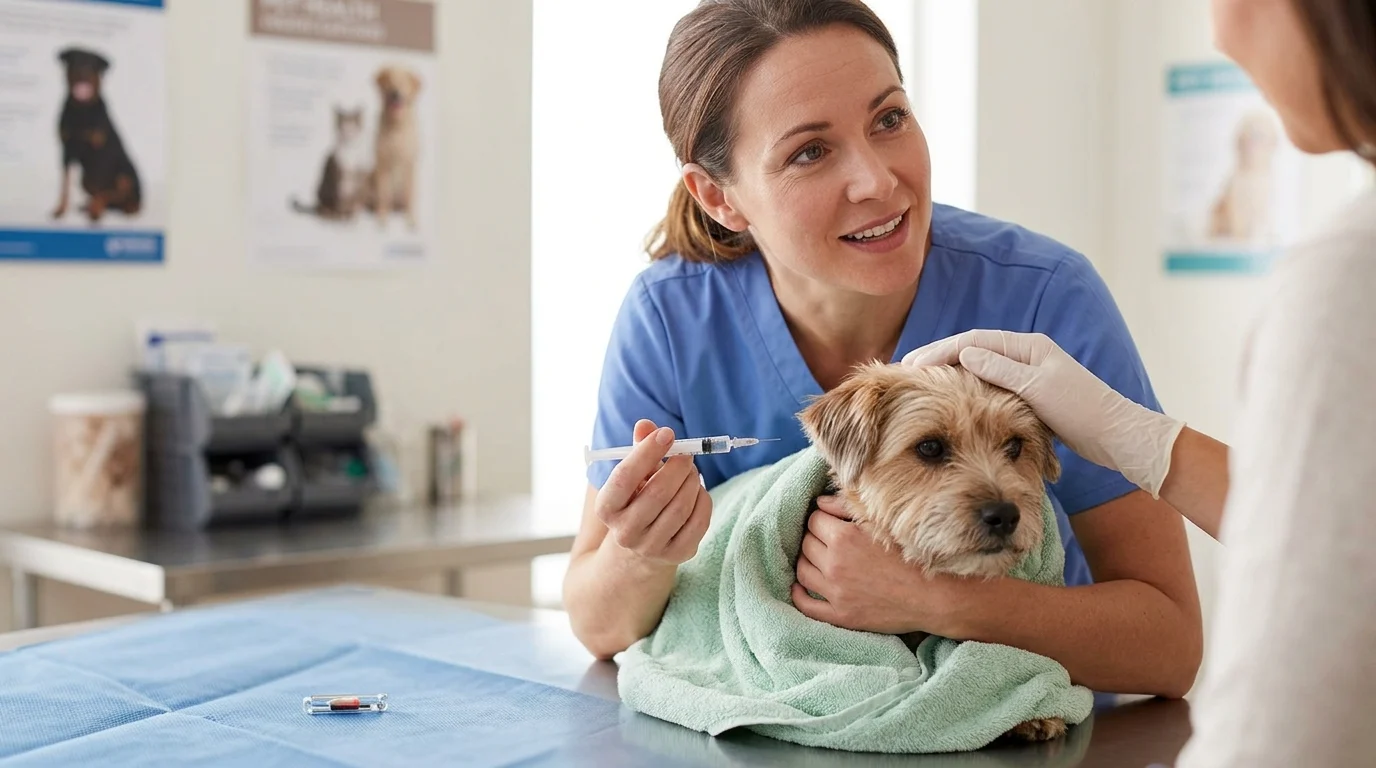
Does Microchipping Hurt Dogs? Pain, Safety & What to Expect 2026
Quick Ans: Microchipping causes minimal, temporary discomfort similar to a routine vaccination or having blood drawn. Your dog will feel a quick pinch when the chip is inserted, but the procedure lasts only seconds. Most dogs don’t even flinch, and there’s no lingering pain afterward.
Key Takeaways
- Brief pinch only – The needle is slightly larger than a vaccine needle, but the injection takes just seconds. Most dogs tolerate it easily without anesthesia.
- No ongoing pain – Once the microchip is implanted, your dog won’t feel it at all. It sits inertly under the skin for life.
- Options for sensitive dogs – If your dog is anxious or very small, ask your vet about numbing cream or schedule the procedure during spay/neuter surgery.
You’ve heard microchipping is the best way to ensure your lost dog finds their way home. But the thought of a needle implanting a chip under your pup’s skin can be unnerving. How much does it actually hurt? Here’s the honest, vet-backed answer and why the momentary pinch is absolutely worth it.
What Is a Microchip and How Is It Implanted?
A microchip is a tiny electronic device about the size of a grain of rice, encased in biocompatible glass. It has no battery or moving parts and remains inactive until scanned by a special reader.
The implantation process:
- Your vet or trained professional positions your dog standing or lying on their stomach.
- The sterile microchip is loaded into a syringe-like applicator.
- The loose skin between the shoulder blades is gently pulled up, and the needle is inserted quickly.
- The applicator trigger is squeezed, injecting the chip under the skin.
- Your dog is scanned to confirm the chip is reading properly.
The whole process takes about the same time as any other injection just seconds. Most of the time is actually spent on registration paperwork, not the procedure itself.
Does Microchipping Hurt Dogs? The Honest Answer
Yes, your dog will feel a brief moment of discomfort but it’s mild and over quickly. Think of it like getting your ears pierced: a short, sharp pinch, and then it’s done.
Here’s what veterinarians say:
VCA Animal Hospitals compares the sensation to having blood drawn a quick pinch with a larger-than-average needle. The American Animal Hospital Association (AAHA) states the procedure is “quick and relatively painless, similar to a routine vaccination”.
Most dogs handle the procedure without any fuss. VCA notes that “the chips are usually inserted without incident in awake animals, even in the tiniest puppies” and “most animals do not even flinch when the chip is inserted”.
Once the chip is implanted, your dog won’t feel it at all. The microchip sits inertly under the skin and doesn’t cause ongoing pain or discomfort.
Microchipping Pain Compared to Other Procedures
“The insertion needle is larger than those used for vaccinations, but most dogs handle it well. The microchip itself doesn’t cause any discomfort once implanted.”
How to Minimize Discomfort for Your Dog
While microchipping is well-tolerated by most dogs, here are options to make it even easier:
- Schedule during another procedure – If your dog is already under anesthesia for spaying, neutering, or dental work, the microchip can be implanted then with zero extra discomfort.
- Ask about numbing cream – Topical numbing cream applied 20–30 minutes before the procedure can reduce the pinch sensation, especially for small or sensitive dogs.
- Choose a trusted professional – Have the procedure done by a veterinarian or trained professional to ensure proper placement and minimize risk.
- Stay calm and reassuring – Your dog picks up on your energy. Stay relaxed, use a calm voice, and offer treats afterward.
Risks and Complications – What to Know
Microchipping is considered very safe, but like any medical procedure, there are rare potential issues:
- Infection – Infection at the implantation site is uncommon but possible. Keeping the area clean reduces risk.
- Migration – The microchip may shift slightly from its original position before settling, but this rarely causes problems.
- Tumor formation – There have been extremely rare reports of tumors developing at the microchip site. Given the millions of chips implanted worldwide, the risk is incredibly low.
“Complications, such as infections or chip failures, are very uncommon,” says Dr. Dench, a veterinarian cited by Adopt a Pet.
“People have to weigh that small risk against what can happen to their lost pet.”
Bottom line: The tiny risk of complications is far outweighed by the permanent identification that can bring a lost dog home.
Can Puppies Be Microchipped?
Yes, puppies can be microchipped safely. Puppies as young as a few weeks old can receive a microchip, though many veterinarians wait until at least 8 weeks of age. The procedure causes the same brief pinch for puppies as it does for adult dogs, and they tolerate it well. If you’re concerned about pain in a tiny puppy, ask your vet about numbing cream or schedule the chip during a spay/neuter procedure.
Frequently Asked Questions
Does microchipping hurt dogs more than vaccines?
No. Microchipping causes similar discomfort to a routine vaccination a brief pinch. The needle is slightly larger, but the sensation is comparable.
Can my dog feel the microchip under their skin?
No, your dog won’t feel the microchip once it’s implanted. In very small or short-haired dogs, you might occasionally feel it if you press on the area, but it doesn’t cause your dog any sensation or discomfort.
Is anesthesia needed for microchipping?
No, anesthesia is not required for microchipping. The procedure is quick and minimally painful. However, many owners choose to have it done while their dog is already under anesthesia for another procedure like spaying or neutering.
Are there any side effects from microchipping?
Serious side effects are extremely rare. Mild side effects like slight swelling or tenderness at the injection site can occur but usually resolve quickly.
Do microchips cause cancer in dogs?
There have been extremely rare reports of tumors developing at microchip sites, but the risk is incredibly low compared to the millions of pets safely microchipped worldwide. Most veterinarians consider the benefit far greater than the minuscule risk.
Can microchips move or fall out?
The microchip can shift slightly under the skin before settling, but it won’t fall out. Once implanted, it remains in place permanently unless surgically removed.
Does my dog need pain relief after microchipping?
No. There is no ongoing pain after the procedure, so pain relief is not needed. Your dog can resume normal activities immediately.
Final Word
Does microchipping hurt dogs? Yes a little, for about two seconds. It’s a quick pinch that most dogs barely react to, and once it’s done, your dog won’t feel a thing. The peace of mind knowing your dog has permanent identification that can’t fall off or be removed is worth every second of that brief moment. If you’re worried about the pinch, talk to your vet about numbing cream or scheduling it during a spay/neuter procedure. But don’t let fear of a temporary ouch keep you from giving your dog the best chance of returning home if they ever get lost.
Sources & References
- Vet et Nous. “Demystifying the microchip.” https://www.vetetnous.com/en/tips/dog-demystifying-the-microchip/
- BC Pet Registry. “Understanding Pet Microchipping: Myths and Facts.” https://bcpetregistry.ca/stories/information/understanding-pet-microchipping-myths-and-facts/
- Adopt a Pet. “Microchipping Dogs: How Does a Dog’s Microchip Work?” https://www.adoptapet.com/blog/adoption/microchipping-dogs
- DVM360. “Sample script: Talking to clients about microchips.” https://www.dvm360.com/view/sample-script-talking-clients-about-microchips
- VCA Animal Hospitals. “Microchipping Your Dog.” https://vcahospitals.com/know-your-pet/microchipping-your-dog
- WebMD. “Microchipping Your Dog or Cat.” https://www.webmd.com/pets/features/cm/microchipping-your-dog-or-cat
- PetSmart Learning Center. “Should I Microchip My Dog or Puppy?” https://www.petsmart.com/learning-center/dog-care/should-i-microchip-my-dog-or-puppy
- The Dodo. “Will Microchipping Hurt My Dog?” https://www.thedodo.com/dodowell/does-microchipping-hurt-dogs
- Animal Tracker. “Microchip Myths.” https://cp.animaltracker.co.uk/blog/microchip-myths/
- AAHA. “Frequently Asked Questions About Pet Microchipping.” https://www.aaha.org/resources/pet-microchipping-faqs/
- Banfield Pet Hospital. “Colóquele un microchip a su mascota.” https://es.banfield.com/Bblog/bcaring/2020/Pet-microchip
Discover More:-

Michael Carter, DVM is a veterinarian and pet health writer with a strong interest in canine nutrition, preventive care, and animal wellness. He is dedicated to providing pet owners with accurate, evidence-based information that helps them make informed decisions about their dogs’ health. As an author and content reviewer, Michael combines veterinary knowledge with practical insights to ensure every article is trustworthy, informative, and easy to understand.