Pet Dental Disease: Signs, Causes, Treatment & How to Protect Your Dog 2026
Quick Ans: Did you know that pet dental disease is one of the most common health problems affecting dogs and cats? In fact, most pets show signs of dental disease by the age of three, yet many owners don’t realize there’s a problem until their pet develops bad breath, difficulty eating, or noticeable pain.
Dental disease isn’t just about dirty teeth or unpleasant breath. If left untreated, bacteria from the mouth can spread throughout the body, increasing the risk of heart, kidney, and liver complications. Fortunately, with regular dental care, professional cleanings, and early intervention, pet dental disease is largely preventable.
In this guide, you’ll learn what pet dental disease is, its causes, symptoms, treatment options, prevention tips, and when it’s time to visit your veterinarian.
What Is Pet Dental Disease?
Pet dental disease, also called periodontal disease, is an infection and inflammation of the tissues surrounding the teeth. It begins when plaque a sticky film made of bacteria, food particles, and saliva builds up on your pet’s teeth.
If plaque isn’t removed through brushing or professional cleaning, it hardens into tartar (calculus). Tartar irritates the gums, allowing bacteria to spread below the gumline where they damage the supporting tissues and bone around the teeth.
Over time, untreated dental disease can lead to loose teeth, tooth loss, painful infections, and serious health problems affecting other organs.
How Common Is Dental Disease in Pets?
Dental disease is extremely common in both dogs and cats.
Many veterinarians estimate that over 70% of cats and 80% of dogs over the age of three have some degree of periodontal disease. Small dog breeds are especially prone because their teeth are crowded together, allowing plaque and tartar to accumulate more easily.
Regular dental care can significantly reduce the risk of advanced oral disease and improve your pet’s overall quality of life.
What Causes Pet Dental Disease?
Several factors contribute to dental disease in pets.
Plaque Buildup
Plaque begins forming only a few hours after eating. Without regular brushing, it quickly hardens into tartar.
Poor Oral Hygiene
Pets that never receive dental care are much more likely to develop gum disease.
Age
Older pets naturally accumulate more plaque and tartar over time.
Breed
Small breeds such as Chihuahuas, Yorkshire Terriers, Dachshunds, and Toy Poodles are at higher risk due to crowded teeth.
Diet
Soft foods may allow plaque to accumulate faster than certain dental diets designed to help clean teeth.
Genetics
Some pets inherit weaker gums or poor tooth alignment that increases their risk.
Broken Teeth
Cracked or fractured teeth allow bacteria to enter the inner tooth, causing painful infections.
Stages of Pet Dental Disease
Veterinarians generally classify periodontal disease into four stages.
Stage 1: Gingivitis
At this early stage, plaque causes mild inflammation and redness along the gumline. The damage is reversible with proper dental care.
Signs include:
- Mild bad breath
- Slightly red gums
- Minimal tartar
Stage 2: Early Periodontal Disease
The gums begin separating from the teeth, creating pockets where bacteria multiply.
Common signs include:
- Moderate tartar
- Swollen gums
- Mild bleeding
- Increased bad breath
Stage 3: Moderate Periodontal Disease
Infection spreads deeper below the gums, damaging bone and connective tissues.
Symptoms may include:
- Loose teeth
- Pain while chewing
- Gum recession
- Significant tartar
Stage 4: Advanced Periodontal Disease
This severe stage often results in irreversible damage.
Pets may experience:
- Severe pain
- Tooth loss
- Bone destruction
- Oral abscesses
- Difficulty eating
- Facial swelling
Symptoms of Pet Dental Disease
Many pets hide pain surprisingly well, making early detection difficult.
Watch for these warning signs:
- Persistent bad breath
- Yellow or brown tartar
- Red or swollen gums
- Bleeding gums
- Loose or missing teeth
- Difficulty chewing
- Dropping food while eating
- Reduced appetite
- Excessive drooling
- Pawing at the mouth
- Facial swelling
- Weight loss
- Irritability when the mouth is touched
Any of these symptoms should prompt a veterinary examination.
Why Dental Disease Is More Than a Mouth Problem
Many owners believe dental disease only affects the teeth, but bacteria from infected gums can enter the bloodstream.
This may contribute to problems involving:
- Heart
- Kidneys
- Liver
- Lungs
Chronic oral infections also cause ongoing inflammation, which may reduce your pet’s overall health and quality of life.
How Veterinarians Diagnose Pet Dental Disease
A complete oral examination is the first step.
Your veterinarian may also recommend:
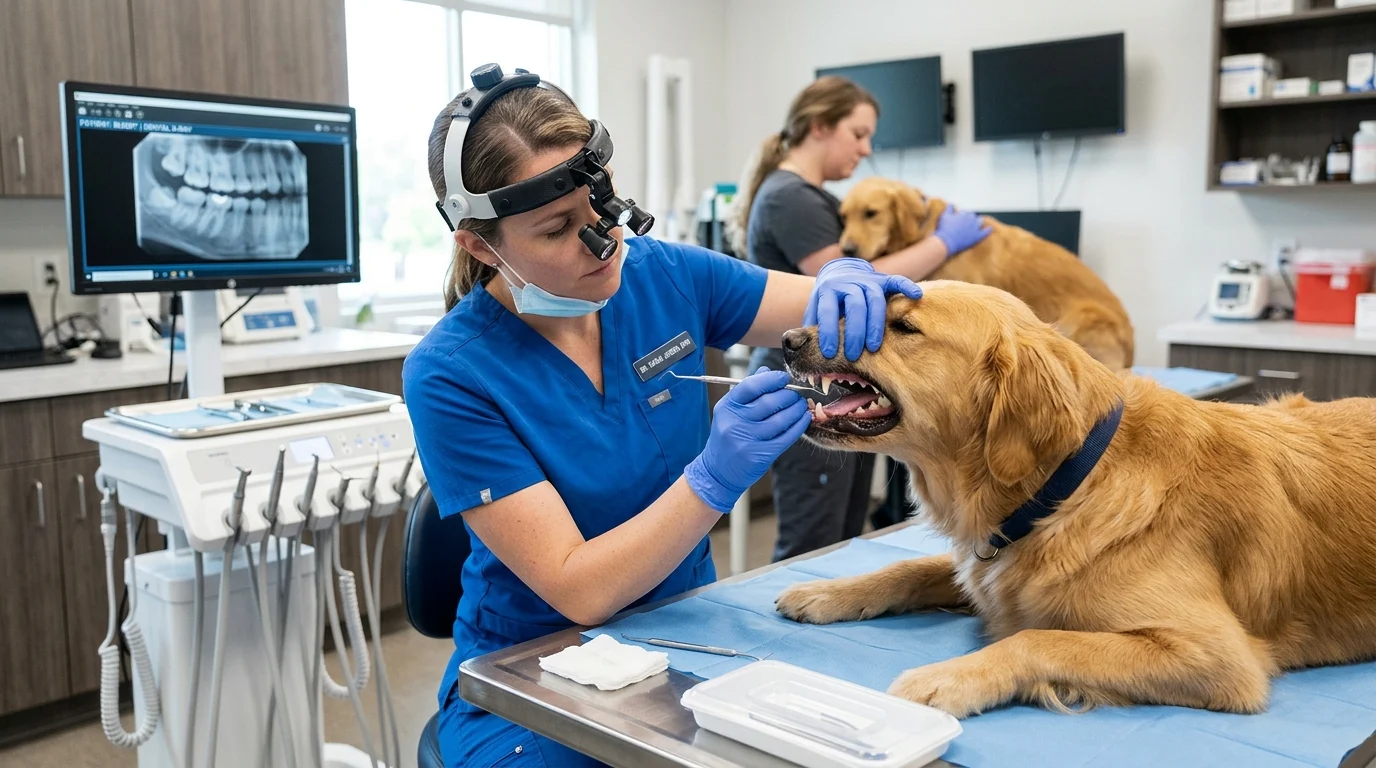
Dental X-Rays
Many dental problems occur below the gumline where they can’t be seen during a routine examination.
Dental radiographs help detect:
- Tooth root infections
- Bone loss
- Fractured teeth
- Retained roots
- Hidden abscesses
Physical Examination
Your veterinarian evaluates:
- Gum health
- Tooth stability
- Plaque accumulation
- Oral masses
- Signs of pain
In many cases, a thorough dental examination requires anesthesia for safety and accuracy.
Treatment for Pet Dental Disease
Treatment depends on how advanced the disease has become.
Professional Dental Cleaning
Professional cleaning removes plaque and tartar above and below the gumline using specialized ultrasonic equipment.
The procedure typically includes:
- General anesthesia
- Scaling
- Polishing
- Dental X-rays
- Full oral examination
Tooth Extraction
Severely damaged teeth often cannot be saved.
Extraction removes infected teeth and relieves chronic pain.
Antibiotics
If severe infection is present, antibiotics may be prescribed along with dental treatment.
Pain Management
Pain medication improves comfort after extractions or other dental procedures.
How to Prevent Pet Dental Disease
Good oral hygiene is the best defense against periodontal disease.
Brush Your Pet’s Teeth
Daily brushing remains the gold standard.
Use:
- Pet-safe toothpaste
- Soft toothbrush or finger brush
Never use human toothpaste, as it may contain ingredients harmful to pets.
Schedule Professional Dental Exams
Annual veterinary dental examinations allow problems to be identified early.
Some pets, especially small breeds, benefit from more frequent professional cleanings.
Feed Dental Diets
Certain veterinary dental foods are specially designed to reduce plaque buildup during chewing.
Offer Dental Chews
Veterinarian-approved dental chews may help reduce plaque between brushings.
Choose products appropriate for your pet’s size and chewing habits.
Provide Safe Chew Toys
Rubber dental toys and textured chew products can support healthy teeth while providing mental stimulation.
Avoid extremely hard objects such as cooked bones, antlers, or rocks that may fracture teeth.
Pets at Higher Risk
Certain pets require closer dental monitoring.
Higher-risk groups include:
- Senior pets
- Small dog breeds
- Flat-faced breeds
- Pets with diabetes
- Cats with chronic gingivitis
- Pets with previous dental disease
Routine examinations become even more important for these animals.
Can Pet Dental Disease Be Reversed?
The answer depends on the stage.
Early gingivitis can often be reversed with professional cleaning and improved home care.
However, once periodontal disease damages bone and supporting tissues, the damage is permanent. Treatment focuses on preventing further progression and relieving pain.
This is why early intervention is so important.
When Should You Visit a Veterinarian?
Schedule a veterinary appointment if your pet has:
- Bad breath that doesn’t improve
- Bleeding gums
- Loose teeth
- Difficulty eating
- Excessive drooling
- Facial swelling
- Broken teeth
- Mouth pain
- Refusal to chew food
- Visible tartar buildup
Prompt treatment can prevent painful complications and preserve your pet’s oral health.
Frequently Asked Questions
Is bad breath normal in pets?
No. Persistent bad breath is often one of the earliest signs of dental disease and should be evaluated by a veterinarian.
At what age do pets develop dental disease?
Many dogs and cats begin showing signs of periodontal disease by three years of age, although it can develop earlier without proper dental care.
How often should my pet’s teeth be cleaned?
Most pets benefit from annual professional dental examinations. Your veterinarian will recommend cleaning intervals based on your pet’s breed, age, and oral health.
Can dental disease make my pet sick?
Yes. Untreated dental disease may lead to chronic pain, tooth loss, infections, and bacteria entering the bloodstream, potentially affecting major organs.
Is anesthesia necessary for dental cleaning?
Yes. Professional veterinary dental cleanings require anesthesia so the veterinarian can safely clean below the gumline, take dental X-rays, and thoroughly examine every tooth.
Can I prevent dental disease at home?
Daily brushing, dental chews, veterinary-approved dental diets, and regular veterinary checkups are the most effective ways to reduce the risk of dental disease.
Final Thoughts
Pet dental disease is far more than a cosmetic problem. It can cause chronic pain, difficulty eating, tooth loss, and serious infections that may affect your pet’s overall health. Because dogs and cats often hide discomfort, regular dental checkups and preventive care are essential.
The combination of daily tooth brushing, professional veterinary cleanings, high-quality dental products, and routine oral examinations offers the best protection against periodontal disease. By recognizing the early warning signs and seeking treatment promptly, you can help your pet enjoy healthier teeth, fresher breath, and a happier, more comfortable life for years to come.
Discover More:-
- Winter Pet Clothes: Best Winter Clothing for Dogs & Cats 2026
- Dog UTI Symptoms: Signs, Causes and Treatment 2026

Dr. Ubaid Ur Rehman, DVM is a qualified veterinarian with expertise in pet health, nutrition, and preventive care. He is passionate about helping pet owners make informed decisions through accurate, research-based, and practical advice. As a veterinary professional, he reviews and contributes content to ensure reliable information for dog and pet owners.