Can Dogs Eat Acorns? Hidden Dangers Every Dog Owner Should Know 2026
Quick Ans: No, dogs should never eat acorns. Acorns contain toxic tannins that can cause severe stomach upset, vomiting, and diarrhea . In more serious cases, acorn ingestion has been linked to life-threatening kidney and liver damage, especially if a dog eats a large quantity or chews them regularly . The hard, large size of acorns also makes them a choking hazard and a risk for intestinal obstruction .
Key Takeaways
- Toxic compounds – Acorns contain tannins, which are harmful to dogs and can cause gastrointestinal distress and, in larger amounts, damage the liver and kidneys .
- Physical dangers – The hard texture and size of acorns can cause choking, dental trauma, or life-threatening intestinal blockages if swallowed whole .
- Call your vet immediately – If you suspect your dog has eaten an acorn, don’t wait for symptoms. Contact your veterinarian or a pet poison helpline right away. Early treatment is critical .
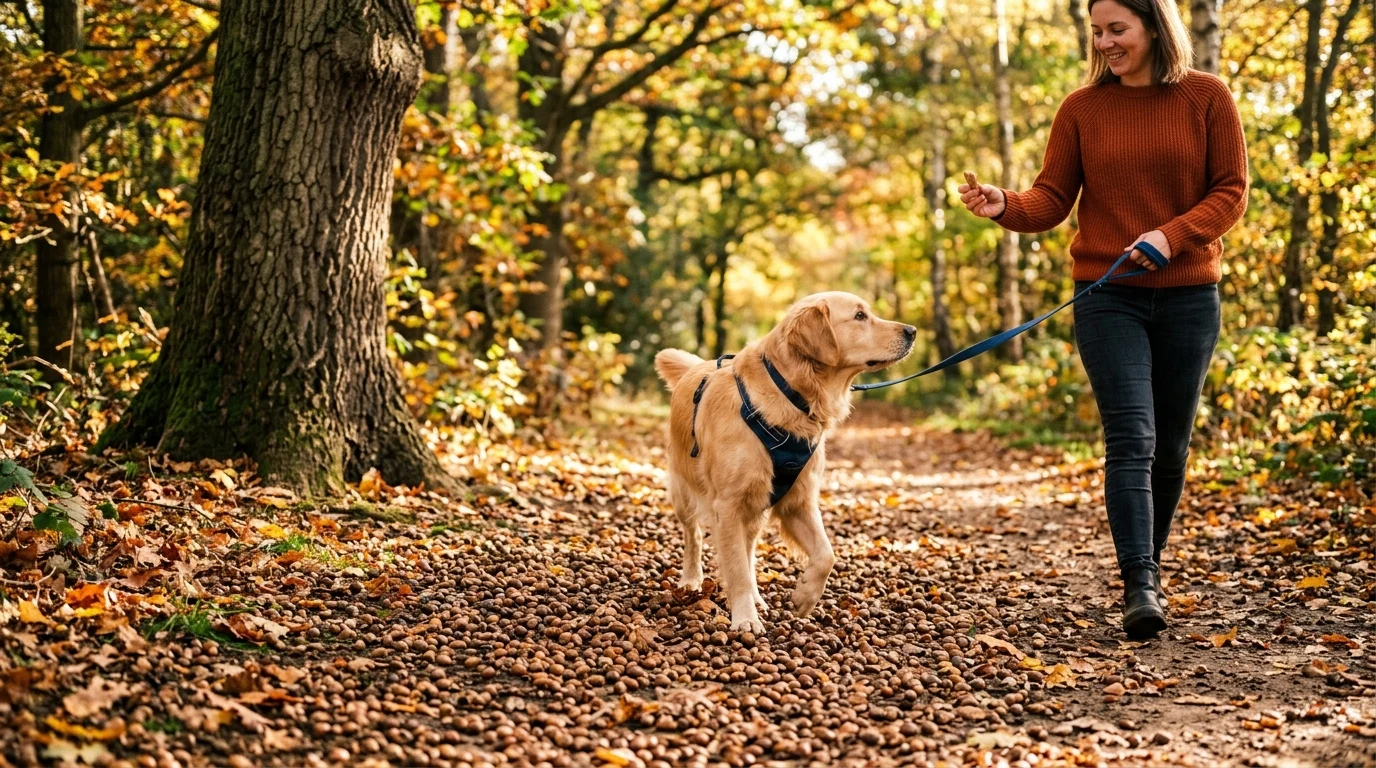
Autumn walks are beautiful, but they come with hidden dangers. Those seemingly harmless acorns scattered on the ground can be a serious threat to your dog. While many dogs might ignore them, others find them intriguing to sniff, chew, or swallow. It’s a common concern for vets during fall. Here’s what you need to know about why acorns are dangerous and how to protect your pup.
Why Are Acorns Dangerous for Dogs?
Acorns pose two distinct types of risk to dogs: the toxic effects of the compounds they contain and the physical dangers of the nut itself.
1. Tannins and Acorn Poisoning
Acorns contain a group of bitter chemical compounds called tannins . These are what make acorns unsafe for dogs. Tannins can irritate the digestive tract, leading to vomiting and diarrhea.
In more severe cases, especially when a dog eats a large number of acorns or consumes them regularly, these toxins can cause damage to the liver and kidneys . There have been documented cases of dogs developing acute kidney injury from acorn ingestion, which can be life-threatening . A case report from 2026 described a dog that developed severe kidney issues after eating dried acorns over several days, requiring intensive treatment .
2. Choking and Blockage Hazards
Beyond the poison, acorns are a physical threat. They are large, hard, and have a tough outer shell . A dog that swallows an acorn whole can choke or it can get stuck in the esophagus or intestines, creating a blockage that is a medical emergency and may require surgery . Chewing on a hard acorn can also cause painful dental fractures .
3. Mold and Rotting Acorns
Additionally, acorns that have been lying on the ground for a while can become moldy. Eating rotting acorns adds the risk of mycotoxin poisoning, which can cause further health problems like tremors and seizures .
Acorn Safety Comparison Table
| Part / Form of Acorn | Toxic? | Main Risk | Verdict |
|---|---|---|---|
| Whole acorn (from tree) | Yes | Tannin poisoning, choking, intestinal blockage | Never feed |
| Chewed acorn pieces | Yes | Tannin poisoning (higher risk) | Never feed |
| Green acorns | Yes | Higher concentration of tannins, more toxic | Never feed |
| Oak leaves/bark | Yes | Contains tannins, can cause toxicity | Avoid |
| Moldy/rotten acorns | Yes | Mycotoxin poisoning, ethanol poisoning | Never feed |
How Much Acorn Is Dangerous for a Dog?
There is no universally “safe” amount of acorn for a dog, as sensitivity can vary. Some sources suggest that as few as 5-10 acorns could be enough to poison a 10 kg (22 lb) dog . However, the Texas A&M School of Veterinary Medicine notes that most dogs would need to ingest large quantities over a period of time to become seriously sick, but that doesn’t mean a single acorn is without risk . Given the severe consequences, including death, no amount is considered safe.
Signs and Symptoms of Acorn Poisoning
Symptoms can appear within a few hours of ingestion .
- Vomiting (may contain blood)
- Diarrhea (may contain blood)
- Loss of appetite
- Lethargy or weakness
- Abdominal pain
- Excessive drooling
Severe Symptoms (Indicating Kidney or Liver Damage) :
- Increased thirst and urination
- Yellowing of the gums or eyes (jaundice)
- Difficulty breathing
- Tremors or seizures
- Collapse
- Increased heart rate
What to Do If My Dog Ate an Acorn
Do not wait to see if symptoms appear. Prompt action is essential.
Step 1: Stay Calm and Assess
- If you can do so safely, try to remove any remaining pieces of acorn from your dog’s mouth .
- Do not try to make your dog vomit unless specifically instructed by a veterinarian .
Call Your Vet Immediately
- Contact your veterinarian or an emergency animal hospital right away .
- ASPCA Animal Poison Control: (888) 426-4435 (fee may apply)
- Pet Poison Helpline: (855) 764-7661 (fee may apply)
Follow Professional Advice
- Your vet may ask you to bring your dog in for an examination. Treatment can range from supportive care (IV fluids, medication to control vomiting) to more intensive monitoring of liver and kidney function. In cases of a blockage, surgery may be required .
Can Puppies Eat Acorns?
No. Puppies are at an even greater risk. Their smaller size means that even one acorn could be enough to cause a dangerous intestinal blockage. Their developing systems are also more vulnerable to the toxic effects of tannins. Keep a close eye on curious puppies during walks in wooded areas .
Safe Alternatives to Acorns
Don’t let your dog snack on acorns. Instead, offer these safe and healthy treats:
- Carrot sticks – Crunchy and good for teeth.
- Apple slices (no seeds) – Sweet and packed with vitamins.
- Plain cooked pumpkin – Excellent for digestion.
- Blueberries – A healthy, antioxidant-rich treat.
- Commercial dog treats – Always the safest option.
Frequently Asked Questions
Are acorns poisonous to dogs?
Yes. Acorns contain tannins, which are toxic to dogs. Eating them can cause severe stomach upset, and in larger amounts, can lead to life-threatening liver and kidney damage .
What happens if a dog eats an acorn?
A dog that eats an acorn might show no symptoms, but the risks are serious. They can experience vomiting, diarrhea, and abdominal pain. It can also lead to a choking hazard or intestinal blockage. In rare cases, it can cause acute kidney or liver injury .
How many acorns are toxic to dogs?
Toxicity is not strictly dose-dependent and varies by the dog’s size. However, some sources state that as few as 5-10 acorns can poison a 10 kg dog . Given the potential for severe consequences, even one acorn is considered a risk.
What are the symptoms of acorn poisoning in dogs?
Symptoms include vomiting (possibly bloody), diarrhea (possibly bloody), loss of appetite, lethargy, and abdominal pain. More severe signs of kidney or liver damage include increased thirst, jaundice (yellow gums/eyes), tremors, and collapse .
What should I do if my dog eats an acorn?
Contact your veterinarian immediately or call a pet poison helpline for advice . Do not induce vomiting without a vet’s instruction. The sooner you get help, the better the chances of a good outcome .
Are oak leaves and bark poisonous to dogs?
Yes. Oak leaves and bark also contain the same toxic tannins found in acorns and can cause similar gastrointestinal issues if eaten in large amounts .
How do vets treat acorn poisoning in dogs?
Treatment depends on the severity. Vets may induce vomiting to remove acorn pieces, give activated charcoal to absorb toxins, or provide IV fluids for rehydration and kidney support. Surgery might be needed to remove a blockage. Blood tests are used to monitor liver and kidney function .
How can I stop my dog from eating acorns?
The best approach is prevention. During autumn, keep your yard raked free of acorns. On walks, keep your dog on a leash and avoid areas with heavy acorn coverage. Teaching your dog the “leave it” command is a great way to prevent them from picking up dangerous objects .
Final Word
Can dogs eat acorns? Absolutely not. Acorns are dangerous for dogs both from the toxic tannins they contain and the physical hazards they present. While a single acorn might not always cause immediate, severe symptoms, the risks of gastrointestinal obstruction or life-threatening kidney and liver damage are too serious to ignore. Prevention is your best tool: supervise your dog closely during autumn walks and remove acorns from your yard. If you suspect your dog has eaten one, don’t wait for signs of illness. Contact your veterinarian right away for advice.
Reviewed & Recommended by Dr. Ubaidur Rahman, DVM
Veterinary Review: Dr. Ubaidur Rahman, DVM, reviewed this guide for the safety risks associated with dogs eating acorns, including potential digestive problems and the risk of obstruction.
Dr. Ubaidur Rahman’s Recommendation: Acorns are not a safe food for dogs and should not be intentionally given as a treat. They contain tannins that can cause stomach upset, vomiting, or diarrhea, and swallowing whole acorns can also create a choking or intestinal blockage risk. Dogs should be kept away from areas where they regularly pick up acorns.
Sources & References
- Texas A&M School of Veterinary Medicine. “What To Know About Dogs And Acorns.”
- National Institutes of Health (NIH). “Successful hemodialysis treatment of suspected acorn toxicosis in a Bedlington terrier.”
- National Institutes of Health (NIH). “Successful management of suspected acorn (Quercus petraea) toxicity in a dog.”
- Blue Cross. “Are acorns poisonous to dogs?”
- Kinship. “Are Acorns Poisonous to Dogs: Risks, Symptoms and Safety.”
- Ingenta Connect. “Successful hemodialysis treatment of suspected acorn toxicosis in a Bedlington terrier.”
- Texas A&M School of Veterinary Medicine. “Should You Keep Dogs Away From Acorns?”
- zooplus Magazine. “Are Acorns Poisonous to Dogs?”
- American Kennel Club. “Can Dogs Eat Acorns and Other Tree Nuts?”
- dvm360. “Pumpkin spice and toxic vice: common fall toxins for pets.”
- Veterinary Poisons Information Service. “Oak and acorns (Quercus species).”

Dr. Ubaid Ur Rehman, DVM is a qualified veterinarian with expertise in pet health, nutrition, and preventive care. He is passionate about helping pet owners make informed decisions through accurate, research-based, and practical advice. As a veterinary professional, he reviews and contributes content to ensure reliable information for dog and pet owners.