
Can Dogs Eat Celery? Health Benefits, Risks & vet approved Tips
Quick Answer: Plain, raw celery stalks are safe for dogs in moderate amounts. The leaves should be given sparingly due to higher sodium content and stronger essential oils. Celery seeds and celery juice are not recommended. Any celery prepared with salt, seasonings, or sauces should be kept away from dogs entirely.
Your dog is eyeing that celery stick on your plate. Before you toss them a piece, you want to be sure it is actually safe. The good news is that celery lands on the safer end of the human-food-for-dogs spectrum, but there are still things every dog owner needs to know before making it a regular treat.
This guide covers every angle: whether celery is genuinely good for dogs, which parts are safe, how much is too much, what to do if your dog ate a large amount, and why some celery-based preparations are not as harmless as they look.
Can Dogs Eat Celery? The Short Answer
Yes, dogs can eat celery. The stalks are low in calories, contain useful vitamins and minerals, and are not toxic to dogs according to the ASPCA. Most healthy adult dogs can enjoy celery as an occasional treat with no issues.
That said, moderation is the keyword here. Celery is not nutritionally complete for dogs, and feeding too much of it can cause digestive upset, excess urination, or simply fill up a dog’s stomach with low-calorie bulk instead of their balanced meal.
What Makes Celery Beneficial for Dogs?
Celery has a profile that makes it one of the more genuinely dog-friendly vegetables. Here is what is inside:

1. Very Low in Calories
One medium celery stalk contains roughly 6 to 10 calories. For dogs that are heavy or on a calorie-restricted diet, celery is one of the few treats that will not derail their weight management plan. It gives them something to chew and enjoy without a significant caloric impact.
2. High Water Content
Celery is about 95 percent water. Dogs that are reluctant to drink enough water can benefit from moisture-rich vegetables like celery, cucumber, or watermelon. This is especially useful in hot weather or for active dogs.
3. Vitamins and Minerals
Celery contains:
- Vitamin K: Supports bone health and blood clotting.
- Vitamin C: An antioxidant that supports immune function. Dogs produce their own vitamin C, but dietary sources can be a small supplement.
- Potassium: Supports heart and muscle function.
- Folate: Important for cell growth and DNA repair.
- Vitamin A: Supports vision, skin, and coat health.
4. Natural Crunch for Dental Health
The crunchy texture of raw celery can help scrape plaque off teeth as dogs chew. This is not a substitute for professional dental cleaning or enzymatic toothpaste, but it is a useful side benefit of a treat that your dog already enjoys chewing.
5. Diuretic Properties
Celery has mild diuretic properties, meaning it can increase urine production. This is not a concern in normal amounts, but it is worth knowing if you are giving it frequently or in large quantities.
What Are the Risks of Feeding Celery to Dogs?
Celery is not toxic, but it is not without risks when fed incorrectly.
Choking Hazard
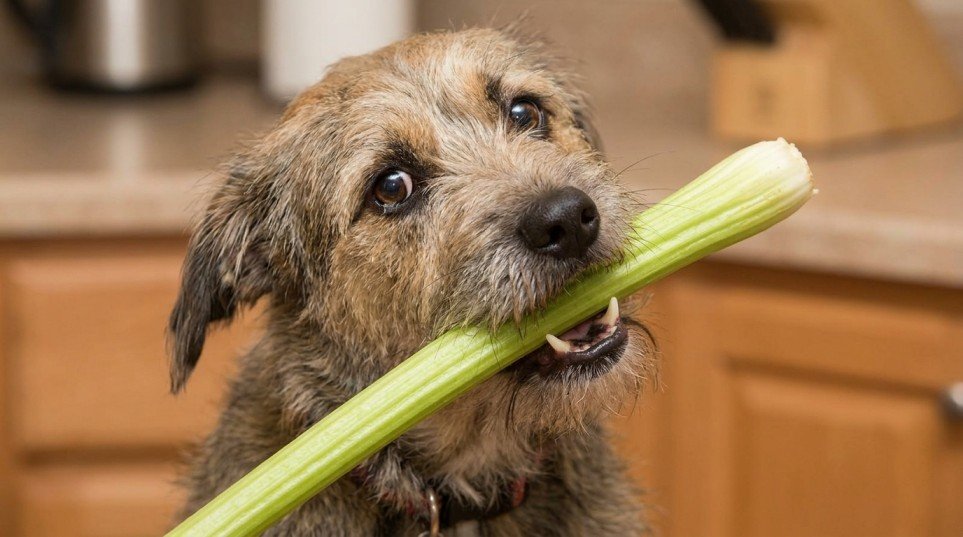
Celery strings are fibrous and can be a choking hazard, especially for small dogs or dogs that tend to gulp their food. Always cut celery into small, bite-sized pieces before offering it to your dog. Never hand over a long stalk and expect them to nibble safely the way a human would.
Digestive Upset
Too much celery at once can cause loose stools, gas, or vomiting. The high fiber content, while beneficial in small amounts, can overwhelm a dog’s digestive system when consumed in excess. Introduce it gradually if your dog has not eaten it before.
Sodium Content in Celery Leaves
Celery leaves contain more sodium and stronger essential oils than the stalks. While not toxic, feeding large quantities of the leaves regularly is not advisable, particularly for dogs on low-sodium diets due to heart or kidney conditions.
Increased Urination
Due to its diuretic effect, too much celery can cause your dog to urinate more frequently. This is more of an inconvenience than a health concern in most cases, but it is worth monitoring if you notice a change in bathroom habits after introducing celery.
Can Celery Kill Dogs?
No. Plain celery is not toxic to dogs and will not kill them. The ASPCA does not list celery as a dangerous food for dogs. Unlike grapes, xylitol, onions, or macadamia nuts, celery does not contain compounds that are known to cause organ failure or life-threatening reactions in dogs.
The realistic risks from celery are gastrointestinal: vomiting, diarrhea, and bloating from eating too much. These are unpleasant but not fatal in otherwise healthy dogs.
The exception would be a severe choking incident if a large piece became lodged in the throat of a small dog, or a preparation of celery that included toxic ingredients such as garlic, onion, or large amounts of salt.
The bottom line: plain celery is one of the safest human vegetables you can share with a dog. The danger lies in how it is prepared, how much is given, and whether it is cut into safe pieces.
How Much Celery Can a Dog Eat?
Treats and extras should make up no more than 10 percent of a dog’s daily caloric intake. Since celery is extremely low in calories, you can give a meaningful amount without breaking that rule, but portion size still matters for digestive comfort.
Practical guidelines based on dog size:
- Small dogs (under 20 lbs): 1 to 2 small pieces of chopped celery per day, a few times a week.
- Medium dogs (20 to 50 lbs): 2 to 3 pieces of chopped celery per day.
- Large dogs (50 lbs and over): A few pieces up to half a stalk per day is reasonable.
Do not feed celery as a meal replacement or in quantities that crowd out their regular, nutritionally balanced food. It is a treat, not a staple.
Celery Safety by Part: Quick Reference Table
| Part of Celery | Safety Level | Main Concern / Benefit | Verdict |
| Celery Stalk | Safe | Low calorie, high fiber, vitamins K and C | Yes, in moderation |
| Celery Leaves | Caution | Higher sodium and essential oils | Small amounts only |
| Celery Seeds | Avoid | Concentrated oils, not tested for dogs | Not recommended |
| Celery with Salt | Unsafe | Salt toxicity risk | Never give |
| Celery with Peanut Butter | Check label | Xylitol in PB is toxic to dogs | Only xylitol-free PB |
| Celery Juice | Avoid | Concentrated sodium, no fiber benefit | Not recommended |
Can Dogs Eat Celery Leaves?
Yes, but with more caution than the stalks. Celery leaves are not toxic, but they are more potent in flavor and contain higher concentrations of sodium and essential oils than the stalk. For most healthy dogs, a leaf or two along with the stalk is not a problem.
However, if your dog has a heart condition, kidney disease, or is on a sodium-restricted diet, skip the leaves entirely and stick to just the stalk. If your dog eats a small amount of leaves with no history of health issues, there is no need to worry.
Can Dogs Eat Celery Seeds?
No, celery seeds are not recommended for dogs. They contain concentrated essential oils and compounds that have not been adequately tested for safety in dogs. The amount of celery seed a dog would need to eat to experience harm is unknown, but there is no benefit to feeding them, and the precautionary approach is to avoid them entirely.
Celery seed is also commonly used as a spice in human cooking, and seasoned foods are generally unsafe for dogs. Do not give your dog anything seasoned with celery seed.
Can Dogs Eat Celery with Peanut Butter?
The classic human snack of celery with peanut butter is tricky for dogs. Here is why:
Peanut butter itself can be safe for dogs, but many commercial peanut butter brands now contain xylitol, an artificial sweetener that is extremely toxic to dogs. Even small amounts of xylitol can cause a life-threatening drop in blood sugar and liver failure.
If you want to give your dog celery with peanut butter:
- Check the ingredient label on the peanut butter every single time before giving it to your dog.
- Confirm there is no xylitol, birch sugar, or any other sugar alcohol listed.
- Use only plain, unsalted, unsweetened peanut butter.
- Give a very small amount since peanut butter is high in fat.
If you cannot confirm the peanut butter is xylitol-free, do not give it.
Can Dogs Eat Celery Juice?
Celery juice is not recommended for dogs. Here is why it is less ideal than whole celery:
- The juicing process removes all the fiber, which is one of the main benefits of celery for dogs.
- The resulting juice concentrates the sodium naturally present in celery.
- The liquid format makes it easy to overconsume, removing the natural portion control that comes with chewing.
- Dogs do not need vegetable juice supplementation in their diet.
If you want to give your dog the benefits of celery, the whole raw stalk cut into pieces is the better option.
Can Dogs Eat Cooked Celery?
Yes, plain cooked celery is safe for dogs. Steaming or boiling plain celery without any added salt, butter, oil, or seasonings produces a soft, easy-to-chew option that works well for older dogs or dogs with dental issues who struggle with hard crunchy foods.
Keep in mind that cooking reduces the fiber content slightly and softens the dental-scrubbing effect of the raw crunch. Nutritionally, the vitamins remain largely intact with gentle steaming. Boiling can leach some water-soluble vitamins into the cooking water.
Never give your dog celery that has been cooked with onions, garlic, salt, cream, or any seasoning. Dishes like celery soup, braised celery with butter, or celery in stews are not safe for dogs.
What to Do If My Dog Ate a Lot of Celery
Stay calm. Celery is not toxic, so the first question is not whether it will poison your dog but whether it will cause digestive discomfort.
Step 1: Assess What Was Eaten
- Plain raw celery stalks, moderate amount: Monitor for 24 hours for signs of digestive upset.
- A very large amount of celery at once: Watch for vomiting, diarrhea, or bloating. Withhold further food for a few hours.
- Celery with peanut butter containing xylitol: Call your vet or ASPCA Animal Poison Control immediately. This is an emergency.
- Celery with salt, garlic, or onion: Call your vet. These ingredients are toxic.
- Celery seeds in large quantity: Call your vet for guidance.
Step 2: Watch for These Symptoms
If your dog ate a large amount of plain celery, watch for:
- Vomiting or retching
- Loose stools or diarrhea
- Excessive gas or bloating
- Increased urination
- Lethargy or refusal to eat
Step 3: Who to Call
- Your vet: First point of contact for any concerns about what your dog ate.
- ASPCA Animal Poison Control: (888) 426-4435, available 24 hours a day, 7 days a week. A consultation fee may apply.
- Pet Poison Helpline: (855) 764-7661, available around the clock for toxicology support.
Is Celery a Good Treat for Heavy Dogs?
Yes, celery is one of the best low-calorie treat options for dogs managing their weight. At roughly 6 to 10 calories per stalk, it is one of the lowest-calorie snacks you can offer while still giving your dog something to chew and enjoy.
Many bulky dogs receive a significant portion of their excess calories from high-fat treats like commercial biscuits, cheese, or processed dog treats. Replacing these with crunchy vegetables like celery, carrots, or cucumber can meaningfully reduce daily caloric intake without leaving your dog feeling deprived.
Always consult your vet before making dietary changes for a dog that is on a weight management program.
Safe Alternatives to Celery for Dogs
If your dog does not take to celery or you want variety in their treat rotation, these vegetables are also safe for dogs:
- Carrots: Crunchy, sweet, and low in calories. An excellent chew treat that also supports dental health.
- Cucumber: High water content, very low calorie. A good option for warm weather.
- Green beans: Low calorie, high fiber, and most dogs enjoy the taste.
- Broccoli: Safe in small amounts. Avoid large quantities as it can cause gas.
- Zucchini: Mild flavor, low calorie, and easy to digest. Most dogs accept it well.
- Blueberries: Rich in antioxidants and vitamins. A great small treat for training.
Frequently Asked Questions: Dogs and Celery
Can dogs eat celery every day?
Yes, in small amounts, celery can be given daily without concern for most healthy dogs. However, variety is important in treat rotation, and no single treat should dominate. Giving celery as one of several vegetable options across the week is the better approach than making it a daily staple.
Is celery good for dogs?
Celery offers real benefits including vitamins K, C, and A, potassium, and hydration from its high water content. It is also low in calories and provides a satisfying crunch. For healthy adult dogs, it is a genuinely useful addition to the treat rotation when given in appropriate amounts.
Can dogs have celery stalks?
Yes. The stalk is the safest part of the celery plant for dogs. Cut it into small pieces to prevent choking, and avoid giving a whole stalk to small dogs or enthusiastic eaters. Plain, raw, or lightly steamed stalks with no added seasonings are the safest form.
Can puppies eat celery?
Yes, but introduce it slowly and in very small pieces. Puppies have more sensitive digestive systems than adult dogs, and any new food should be introduced gradually. Always cut celery into very small pieces for puppies to eliminate the choking risk. Avoid celery leaves for puppies due to the higher sodium content.
Can dogs eat celery if they have kidney disease?
Not without checking with your vet first. Dogs with kidney disease are often on low-potassium, low-sodium, or low-phosphorus diets depending on their stage of disease. Celery contains potassium and sodium, both of which may need to be restricted. Do not give any new food to a dog with kidney disease without veterinary guidance.
How should I prepare celery for my dog?
Wash the stalk thoroughly to remove any pesticide residue. Cut it into small bite-sized pieces appropriate for your dog’s size. Serve it raw or lightly steamed with no salt, butter, oil, or seasonings. Remove the leaves if your dog is on a low-sodium diet or has any health condition. Avoid serving celery as part of any cooked human dish.
Can celery cause diarrhea in dogs?
Yes, if too much is eaten at once. The fiber and water content in celery can loosen stools or cause diarrhea in dogs who eat a large amount, especially if their digestive system is not used to it. Start with a small amount when introducing celery and watch how your dog responds.Can Dogs Have Celery?
Yes, dogs can have celery in moderation. This low-calorie vegetable is rich in vitamins, fiber, and water, making it a healthy occasional snack when cut into small, bite-sized pieces.
Is Celery Bad for Dogs?
No, celery is not bad for dogs when served in moderation. However, feeding large amounts may cause digestive upset, so it’s best to offer it as an occasional treat rather than a regular meal.
Can Dogs Have Celery?
Yes, dogs can have celery in moderation. This low-calorie vegetable is rich in vitamins, fiber, and water, making it a healthy occasional snack when cut into small, bite-sized pieces.
Can Dogs Eat Cooked Celery?
Yes, dogs can eat cooked celery as long as it’s plain and free from butter, salt, garlic, onions, or other seasonings. Soft, cooked celery is also easier for some dogs to chew and digest.
Final Word: Should You Feed Your Dog Celery?
Celery is one of the genuinely dog-safe vegetables on the list. It is low in calories, provides useful vitamins, supports hydration, and gives dogs something satisfying to crunch. For most healthy adult dogs, a few small pieces of plain, raw celery stalk is a safe and worthwhile addition to their treat routine.
The key rules are simple: cut it into small pieces, skip the leaves for dogs with health conditions, never add salt or seasonings, and always check peanut butter labels before combining the two. Celery seeds and celery juice are not necessary and are best avoided.
If your dog shows any signs of digestive upset after eating celery, reduce the amount or stop offering it and consult your vet. When in doubt about your individual dog’s health needs, your vet is always the best first call.
Reviewed & Recommended by Dr. Ubaidur Rahman, DVM
Veterinary Review: Dr. Ubaidur Rahman, DVM, reviewed this guide for veterinary accuracy, feeding safety, and the recommendations regarding celery for dogs.
Dr. Ubaidur Rahman’s Recommendation: Celery is generally safe for dogs when offered in moderation. It is low in calories and contains water and fiber, making small pieces a reasonable occasional treat. Wash celery well and cut it into small, manageable pieces to reduce the risk of choking, especially for small dogs.
Sources and References
- ASPCA Animal Poison Control Center: People Foods to Avoid Feeding Your Pets. aspca.org
- Merck Veterinary Manual: Toxicology overview for dogs. merckvetmanual.com
- PetMD: Can Dogs Eat Celery? (Updated 2025). petmd.com
- American Kennel Club: Can Dogs Eat Celery? akc.org
- VCA Animal Hospitals: Nutrition in Dogs. vcahospitals.com
- Pet Poison Helpline: Safe and Unsafe Foods for Dogs. petpoisonhelpline.com
Discover More:-
- Can Dogs Eat Strawberries? A Complete Vet-Backed Guide (2026)
- Can Dogs Eat Shrimp? Benefits, Side Effects & Feeding Tips 2026

Dr. Ubaid Ur Rehman, DVM is a qualified veterinarian with expertise in pet health, nutrition, and preventive care. He is passionate about helping pet owners make informed decisions through accurate, research-based, and practical advice. As a veterinary professional, he reviews and contributes content to ensure reliable information for dog and pet owners.