Dog Whelping: Complete Guide to Labor, Delivery & Puppy Care 2026
Quick Ans: Bringing a litter of puppies into the world is an exciting experience, but it also comes with important responsibilities. Whether you’re a first-time breeder or your dog is unexpectedly pregnant, understanding dog whelping can help you provide the best care for both the mother and her puppies.
Whelping is the process of a female dog giving birth. While many dogs deliver healthy puppies without complications, knowing what to expect before, during, and after labor can make a significant difference if problems arise. Proper preparation, close observation, and timely veterinary care can help ensure a safe delivery.
This guide explains everything you need to know about dog whelping, including the stages of pregnancy, signs of labor, what happens during delivery, possible complications, and how to care for the mother and her newborn puppies.
What Is Dog Whelping?
Dog whelping refers to the process of a pregnant dog giving birth to her puppies. Pregnancy in dogs typically lasts 58 to 68 days, with an average of 63 days from ovulation.
Every breed is different. Small breeds may have one to four puppies, while larger breeds can deliver eight or more. Although many dogs instinctively know what to do during labor, owners should be prepared to assist if necessary and contact a veterinarian if complications develop.
Understanding Canine Pregnancy
Before labor begins, it’s important to understand how pregnancy progresses.
First Month
During the first few weeks, fertilized eggs implant into the uterus. Most dogs show very few visible signs during this stage, although some may become slightly more affectionate or experience a temporary decrease in appetite.
Second Month
As the puppies continue to grow, physical changes become more noticeable.
Common signs include:
- Enlarged abdomen
- Increased appetite
- Weight gain
- Enlarged nipples
- Mild behavioral changes
- Increased sleeping
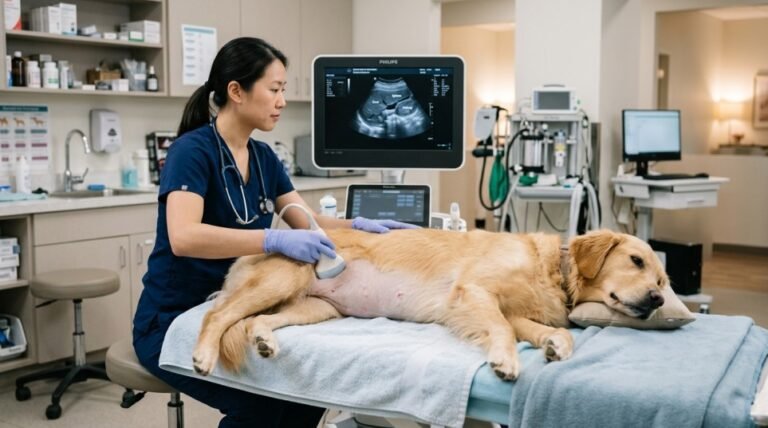
Your veterinarian may confirm pregnancy through ultrasound around 25 to 30 days after breeding.
Final Weeks
During the last two weeks of pregnancy, the puppies grow rapidly. The mother may become restless, begin nesting, and spend more time preparing a quiet place for delivery.
Signs Your Dog Is Ready to Whelp
Recognizing the early signs of labor helps you prepare for delivery.
Common signs include:
- Nesting behavior
- Restlessness
- Panting
- Shivering
- Loss of appetite
- Frequent licking of the vulva
- Seeking privacy
- Drop in body temperature below 100°F (37.8°C) approximately 12–24 hours before labor
Monitoring your dog’s temperature twice daily during the last week of pregnancy can help predict when labor will begin.
Preparing a Whelping Area
A clean, quiet, and comfortable environment is essential.
Your whelping box should:
- Be large enough for the mother to stretch comfortably
- Have low sides for easy access
- Include pig rails to help prevent puppies from being accidentally crushed
- Be lined with washable blankets or towels
- Stay warm, dry, and draft-free
- Be located in a quiet room away from household activity
Introduce your dog to the whelping box one to two weeks before her due date so she becomes comfortable with it.
Essential Whelping Supplies
Having supplies ready before labor begins can reduce stress.
Prepare:
- Clean towels
- Disposable gloves
- Sterile scissors
- Dental floss or umbilical clamps
- Heating pad or heat lamp
- Puppy scale
- Bulb syringe
- Thermometer
- Puppy milk replacer (for emergencies)
- Clean bedding
- Disinfectant
- Notebook for recording birth times
- Emergency veterinarian’s phone number
The Three Stages of Dog Whelping
Understanding each stage helps you recognize what is normal.
Stage One: Early Labor
This stage usually lasts 6 to 12 hours, although some dogs may remain in early labor for up to 24 hours.
Signs include:
- Restlessness
- Nesting
- Panting
- Mild contractions
- Shaking
- Refusing food
- Digging at bedding
During this stage, the cervix opens and prepares for delivery.
Stage Two: Puppy Delivery
This is the active stage of labor.
Strong contractions begin, and puppies are delivered one at a time.
Normally:
- A puppy arrives every 20 to 60 minutes.
- Green or clear fluid may appear before the first puppy.
- Puppies may be born head-first or rear-first.
Both positions are considered normal in dogs.
The mother usually tears open the birth sac, cleans each puppy, and chews through the umbilical cord.
If she does not, you may need to carefully assist by removing the sac, clearing the puppy’s airway, drying the puppy with a clean towel, and tying the umbilical cord if necessary.
Stage Three: Placenta Delivery
After each puppy is born, the placenta is usually delivered.
Count the placentas to ensure one passes for every puppy. A retained placenta can cause infection and requires veterinary attention.
Some mothers naturally eat one or two placentas. While this behavior is normal, consuming too many may lead to vomiting or diarrhea.
How Long Does Dog Whelping Take?
Labor varies depending on the number of puppies.
Most deliveries last 3 to 12 hours, but larger litters may take up to 24 hours.
Normal rest periods between puppies may last 15 to 60 minutes.
However, contact your veterinarian immediately if:
- Strong contractions continue for more than 30 minutes without a puppy.
- More than two hours pass between puppies.
- The mother appears exhausted.
- Heavy bleeding occurs.
- A puppy becomes stuck.
Common Whelping Complications
Although many dogs deliver naturally, complications can occur.
Dystocia (Difficult Birth)
Dystocia is one of the most serious emergencies during whelping.
Causes include:
- Large puppies
- Small pelvic opening
- Poor contractions
- Malpositioned puppies
- Uterine exhaustion
Emergency veterinary treatment or a cesarean section may be necessary.
Retained Puppy
A puppy remaining inside the uterus after labor can become life-threatening.
Signs include:
- Continued straining
- Foul-smelling discharge
- Weakness
- Fever
Immediate veterinary care is essential.
Retained Placenta
If a placenta remains inside the uterus, infection can develop within days.
Symptoms include:
- Fever
- Lethargy
- Green discharge lasting longer than expected
- Loss of appetite
Excessive Bleeding
Small amounts of discharge are normal.
Heavy bleeding or continuous bright red blood requires emergency veterinary evaluation.
Eclampsia (Low Calcium)
Small breeds nursing large litters are at greater risk.
Signs include:
- Trembling
- Muscle stiffness
- Panting
- Fever
- Seizures
This is a medical emergency.
Caring for the Mother After Whelping
The first few weeks are important for recovery.
Provide:
- Plenty of fresh water
- High-quality puppy food
- Frequent bathroom breaks
- Quiet surroundings
- Clean bedding
- Daily monitoring of temperature and appetite
Most nursing mothers require significantly more calories than normal because milk production demands extra energy.
Caring for Newborn Puppies
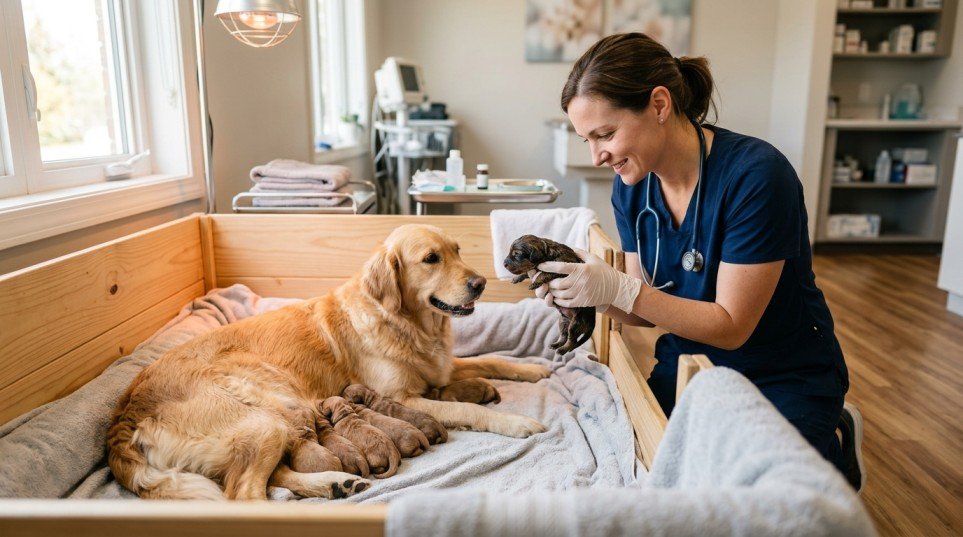
Healthy puppies should begin nursing within the first hour after birth.
During the first two weeks:
- Keep puppies warm.
- Monitor nursing.
- Weigh puppies daily.
- Watch for steady weight gain.
- Keep bedding clean and dry.
Healthy puppies spend most of their time sleeping and nursing.
Puppy Temperature Requirements
Newborn puppies cannot regulate their body temperature well.
Recommended temperatures:
- Week 1: 85–90°F
- Week 2: 80–85°F
- Week 3: 75–80°F
Always provide a cooler area so puppies can move away from the heat if needed.
When to Call a Veterinarian
Seek veterinary care immediately if your dog experiences:
- Labor lasting longer than 24 hours
- Strong contractions with no puppy after 30 minutes
- More than two hours between puppies
- Green discharge before the first puppy without delivery
- Heavy bleeding
- Fever above 103°F
- Severe weakness
- Collapse
- Foul-smelling discharge
- Puppies that cannot nurse
Prompt treatment can save both the mother and her litter.
Can a Dog Give Birth Without Assistance?
Yes. Most healthy dogs deliver naturally with little or no human intervention.
Your role is to:
- Observe quietly
- Keep the environment calm
- Assist only if necessary
- Contact your veterinarian if complications arise
Avoid excessive handling unless there is a clear reason to intervene.
Tips for a Successful Dog Whelping Experience
- Schedule prenatal veterinary examinations.
- Feed a balanced, high-quality diet.
- Avoid unnecessary stress.
- Prepare the whelping box early.
- Gather supplies before the due date.
- Learn the signs of labor.
- Monitor every puppy after birth.
- Keep emergency veterinary contact information available.
Preparation is one of the best ways to ensure a safe delivery.
Frequently Asked Questions
How long is a dog pregnant before whelping?
Most pregnancies last about 63 days, although normal delivery can occur between 58 and 68 days.
How many puppies can a dog have?
The number depends on breed and size. Small breeds often have one to four puppies, while large breeds may have eight to twelve or more.
Is it normal for a dog to eat the placenta?
Yes. Many mothers instinctively eat one or two placentas, but eating too many may cause digestive upset.
Should I help pull a puppy out?
No. Never pull on a puppy unless instructed by a veterinarian. Incorrect handling can injure both the puppy and the mother.
When should puppies start nursing?
Healthy puppies should begin nursing within the first hour after birth to receive colostrum, which provides essential antibodies.
When should puppies see a veterinarian?
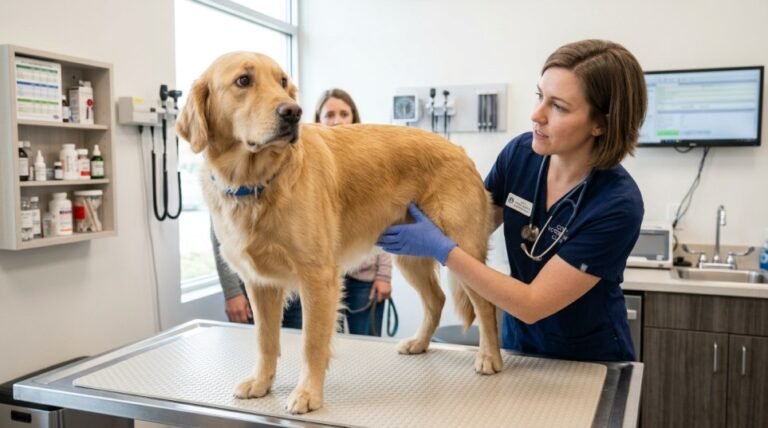
A veterinary examination within the first few days after birth is recommended to ensure both the mother and puppies are healthy.
Final Thoughts
Dog whelping is a natural process, but successful deliveries depend on careful preparation and close observation. Understanding the stages of labor, recognizing warning signs, and creating a safe whelping environment can help protect both the mother and her puppies.
While most dogs deliver without complications, it’s important to know when professional veterinary care is needed. If labor seems abnormal, a puppy becomes stuck, or the mother shows signs of illness, don’t delay seeking medical attention. With proper prenatal care, a clean whelping area, good nutrition, and attentive monitoring after birth, most mothers recover well and their puppies get the healthy start they need.
Discover More:-

Dr. Ubaid Ur Rehman, DVM is a qualified veterinarian with expertise in pet health, nutrition, and preventive care. He is passionate about helping pet owners make informed decisions through accurate, research-based, and practical advice. As a veterinary professional, he reviews and contributes content to ensure reliable information for dog and pet owners.