
Dog Coughing: Home Remedies, Warning Signs & Vet Advice 2026
Quick Answer: If your dog coughs once or twice and then acts normally, monitoring may be reasonable. If coughing continues for more than a few days, worsens, or is accompanied by lethargy, breathing problems, fever, or loss of appetite, veterinary care is recommended.
Your dog suddenly starts coughing across the room. Maybe it sounds like a dry hack, a honking goose, or a choking noise that stops as quickly as it started. Naturally, your first thought is: should I be worried?
The answer depends on what kind of cough your dog has, how long it has been happening, and whether other symptoms are present. Some coughs are caused by minor throat irritation and resolve quickly. Others can signal respiratory infections, heart disease, collapsing trachea, pneumonia, or other conditions that require veterinary treatment.
This guide covers everything dog owners commonly search for: why dogs cough, safe home remedies, symptoms to watch for, different types of coughs, when to call a vet, and what treatments may be needed.
Dog Coughing: The Short Answer
Occasional coughing may result from mild throat irritation, excitement, pulling on a leash, or temporary environmental factors. However, persistent coughing, frequent coughing fits, breathing difficulties, or coughing accompanied by other symptoms should be evaluated by a veterinarian.
The most important thing to understand is that coughing itself is not a disease. It is a symptom. Finding the underlying cause is what determines the proper treatment.
Why Is My Dog Coughing?

1. Kennel Cough
One of the most common causes of coughing in dogs is kennel cough.
Kennel cough is a contagious respiratory infection that spreads wherever dogs gather, including:
- Boarding facilities
- Dog parks
- Grooming salons
- Training classes
- Daycare centers
Dogs with kennel cough often develop a dry, hacking cough that sounds like something is stuck in their throat.
Common signs include:
- Dry honking cough
- Gagging after coughing
- Mild nasal discharge
- Normal energy levels in mild cases
Most uncomplicated cases improve within a few weeks.
2. Throat Irritation
Dogs can cough after inhaling:
- Dust
- Smoke
- Cleaning chemicals
- Perfumes
- Pollen
Temporary irritation usually causes short-lived coughing that resolves once the irritant is removed.
Environmental irritants are especially common in sensitive dogs and those with allergies.
3. Collapsing Trachea
Small breeds are particularly prone to tracheal collapse.
Commonly affected breeds include:
- Yorkshire Terriers
- Pomeranians
- Chihuahuas
- Toy Poodles
The cough is often described as a “goose honk.”
Triggers may include:
- Excitement
- Exercise
- Pulling on a collar
- Hot weather
The condition often requires veterinary management.
4. Heart Disease
Heart disease can cause chronic coughing, especially in older dogs.
As the heart enlarges or fluid accumulates in the lungs, coughing may develop.
Additional signs may include:
- Reduced exercise tolerance
- Fatigue
- Rapid breathing
- Weakness
- Fainting episodes
Heart-related coughing should always be evaluated promptly.
5. Pneumonia
Pneumonia occurs when the lungs become inflamed due to infection or aspiration.
Symptoms often include:
- Wet cough
- Fever
- Lethargy
- Difficulty breathing
- Loss of appetite
Pneumonia can become serious quickly and requires veterinary treatment.
6. Allergies
Just like humans, dogs can develop allergies that affect the respiratory system.
Possible triggers include:
- Seasonal pollen
- Dust mites
- Mold
- Grass
- Household chemicals
Dogs with allergies may also experience:
- Itchy skin
- Red eyes
- Sneezing
- Paw licking
7. Foreign Objects
Sometimes dogs inhale or partially swallow objects that irritate the throat.
Potential causes include:
- Grass awns
- Small sticks
- Seeds
- Food particles
Persistent coughing after chewing or eating should never be ignored.
Types of Dog Coughs and What They May Mean
Understanding the sound of your dog’s cough can help identify possible causes.
| Type of Cough | Possible Cause |
|---|---|
| Dry, hacking cough | Kennel cough |
| Goose-honk cough | Collapsing trachea |
| Wet cough | Pneumonia or fluid in lungs |
| Nighttime cough | Heart disease |
| Cough with gagging | Kennel cough or throat irritation |
| Sudden coughing fit | Foreign object or airway irritation |
While the cough’s sound provides clues, only a veterinarian can diagnose the exact cause.
Home Remedies for Dog Coughing
Home remedies should only be used for mild symptoms in dogs that are otherwise acting normally.
1. Encourage Rest
Rest helps the respiratory system recover.
Limit:
- Running
- Rough play
- Long walks
- Excessive excitement
Quiet recovery often helps dogs with mild respiratory irritation.
2. Use a Humidifier
Moist air may help soothe irritated airways.
Benefits include:
- Reduced throat dryness
- Easier breathing
- Improved comfort
A humidifier may be particularly helpful during dry weather.
3. Keep Your Dog Hydrated
Adequate hydration helps keep airway secretions thin and easier to clear.
Provide:
- Fresh water
- Clean water bowls
- Easy access throughout the day
Dehydration can worsen respiratory symptoms.
4. Switch From Collar to Harness
Dogs with throat irritation or collapsing trachea often benefit from harnesses.
Harnesses reduce pressure on the neck during walks and can significantly decrease coughing episodes.
5. Reduce Environmental Irritants
Avoid exposing your dog to:
- Cigarette smoke
- Aerosol sprays
- Strong cleaning products
- Dusty environments
- Heavy fragrances
Cleaner air can dramatically improve mild coughs.
6. Offer Warm, Moist Food
Some dogs with throat irritation find warm food more comfortable.
Moist food may help:
- Reduce throat irritation
- Encourage eating
- Improve hydration
Only offer foods appropriate for your dog’s regular diet.
Home Remedies That Do Not Replace Veterinary Care
While supportive care can help mild irritation, it cannot treat serious disease.
Home remedies cannot cure:
- Pneumonia
- Heart disease
- Lung infections
- Tracheal collapse
- Foreign object obstruction
- Advanced respiratory illness
Delaying treatment may worsen outcomes.
When You May Monitor at Home
Monitoring may be reasonable if:
- The cough is mild
- Symptoms started recently
- Your dog remains active
- Appetite remains normal
- Breathing is normal
- No other symptoms are present
Even mild coughing should be monitored closely for changes.
When to Call a Vet Immediately
Seek veterinary care if your dog has:
- Difficulty breathing
- Blue or gray gums
- Collapse
- Persistent coughing fits
- Fever
- Severe lethargy
- Refusal to eat
- Wheezing
- Rapid breathing
- Coughing up blood
These symptoms may indicate a serious medical condition.
Symptoms That Often Accompany Dog Coughing
Additional symptoms provide important clues.
Mild Symptoms
- Occasional cough
- Mild throat irritation
- Slight nasal discharge
- Temporary gagging
Moderate Symptoms
- Frequent coughing
- Sneezing
- Reduced activity
- Eye discharge
- Decreased appetite
Severe Symptoms
- Breathing difficulty
- Collapse
- Blue gums
- Extreme lethargy
- Persistent fever
- Severe respiratory distress
Emergency symptoms require immediate veterinary attention.
What a Vet May Do for a Coughing Dog
Diagnosis begins with identifying the underlying cause.
Common veterinary steps include:
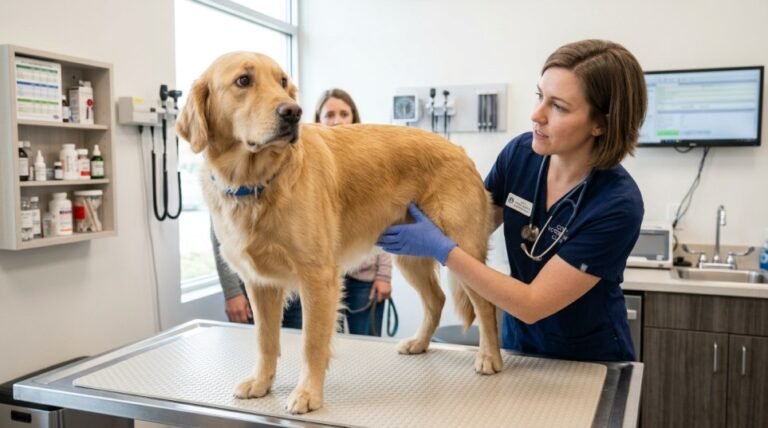
Physical Examination
The veterinarian will evaluate:
- Heart sounds
- Lung sounds
- Respiratory rate
- Temperature
- Overall health
Chest X-Rays
Radiographs help identify:
- Pneumonia
- Heart enlargement
- Lung disease
- Airway abnormalities
Blood Testing
Blood work may help detect:
- Infection
- Inflammation
- Organ disease
Respiratory Testing
Some cases require testing for infectious respiratory diseases.
Treatment
Depending on the diagnosis, treatment may include:
- Antibiotics
- Anti-inflammatory medications
- Cough suppressants
- Bronchodilators
- Heart medications
- Oxygen therapy
Treatment varies significantly based on the underlying cause.
Dog Coughing by Age Group
Puppies
Common causes include:
- Kennel cough
- Respiratory infections
- Congenital abnormalities
Young puppies can deteriorate quickly and should be monitored carefully.
Adult Dogs
Common causes include:
- Infections
- Allergies
- Environmental irritants
Most healthy adults recover well with appropriate treatment.
Senior Dogs
Older dogs are more likely to develop:
- Heart disease
- Chronic respiratory conditions
- Tumors
- Age-related illnesses
Persistent coughing in senior dogs should always be investigated.
Frequently Asked Questions About Dog Coughing
Why does my dog cough like something is stuck in his throat?
This is commonly associated with kennel cough, throat irritation, or collapsing trachea. A veterinary exam may be needed if symptoms persist.
Is dog coughing an emergency?
Not always. Occasional coughing may be harmless. Difficulty breathing, blue gums, collapse, or severe respiratory distress are emergencies.
Why does my dog cough more at night?
Nighttime coughing can sometimes be associated with heart disease, airway disorders, or respiratory infections.
Can allergies cause dogs to cough?
Yes. Environmental allergens may trigger coughing, sneezing, and other respiratory symptoms.
How long should a dog cough last?
A brief cough may resolve quickly. Coughing lasting more than several days should be evaluated by a veterinarian.
Can kennel cough go away on its own?
Mild cases often improve with rest and supportive care, but veterinary evaluation is still recommended to confirm the diagnosis.
What should I not give a coughing dog?
Do not give human cough medicines unless specifically instructed by a veterinarian. Many human medications can be harmful to dogs.
How to Prevent Dog Coughing
- Keep vaccinations current.
- Avoid exposure to sick dogs.
- Use a harness instead of a neck collar when appropriate.
- Maintain a smoke-free environment.
- Schedule routine veterinary checkups.
- Support overall health with proper nutrition.
- Keep living areas clean and well ventilated.
Preventive care significantly reduces the risk of many respiratory illnesses.
Final Word: Don’t Ignore Persistent Dog Coughing
An occasional cough may not be a cause for concern, but persistent coughing should never be dismissed as normal. While minor throat irritation can improve with rest, hydration, and reduced airway irritation, ongoing coughing often signals an underlying problem that requires attention.
The most important factors are how long the cough has been present, whether it is getting worse, and whether other symptoms are developing. Early intervention can make a major difference, particularly when heart disease, pneumonia, respiratory infections, or airway disorders are involved.
If your dog’s cough persists, becomes more frequent, or is accompanied by breathing difficulties, schedule a veterinary examination as soon as possible. Identifying the cause early is the best way to protect your dog’s long-term health.
Sources and References
- American Kennel Club (AKC): Common Causes of Dog Coughing
- Merck Veterinary Manual: Respiratory Diseases in Dogs
- VCA Animal Hospitals: Coughing in Dogs
- American Veterinary Medical Association (AVMA): Respiratory Health in Dogs
- PetMD: Why Dogs Cough
- World Small Animal Veterinary Association (WSAVA): Respiratory Disease Guidelines
- Cornell University College of Veterinary Medicine: Canine Respiratory Conditions
Discover More:-
- Home Remedies for Stinky Dog Breath: 7 Natural Ways That Actually Work 2026
- Can Dogs Eat Sweet Potatoes? Benefits, Risks & Safe Serving Guide 2026

Dr. Ubaid Ur Rehman, DVM is a qualified veterinarian with expertise in pet health, nutrition, and preventive care. He is passionate about helping pet owners make informed decisions through accurate, research-based, and practical advice. As a veterinary professional, he reviews and contributes content to ensure reliable information for dog and pet owners.