
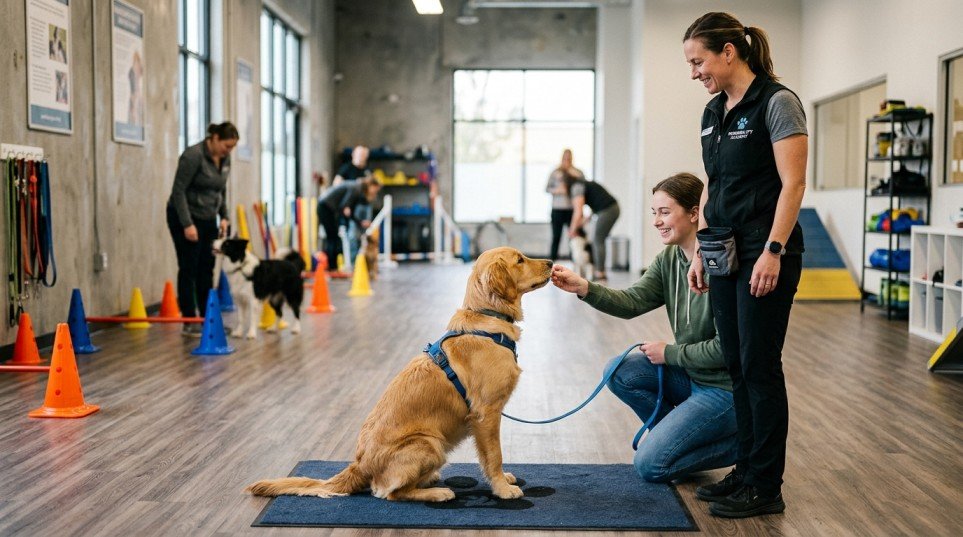
PetSmart Dog Training Cost: Everything You Need to Know 2026
Quick Answer: PetSmart training works best for puppies, beginner obedience, socialization, and basic behavior training. Dogs with severe aggression, anxiety, or complex behavioral issues may require specialized trainers or veterinary behaviorists.
Bringing home a new puppy or dealing with a dog that ignores commands can quickly become overwhelming. Many pet owners start searching for professional help and often come across PetSmart dog training classes as one of the most accessible options available.
But are PetSmart dog training classes actually worth it? What do they cost? What skills will your dog learn? And how do they compare to private trainers?
This guide answers everything dog owners commonly search for regarding PetSmart dog training. We’ll cover class options, pricing expectations, what happens during training sessions, advantages and disadvantages, and whether PetSmart training is the right choice for your dog.
PetSmart Dog Training: The Short Answer
PetSmart dog training offers structured group and private training programs designed for puppies, adult dogs, and dogs needing advanced obedience skills. For many pet owners, it provides an affordable and convenient introduction to professional dog training.
The success of any training program depends not only on the trainer but also on how consistently owners practice at home between sessions.
Pros of PetSmart Dog Training
PetSmart Dog Training is beginner-friendly and offers structured classes for puppies, adult dogs, and basic obedience. The certified trainers use positive reinforcement techniques, making the lessons enjoyable while helping dogs build confidence and good behavior.
Another advantage is convenience. With many PetSmart locations across the United States, it’s easy to find a nearby class. Group sessions also give dogs valuable socialization opportunities, allowing them to practice commands around other dogs and people.
Cons of PetSmart Dog Training
One downside is that the quality of training can vary depending on the instructor and store location. While many trainers are knowledgeable and experienced, the overall experience may not be the same at every PetSmart training center.
Additionally, group classes may not be the best choice for dogs with severe behavioral problems, anxiety, or aggression. In these cases, private training sessions or working with a certified behavior specialist may provide more personalized support and faster results.
What Is PetSmart Dog Training?
PetSmart offers instructor-led dog training programs conducted inside select PetSmart stores. The classes are designed to help dogs learn important skills while teaching owners how to communicate effectively with their pets.
Training focuses on:
- Basic obedience
- Puppy socialization
- Leash manners
- Recall training
- Impulse control
- Advanced obedience
- Behavioral foundations
The goal is not only to train the dog but also to educate owners so they can continue reinforcing good behaviors at home.
Types of PetSmart Dog Training Classes
1. Puppy Training Classes
Puppy classes are typically designed for young dogs during critical developmental stages.
Common topics include:
- Name recognition
- Sit and stay
- Coming when called
- Potty training basics
- Socialization
- Handling and grooming tolerance
- Positive reinforcement foundations
Early training can significantly reduce future behavioral problems.
2. Beginner Dog Training
Beginner classes focus on essential obedience skills for dogs of all ages.
Dogs commonly learn:
- Sit
- Down
- Stay
- Leave it
- Loose-leash walking
- Polite greetings
- Focus exercises
This level is often recommended for dogs with little or no formal training experience.
3. Intermediate Training Classes
Intermediate programs build upon previously learned commands.
Additional skills may include:
- Longer stays
- Increased distractions
- Improved recall
- Better impulse control
- Distance commands
- Real-world obedience practice
These classes help strengthen reliability outside the home.
4. Advanced Training Classes
Advanced training focuses on improving consistency and responsiveness in challenging environments.
Dogs may work on:
- Advanced recall
- Extended stays
- Complex command sequences
- Public behavior skills
- Advanced focus work
This level is suitable for owners seeking higher obedience standards.
5. Private Dog Training
Some locations offer one-on-one training sessions.
Private training can be beneficial for:
- Busy schedules
- Specific behavioral goals
- Faster progress
- Personalized attention
- Unique training challenges
Private lessons often allow trainers to tailor sessions to individual needs.
How Does PetSmart Dog Training Work?
Most programs follow a structured curriculum taught over multiple sessions.
A typical class includes:
- Review of previous skills
- Introduction of new behaviors
- Demonstrations by the trainer
- Guided practice with owners
- Homework assignments
- Questions and troubleshooting
Owners play a major role in the learning process. Training success depends heavily on practicing between classes.
Training Methods Used by PetSmart
PetSmart trainers generally use positive reinforcement techniques.
Positive reinforcement involves rewarding desired behaviors with:
- Treats
- Praise
- Toys
- Affection
- Play
This approach encourages dogs to repeat behaviors that result in rewards.
Training typically avoids punishment-based methods and instead focuses on building confidence and motivation.
Benefits of PetSmart Dog Training
Affordable Compared to Many Private Trainers
Professional dog training can become expensive quickly.
Group classes often provide a lower-cost entry point for owners seeking professional guidance.
Convenient Locations
PetSmart stores are widely available across many regions.
This accessibility makes it easier for owners to attend classes regularly.
Controlled Socialization Opportunities
Group environments allow dogs to practice around distractions.
Benefits include:
- Exposure to other dogs
- Exposure to people
- Improved confidence
- Better focus in stimulating environments
Proper socialization is especially important during puppyhood.
Structured Learning Plan
Many dog owners struggle because they do not know where to begin.
A structured curriculum provides:
- Clear goals
- Progressive skill building
- Professional guidance
- Accountability
This often improves consistency and long-term success.
Suitable for First-Time Dog Owners
New dog owners frequently benefit from professional instruction.
Classes help owners learn:
- Timing of rewards
- Reading body language
- Effective communication
- Training fundamentals
The owner’s education is often just as valuable as the dog’s training.
Potential Limitations of PetSmart Dog Training
Group Classes Have Distractions
Some dogs learn well in group settings.
Others may struggle with:
- Excitement
- Fearfulness
- Overstimulation
- Reactivity
These dogs may require more individualized attention.
Results Depend on Home Practice
Weekly classes alone rarely create dramatic changes.
Owners must consistently reinforce lessons at home.
Without practice, progress may be slow regardless of trainer quality.
Severe Behavioral Issues May Need Specialists
Dogs experiencing:
- Aggression
- Severe separation anxiety
- Extreme fearfulness
- Resource guarding
- Complex behavioral disorders
may benefit from working with specialized trainers or veterinary behavior professionals.
Trainer Experience Can Vary
As with any large training organization, individual trainer experience and teaching styles can differ by location.
Researching local trainers and reading reviews can be helpful before enrolling.
What Skills Can Dogs Learn Through PetSmart Training?
Most dogs can learn:
- Sit
- Down
- Stay
- Come
- Heel
- Leave it
- Wait
- Drop it
- Loose-leash walking
- Polite greetings
More advanced dogs may develop stronger reliability around distractions and public environments.
Is PetSmart Puppy Training Worth It?
For many owners, puppy classes provide significant value.
Benefits include:
- Early socialization
- Confidence building
- Bite inhibition guidance
- Basic obedience foundations
- Exposure to new environments
The first year of a dog’s life has a major impact on future behavior, making early training especially important.
PetSmart Training vs Private Dog Trainers
PetSmart Training
Best for:
- Basic obedience
- Puppy training
- Socialization
- Budget-conscious owners
- Beginner dog owners
Private Trainers
Best for:
- Customized plans
- Behavioral challenges
- Faster progression
- Flexible scheduling
- Specialized goals
Neither option is universally better. The ideal choice depends on the dog’s needs and the owner’s goals.
What to Bring to PetSmart Dog Training Classes
Most trainers recommend bringing:
- Standard leash
- Flat collar or approved harness
- High-value treats
- Vaccination records if required
- Waste bags
- Water
Avoid bringing distracting toys unless instructed by the trainer.
Signs Your Dog May Benefit From Training
Consider training if your dog:
- Pulls excessively on leash
- Ignores commands
- Jumps on visitors
- Displays poor manners
- Has difficulty focusing
- Struggles around distractions
- Lacks socialization experience
Training can improve communication and strengthen the bond between owner and dog.
Frequently Asked Questions About PetSmart Dog Training
How much does PetSmart dog training cost?
Pricing varies by location, class type, and package selected. Group classes are generally more affordable than private training sessions.
Are PetSmart dog trainers certified?
Training qualifications may vary depending on the trainer and location. PetSmart trainers typically follow company-approved training programs and methodologies.
Can older dogs attend PetSmart training?
Yes. Adult and senior dogs can learn new skills. Training is not limited to puppies.
How long are PetSmart dog training classes?
Class schedules vary by program, but most involve multiple sessions spread over several weeks.
Does PetSmart training help with leash pulling?
Yes. Loose-leash walking is commonly included in beginner obedience programs.
Can aggressive dogs attend PetSmart classes?
Dogs with serious aggression issues may require specialized behavioral assessment before participating in group settings.
How quickly will my dog learn?
Every dog learns at a different pace. Consistency, motivation, temperament, and owner involvement all influence results.
Is PetSmart training enough for most dogs?
For basic obedience and manners, many dogs benefit greatly from structured group classes. More complex behavioral issues may require additional support.
Tips for Getting Better Results From Dog Training
- Practice daily between classes.
- Keep training sessions short and positive.
- Use high-value rewards.
- Be consistent with commands.
- Reward desired behaviors immediately.
- Avoid punishment-based methods.
- Set realistic expectations.
- Stay patient throughout the learning process.
Consistency matters far more than training intensity.
How to Prevent Future Behavior Problems
- Start training early.
- Socialize puppies appropriately.
- Reinforce good behavior daily.
- Provide mental stimulation.
- Exercise regularly.
- Maintain consistent household rules.
- Continue practicing obedience skills after graduation.
Training should be viewed as an ongoing process rather than a one-time event.
Final Word: Is PetSmart Dog Training Right for Your Dog?
PetSmart dog training provides an accessible and structured way for owners to build obedience skills, improve communication, and strengthen relationships with their dogs. For puppies, beginner dogs, and owners seeking foundational training, the programs can offer excellent value.
However, no training class can replace consistent practice at home. The dogs that achieve the best results are usually those whose owners remain actively involved between sessions.
If your goal is basic obedience, socialization, leash manners, and improved behavior, PetSmart training can be a strong starting point. If your dog struggles with aggression, severe anxiety, or complex behavioral challenges, consulting a specialized trainer or veterinary behavior professional may be the better path.
Sources and References
- PetSmart Dog Training Programs
- American Kennel Club (AKC) Training Resources
- American Veterinary Medical Association (AVMA)
- Association of Professional Dog Trainers (APDT)
- Certification Council for Professional Dog Trainers (CCPDT)
- VCA Animal Hospitals: Dog Training Basics
- Preventive Vet: Positive Reinforcement Training Guide
Discover More:-
- How to Heal a Dog Wound Fast at Home: Safe Treatment Guide 2026
- Home Remedies for Light Skin Scrapes on Family Small Dogs Vet-Backed Guide 2026

Dr. Ubaid Ur Rehman, DVM is a qualified veterinarian with expertise in pet health, nutrition, and preventive care. He is passionate about helping pet owners make informed decisions through accurate, research-based, and practical advice. As a veterinary professional, he reviews and contributes content to ensure reliable information for dog and pet owners.