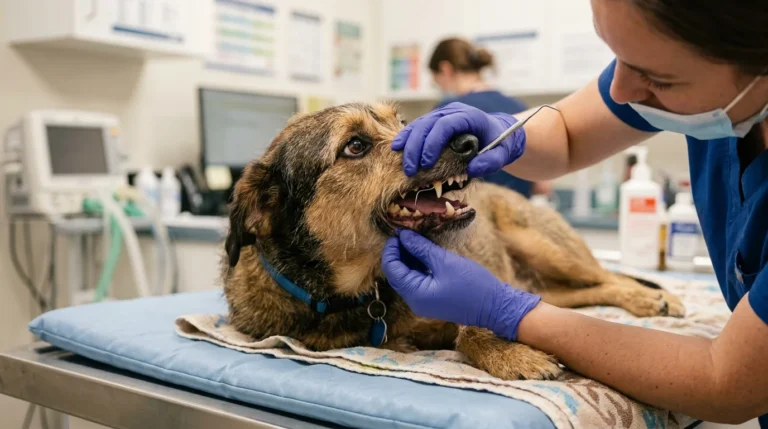

Dog Stung by Bee? Here’s Exactly What to Do Next 2026
Quick Answer: A single bee sting on a healthy adult dog is usually painful but not dangerous. Watch closely for signs of an allergic reaction during the first 30 minutes. If your dog was stung multiple times, or if they show any signs of swelling beyond the sting site, vomiting, difficulty breathing, or collapse, treat it as an emergency.
Your dog just yelped, started pawing at their face, and you spotted a bee flying away. Before you spiral into panic, take a breath. Most bee stings in dogs are painful but manageable at home. The key is knowing the difference between a normal sting reaction and a life-threatening allergic response. This guide gives you the full, vet-backed picture.
We cover every angle dog owners actually search for: what happens when a dog gets stung by a bee, which symptoms signal an emergency, how to remove a stinger, what treatments actually work, when to rush to the vet, and how to protect your dog from future stings.
Dog Stung by Bee: The Short Answer
Most bee stings cause localized pain and mild swelling that resolves on its own within a few hours. However, some dogs have severe allergic reactions called anaphylaxis, which can become life-threatening within minutes. Knowing which situation you are dealing with is the single most important thing a dog owner can do when their dog gets stung.
The reality is that bee stings happen far more often than most owners expect. Dogs are naturally curious and have a tendency to snap at insects, making the face, muzzle, and inside of the mouth the most common sting sites. These locations carry higher risk because swelling near the airway can interfere with breathing.
What Happens When a Dog Gets Stung by a Bee?

When a honeybee stings a dog, it injects venom through a barbed stinger that lodges in the skin. The venom contains compounds including melittin, histamine, and phospholipase A2, which trigger the immune system and cause local inflammation. Unlike wasps and hornets, honeybees leave their stinger behind and die after a single sting. Wasps can sting multiple times without losing their stinger.
The dog’s immune system responds by releasing its own histamines and inflammatory compounds at the sting site. For most dogs, this immune response is proportionate and localized. For others, the immune system overreacts in a process called anaphylaxis, flooding the body with chemicals that can cause dangerous drops in blood pressure, airway constriction, and shock.
Dog Bee Sting Symptoms: Normal vs. Emergency
Normal Sting Reactions (Usually Resolve Within Hours)
- Localized swelling or a small lump at the sting site
- Redness and warmth around the affected area
- Pain or tenderness when the area is touched
- Pawing at the face, mouth, or sting location
- Whimpering, yelping, or restlessness immediately after the sting
- Mild drooling if stung near or inside the mouth
These reactions are expected and typically improve on their own within a few hours. Your dog may be uncomfortable and seek comfort, but they should remain alert and responsive.
Emergency Warning Signs (Act Immediately)
- Facial swelling that spreads beyond the sting site
- Hives or raised welts across the body (not just near the sting)
- Vomiting or diarrhea
- Excessive drooling
- Pale or white gums
- Weakness, sudden lethargy, or inability to stand
- Difficulty breathing, labored breathing, or wheezing
- Rapid or irregular heartbeat
- Collapse or loss of consciousness
If your dog shows any of these signs, do not wait to see if they improve. Get to an emergency vet immediately. Anaphylaxis in dogs progresses rapidly and can be fatal without prompt treatment.
How to Remove a Bee Stinger from a Dog
If your dog was stung by a honeybee, there may be a stinger left in the skin. Removing it quickly reduces the amount of venom injected, since the venom sac continues to pump after the sting.
Step-by-Step Stinger Removal
- Stay calm and secure your dog so they do not bite from pain.
- Locate the stinger by parting the fur gently. It looks like a tiny dark splinter.
- Scrape the stinger sideways using a credit card, fingernail, or the edge of a flat object. Do not pinch or squeeze with tweezers, as this pushes more venom into the wound.
- Apply a cold pack or cloth wrapped ice to the area for 10 minutes to reduce swelling.
- Monitor your dog closely for at least 30 to 60 minutes after the sting.
Wasps and hornets do not leave a stinger behind, so if you cannot find one, your dog may have been stung by a wasp. The treatment approach for the sting itself remains the same.
Dog Bee Sting Risk: Quick Reference Table
| Sting Situation | Risk Level | Main Concern | What to Do |
| Single sting, body or paw | Low | Pain and local swelling | Monitor at home for 30 to 60 minutes |
| Single sting, face or muzzle | Moderate | Swelling near airway | Monitor closely, call vet if swelling spreads |
| Sting inside mouth or throat | High | Airway swelling and obstruction | Call vet immediately |
| Multiple stings | High | Venom overload, systemic reaction | Go to emergency vet |
| Known allergy or prior reaction | Very High | Anaphylaxis | Emergency vet, use EpiPen if prescribed |
| Collapse or difficulty breathing | Emergency | Anaphylactic shock | Rush to emergency vet immediately |
What to Do If Your Dog Gets Stung by a Bee
Step 1: Identify Where the Sting Is
The location of the sting determines the level of urgency. A sting on the paw or body is less dangerous than a sting on the face, inside the mouth, or near the throat. If you cannot identify the sting location but your dog is behaving abnormally, assume the worst and call your vet.
Step 2: Remove the Stinger if Present
Follow the stinger removal steps above. Do not delay this step, as the venom sac continues releasing venom for up to two minutes after the sting.
Step 3: Apply Cold and Monitor
Apply a cold compress to reduce swelling and pain at the sting site. Keep your dog calm and watch them carefully. The first 30 minutes after a sting are the most critical window for spotting signs of an allergic reaction.
Step 4: Know When to Call the Vet
- Single sting, mild local swelling only: Monitor at home for one to two hours.
- Single sting with spreading swelling or unusual behavior: Call your vet.
- Multiple stings at once: Go to the vet regardless of symptoms.
- Sting in the mouth or throat: Call your vet immediately.
- Any emergency warning signs: Go to an emergency vet right away. Do not wait.
Step 5: Who to Call
Your vet: First point of contact for any bee sting concern.
ASPCA Animal Poison Control: (888) 426-4435, available 24/7 (consultation fee may apply).
Pet Poison Helpline: (855) 764-7661, 24/7 toxicology and emergency support.
Can a Dog Die from a Bee Sting?
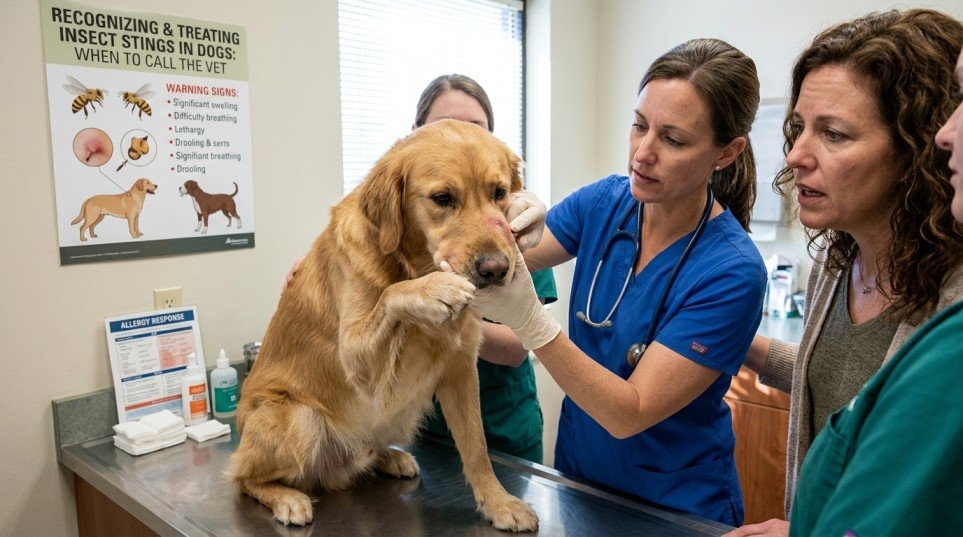
This question deserves a direct answer. For healthy adult dogs, a single bee sting is almost never fatal on its own. However, there are circumstances that can turn a bee sting into a life-threatening event:
- Anaphylaxis: A severe allergic reaction can cause cardiovascular collapse and death within 30 minutes without emergency treatment.
- Multiple stings at once: Being stung by a swarm introduces a massive dose of venom that can overwhelm the body, causing toxic venom poisoning distinct from an allergic reaction.
- Sting in the throat or airway: Even in a non-allergic dog, a sting deep in the throat can cause swelling that obstructs the airway.
- Small dogs and puppies: Smaller body mass means less tolerance to venom. What is manageable for a large dog may be dangerous for a small breed.
- Dogs with pre-existing conditions: Heart disease, immune disorders, or dogs on certain medications may have reduced capacity to respond to venom.
The bottom line: most bee stings in dogs are painful nuisances that resolve without intervention. But anaphylaxis moves fast, and waiting to see if symptoms improve can cost your dog their life. When in doubt, call your vet.
Is My Dog Allergic to Bee Stings?
Many owners do not know whether their dog is allergic until the first serious sting incident. There is no routine skin or blood test that reliably predicts bee sting allergy in dogs. The clearest signal is a history of severe reactions to previous stings.
Certain factors increase the likelihood of a severe reaction:
- A prior sting that caused swelling beyond the sting site or any systemic symptom
- Any prior episode of vomiting, weakness, or difficulty breathing after a sting
- Known atopic dermatitis or environmental allergies (these dogs tend to have more reactive immune systems)
If your dog has had any prior reaction that went beyond minor local swelling, talk to your vet about keeping an epinephrine auto-injector (EpiPen or equivalent) on hand. Your vet can show you how and when to use it. Using an EpiPen gives your dog precious extra minutes to get to emergency care, but it is not a substitute for veterinary treatment.
Bee Sting Treatment for Dogs: What Actually Works
Home Treatments That Are Safe
Cold compress: Apply a cloth-wrapped ice pack or cold damp towel to the sting site for 10 minutes at a time. Reduces swelling and numbs pain. Do not apply ice directly to skin.
Baking soda paste: Mix baking soda with a small amount of water to form a paste. Apply to the sting site and leave for 10 to 15 minutes before wiping off. Baking soda is mildly alkaline and may help neutralize the acidic bee venom, though evidence is anecdotal.
Diphenhydramine (Benadryl): Some vets recommend a dose of plain diphenhydramine for mild sting reactions. The standard dose is 1 mg per pound of body weight. However, always call your vet before giving any medication. Do not use Benadryl formulations with decongestants or other added ingredients.
Treatments to Avoid
- Do not apply vinegar or acidic compounds. Despite popular advice, vinegar is not effective on bee venom and can irritate skin.
- Do not give ibuprofen or acetaminophen (Tylenol). Both are toxic to dogs and can cause kidney failure, liver failure, or gastrointestinal damage.
- Do not apply human topical pain creams or antihistamine creams unless specifically directed by your vet.
- Do not attempt to squeeze out the stinger with tweezers or fingers. This injects additional venom.
Veterinary Treatments for Severe Reactions
If your dog is treated by a vet for a bee sting reaction, common interventions include:
- Injectable epinephrine to reverse anaphylaxis rapidly
- Intravenous fluids to stabilize blood pressure
- Injectable corticosteroids to reduce immune system overreaction
- Injectable antihistamines for supplemental allergy management
- Oxygen therapy if breathing is compromised
- Hospitalization for observation in moderate to severe cases
What If My Dog Got Stung Multiple Times?
Multiple stings dramatically increase the risk of a serious outcome, even in dogs without a known allergy. This is because venom compounds accumulate in the body and can cause systemic toxicity at high enough doses. The lethal dose of bee venom is estimated at 20 stings per pound of body weight for humans, but individual sensitivity varies widely, and even fewer stings can be dangerous for smaller dogs.
If your dog ran into a bee swarm or disturbed a nest and was stung multiple times, go to a veterinary clinic immediately. Do not wait to see symptoms develop. By the time severe symptoms appear, your dog is already in a medical crisis.
Bee Sting on Dog’s Face, Paw, or Mouth: Does Location Matter?
Yes, location matters significantly.
Face and muzzle: Swelling in this area is more visible and concerning than on the body. If the swelling is spreading or your dog is having difficulty breathing, treat it as an emergency. Even without airway involvement, facial stings should be monitored closely.
Inside the mouth or throat: This is the highest-risk sting location regardless of allergy status. The airway can swell rapidly. Call your vet or go to an emergency clinic immediately, even if your dog seems fine initially.
Paw or limb: The lowest-risk location. Swelling is common and expected. Monitor for normal sting reaction symptoms and apply cold. Most paw stings resolve within a few hours.
Eye area: Can cause significant swelling and irritation. Risk of eye damage if swelling compresses the eye. Contact your vet even if symptoms appear mild.
Dog Bee Sting Swelling: What Is Normal and What Is Not
Some swelling at the sting site is completely normal and expected. This is the immune system doing its job. Normal swelling is localized to a small area directly around the sting, appears within minutes, and begins to improve within a few hours.
Swelling becomes a concern when it:
- Spreads beyond the immediate sting site
- Affects the face, eyes, or throat
- Continues to worsen after 30 minutes rather than stabilizing
- Is accompanied by hives elsewhere on the body
- Causes difficulty breathing or swallowing
Swelling that peaks within 1 to 2 hours and gradually reduces over the following hours is generally a normal sting response. If swelling is still growing after an hour, or if it has not significantly improved within 4 to 6 hours, contact your vet.
How to Prevent Your Dog from Getting Stung by Bees
You cannot eliminate the risk entirely, but you can reduce it significantly with a few practical habits:
- Keep dogs on a leash near flowering plants, berry bushes, or areas where bees are active.
- Avoid walking dogs near visible hives or nests. If you find one near your home, contact a professional removal service rather than disturbing it yourself.
- Be cautious in late summer and early fall, when bees are most active and foraging heavily as they prepare for winter.
- Do not leave sweet food or drinks unattended outside, as these attract bees.
- Teach your dog a reliable leave it command to discourage snapping at insects.
- Keep dogs inside during peak bee activity times, typically late morning to late afternoon on warm sunny days.
What to Watch for After a Bee Sting: A Timeline
0 to 10 minutes: Immediate pain, yelping, pawing at the area. This is normal. Remove the stinger if present and apply cold.
10 to 30 minutes: The highest-risk window for anaphylaxis. Watch closely for any emergency warning signs. If symptoms are only localized, continue monitoring.
30 minutes to 2 hours: Normal swelling may peak and begin to reduce. Your dog should be alert and responsive, though still uncomfortable.
2 to 6 hours: Swelling should be noticeably improving in a normal reaction. Pain typically reduces significantly. If swelling is still growing or your dog seems worse, call your vet.
6 to 24 hours: Most normal sting reactions are nearly resolved. Some mild residual sensitivity at the sting site may remain. If your dog is still visibly unwell, a vet visit is warranted.
Frequently Asked Questions: Dog Stung by Bee
What should I do if my dog gets stung by a bee?
Stay calm and remove the stinger if it is a honeybee sting by scraping it sideways with a flat object. Apply cold to reduce swelling. Watch for emergency warning signs during the first 30 minutes. If your dog shows any signs beyond localized pain and swelling, contact your vet immediately.
How do I know if my dog is having an allergic reaction to a bee sting?
Allergic reaction signs include swelling that spreads beyond the sting site, hives or raised welts across the body, vomiting, pale gums, weakness, difficulty breathing, or collapse. These can appear within minutes of the sting. Any of these symptoms require emergency veterinary care.
Can I give my dog Benadryl for a bee sting?
Plain diphenhydramine (Benadryl) may be recommended by vets for mild sting reactions at a dose of 1 mg per pound of body weight. However, always check with your vet before giving any medication. Never give formulations that contain decongestants, xylitol, or other added ingredients, and never give ibuprofen or Tylenol.
How long does bee sting swelling last on a dog?
Normal bee sting swelling in dogs typically peaks within 1 to 2 hours and resolves significantly within 6 to 12 hours. Residual sensitivity may persist for up to 24 hours. If swelling is still worsening after 30 minutes or has not improved after 4 to 6 hours, contact your vet.
Can a dog die from a bee sting?
A single bee sting is rarely fatal for a healthy adult dog. However, anaphylaxis, multiple simultaneous stings, or a sting in the throat can all become life-threatening situations. Anaphylaxis in particular moves very quickly and can cause cardiovascular collapse and death without prompt emergency treatment.
What if my dog ate a bee?
If your dog snapped at and swallowed a bee, the main risk is being stung inside the mouth or throat. Watch for pawing at the mouth, excessive drooling, difficulty swallowing, or any signs of airway distress. If you see any of these, go to a vet immediately. If your dog swallowed the bee without being stung, it is unlikely to cause harm.
Is a bee sting more dangerous than a wasp sting for dogs?
Both can cause similar reactions. Honeybees leave a stinger behind and can only sting once. Wasps and hornets retain their stinger and can sting multiple times, which increases the risk of venom overload. Yellow jackets are often the most aggressive and are responsible for many multi-sting incidents in dogs. All three should be treated with the same level of caution.
Final Word: Dog Stung by Bee
Most bee stings in dogs are uncomfortable, not dangerous. A healthy adult dog stung once on the body or paw has a very good chance of recovering quickly with basic at-home care. The risks rise sharply with stings on the face or inside the mouth, multiple stings at once, and dogs with a history of allergic reactions.
The single most important thing you can do is watch your dog closely for the first 30 minutes after a sting. Anaphylaxis is the scenario that turns a routine sting into an emergency, and it moves fast. When in doubt, call your vet. An unnecessary phone call costs you nothing. A delayed emergency trip could cost your dog everything.
If your dog has had a significant reaction to a bee sting in the past, talk to your vet about keeping an emergency epinephrine kit at home. It is one of the most effective safety nets you can have for a dog known to be at risk.
Sources and References
Merck Veterinary Manual: Insect Sting Reactions in Dogs. merckvetmanual.com
ASPCA Animal Poison Control Center: Bee and Wasp Stings. aspca.org
VCA Animal Hospitals: Bee and Wasp Stings in Dogs. vcahospitals.com
American Kennel Club: What to Do if Your Dog Gets Stung by a Bee. akc.org
PetMD: Dog Bee Sting: Symptoms and Treatment (Updated 2025). petmd.com
Pet Poison Helpline: Bee Sting Toxicity in Dogs. petpoisonhelpline.com
Discover More:-
- Dr Marty Dog Food Review: Is It Worth the Price? 2026
- High Protein Dog Food: A Complete Vet-Backed Guide 2026

Dr. Ubaid Ur Rehman, DVM is a qualified veterinarian with expertise in pet health, nutrition, and preventive care. He is passionate about helping pet owners make informed decisions through accurate, research-based, and practical advice. As a veterinary professional, he reviews and contributes content to ensure reliable information for dog and pet owners.