Canine Rehabilitation Therapy: Benefits, Exercises, Recovery & What Every Dog Owner Should Know 2026
Quick Ans: Whether your dog is recovering from surgery, managing arthritis, or struggling to walk after an injury, canine rehabilitation therapy can play a vital role in restoring mobility, reducing pain, and improving overall quality of life. Similar to physical therapy for people, canine rehabilitation combines targeted exercises, manual therapy, and advanced therapeutic techniques to help dogs regain strength, flexibility, and confidence.
Many pet owners assume rehabilitation is only necessary after major surgery, but it can also benefit senior dogs, athletic dogs, bulky pets, and dogs living with chronic orthopedic or neurological conditions. With a customized treatment plan, many dogs experience less pain, improved movement, and a faster return to their normal activities.
In this guide, you’ll learn what canine rehabilitation therapy is, how it works, who can benefit, common treatment methods, expected recovery timelines, and what to expect during therapy sessions.
What Is Canine Rehabilitation Therapy?
Canine rehabilitation therapy is a specialized form of veterinary medicine focused on improving a dog’s mobility, strength, flexibility, balance, and overall physical function after injury, surgery, or illness.
A rehabilitation program is designed specifically for each dog based on factors such as:
- Age
- Breed
- Weight
- Medical condition
- Activity level
- Pain level
- Recovery goals
The primary objective is to help dogs recover safely while minimizing pain and reducing the risk of future injuries.
How Does Canine Rehabilitation Therapy Work?
A rehabilitation veterinarian or certified canine rehabilitation therapist begins with a thorough physical assessment.
They evaluate:
- Muscle strength
- Joint flexibility
- Walking pattern (gait)
- Range of motion
- Balance
- Coordination
- Pain levels
- Neurological function
Based on the evaluation, a personalized therapy program is created that may include therapeutic exercises, underwater treadmill sessions, massage, stretching, laser therapy, and home exercise recommendations.
Progress is monitored regularly, and the treatment plan is adjusted as the dog gains strength and mobility.
Which Dogs Benefit from Canine Rehabilitation Therapy?
Rehabilitation therapy helps dogs of all ages not just injured pets.
It is commonly recommended for:
- Dogs recovering from orthopedic surgery
- Dogs after cruciate ligament (ACL/CCL) surgery
- Hip replacement recovery
- Fracture repair recovery
- Senior dogs with arthritis
- Dogs with hip dysplasia
- Dogs with elbow dysplasia
- Dogs with spinal injuries
- Dogs recovering from intervertebral disc disease (IVDD)
- Neurological disorders
- Sporting and working dogs
- Heavy dogs beginning an exercise program
- Dogs with chronic pain
Even healthy athletic dogs may use rehabilitation therapy to improve conditioning and reduce injury risk.
Common Conditions Treated with Canine Rehabilitation Therapy
Arthritis
Arthritis is one of the leading reasons dogs enter rehabilitation.
Therapy helps:
- Reduce joint stiffness
- Improve flexibility
- Increase muscle support
- Decrease pain
- Maintain independence
Hip Dysplasia
Dogs with hip dysplasia often experience discomfort, weakness, and reduced activity.
Rehabilitation strengthens supporting muscles and helps improve joint function without excessive stress.
Cruciate Ligament (CCL) Injuries
Following TPLO, TTA, or other cruciate ligament surgeries, rehabilitation helps restore:
- Proper weight bearing
- Muscle strength
- Knee stability
- Normal walking patterns
Without rehabilitation, recovery may take longer and muscle loss can become significant.
Neurological Disorders
Dogs with spinal cord injuries or nerve damage often benefit from structured rehabilitation.
Therapy focuses on:
- Balance training
- Coordination
- Muscle activation
- Controlled movement
- Walking retraining
Obesity
Excess weight places additional stress on joints.
Low-impact rehabilitation exercises allow bulky dogs to become more active while reducing the risk of injury.
Types of Canine Rehabilitation Therapy
A rehabilitation program often combines several treatment techniques.
Therapeutic Exercises
Targeted exercises improve:
- Muscle strength
- Joint stability
- Balance
- Endurance
- Flexibility
Examples include:
- Sit-to-stand exercises
- Controlled leash walking
- Weight shifting
- Cavaletti rails
- Balance discs
- Step exercises
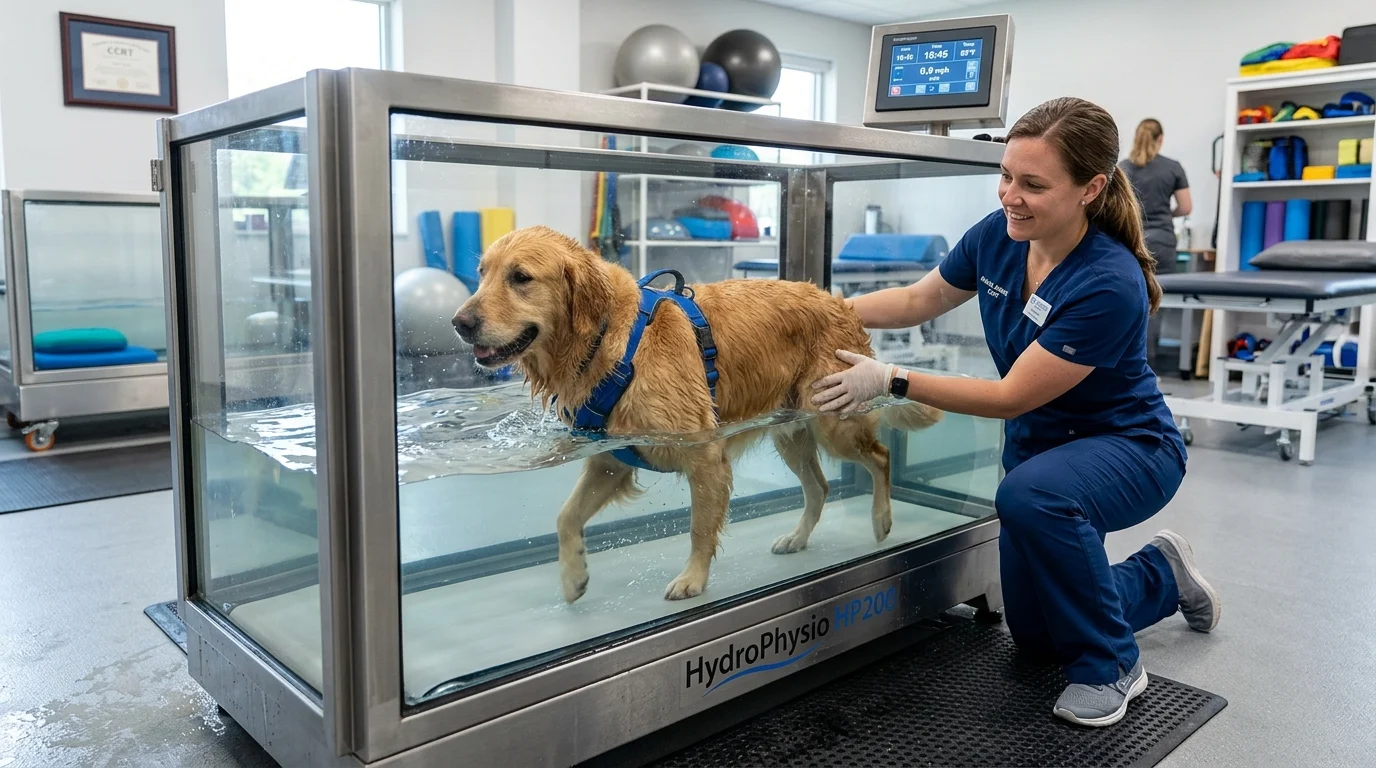
Underwater Treadmill Therapy
One of the most popular rehabilitation treatments is the underwater treadmill.
The buoyancy of water supports the dog’s body weight while allowing safe movement.
Benefits include:
- Less joint pressure
- Improved muscle strength
- Better cardiovascular fitness
- Increased range of motion
- Faster recovery
Many dogs with arthritis or post-surgical restrictions tolerate underwater exercise better than land-based activities.
Therapeutic Laser Therapy
Laser therapy uses focused light energy to stimulate healing at the cellular level.
Potential benefits include:
- Reduced inflammation
- Pain relief
- Faster tissue repair
- Improved circulation
Treatment is painless and usually takes only a few minutes.
Manual Therapy
Hands-on techniques may include:
- Massage
- Joint mobilization
- Soft tissue stretching
- Passive range-of-motion exercises
These methods help improve circulation and reduce muscle tightness.
Balance and Coordination Training
Improving balance reduces the risk of future injuries.
Therapists may use:
- Balance cushions
- Stability balls
- Wobble boards
- Controlled obstacle courses
Benefits of Canine Rehabilitation Therapy
A properly designed rehabilitation program offers many advantages.
Some of the most significant benefits include:
- Faster recovery after surgery
- Reduced pain
- Improved mobility
- Increased muscle strength
- Better flexibility
- Improved joint function
- Enhanced balance
- Better coordination
- Reduced inflammation
- Lower risk of future injuries
- Increased confidence during movement
- Improved quality of life
Many dogs also become more active and maintain a healthier body weight after rehabilitation.
What Happens During the First Rehabilitation Appointment?
The initial visit usually lasts between 45 and 90 minutes.
The therapist may:
- Review your dog’s medical history
- Evaluate movement and posture
- Check muscle mass
- Assess joint flexibility
- Observe walking and standing
- Identify painful areas
- Discuss recovery goals
After the assessment, you’ll receive a personalized treatment plan that may include in-clinic therapy and home exercises.
Home Exercises for Dogs
Successful rehabilitation often continues at home.
Your veterinarian may recommend:
- Short leash walks
- Gentle stretching
- Controlled sit-to-stand repetitions
- Weight-shifting exercises
- Slow incline walking
- Balance exercises
- Range-of-motion movements
Always perform only the exercises recommended for your dog’s specific condition.
How Long Does Rehabilitation Take?
Recovery depends on the condition being treated.
General timelines include:
- Minor muscle injuries: 2–4 weeks
- Mild orthopedic conditions: 4–8 weeks
- Cruciate ligament surgery recovery: 8–16 weeks
- Hip surgery rehabilitation: 3–6 months
- Neurological recovery: Several months or longer
Some dogs with chronic arthritis continue rehabilitation throughout their lives to maintain comfort and mobility.
Is Canine Rehabilitation Therapy Safe?
Yes. When performed by trained veterinary professionals, canine rehabilitation therapy is considered very safe.
Treatment plans are customized to each dog’s medical condition, age, and physical abilities.
Exercises are introduced gradually to avoid overexertion, and progress is monitored closely throughout recovery.
Signs Your Dog May Need Rehabilitation Therapy
Talk to your veterinarian if your dog shows any of these signs:
- Limping
- Difficulty standing
- Trouble climbing stairs
- Reluctance to jump
- Muscle loss
- Reduced activity
- Stiffness after resting
- Slow recovery after surgery
- Frequent slipping
- Chronic joint pain
- Weakness in the hind legs
- Changes in gait
Early intervention often leads to better long-term outcomes.
Can Rehabilitation Help Senior Dogs?
Absolutely.
Senior dogs frequently develop age-related conditions such as arthritis, muscle weakness, and reduced flexibility.
A gentle rehabilitation program can help older dogs:
- Stay active longer
- Reduce discomfort
- Maintain muscle mass
- Improve balance
- Increase independence
- Enhance overall quality of life
Even modest improvements in mobility can make everyday activities much easier for aging pets.
Frequently Asked Questions
Is canine rehabilitation therapy only for dogs recovering from surgery?
No. It is also used for arthritis, neurological disorders, sports injuries, obesity, chronic pain, and age-related mobility issues.
How soon should rehabilitation begin after surgery?
The timing depends on the procedure and your veterinarian’s recommendations. In many cases, gentle rehabilitation begins within days of surgery to encourage safe healing.
Does rehabilitation therapy hurt dogs?
No. Therapy is designed to minimize pain, and exercises are adjusted to your dog’s comfort level. If a treatment causes discomfort, the therapist will modify the plan.
How many rehabilitation sessions will my dog need?
Some dogs improve after only a few sessions, while others with chronic or complex conditions may benefit from ongoing therapy over several months.
Can I do rehabilitation exercises at home?
Yes, but only under your veterinarian’s guidance. Home exercises are an important part of recovery and should match your dog’s condition and stage of healing.
Is underwater treadmill therapy safe?
Yes. Underwater treadmill therapy is widely used because the water supports the body, reducing stress on joints while allowing controlled movement.
Final Thoughts
Canine rehabilitation therapy is an effective way to help dogs recover from injuries, surgeries, and chronic conditions while improving their strength, mobility, and overall well-being. Through a combination of therapeutic exercises, underwater treadmill sessions, laser therapy, massage, and personalized care, rehabilitation supports healing in a safe and structured manner.
Whether your dog is an active athlete recovering from an injury, a senior companion managing arthritis, or a pet healing after orthopedic surgery, rehabilitation can make a meaningful difference in comfort, function, and quality of life. Working closely with your veterinarian and following a consistent rehabilitation plan gives your dog the best opportunity to move more comfortably and enjoy an active, healthy life.
Discover More:-

Michael Carter, DVM is a veterinarian and pet health writer with a strong interest in canine nutrition, preventive care, and animal wellness. He is dedicated to providing pet owners with accurate, evidence-based information that helps them make informed decisions about their dogs’ health. As an author and content reviewer, Michael combines veterinary knowledge with practical insights to ensure every article is trustworthy, informative, and easy to understand.