Florida Beach Hazards for Pets: A Complete Safety Guide for Dogs and Cats 2026
Quick Ans: Florida beaches can be dangerous for pets due to heatstroke, hot sand, saltwater poisoning, harmful algae, jellyfish, sharp shells, fishing hooks, and strong ocean currents. Keep your pet hydrated, avoid the hottest part of the day, use a leash, and contact a veterinarian immediately if your pet shows signs of illness after a beach visit.
Florida’s beautiful beaches attract millions of visitors every year, and many pet owners enjoy bringing their dogs along for fun in the sun. While a beach trip can be a great adventure, it also comes with hidden dangers that many owners don’t realize. From hot sand and strong rip currents to toxic algae and marine wildlife, several Florida beach hazards for pets can quickly turn a fun outing into a medical emergency.
Whether you’re visiting the Gulf Coast, the Atlantic Coast, or one of Florida’s many dog-friendly beaches, understanding these risks can help keep your furry companion safe and healthy.
In this guide, you’ll learn about the most common beach hazards for pets in Florida, warning signs to watch for, and practical tips to ensure a safe day by the ocean.
Why Florida Beaches Can Be Risky for Pets
Florida’s warm climate, abundant wildlife, and coastal environment create unique hazards that aren’t found at most parks or neighborhoods. Dogs are naturally curious and often explore by sniffing, licking, or eating unfamiliar objects, increasing their risk of injury or illness.
The good news is that most beach-related emergencies are preventable with proper planning and close supervision.
Heatstroke and High Temperatures
One of the biggest dangers at Florida beaches is extreme heat. Even on mild days, the combination of sunshine, humidity, and reflected heat from the sand can quickly raise your dog’s body temperature.
Dogs cool themselves mainly by panting, making them more vulnerable to overheating than humans.
Signs of Heatstroke
- Excessive panting
- Bright red gums
- Drooling
- Weakness
- Vomiting
- Rapid heartbeat
- Confusion
- Collapse
How to Prevent Heatstroke
- Visit the beach early in the morning or late in the evening.
- Always bring fresh drinking water.
- Take frequent breaks in the shade.
- Never force your dog to exercise during hot weather.
- Leave the beach immediately if your pet shows signs of overheating.
Heatstroke is a life-threatening emergency that requires immediate veterinary care.
Hot Sand Can Burn Paw Pads
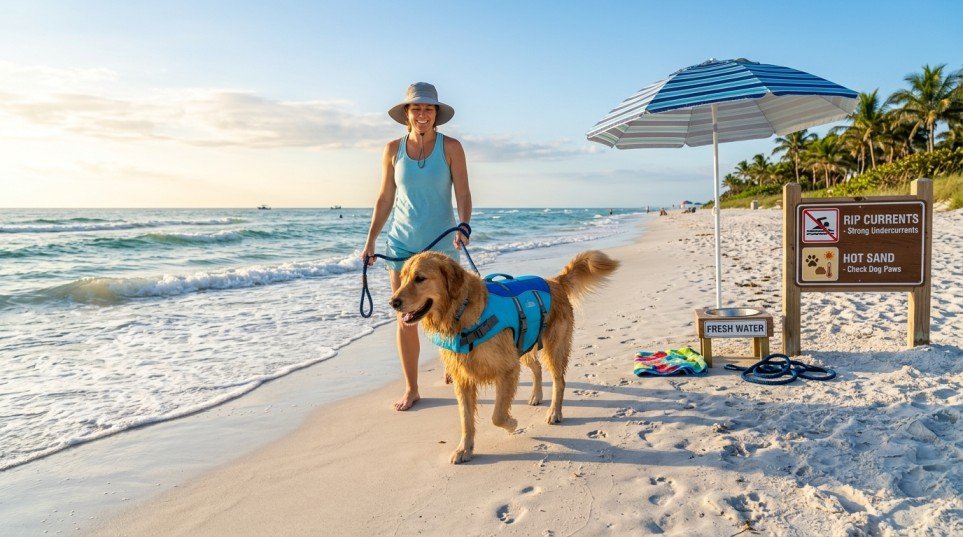
Beach sand can become much hotter than the surrounding air. On sunny afternoons, sand temperatures may exceed 120°F (49°C), causing painful burns within seconds.
Symptoms of Burned Paw Pads
- Limping
- Blisters
- Red or peeling skin
- Excessive licking of paws
- Refusing to walk
Prevention Tips
- Walk during cooler hours.
- Test the sand with your hand for several seconds.
- Stay near wet sand whenever possible.
- Consider protective dog booties for sensitive paws.
Saltwater Poisoning
Many dogs enjoy drinking seawater while playing, but swallowing too much saltwater can lead to serious health problems.
Excess salt causes dehydration and disrupts the body’s electrolyte balance.
Symptoms of Saltwater Poisoning
- Vomiting
- Diarrhea
- Excessive thirst
- Weakness
- Loss of coordination
- Muscle tremors
- Seizures
Prevention
Always provide plenty of clean, fresh water and discourage your dog from drinking seawater.
Rip Currents and Strong Waves
Even strong swimmers can struggle against Florida’s powerful ocean currents.
Large waves may knock pets off balance, while rip currents can quickly pull them into deeper water.
Safety Tips
- Keep dogs on a leash near the shoreline.
- Avoid rough surf conditions.
- Never force a nervous dog into the water.
- Consider a properly fitted canine life jacket for boating or swimming.
Harmful Algal Blooms (Red Tide and Blue-Green Algae)
Florida occasionally experiences harmful algal blooms that produce dangerous toxins.
Pets can become sick by:
- Drinking contaminated water
- Swimming in affected areas
- Licking algae from their fur
- Eating dead fish
Symptoms
- Drooling
- Vomiting
- Difficulty breathing
- Weakness
- Tremors
- Seizures
Always check local beach advisories before visiting.
Jellyfish Stings
Washed-up jellyfish can still sting curious pets even after they’re no longer alive.
Signs of a Sting
- Sudden pain
- Whining
- Redness
- Swelling
- Pawing at the affected area
Prevent pets from investigating jellyfish on the shoreline.
Sharp Shells, Rocks, and Broken Glass
Hidden objects on the beach can easily cut your pet’s paws.
Common hazards include:
- Oyster shells
- Broken seashells
- Fishing hooks
- Glass
- Sharp rocks
Inspect your dog’s paws before leaving the beach and after returning home.
Fish Hooks and Fishing Line
Discarded fishing equipment is one of the most overlooked beach dangers.
Dogs may accidentally swallow:
- Hooks
- Sinkers
- Bait
- Fishing line
Never attempt to remove an embedded fish hook yourself. Seek veterinary care immediately.
Toxic Marine Life
Florida beaches are home to several marine animals that can injure curious pets.
These include:
- Stingrays
- Lionfish
- Sea urchins
- Portuguese man o’ war
- Certain toxic fish species
Keep pets from sniffing or playing with unfamiliar sea creatures.
Wildlife Encounters
Florida’s beaches are home to more than just marine animals.
Pets may encounter:
- Sea turtles
- Shore birds
- Snakes
- Crabs
- Raccoons
Wildlife should always be observed from a safe distance.
Sand Ingestion
Many dogs accidentally swallow sand while digging, fetching toys, or eating treats.
Small amounts usually pass without problems, but larger amounts can cause intestinal blockage.
Warning Signs
- Vomiting
- Constipation
- Abdominal pain
- Loss of appetite
- Lethargy
If these symptoms appear after a beach trip, contact your veterinarian immediately.
Parasites and Bacteria
Warm coastal environments may contain parasites and harmful bacteria.
Dogs may be exposed through:
- Standing water
- Contaminated sand
- Wildlife feces
Rinse your pet thoroughly after every beach visit to reduce the risk of infection.
Sunburn in Pets
Dogs with light-colored fur, thin coats, or exposed skin are at greater risk of sunburn.
Areas commonly affected include:
- Nose
- Ears
- Belly
Pet-safe sunscreen can provide extra protection for vulnerable areas.
Dehydration
Running and playing in Florida’s heat increases water loss rapidly.
Signs include:
- Dry gums
- Heavy panting
- Sunken eyes
- Fatigue
Offer water every 15–20 minutes during beach outings.
Beach Safety Tips for Pet Owners
Before heading to the beach:
- Check if pets are allowed.
- Review weather forecasts.
- Look for algae or Red Tide advisories.
- Pack fresh water.
- Bring a collapsible water bowl.
- Carry waste bags.
- Pack a pet first-aid kit.
- Bring towels.
- Use a sturdy leash.
- Provide shade with an umbrella or beach tent.
When Should You Visit an Emergency Veterinarian?
Seek immediate veterinary care if your pet experiences:
- Heatstroke symptoms
- Difficulty breathing
- Persistent vomiting
- Seizures
- Severe bleeding
- Fish hook injuries
- Jellyfish stings with significant swelling
- Suspected saltwater poisoning
- Collapse
- Difficulty walking after a beach visit
Prompt treatment can be lifesaving.
Frequently Asked Questions
Is Florida beach water safe for dogs?
Usually yes, but avoid beaches with Red Tide, blue-green algae, pollution warnings, or unsafe surf conditions.
Can dogs drink ocean water?
No. Drinking saltwater can lead to dehydration and salt poisoning.
Are all Florida beaches dog friendly?
No. Some beaches prohibit pets or require dogs to remain leashed. Always check local regulations before visiting.
How long can dogs stay at the beach?
Most dogs do well with 1–3 hours of supervised activity, depending on the weather, breed, age, and fitness level.
Should dogs wear life jackets?
Yes. Life jackets are recommended for boating, swimming in deep water, or dogs that are not confident swimmers.
Final Thoughts
Florida’s beaches offer unforgettable adventures for pets and their owners, but they also present unique risks that shouldn’t be overlooked. Heatstroke, hot sand, saltwater poisoning, harmful algae, marine wildlife, and sharp debris are among the most common Florida beach hazards for pets. Fortunately, most of these dangers can be avoided with careful planning, close supervision, and a little preparation.
By providing fresh water, avoiding the hottest part of the day, watching for local beach advisories, and monitoring your pet for signs of illness or injury, you can help ensure every beach trip remains safe, enjoyable, and stress-free. If your pet develops unusual symptoms after spending time at the beach, don’t delay seeking veterinary care—early treatment can make all the difference.
Discover More:-
- Early Cancer Signs in Golden Retrievers: Symptoms Every Owner Should Know 2026
- Winter Pet Clothes: Best Winter Clothing for Dogs & Cats 2026

Michael Carter, DVM is a veterinarian and pet health writer with a strong interest in canine nutrition, preventive care, and animal wellness. He is dedicated to providing pet owners with accurate, evidence-based information that helps them make informed decisions about their dogs’ health. As an author and content reviewer, Michael combines veterinary knowledge with practical insights to ensure every article is trustworthy, informative, and easy to understand.