Dog Spewing Yellow Vomit: Is It Serious or Normal? 2026
Quick Answer: If your dog vomits yellow bile once but otherwise acts normal, eats normally, and remains energetic, the cause may be mild stomach irritation or an empty stomach. However, repeated vomiting, lethargy, abdominal pain, blood in vomit, or refusal to eat requires veterinary attention.
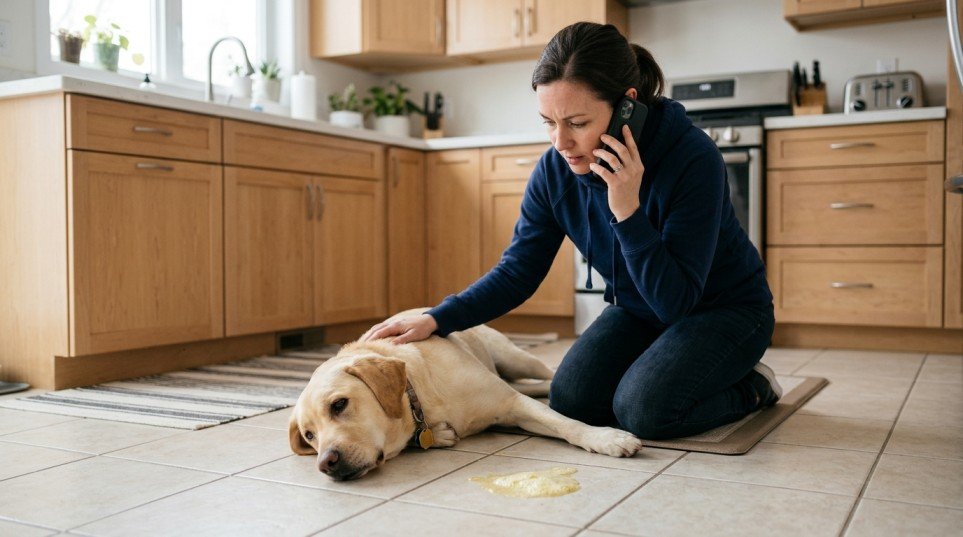
Your dog suddenly starts vomiting yellow liquid onto the floor. It’s alarming, messy, and leaves most dog owners asking the same question: should I be worried?
The answer depends on what’s causing the vomiting. In some cases, yellow vomit is simply bile that has built up in an empty stomach. In other situations, it may signal digestive disease, dietary problems, intestinal blockage, pancreatitis, or another medical issue requiring veterinary attention.
This guide covers everything dog owners actually search for: why dogs vomit yellow bile, what home remedies may help, when vomiting becomes dangerous, symptoms to watch for, and when it’s time to contact your veterinarian.
Why Is My Dog Throwing Up Yellow Bile?
1. Empty Stomach Syndrome (Bilious Vomiting Syndrome)
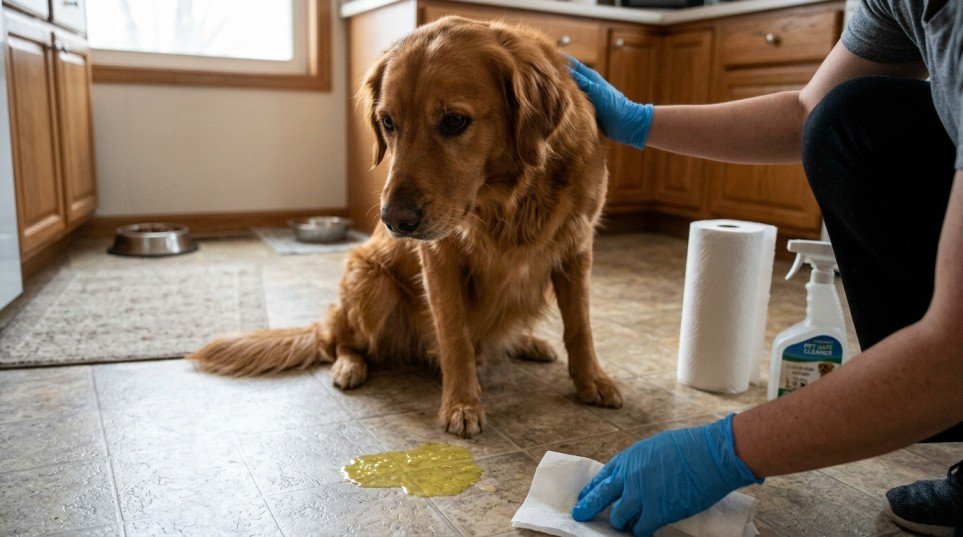
One of the most common causes of yellow vomiting is Bilious Vomiting Syndrome.
This occurs when bile accumulates in the stomach during long periods without food.
Many dogs affected by this condition:
- Vomit early in the morning
- Vomit yellow foam or liquid
- Feel better afterward
- Continue eating normally
- Show no other symptoms
Dogs that go too long between meals are particularly prone to this condition.
2. Dietary Indiscretion
Dogs frequently eat things they should not.
Common examples include:
- Garbage
- Spoiled food
- Greasy table scraps
- Grass
- Foreign objects
- Outdoor debris
These items can irritate the stomach lining and trigger vomiting of yellow bile.
3. Sudden Diet Changes
Rapid food changes can upset a dog’s digestive system.
The gastrointestinal tract needs time to adjust to new foods.
A sudden switch may cause:
- Vomiting
- Diarrhea
- Gas
- Reduced appetite
- Stomach irritation
Gradual food transitions are usually recommended over 7 to 10 days.
4. Gastrointestinal Illness
Stomach and intestinal inflammation can lead to repeated episodes of bile vomiting.
Possible causes include:
- Gastritis
- Viral infections
- Bacterial infections
- Parasites
- Food intolerances
These conditions often produce additional symptoms beyond vomiting.
What Does Yellow Dog Vomit Mean?
The appearance of the vomit can provide useful clues.
| Appearance | Possible Meaning |
|---|---|
| Yellow liquid | Bile from an empty stomach |
| Yellow foam | Bile mixed with stomach acids |
| Yellow with food | Digestive irritation |
| Yellow and mucus-like | Gastric inflammation |
| Yellow with blood | Potential emergency |
| Yellow with foreign material | Possible obstruction |
While appearance can be helpful, diagnosis should never rely on color alone.
Common Causes of Yellow Vomit in Dogs
Mild Causes
These causes often improve with supportive care:
- Empty stomach
- Eating grass
- Mild stomach irritation
- Minor dietary indiscretion
- Temporary digestive upset
- Stress-related stomach upset
Moderate Causes
These conditions may require veterinary treatment:
- Food intolerance
- Gastroenteritis
- Intestinal parasites
- Chronic gastritis
- Medication side effects
Serious Causes
These situations require immediate veterinary attention:
- Intestinal blockage
- Pancreatitis
- Liver disease
- Kidney disease
- Severe infection
- Toxic substance ingestion
- Gastric torsion (bloat)
- Cancer
Home Remedies for Dogs Throwing Up Yellow Bile
This section answers what most dog owners want to know, but an important disclaimer comes first:
Home remedies may help mild digestive upset, but they cannot treat serious illness, poisoning, or intestinal obstruction.
What You Can Do at Home
1. Allow the Stomach to Rest
For otherwise healthy adult dogs, your veterinarian may recommend temporarily withholding food for several hours.
This allows stomach irritation to settle.
Always ensure water remains available unless your veterinarian advises otherwise.
2. Offer Small Amounts of Water
Vomiting can quickly lead to dehydration.
Offer:
- Small sips frequently
- Ice cubes if tolerated
- Fresh clean water
Avoid allowing your dog to drink excessively all at once, as this may trigger more vomiting.
3. Feed Smaller, More Frequent Meals
If the cause is an empty stomach, feeding smaller meals throughout the day may help prevent bile accumulation.
Many dogs improve when:
- Breakfast is offered earlier
- Dinner is offered later
- A small bedtime snack is added
4. Try a Bland Diet
Veterinarians commonly recommend bland foods during recovery from mild stomach upset.
Examples may include:
- Plain boiled chicken
- Plain white rice
- Low-fat veterinary-approved recovery diets
Avoid seasoning, oils, and fatty foods.
5. Keep Activity Calm
Excessive exercise immediately after vomiting may worsen nausea.
Provide:
- Rest
- Comfortable bedding
- Quiet surroundings
- Reduced excitement
What NOT to Do at Home
Do Not Give Human Medications
Many over-the-counter medications can be dangerous for dogs.
Never administer:
- Pepto-Bismol without veterinary guidance
- Human anti-nausea medications
- Painkillers
- Antacids intended for humans
Do Not Force Food
If your dog feels nauseated, forcing food may worsen vomiting.
Follow veterinary guidance regarding feeding schedules.
Do Not Ignore Repeated Vomiting
Multiple vomiting episodes are not normal and should not be dismissed as simple stomach upset.
Do Not Delay Treatment for Severe Symptoms
Prompt care can be lifesaving in emergencies.
When to Call a Vet vs. When to Monitor at Home
This is the decision most owners struggle with.
Call a Vet Immediately If:
- Vomiting continues repeatedly
- Blood appears in vomit
- Your dog cannot keep water down
- Your dog appears weak or collapsed
- There is abdominal swelling
- Your dog seems painful
- Your dog ingested a toxin
- Your dog swallowed a foreign object
- Your dog is a puppy
- Your dog is a senior dog
- Your dog has existing medical conditions
You May Monitor at Home (With Veterinary Guidance) If:
- Vomiting occurred only once
- Your dog remains energetic
- Appetite is normal
- Water is tolerated
- No other symptoms are present
- Your veterinarian agrees monitoring is appropriate
Even mild cases should be discussed with your veterinarian if uncertainty exists.
Symptoms That May Accompany Yellow Vomiting
The underlying cause often determines which symptoms appear.
Mild Symptoms
- Occasional vomiting
- Lip licking
- Mild nausea
- Reduced appetite
- Eating grass
Moderate Symptoms
- Diarrhea
- Frequent vomiting
- Lethargy
- Excessive drooling
- Dehydration
Severe Symptoms
- Bloody vomit
- Collapse
- Severe weakness
- Abdominal pain
- Distended abdomen
- Difficulty breathing
- Pale gums
These symptoms require urgent medical attention.
What a Vet Will Actually Do
Understanding treatment helps owners make decisions quickly.
Veterinary treatment may include:
Physical Examination
The veterinarian will assess:
- Hydration status
- Abdominal discomfort
- Body temperature
- Heart rate
Diagnostic Testing
Depending on symptoms, testing may include:
- Blood work
- X-rays
- Ultrasound
- Fecal testing
- Urinalysis
Fluid Therapy
Intravenous fluids help correct:
- Dehydration
- Electrolyte imbalances
- Ongoing fluid loss
Anti-Nausea Medication
Veterinarians may prescribe medications to control vomiting and improve comfort.
Treatment of the Underlying Cause
The specific treatment depends entirely on the diagnosis.
Yellow Vomiting by Dog Age
Puppies
Vomiting in puppies should be taken seriously.
Possible causes include:
- Parasites
- Infections
- Dietary indiscretion
- Foreign body ingestion
Puppies can become dehydrated quickly.
Adult Dogs
Most cases relate to:
- Empty stomach syndrome
- Diet issues
- Gastrointestinal irritation
However, repeated vomiting still warrants evaluation.
Senior Dogs
Older dogs have increased risk of:
- Kidney disease
- Liver disease
- Cancer
- Chronic digestive disorders
Veterinary assessment is particularly important in aging dogs.
Frequently Asked Questions About Dogs Throwing Up Yellow Bile
Is yellow vomit always serious?
No. Many cases involve bile from an empty stomach. However, persistent or repeated vomiting should always be evaluated.
Why does my dog throw up yellow bile in the morning?
This commonly occurs when the stomach has been empty overnight, allowing bile to accumulate and irritate the stomach lining.
Should I feed my dog after vomiting yellow bile?
The answer depends on the situation. Some dogs benefit from a brief fasting period followed by small bland meals. Consult your veterinarian for guidance.
Can stress cause yellow vomiting?
Yes. Stress can affect digestion and contribute to nausea, stomach irritation, and vomiting in some dogs.
What if my dog throws up yellow foam but acts normal?
A single episode in an otherwise healthy dog may not indicate a serious problem. Continued monitoring and veterinary guidance are recommended.
How long should I wait before calling a vet?
If vomiting is repeated, accompanied by other symptoms, or involves a puppy, senior dog, or medically compromised pet, contact your veterinarian promptly.
Can dehydration result from vomiting?
Yes. Repeated vomiting can quickly lead to dehydration, electrolyte imbalances, and weakness.
How to Help Prevent Future Episodes
- Feed consistent meals daily.
- Avoid sudden food changes.
- Keep garbage secured.
- Prevent access to toxins.
- Schedule routine wellness exams.
- Transition foods gradually.
- Monitor chewing habits.
- Address digestive issues early.
Prevention is often much easier than treating gastrointestinal disease after it develops.
Final Word: Not Every Case Is an Emergency, But Every Case Deserves Attention
Yellow vomit in dogs is commonly caused by bile and may result from something as simple as an empty stomach. In many cases, adjusting feeding schedules and supporting digestive health can reduce future episodes.
However, vomiting should never be ignored when it becomes frequent, severe, or is accompanied by other symptoms. Conditions such as intestinal blockage, pancreatitis, toxin exposure, and systemic disease can all present with yellow vomiting.
If your dog is repeatedly spewing yellow bile, appears unwell, or shows any warning signs discussed in this guide, contact your veterinarian. Early intervention is often the key to a faster recovery and better outcome.
Sources and References
- Merck Veterinary Manual: Vomiting in Dogs
- American Kennel Club (AKC): Why Dogs Vomit Yellow Bile
- VCA Animal Hospitals: Bilious Vomiting Syndrome
- PetMD: Causes of Yellow Vomit in Dogs
- American Veterinary Medical Association (AVMA): Gastrointestinal Health in Dogs
- WSAVA Gastrointestinal Guidelines
- Cornell University College of Veterinary Medicine: Digestive Disorders in Dogs
Discover More:-
- How to Stop Dog from Eating Poop Home Remedies: A Complete Vet-Backed Guide
- How to Stop Dog from Licking Paws Home Remedy: complete Vet-Backed Guide 2026

Dr. Ubaid Ur Rehman, DVM is a qualified veterinarian with expertise in pet health, nutrition, and preventive care. He is passionate about helping pet owners make informed decisions through accurate, research-based, and practical advice. As a veterinary professional, he reviews and contributes content to ensure reliable information for dog and pet owners.