Can Dogs Eat Broccoli Every Day? Benefits, Risks & Portion Sizes
Quick Answer: Plain, cooked or raw broccoli florets in small amounts are safe for most healthy adult dogs. No seasoning, no butter, no garlic. The main risk is a natural compound called isothiocyanate, which causes stomach upset when a dog eats too much. Keep broccoli to under 10 percent of your dog’s daily food intake.
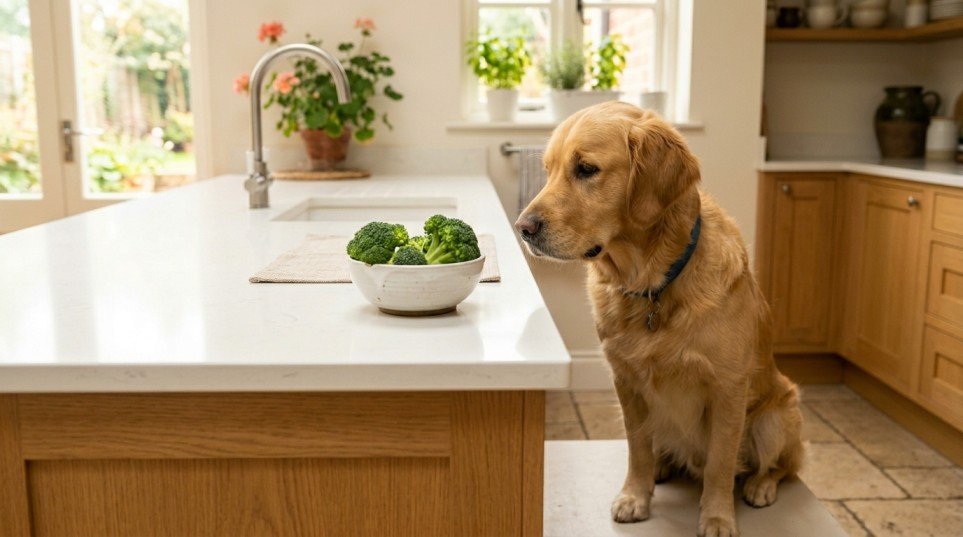
Your dog is eyeing the broccoli florets on your plate. Before you share, it is worth knowing the full picture. Broccoli is one of those foods that gets a quick “yes” or “no” on most pet sites, but the truth is more layered. This guide gives you the complete, vetbacked answer.
We cover everything dog owners actually need to know: whether broccoli is safe, which parts are risky, how much is too much, whether raw or cooked is better, and what to do if your dog already ate a lot of it.
Can Dogs Eat Broccoli? The Short Answer
Yes, dogs can eat broccoli in small amounts. It is not toxic. But it does contain a compound that causes gastrointestinal irritation in large quantities, and the stalks can be a choking hazard. Portion size and preparation method matter a great deal here.
What Makes Broccoli Risky for Dogs?
1. Isothiocyanates The GI Irritant in Broccoli
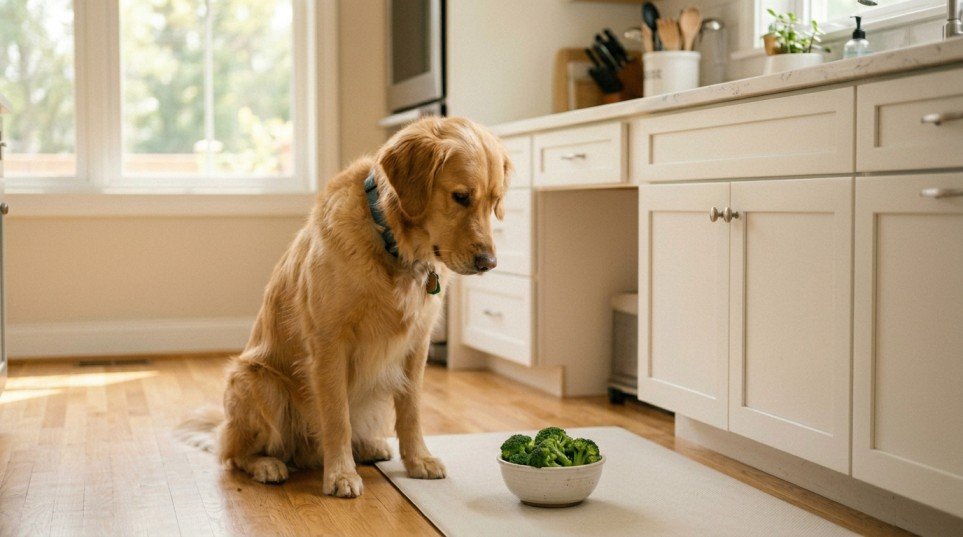
Broccoli florets contain naturally occurring compounds called isothiocyanates. These are the same sulfur containing compounds that give broccoli its slightly bitter taste and that have been studied for anticancer properties in humans.
In dogs, isothiocyanates can cause gastrointestinal irritation, especially when consumed in large amounts. Symptoms include gas, bloating, vomiting, and diarrhea. The florets have the highest concentration of isothiocyanates in the broccoli plant.
Important: According to the ASPCA, broccoli is listed as a nontoxic food for dogs. The isothiocyanate concern is about quantity and individual sensitivity, not a toxin in the way persin in avocado functions. Small portions are generally well tolerated.
2. The Stalks A Choking and Obstruction Risk
Broccoli stalks are dense, fibrous, and can be difficult for dogs to chew thoroughly. Depending on the size of your dog and how the stalk is cut, it can become a choking hazard or cause a gastrointestinal blockage.
This risk is especially high for small dogs who might try to swallow large chunks whole, and for dogs that eat quickly without proper chewing.
3. Seasonings and Additions
Plain broccoli is the only version that is safe. Broccoli cooked with butter, garlic, onion, salt, or cheese introduces hazards far worse than anything in the broccoli itself. Garlic and onion in particular are toxic to dogs and can cause red blood cell damage even in small amounts.
Can Broccoli Kill Dogs?
Plain broccoli alone is extremely unlikely to kill a dog. No documented deaths from broccoli consumption in dogs appear in the veterinary literature. However, there are scenarios that warrant serious attention:
- Obstructive choking from a large stalk piece: This is the most realistic acute danger. A stalk piece lodged in the throat or intestines can become life threatening without immediate veterinary intervention.
- Eating a very large quantity of florets: If a dog eats a significant amount, the isothiocyanate load can cause severe GI distress. In extreme cases or in dogs with preexisting digestive conditions, this could become serious.
- Seasoned broccoli with garlic or onion: If the broccoli was cooked with these ingredients, the risk is not from the broccoli at all but from the toxic seasonings.
- Pre existing conditions: Dogs with hypothyroidism should be cautious. Isothiocyanates belong to the goitrogen family, which in theory can interfere with thyroid function in large quantities, though this is primarily a concern with chronic overconsumption, not occasional treats.
The bottom line: broccoli is one of the safer vegetables you can share with a dog. The risks are real but manageable with correct portioning and preparation.
How Much Broccoli Can a Dog Eat?
Veterinary nutritionists use a general rule for dog treats and supplemental foods: treats should make up no more than 10 percent of a dog’s total daily calorie intake. Within that, broccoli is considered safe up to that limit for most dogs.
A more cautious and widely cited guideline for broccoli specifically:
Keep broccoli to under 10 percent of your dog’s daily food intake by volume. For small dogs, stay under 5 percent to reduce the isothiocyanate load on a smaller digestive system.
To put that in practical terms:
- A 10 lb dog (like a Chihuahua or Maltese): 1 to 2 small floret pieces as an occasional treat
- A 30 lb dog (like a Beagle or Cocker Spaniel): 2 to 4 small floret pieces
- A 60 lb dog (like a Labrador or Golden Retriever): up to a small handful of floret pieces
These amounts are for occasional treats, not daily feeding. If you are giving broccoli daily, reduce the portion further and monitor for any signs of digestive upset.
Broccoli Risk by Part: Quick Reference Table
| Part of Broccoli | Main Concern | Risk Level | Verdict |
| Florets (plain) | Isothiocyanates GI irritation in large amounts | Low to Moderate | Small amounts safe |
| Stalks / Stems | Choking hazard, GI blockage risk | Moderate | Cut small or avoid |
| Leaves | Mild isothiocyanates | Low | Generally fine in small amounts |
| Raw (unseasoned) | Harder to digest for some dogs | Low | Acceptable in small amounts |
| Cooked (plain) | Softer, easier to digest | Low | Preferred preparation |
| Seasoned / Buttered | Garlic, onion, salt, fat toxicity | High | Never give |
| Frozen (thawed) | Similar to raw | Low | Acceptable plain and thawed |
Can Dogs Eat Broccoli Raw or Cooked?
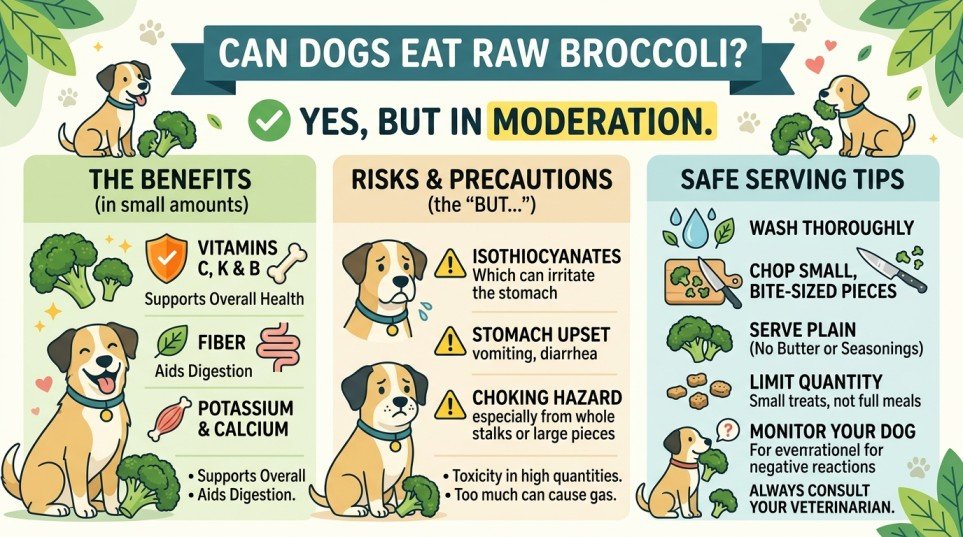
Both raw and cooked plain broccoli are acceptable for dogs. Each has its trade offs:
Raw broccoli: Retains more nutrients, including vitamin C. However, the fibrous texture is harder for some dogs to chew properly, which increases the choking risk from stalks. Raw florets are fine when cut into small, bite sized pieces.
Cooked broccoli (steamed or boiled, plain): Softer texture reduces the choking risk. Easier on digestion. The cooking process reduces some nutrient content but also reduces some isothiocyanate activity. Do not add any oil, butter, salt, or seasoning.
What to avoid: Stir fried broccoli, broccoli cooked with garlic or onion, broccoli in cheese sauce, or any broccoli dish made for human consumption with added flavoring.
What to Do If My Dog Ate Broccoli
Stay calm. What happens next depends entirely on how much your dog ate and whether it was plain.
Step 1: Identify What Was Eaten
- Plain florets, small amount: Monitor at home for 12 to 24 hours.
- Plain florets, large amount: Call your vet. GI upset is likely.
- Stalk or large chunk: Watch carefully for signs of choking or obstruction.
- Seasoned broccoli (garlic, onion, butter, salt): Call your vet right away.
- Broccoli with cheese sauce or unknown ingredients: Call your vet.
Step 2: Watch for These Symptoms
After eating broccoli, monitor your dog for the following signs within 12 to 24 hours:
- Excessive gas or bloating
- Vomiting or retching
- Diarrhea or loose stools
- Reduced appetite
- Lethargy or unusual tiredness
- Pawing at the mouth or gagging (possible stalk obstruction)
- Abdominal pain or hunched posture
Step 3: Who to Call
- Your vet: First point of contact for any concerning symptoms or large ingestion.
- ASPCA Animal Poison Control: (888) 4264435, available 24 hours a day, 7 days a week (consultation fee may apply).
- Pet Poison Helpline: (855) 7647661, 24/7 toxicology support.
Nutritional Benefits of Broccoli for Dogs
When given in appropriate amounts, broccoli offers genuine nutritional value for dogs:
- Vitamin C: Supports immune function. Dogs produce their own vitamin C, but supplemental amounts from food are generally safe.
- Vitamin K: Supports bone health and blood clotting.
- Fiber: Supports healthy digestion and bowel regularity.
- Folate: Supports cell function and red blood cell production.
- Potassium: Supports heart health and muscle function.
- Calcium: Supports bone and dental health.
- Low calorie: Broccoli is a low calorie treat, making it suitable for dogs on weight management diets.
These benefits are real, but they come with the caveat that the same nutrients are available through properly formulated dog food. Broccoli is a beneficial addition, not a nutritional necessity.
Can Dogs Eat Broccoli Every Day?
Not recommended. Daily feeding of broccoli increases the cumulative isothiocyanate load on your dog’s digestive system. Over time, this is more likely to cause ongoing GI upset and, theoretically in large amounts over a long period, could have a mild effect on thyroid function in dogs with preexisting thyroid conditions.
Broccoli is best given as an occasional treat, a few times per week at most, and always within the 10 percent guideline for total daily calorie intake.
Can Dogs Eat Broccoli Stems?
Technically yes, but with caution. The stems are fibrous and dense, making them the most likely part of the plant to cause choking or a GI blockage. If you do offer broccoli stems, cut them into very small, thin pieces appropriate for your dog’s size. For small dogs, it may be safer to skip the stems entirely and only offer florets.
Can Puppies Eat Broccoli?
Puppies have more sensitive digestive systems than adult dogs. While broccoli is not toxic to puppies, it is generally better to wait until your dog is fully grown before introducing human foods as treats. If you do give a puppy broccoli, use only a very small piece of plain cooked floret and monitor closely for any digestive reaction.
Safe Alternatives to Broccoli for Dogs
If you want to give your dog a healthy vegetable treat but prefer something with fewer caveats, these options are dog friendly and widely recommended by veterinarians:
- Carrots: Low calorie, high in beta carotene and fiber. Great for chewing and dental health. Safe raw or cooked.
- Green beans (plain): Low calorie, a good source of fiber and vitamins. Safe raw, steamed, or frozen without seasoning.
- Cucumber: Very low calorie, hydrating, safe for most dogs in moderate amounts.
- Cooked sweet potato (plain): Excellent source of beta carotene and dietary fiber. A highly digestible treat for most dogs.
- Plain pumpkin (not pie filling): Excellent for digestive health. Commonly recommended by vets for dogs with upset stomachs.
- Blueberries: Rich in antioxidants, easy to digest, and a low calorie snack most dogs enjoy.
Frequently Asked Questions: Dogs and Broccoli
Is broccoli safe for dogs?
Yes, plain broccoli is safe for dogs in small amounts. It is not toxic. The main concern is isothiocyanates in the florets, which can cause GI upset in large quantities, and the stalks, which can be a choking hazard.
Can dogs eat raw broccoli?
Yes. Raw, plain broccoli florets cut into small pieces are safe for most dogs. The texture is harder than cooked broccoli, so always cut into bite sized pieces appropriate for your dog’s size, especially for smaller breeds.
Can dogs eat cooked broccoli?
Yes, as long as it is cooked plain without any added oil, butter, salt, garlic, or other seasonings. Steamed or boiled plain broccoli is actually easier to digest than raw and reduces the choking risk.
How much broccoli is too much for a dog?
Broccoli should not exceed 10 percent of your dog’s daily food intake. For small dogs, stay under 5 percent. Large amounts can cause significant GI upset due to the isothiocyanate content. Dogs with thyroid conditions or digestive sensitivities should eat even less or avoid it entirely.
Can dogs eat broccoli and cheese?
No. Cheese adds fat, salt, and dairy to the equation. Many dogs are lactose intolerant to varying degrees. And if the cheese sauce contains garlic or onion, it becomes actively toxic. Always give broccoli plain.
Can dogs eat frozen broccoli?
Yes, if it is plain frozen broccoli without any added salt or seasoning. Thaw it first or serve it as a small frozen treat in summer. Check the ingredient label to confirm it contains only broccoli.
Is broccoli good for dogs with diabetes?
Broccoli is low in sugar and high in fiber, which makes it a potentially suitable occasional treat for diabetic dogs. However, any dietary changes for a diabetic dog should be discussed with your vet first, as even low glycemic foods can affect insulin management.
What happens if a dog eats too much broccoli?
Eating too much broccoli is most likely to cause gas, bloating, vomiting, and diarrhea due to the isothiocyanate content. In most healthy dogs, these symptoms are temporary and resolve within 24 hours. If symptoms are severe or persistent, contact your vet.
Final Word: Should You Feed Your Dog Broccoli?
Yes, with the right approach, broccoli is a safe and nutritious treat for most healthy adult dogs. Keep portions small, always serve it plain, cut the stalks into small pieces or skip them entirely, and do not give it every day.
The biggest risks are seasoned or buttered broccoli containing garlic or onion, and large amounts of stalk causing a physical obstruction. Avoid those two scenarios and broccoli is one of the more genuinely dog friendly vegetables you can share.
When in doubt, stick to well established dog safe options like carrots, green beans, or plain pumpkin. Your dog will not know the difference, and you will have less to worry about.
Reviewed & Recommended by Dr. Ubaidur Rahman, DVM
Veterinary Review: Dr. Ubaidur Rahman, DVM, reviewed this guide for the safety of broccoli for dogs, including appropriate preparation and potential digestive concerns.
Dr. Ubaidur Rahman’s Recommendation: Broccoli can be a safe occasional treat for most healthy dogs when served in small amounts. It provides fiber and nutrients, but too much may cause gas or stomach upset. Serve it plain, washed, and cut into small, manageable pieces. Avoid broccoli prepared with butter, heavy seasoning, garlic, onion, or other ingredients that may be harmful to dogs.
Sources and References
- ASPCA Animal Poison Control Center: People Foods to Avoid Feeding Your Pets. aspca.org
- Merck Veterinary Manual: Overview of Food Hazards for Animals. merckvetmanual.com
- PetMD: Can Dogs Eat Broccoli? (Updated 2025). petmd.com
- American Kennel Club: Can Dogs Eat Broccoli? akc.org
- VCA Animal Hospitals: Vegetables and Fruits Which Are Safe for My Dog? vcahospitals.com
- Purina: Can Dogs Eat Broccoli? purina.com
- Pet Poison Helpline: (855) 764 7661. petpoisonhelpline.com
Discover More:-
- Can Dogs Have Cream Cheese? A Complete Vet-Backed Guide-2026
- Can Dogs Eat Banana? A Complete Vet-Backed Guide (2026)

Dr. Ubaid Ur Rehman, DVM is a qualified veterinarian with expertise in pet health, nutrition, and preventive care. He is passionate about helping pet owners make informed decisions through accurate, research-based, and practical advice. As a veterinary professional, he reviews and contributes content to ensure reliable information for dog and pet owners.