
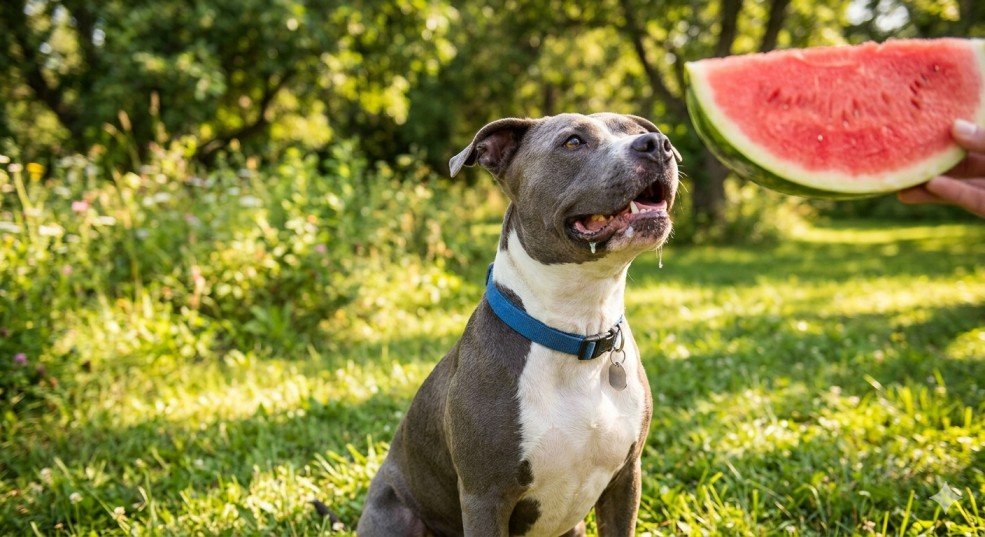
Is Watermelon Safe for Dogs? Seeds, Rind & Serving Tips
Quick Answer: Plain watermelon flesh, with seeds and rind removed, is safe for most healthy dogs in moderate amounts. The rind and seeds are the parts to watch out for. Flavored watermelon products, watermelon candy, and sugar-added juice are all unsafe.
Your dog is eyeing that bright red slice of watermelon in your hand on a hot summer day. Before you share a bite, you want to be sure. The good news? Watermelon is one of the most dog-friendly fruits out there. But the full story has a few important details every dog owner should know.
This guide covers everything: whether watermelon is truly safe, which parts to avoid, how much is appropriate, what the research says about diabetic dogs and watermelon, and what to do if your dog ate the rind or seeds.
Is Watermelon Safe for Dogs? The Short Answer
Yes, watermelon is safe for dogs, and it is actually one of the better fruit treats you can offer. The red flesh of a ripe, seedless watermelon is non-toxic, hydrating, low in calories, and packed with vitamins and antioxidants that benefit dogs.
The key qualifier in every vet recommendation is moderation. Watermelon contains natural sugar, and too much of it, even from a natural source, can cause digestive upset and blood sugar spikes, especially in dogs with diabetes or weight issues.
Is Watermelon Healthy for Dogs? Nutritional Benefits
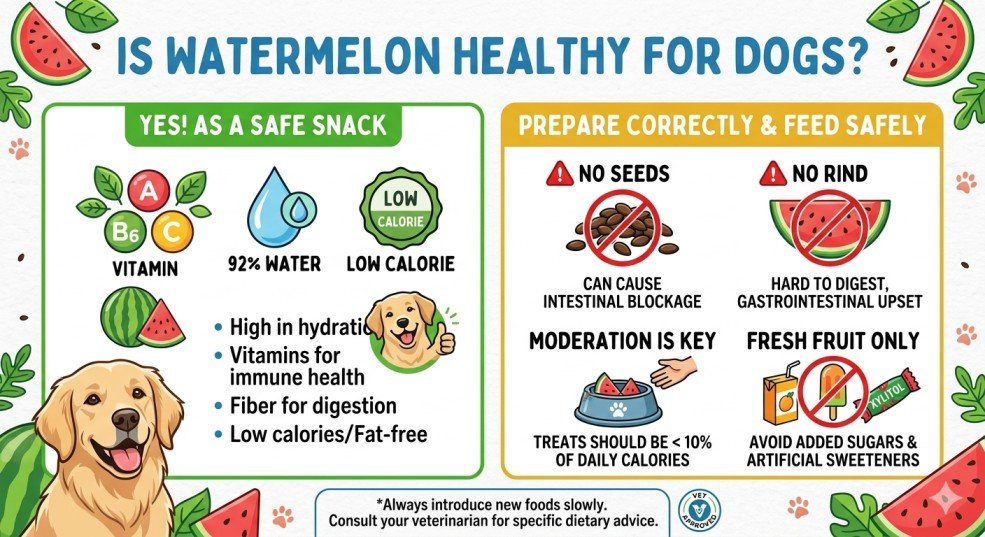
Watermelon is not just safe, it is genuinely nutritious for dogs when served correctly. Here is what the flesh provides per 100 grams:
| Nutrient | Amount (per 100g) | Dog Benefit |
| Water | 92% | Hydration support |
| Vitamin A | 569 IU | Eye and skin health |
| Vitamin C | 8.1 mg | Immune function |
| Vitamin B6 | 0.045 mg | Brain and nerve health |
| Potassium | 112 mg | Heart and muscle function |
| Lycopene | 4.5 mg | Antioxidant, cancer protection |
| Fiber | 0.4 g | Digestive health |
| Sugar | 6.2 g | Limit for diabetic dogs |
| Fat | 0.2 g | Virtually none |
A few of these nutrients deserve extra attention for dog owners:
- Lycopene: This powerful antioxidant gives watermelon its red color and has been studied for its role in reducing oxidative stress and supporting cardiovascular health in animals.
- Water content (92%): Watermelon is one of the most hydrating foods dogs can eat. On hot days or after exercise, it can help dogs stay cool and maintain fluid balance.
- Vitamin A: Supports healthy skin, coat, and eye function in dogs.
- Vitamin B6: Plays a role in protein metabolism and neurological health.
Compared to many other dog treats, plain watermelon flesh is very low in fat and calories, making it a reasonable option for dogs managing their weight.
Can Dogs Eat Melon? What About Other Melon Varieties?
Yes, dogs can eat melon in general, but the rules vary slightly by variety. Watermelon is the most commonly discussed, but dog owners frequently ask about honeydew, cantaloupe, and orange-fleshed melons as well.
Can Dogs Have Melon (Cantaloupe)?
Cantaloupe is safe for dogs in small quantities. It is higher in sugar than watermelon and slightly higher in beta-carotene, which converts to vitamin A. The same rules apply: remove the rind and seeds, serve only the flesh, and keep portions small. Dogs with diabetes or obesity should have cantaloupe sparingly due to its higher sugar concentration.
Can Dogs Eat Orange Melon?
Orange melon refers most commonly to cantaloupe and some varieties of honeydew. These are safe in the same way cantaloupe is: flesh only, no rind, no seeds. The orange flesh is rich in beta-carotene and is not toxic to dogs. Limit the quantity to avoid blood sugar spikes, particularly in older dogs or those with metabolic conditions.
Can Dogs Have Honeydew Melon?
Honeydew is also safe for dogs in moderation. Its pale green flesh has a lower lycopene content than watermelon but still provides hydration, vitamin C, and B vitamins. It contains slightly more sugar per gram than watermelon. As with all melon varieties, the rind is off-limits.
Watermelon Safety by Part: Quick Reference Table
| Part of Watermelon | Safe? | Main Risk | Verdict |
| Red flesh (seedless) | Yes | Sugar content | Safe in moderation |
| Red flesh (with seeds) | With caution | Seed ingestion | Remove seeds first |
| Black seeds | No | Choking, intestinal blockage | Always remove |
| White/pale seeds | Generally yes | Very low risk | Monitor, remove when possible |
| Rind (green outer) | No | GI upset, blockage risk | Avoid completely |
| Rind (white inner) | No | Digestive irritation | Avoid completely |
What Parts of Watermelon Are Dangerous for Dogs?
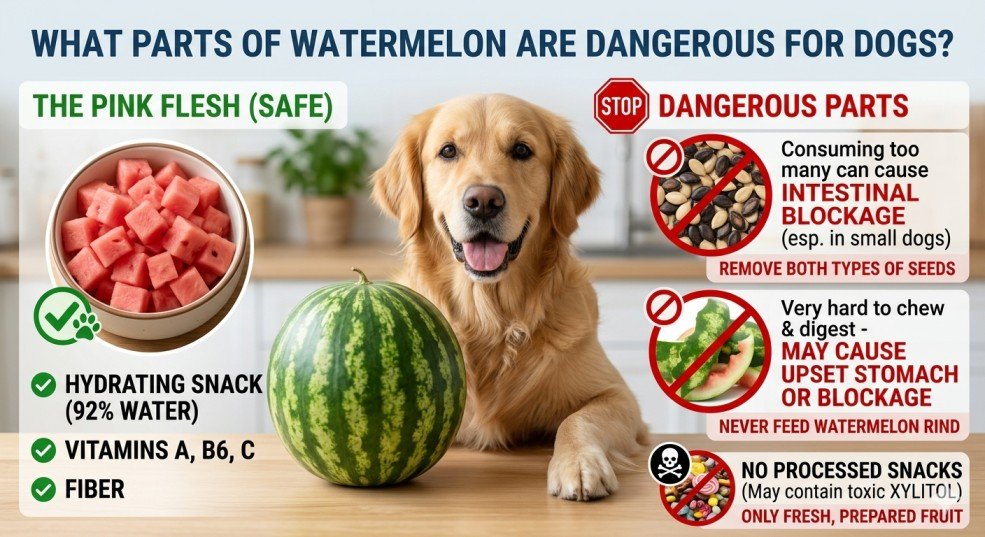
1. Watermelon Seeds
Black watermelon seeds are a genuine concern, especially for smaller dogs. While a single seed swallowed by a large dog is unlikely to cause serious harm, multiple seeds can cause intestinal blockage. Seeds can also present a choking hazard.
The pale, underdeveloped white seeds found in some watermelons carry very low risk and are generally considered safe, but removing them when possible is still the sensible approach.
If your dog ate watermelon with seeds, monitor them for the next 24 to 48 hours for signs of constipation, straining to defecate, loss of appetite, vomiting, or abdominal bloating. These can indicate a seed blockage.
2. Watermelon Rind
The watermelon rind, both the tough green outer layer and the pale white inner layer, should never be fed to dogs. The rind is difficult for dogs to digest, can cause gastrointestinal upset, and in some cases can lead to intestinal obstruction, especially in small breeds.
Unlike the soft flesh, the rind does not offer meaningful nutritional benefits and presents unnecessary risk. Always cut away both layers completely before offering watermelon to your dog.
3. Flavored or Sweetened Watermelon Products
Watermelon-flavored candies, juices, and jellies are not safe for dogs. These products typically contain:
- Xylitol: An artificial sweetener found in many sugar-free candies and products. Xylitol is highly toxic to dogs, causing rapid insulin release, hypoglycemia, liver failure, and death.
- Added sugar: Spikes blood sugar and contributes to obesity and dental problems.
- Artificial colors and preservatives: Can irritate the digestive tract.
- Citric acid: Common in flavored beverages and can cause GI upset in dogs.
Always serve dogs plain, fresh watermelon flesh and nothing processed or flavored.
Can Diabetic Dogs Eat Watermelon?
This is one of the most important nuances in the watermelon discussion, and most articles skip over it. The short answer is: it depends on the individual dog and portion size.
Watermelon has a relatively high glycemic index (72) but a very low glycemic load due to its high water content. This means that despite tasting sweet, a small portion of watermelon does not cause the dramatic blood sugar spike you might expect.
However, diabetic dogs require carefully controlled diets, and any fruit with natural sugar, including watermelon, should only be introduced with your veterinarian’s explicit guidance. If your vet approves watermelon for a diabetic dog, the portion should be very small: one or two small cubes as an occasional treat, not a regular snack.
Signs that watermelon has affected a diabetic dog’s blood sugar include increased thirst and urination, lethargy, or changes in appetite. If you notice these after giving watermelon, discontinue and contact your vet.
Key point: Diabetic dogs can potentially have tiny amounts of watermelon, but only with direct veterinary approval and in strictly limited quantities.
How Much Watermelon Can Dogs Eat?
There is no universal dose, but veterinary nutritionists offer a practical framework: treats of any kind, including fruit, should make up no more than 10 percent of a dog’s daily caloric intake.
For watermelon specifically, a reasonable starting point by size:
- Small dogs (under 20 lbs): 1 to 2 small cubes (about an inch each), occasionally
- Medium dogs (20 to 50 lbs): 3 to 5 small cubes, occasionally
- Large dogs (over 50 lbs): up to a one-inch slice, occasionally
Start with a smaller amount than this on the first introduction to watch for any signs of digestive sensitivity. Some dogs have individual intolerances to certain fruits even when those fruits are generally considered safe.
How to Safely Serve Watermelon to Your Dog
Follow these steps every time you offer watermelon as a treat:
- Choose seedless watermelon: This eliminates the most common risk.
- Remove all rind: Cut away the entire green and white portions, leaving only the red flesh.
- Cut into small, bite-sized cubes: Reduces choking risk and helps with portion control.
- Serve chilled, not frozen: Very hard frozen watermelon can damage teeth. Chilled is fine, frozen chunks are not recommended.
- Add nothing: No salt, no sugar, no seasoning. Plain flesh only.
- Monitor after first serving: Watch for diarrhea, vomiting, or signs of gas for 24 hours after the first introduction.
What to Do If Your Dog Ate Watermelon Rind or Seeds
Stay calm and assess the situation:
Dog Ate Watermelon Seeds
- One or two seeds, large dog: Monitor at home. Watch for vomiting, straining to defecate, or appetite loss over 48 hours.
- Multiple seeds, any dog: Call your vet for guidance.
- Small dog, multiple seeds: Call your vet. Higher risk of blockage in smaller digestive tracts.
Dog Ate Watermelon Rind
- Small piece of rind, large dog: Monitor for GI upset for 24 to 48 hours. Watch for diarrhea, vomiting, bloating.
- Large amount of rind, any dog: Contact your vet. Risk of obstruction.
- Small dog ate any amount of rind: Call your vet proactively.
If at any point your dog shows signs of intestinal blockage (repeated vomiting, inability to defecate, abdominal pain, lethargy, or loss of appetite lasting more than 24 hours), go to an emergency vet immediately.
Safe Melon Alternatives for Dogs
If you want variety in your dog’s fruit treats, here are other options that are dog-safe and offer similar hydration and nutritional benefits:
- Cantaloupe: Flesh only, no seeds or rind. Higher in beta-carotene than watermelon.
- Honeydew melon: Flesh only, no rind. Good source of vitamin C and B vitamins.
- Cucumber: Very low in calories, high in water content, great for weight-conscious dogs.
- Blueberries: Rich in antioxidants and safe for most dogs including diabetic dogs in small amounts.
- Strawberries: Good source of vitamin C and fiber when given in small quantities.
- Peaches (fresh, no pit): Safe in small amounts, pit is toxic and must always be removed.
Avoid grapes, raisins, citrus fruit (in large amounts), and cherries, as these are genuinely harmful to dogs.
Frequently Asked Questions: Dogs and Watermelon
Is watermelon safe for dogs?
Yes. Plain watermelon flesh, with seeds and rind removed, is safe and nutritious for most healthy dogs. It is one of the more dog-friendly fruits available. The rind and seeds are the parts that cause problems.
Can dogs eat melon in general?
Yes, most melons are safe for dogs in small quantities when served correctly. This includes watermelon, cantaloupe, and honeydew. Always remove the rind and seeds before serving, and limit portion sizes to account for the natural sugar content.
Can dogs have melon every day?
It is not recommended to feed dogs melon every day. Treats including fruit should make up no more than 10 percent of a dog’s daily calories. Daily melon can contribute to excess sugar intake, digestive upset over time, and may not leave room for a nutritionally complete diet.
Can dogs eat orange melon?
Yes. Orange melon, most commonly cantaloupe, is safe for dogs in small quantities. Serve only the flesh, remove all seeds and rind, and limit the portion based on your dog’s size. Dogs with diabetes or obesity should have orange melon only with veterinary approval due to its higher sugar content.
Is watermelon healthy for dogs?
Yes, watermelon provides real nutritional benefits: vitamins A, B6, and C; potassium; lycopene; and excellent hydration from its 92 percent water content. It is also very low in fat and calories compared to most treats. These qualities make it one of the healthier fruit options for dogs when served in appropriate portions.
Can diabetic dogs eat watermelon?
Potentially in very small amounts and only with your veterinarian’s approval. Watermelon has a high glycemic index but a low glycemic load due to its high water content. Small portions are unlikely to cause dramatic blood sugar spikes, but diabetic dogs require strict dietary management. Always consult your vet before offering any fruit to a diabetic dog.
What happens if a dog eats watermelon seeds?
A single seed swallowed by a large dog is unlikely to cause serious harm. Multiple seeds, or any seeds in a small dog, can cause intestinal blockage. If your dog ate several seeds, monitor for constipation, vomiting, or appetite loss for 48 hours and call your vet if symptoms appear.
Can dogs eat watermelon rind?
No. The rind, including both the green outer and the white inner layer, is difficult for dogs to digest and can cause gastrointestinal upset or intestinal obstruction. Always remove the entire rind before offering watermelon to your dog.
How much watermelon can I give my dog?
A general guideline is one to two small cubes for small dogs, three to five cubes for medium dogs, and up to a small slice for large dogs, offered occasionally rather than daily. Treats should not exceed 10 percent of your dog’s daily caloric intake.
Is frozen watermelon safe for dogs?
Slightly chilled watermelon is fine and can be a refreshing summer treat. However, hard-frozen chunks of watermelon are not recommended because they can be a choking hazard and may chip a dog’s teeth. If you want to serve frozen watermelon, blend the flesh and freeze it in small silicone molds for a safer texture.
Can Dogs Eat Watermelon Seeds?
Dogs should not eat watermelon seeds. A few small seeds may pass without issues, but swallowing many seeds can increase the risk of digestive upset or an intestinal blockage, especially in small dogs.
Final Word: Should You Give Your Dog Watermelon?
Watermelon is one of the safest and most hydrating fruits you can share with your dog, provided you follow a few simple rules. Stick to the plain red flesh only, always remove seeds and rind, and keep the portions moderate.
For most healthy adult dogs, watermelon is a genuinely good summer treat. For dogs with diabetes, obesity, kidney disease, or other conditions, check with your vet first and keep portions very small if approved.
When in doubt about any new food, introduce it slowly, start with a small amount, and watch your dog’s response before making it a regular part of their treat rotation. A happy, healthy dog is worth the few extra seconds it takes to prepare their watermelon properly.
Reviewed & Recommended by Dr. Ubaidur Rahman, DVM
Veterinary Review: Dr. Ubaidur Rahman, DVM, reviewed this guide for the safety of watermelon for dogs, including the risks associated with seeds, rind, and excessive amounts.
Dr. Ubaidur Rahman’s Recommendation: Watermelon is generally safe for healthy dogs when served properly and in moderation. Remove the seeds and tough rind before giving it to your dog, as they can cause digestive problems and, in larger amounts, may contribute to an intestinal blockage. The flesh can be offered as an occasional, refreshing treat, but too much may cause stomach upset because of its water and natural sugar content.
Sources and References
Merck Veterinary Manual: Fruits Safe and Unsafe for Dogs. merckvetmanual.com
ASPCA Animal Poison Control Center: People Foods to Avoid Feeding Your Pets. aspca.org
PetMD: Can Dogs Eat Watermelon? (Updated 2025). petmd.com
American Kennel Club: Can Dogs Eat Watermelon? akc.org
VCA Animal Hospitals: Nutrition General Feeding Guidelines for Dogs. vcahospitals.com
Purina: Can Dogs Eat Watermelon? purina.com
Pet Poison Helpline: Fruits Toxic to Dogs. petpoisonhelpline.com
Discover More:-
- Can Dogs Eat Banana? A Complete Vet-Backed Guide (2026)
- Can Dogs Eat Blueberries? Vet-Approved Guide (2026),Safe Amounts, Benefits & Risks

Dr. Ubaid Ur Rehman, DVM is a qualified veterinarian with expertise in pet health, nutrition, and preventive care. He is passionate about helping pet owners make informed decisions through accurate, research-based, and practical advice. As a veterinary professional, he reviews and contributes content to ensure reliable information for dog and pet owners.