
Can Dogs Have Cream Cheese? Benefits, Risks & Safe Amounts
Quick Answer: A tiny lick or small smear of plain cream cheese is unlikely to seriously harm a healthy adult dog. But flavored varieties, especially those with onion, garlic, or chive, are toxic and should never be given. Cream cheese with xylitol is a life-threatening emergency. And even plain cream cheese carries real risks from fat content and lactose intolerance.
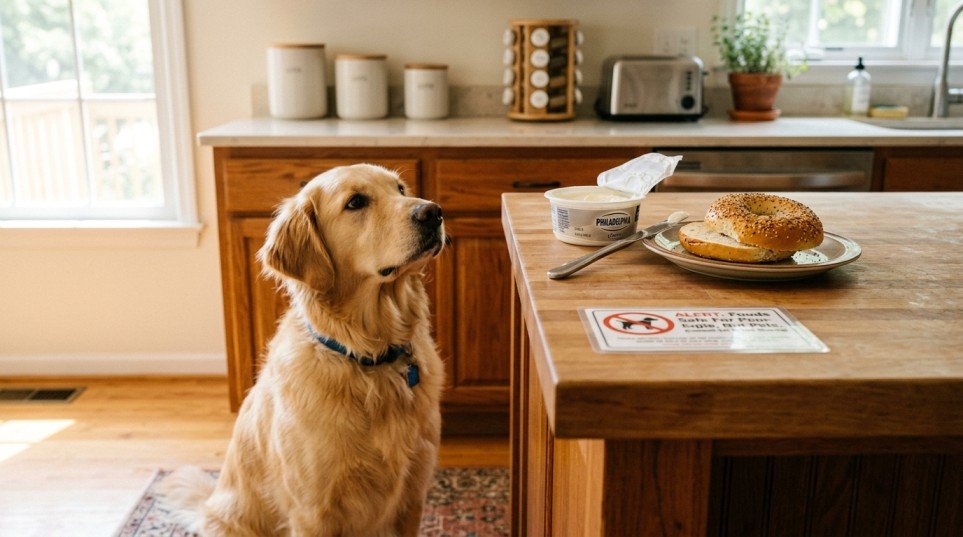
Your dog is staring at the bagel in your hand with those irresistible eyes. You have a little cream cheese left on the knife. Is it safe to let them lick it? The answer is not a flat yes or no, and most of what you find online either oversimplifies the risk or skips the details that actually matter for your dog.
This guide covers every angle: whether cream cheese is toxic to dogs, how much is too much, which types are dangerous, what happens if your dog already ate some, and how cream cheese connects to other common foods dog owners wonder about, including ham, sugar, chorizo, Lays chips, and Chinese food.
Can Dogs Have Cream Cheese? The Short Answer
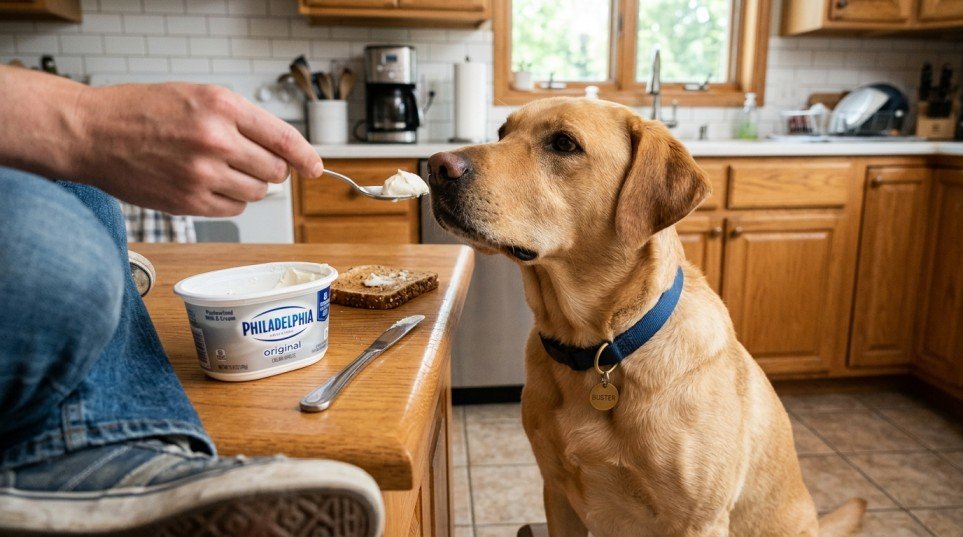
Plain cream cheese is not toxic to dogs, but it is not a safe or recommended treat either. A very small amount of plain, full-fat cream cheese is unlikely to cause a serious emergency in a healthy adult dog. However, the high fat and sodium content, combined with lactose that many dogs cannot properly digest, makes cream cheese a food you should avoid sharing regularly.
The bigger concern with cream cheese is not a single dramatic toxic reaction. It is the cumulative effect of high fat, added sodium, and dairy on a dog’s digestive system and long-term health.
What Makes Cream Cheese Risky for Dogs?
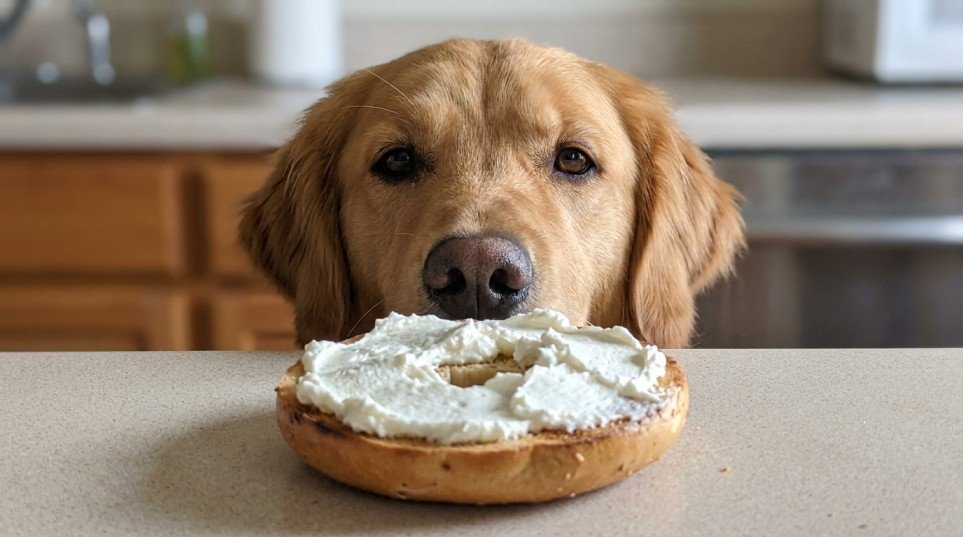
1. High Fat Content The Biggest Threat
Cream cheese is almost entirely fat and dairy. A single tablespoon contains around 5 grams of fat, which is a significant load for a dog’s digestive system. Dogs that consume too much fat, especially in one sitting, are at serious risk of:
- Gastrointestinal upset vomiting, diarrhea, and loose stools
- Pancreatitis inflammation of the pancreas, which can become life-threatening
- Weight gain and obesity if cream cheese is given regularly
Pancreatitis is one of the most commonly triggered conditions in dogs who eat fatty human foods. Symptoms include vomiting, abdominal pain, lethargy, and loss of appetite. In severe cases, pancreatitis can be fatal.
2. Lactose Intolerance in Dogs
Most adult dogs produce lower levels of lactase, the enzyme needed to digest lactose found in dairy products. Cream cheese, being a dairy product, contains lactose that many dogs simply cannot properly break down. The result is predictable: gas, bloating, diarrhea, and abdominal discomfort.
Some dogs tolerate small amounts of dairy better than others, but there is no reliable way to know how sensitive your specific dog is without trial and, often, error.
3. Sodium Content
Plain cream cheese contains sodium that, while modest for a human, adds up quickly for a small dog. Excess sodium in dogs causes increased thirst and urination, and in larger amounts, can lead to sodium ion poisoning with symptoms including vomiting, diarrhea, tremors, and seizures.
4. Flavored Varieties A Serious Danger
This is where cream cheese goes from risky to genuinely dangerous. Many flavored cream cheeses include ingredients that are toxic to dogs:
- Onion and garlic cream cheese: Both are highly toxic to dogs, causing red blood cell damage and hemolytic anemia. Even a small amount of onion or garlic in cream cheese can cause serious harm.
- Chive cream cheese: Chives belong to the same plant family as onion and garlic and carry the same toxicity risk.
- Strawberry or fruit flavors: Often contain added sugars, artificial sweeteners, or fruit concentrates that are unsuitable for dogs.
Never assume that a flavored cream cheese is safe just because it smells appealing to your dog. Always read the ingredient list.
5. Xylitol A Life-Threatening Additive
This is the most critical warning in this entire guide. Some low-fat or reduced-sugar cream cheese products contain xylitol, an artificial sweetener that is extremely toxic to dogs. Even a small amount of xylitol can cause rapid insulin release, leading to hypoglycemia (dangerously low blood sugar), and in larger amounts, acute liver failure.
If you suspect your dog ate any product containing xylitol, this is a veterinary emergency. Do not wait for symptoms.
Cream Cheese Risk by Type: Quick Reference Table
| Type of Cream Cheese | Fat Content | Main Risk for Dogs | Verdict |
| Plain, full-fat | High | Weight gain, pancreatitis | Tiny amounts only, rarely |
| Low-fat / Reduced-fat | Moderate | May contain additives | Not recommended |
| Whipped cream cheese | High | Extra air + fat, still risky | Avoid |
| Flavored (onion, garlic, chive) | High | Toxic ingredients (onion/garlic) | Never give toxic |
| Flavored (strawberry, blueberry) | High | Added sugars, artificial flavors | Avoid |
| Cream cheese frosting / desserts | Very High | Sugar, xylitol risk, fat overload | Dangerous never give |
Can Dogs Have Cream Cheese With Ham?
Many dog owners wonder about this combination because bagels with cream cheese and ham are a common snack. The short answer: no, and the ham is actually the bigger problem here.
Ham is extremely high in sodium and fat, both of which are harmful to dogs. The salt content in even a small slice of ham can push a dog well past the safe sodium threshold for their body weight. Combined with the fat in cream cheese, this pairing creates a compounded risk of:
- Salt toxicity excessive sodium causing vomiting, tremors, seizures
- Pancreatitis from the combined fat load of ham and cream cheese
- Gastrointestinal distress stomach upset, diarrhea
Why can’t dogs have ham? Ham is cured with large amounts of salt and preservatives. It is not poisonous in the way garlic is, but it is genuinely harmful due to its sodium and fat profile. Dogs that eat ham regularly face real risks of sodium overload and weight-related health problems. A small bite is unlikely to be an emergency, but ham should not be a regular part of any dog’s diet.
Can Dogs Have Sugar? What About Cream Cheese Desserts?
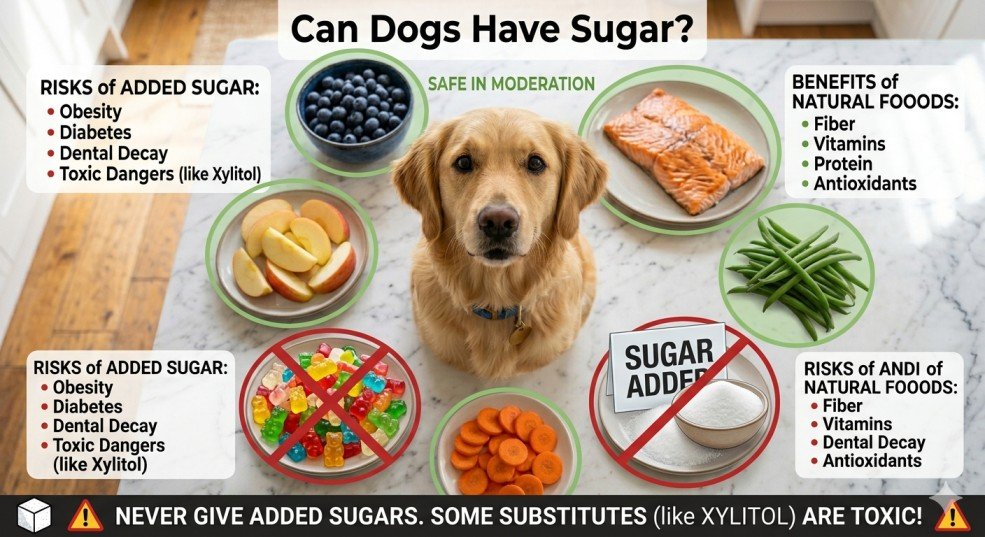
Plain sugar is not acutely toxic to dogs the way chocolate or xylitol is. However, that does not make it safe. Dogs do not need sugar in their diet, and regularly feeding sugary foods leads to weight gain, dental decay, and metabolic issues including insulin resistance over time.
Cream cheese frosting, cheesecake, or any cream cheese used in a dessert context typically contains large amounts of sugar alongside the already high fat content. This combination is particularly problematic because:
- High sugar spikes blood glucose and contributes to obesity
- Desserts often contain other harmful ingredients like chocolate, raisins, or nutmeg
- The fat and sugar together dramatically increase pancreatitis risk
- Some dessert cream cheeses contain xylitol as a sugar substitute which is toxic
Can dogs have sugar? Technically, a tiny amount of plain sugar will not cause an acute emergency. But intentionally giving your dog sugary foods, including cream cheese desserts, is unnecessary and harmful over time. Skip it entirely.
Can Dogs Eat Chorizo? Is It Safer Than Cream Cheese?
No, chorizo is not safer. In fact, chorizo is one of the more dangerous processed meats you can feed a dog. Here is why:
- Extremely high fat: Chorizo is a fatty cured sausage, and even small amounts put dogs at serious pancreatitis risk.
- Very high sodium: Like ham, chorizo is heavily salted and seasoned, pushing dogs toward sodium toxicity quickly.
- Spices and seasonings: Chorizo typically contains garlic powder, paprika, and chili spices. Garlic is toxic to dogs, and capsaicin from chili irritates the gastrointestinal tract and mucous membranes.
- Preservatives and curing agents: Processed meats contain nitrates and other curing compounds that are not appropriate for dogs.
Can dogs eat chorizo? No. Chorizo is unsafe for dogs due to its combination of high fat, high sodium, toxic spices, and preservatives. Even a small piece can cause vomiting and diarrhea. Regular exposure risks pancreatitis and salt poisoning. Keep chorizo away from your dog entirely.
Can Dogs Eat Lays Chips? And What About Salty Snack Pairings?
Lays chips are one of the most commonly searched snacks for dog safety, and the answer is a clear no. While chips are not acutely poisonous, they are harmful for the same core reasons as many of the other foods in this guide:
- High sodium: A single serving of Lays chips contains far more sodium than a dog of any size should consume in a day.
- High fat: Fried chips are heavy in the kind of fat that strains a dog’s digestive system and pancreas.
- No nutritional value: Chips offer nothing beneficial to a dog. They are pure empty calories with active risks attached.
Can dogs eat Lays chips? No. Even one or two chips add meaningful sodium and fat with no benefit. Some flavored varieties like sour cream and onion or ranch contain garlic and onion powder, making them actively toxic rather than just unhealthy.
The connection to cream cheese is worth noting: if you are eating chips and cream cheese dip, keep the whole spread away from your dog. The combination of dairy, fat, sodium, and potentially toxic flavorings in that snack setup is a recipe for a sick dog.
Can Dogs Have Chinese Food?
This is a broader question that deserves a direct answer: most Chinese restaurant food is unsafe for dogs, and some of it is genuinely dangerous.
Here is what makes Chinese food problematic for dogs:
- Garlic and onion: Used extensively in Chinese cooking, both in cooking oils, sauces, and marinades. These are toxic to dogs at any meaningful amount.
- High sodium: Soy sauce, oyster sauce, and MSG-based seasonings pack enormous amounts of sodium into even small servings. A dog that laps up soy sauce from a dropped container could develop sodium toxicity.
- Sugar: Many Chinese dishes, especially sweet and sour preparations and teriyaki-style sauces, contain large amounts of added sugar.
- Oil and fat: Chinese stir-fry cooking uses significant amounts of cooking oil that can trigger gastrointestinal distress and pancreatitis.
- Xylitol risk: Some Chinese restaurant sauces, particularly reduced-calorie condiments, may contain artificial sweeteners including xylitol.
Can dogs have Chinese food? As a rule, no. Plain steamed rice or plain steamed chicken with no sauce or seasoning is technically safe, but anything from a Chinese takeout container with sauce, seasoning, or mixed ingredients should not be given to your dog. The risk of garlic, onion, and sodium exposure is too high.
How Much Cream Cheese Is Safe for Dogs?
If you are using cream cheese as a vehicle for giving a pill or medication, a very small amount of plain, full-fat cream cheese is acceptable occasionally. The practical guideline from veterinary nutrition sources:
No more than a pea-sized amount of plain cream cheese for a small dog, and no more than a teaspoon for a large dog, and only rarely, not as a regular treat.
To put that in context by size:
- Small dog under 20 lbs (e.g., Chihuahua, Shih Tzu): pea-sized or less
- Medium dog 20 to 50 lbs (e.g., Beagle, Cocker Spaniel): no more than half a teaspoon
- Large dog over 50 lbs (e.g., Labrador, German Shepherd): no more than 1 teaspoon
Dogs with a history of pancreatitis, lactose intolerance, obesity, or digestive sensitivity should not be given cream cheese at all, regardless of the amount.
What to Do If Your Dog Ate Cream Cheese
Stay calm. What matters most is what kind they ate and how much.
Step 1: Identify What Was Eaten
- Plain cream cheese, small lick: Monitor at home for 24 hours.
- Plain cream cheese, larger amount: Call your vet for guidance on whether to induce vomiting.
- Flavored cream cheese with onion, garlic, or chives: Call your vet immediately. These are toxic.
- Cream cheese with xylitol: Emergency. Go to a veterinary clinic immediately.
- Cream cheese frosting or dessert: Call your vet. Risk of toxic ingredients and sugar overload.
Step 2: Watch for These Symptoms
If your dog ate cream cheese and you are monitoring at home, watch for these signs within 24 hours:
- Vomiting or retching
- Diarrhea or loose stools
- Gas, bloating, or abdominal discomfort
- Lethargy or unusual tiredness
- Loss of appetite
- Tremors, collapse, or pale gums seek emergency care immediately
Step 3: Who to Call
- Your vet: First point of contact for any concerning ingestion.
- ASPCA Animal Poison Control: (888) 426-4435, available 24/7 (consultation fee may apply).
- Pet Poison Helpline: (855) 764-7661, 24/7 toxicology support.
Safe Alternatives to Cream Cheese for Dogs
If you want to give your dog a creamy, spreadable treat without the risks, these alternatives are safer:
- Plain, unsweetened pumpkin puree: Great for digestion, low in fat, and most dogs love it.
- Plain, unsweetened peanut butter (xylitol-free): High in protein and healthy fat in small amounts. Always check the label.
- Plain Greek yogurt (no added sugar or flavors): Lower in lactose than cream cheese, with beneficial probiotics.
- Mashed banana: Sweet, soft, and naturally appealing to dogs. High in potassium.
- Plain cooked sweet potato, mashed: Nutrient-dense, low in fat, and easy to use as a pill pocket.
Frequently Asked Questions: Dogs and Cream Cheese
Can dogs have cream cheese?
Plain cream cheese is not toxic, but it is not safe to give regularly. The high fat and lactose content can cause digestive upset and pancreatitis, especially in larger amounts or sensitive dogs. Flavored cream cheese with onion, garlic, or chives is toxic and should never be given.
Is cream cheese bad for dogs?
Yes, in any meaningful amount. Even plain cream cheese carries significant fat and lactose risks. It is not a safe treat choice, even for healthy dogs. A tiny amount used to hide a pill is generally acceptable, but cream cheese should not be a routine part of your dog’s diet.
Why can’t dogs have ham?
Ham is cured with large amounts of salt and fat, both of which are genuinely harmful to dogs. The sodium in ham can cause toxicity symptoms even in moderate amounts, and the fat load is a serious pancreatitis risk. Ham is not safe for dogs, and combining it with cream cheese compounds those risks significantly.
Can dogs have sugar?
Plain sugar is not acutely toxic, but it is not safe to give intentionally. Dogs do not need sugar, and regular consumption causes weight gain, dental disease, and metabolic problems. Xylitol, a common sugar substitute, is fatally toxic to dogs and can be present in cream cheese or dessert products.
Can dogs eat chorizo?
No. Chorizo contains a dangerous combination of high fat, extremely high sodium, garlic powder, and spices that are all harmful to dogs. Even small amounts can cause vomiting and gastrointestinal distress. Regular exposure risks pancreatitis and salt poisoning.
Can dogs eat Lays chips?
No. Lays chips are high in sodium and fat with no nutritional benefit for dogs. Flavored varieties often contain garlic or onion powder, which are toxic. Even plain chips should be avoided due to the sodium content alone.
Can dogs have Chinese food?
Most Chinese restaurant food is not safe for dogs. Garlic, onion, soy sauce, and cooking oils are present in nearly all prepared Chinese dishes. Garlic and onion are toxic, and the sodium levels in Chinese sauces and seasonings can quickly cause sodium toxicity in dogs.
What happens if a dog eats cream cheese with onion or garlic?
Onion and garlic are toxic to dogs and cause damage to red blood cells, leading to hemolytic anemia. Symptoms may not appear for several days, which makes these ingredients particularly dangerous. If your dog ate cream cheese containing onion, garlic, or chive, contact your vet immediately, even if your dog seems fine.
Can cream cheese kill dogs?
Plain cream cheese is unlikely to kill a healthy adult dog in small amounts. However, cream cheese containing xylitol can cause fatal hypoglycemia or liver failure, and cream cheese with onion or garlic can cause toxic blood cell damage. A large amount of plain cream cheese can trigger life-threatening pancreatitis in susceptible dogs. Never treat cream cheese as a harmless snack.
Final Word: Should You Give Your Dog Cream Cheese?
A tiny amount of plain cream cheese is not a medical emergency for most healthy adult dogs. But that does not make it a good idea. The fat content is a genuine pancreatitis risk, the lactose causes digestive problems for many dogs, and the flavored varieties carry toxicity risks that are entirely avoidable.
Cream cheese desserts, cream cheese with ham, cream cheese paired with Lays chips, or any cream cheese mixed into Chinese food are all situations where the risks compound quickly. The other foods in that snack spread, the sodium in ham, the garlic in Chinese sauces, the onion powder in flavored chips, turn a marginal treat into a genuinely dangerous situation.
When in doubt, choose a safer treat. Your dog will be just as happy with a spoonful of plain pumpkin puree or a smear of xylitol-free peanut butter, and you will not spend the next 24 hours watching for symptoms.
Reviewed & Recommended by Dr. Ubaidur Rahman, DVM
Veterinary Review: Dr. Ubaidur Rahman, DVM, reviewed this guide for the safety of cream cheese for dogs, including its fat, dairy, and ingredient content.
Dr. Ubaidur Rahman’s Recommendation: Dogs can have a small amount of plain cream cheese occasionally, but it is not an ideal regular treat. Cream cheese is relatively high in fat and may contain ingredients such as garlic, onion, or added seasonings that can be harmful to dogs. If you offer it, choose plain cream cheese and give only a small amount.
Sources and References
– ASPCA Animal Poison Control Center: Dairy and Cheese. aspca.org
– Merck Veterinary Manual: Pancreatitis in Small Animals. merckvetmanual.com
– PetMD: Can Dogs Eat Cream Cheese? (Updated 2025). petmd.com
– American Kennel Club: Can Dogs Eat Cheese? akc.org
– Pet Poison Helpline: Xylitol Toxicity in Dogs. petpoisonhelpline.com
– VCA Animal Hospitals: Sodium Toxicity in Dogs. vcahospitals.com
– Purina: Can Dogs Eat Dairy Products? purina.com
Discover More:-
- Can Dogs Eat Mango? A Tasty Treat or a Hidden Danger You Need to Know About
- Dogs Vegetables Guide: What Vegetables Can Dogs Eat Safely? 2026

Dr. Ubaid Ur Rehman, DVM is a qualified veterinarian with expertise in pet health, nutrition, and preventive care. He is passionate about helping pet owners make informed decisions through accurate, research-based, and practical advice. As a veterinary professional, he reviews and contributes content to ensure reliable information for dog and pet owners.