
Can Dogs Eat Apples? Vet-Approved Benefits, Risks & Safe Feeding Guide
Quick Answer: Sliced apple with the seeds and core removed is safe and healthy for most dogs. Apple seeds contain a cyanide compound that is toxic in quantity. The core poses a choking risk. Plain, unsweetened applesauce in small amounts is also generally safe but apple juice, candied apples, and apple-flavored products with added sugar or xylitol are not.
Your dog is staring at your apple slice with those irresistible eyes. You want to share but is it actually safe? Unlike some human foods, the answer here is mostly good news. But there are a few critical exceptions that every dog owner needs to know before tossing over that slice.
This guide covers everything dog owners actually search for: whether apples are safe for dogs, which parts are dangerous, how much is too much, what to do if your dog already ate the core or seeds, and whether apple juice or applesauce follow the same rules.
Can Dogs Eat Apples? The Short Answer

Yes dogs can eat apples, and for most healthy dogs, apples are a genuinely beneficial snack. The flesh and skin of a ripe apple are safe and nutritious. The danger lies exclusively in the seeds and the core, which should always be removed before giving apples to your dog.
Apples are one of the more dog-friendly fruits available. They provide fiber, vitamin C, vitamin A, and antioxidants and most dogs find them genuinely tasty. The key is knowing exactly what to remove and how much to give.
What Makes Apples Potentially Dangerous for Dogs?
1. Apple Seeds The Hidden Cyanide Risk
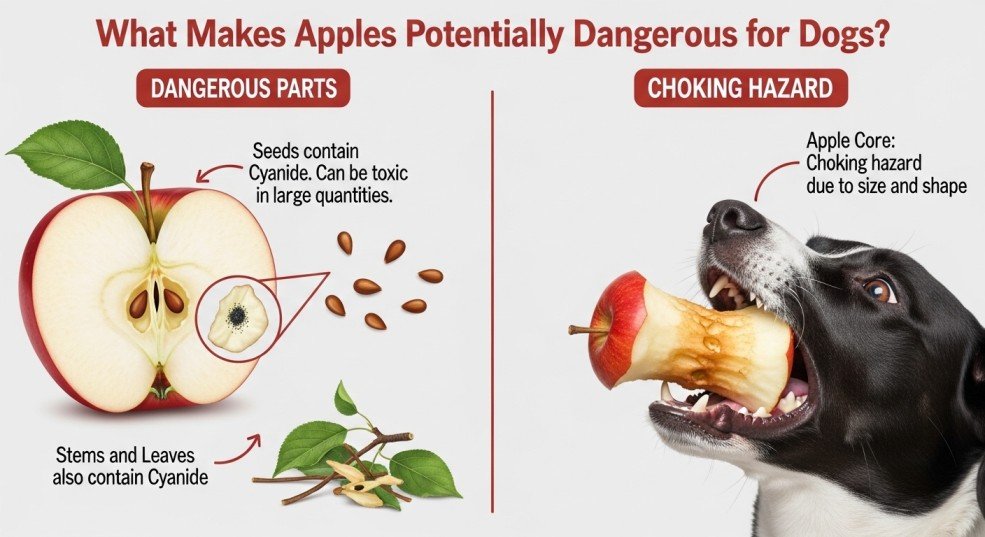
Apple seeds contain amygdalin, a cyanogenic glycoside. When chewed or digested, amygdalin breaks down and releases hydrogen cyanide. Cyanide interferes with cellular oxygen use, which can become serious in sufficient quantities.
Important: A single apple seed is unlikely to harm a large dog, but the risk compounds with regular exposure. Small dogs and puppies are at higher risk from the same seed count. The safest approach is to remove all seeds every time, without exception.
2. The Core A Choking and Blockage Hazard
The apple core is firm, dense, and difficult for most dogs to chew properly. Even in dogs that are enthusiastic chewers, the core can splinter into chunks that cause choking or gastrointestinal obstruction. This is a physical risk, not a toxicity risk but it is just as serious.
3. High Natural Sugar Content
Apples are naturally sweet. A medium apple contains around 19 grams of sugar. For a healthy adult dog eating an occasional slice, this is not a concern. However, dogs with diabetes, obesity, or dental disease should have apples only sparingly or not at all. High-sugar treats worsen blood sugar control, contribute to weight gain, and promote tooth decay.
Can Apples Kill Dogs?
A plain apple slice will not kill a dog. However, two scenarios can become genuinely dangerous:
- Apple seeds in large quantities: A small dog that regularly chews and swallows seeds is building up cyanide exposure over time. Acute cyanide poisoning causes dilated pupils, difficulty breathing, bright red gums, vomiting, and seizures. While a single apple’s seeds are unlikely to reach a toxic threshold in most dogs, the risk is real and entirely preventable.
- Swallowing the core whole: A dog that gulps an apple core can experience a partial or complete gastrointestinal obstruction. Signs include repeated vomiting, loss of appetite, abdominal bloating, and lethargy. Obstruction requires surgical intervention if it does not resolve on its own.
The bottom line: apples are one of the safest fruits you can give a dog but only when properly prepared. Remove seeds and core every single time. Never give a dog a whole apple or an apple with the core intact.
How Much Apple Can a Dog Eat?
Apples should be treated as a treat, not a meal replacement or daily staple. Veterinary nutritionists follow the 10% rule: treats of any kind should not exceed 10% of your dog’s total daily caloric intake.
As a practical guideline for apple slices (seeded and cored):
- Small dogs (under 20 lbs, e.g., Chihuahua, Yorkie): 1–2 thin slices per day
- Medium dogs (20–50 lbs, e.g., Beagle, Cocker Spaniel): 2–3 slices per day
- Large dogs (50+ lbs, e.g., Labrador, German Shepherd): 3–4 slices per day
Going well beyond these amounts can cause digestive upset from the fiber load loose stools, gas, and stomach cramping. Dogs with diabetes or weight issues should have apple treats only with veterinary guidance.
Apple Safety by Part: Quick Reference Table
| Part of Apple | Main Risk | Safe? | Verdict |
| Flesh (peeled or unpeeled) | High natural sugar | Yes | Safe in moderation |
| Skin / Peel | Pesticide residue if unwashed | Yes (washed) | Wash thoroughly first |
| Seeds | Cyanide compound (amygdalin) | No | Always remove |
| Core | Choking / GI obstruction | No | Always remove |
| Applesauce (plain) | Sugar if sweetened | In small amounts | Unsweetened only |
| Apple juice | Sugar, no fiber | Not recommended | Avoid |
| Candied / spiced apple | Sugar, xylitol, spices | No | Dangerous avoid |
Can Dogs Eat Apple Skin?
Yes apple skin is safe for dogs and actually contains a higher concentration of antioxidants and fiber than the flesh. There is no need to peel the apple before giving it to your dog.
The one precaution: wash the apple thoroughly before serving. Conventionally grown apples are among the most heavily pesticide-treated fruits. A thorough rinse under running water removes most surface residue. If you have access to organic apples, those are a safe choice with no additional concern.
Can Dogs Eat Apple Seeds?
No never intentionally. Apple seeds should always be removed before giving apples to your dog. As described above, apple seeds contain amygdalin, which metabolizes into hydrogen cyanide when chewed or digested.
The risk from one or two accidental seeds in a medium or large dog is low. But the risk becomes meaningful with:
- Small or toy breeds, where the same seed count affects a much smaller body
- Regular exposure over weeks or months, where cyanide compounds can accumulate
- Dogs that eagerly chew and crunch seeds rather than swallowing them whole
If your dog accidentally ate an apple core with seeds, read the “What to Do” section below for next steps.
Can Dogs Eat Applesauce?
Plain, unsweetened applesauce is generally safe for dogs in small amounts. Many dog owners use a spoonful of plain applesauce as a pill-hiding vehicle or a food topper. The fiber in applesauce can also support digestion.
The critical caveat: read the label. Many commercial applesauce products contain:
- Added sugar contributing to obesity and dental disease
- High-fructose corn syrup problematic in large quantities
- Xylitol extremely toxic to dogs, causing a rapid drop in blood sugar and potentially fatal liver failure. Even small amounts of xylitol can be lethal.
Only give your dog applesauce that lists “apples” and possibly “water” as the only ingredients. When in doubt, skip commercial applesauce and slice a fresh apple instead.
Can Dogs Eat Apple Juice?
Apple juice is not recommended for dogs. Here’s why it is a worse choice than fresh apple slices:
- No fiber: The beneficial fiber in whole apples is absent in juice.
- Concentrated sugar: The sugar from many apples is condensed into a small liquid volume. Even a few laps provide a significant sugar hit without any nutritional payoff.
- Additives: Store-bought apple juice often contains preservatives, added sugars, and sometimes artificial sweeteners including xylitol.
Fresh water is always the best drink for your dog. If you want to add apple flavor to your dog’s water, a thin slice of apple in their bowl is a far better option than juice.
What to Do If My Dog Ate Apple Seeds or the Core

Stay calm. What you do next depends on what was eaten and how much.
Step 1: Identify What Was Eaten
- A few apple seeds (medium or large dog): Monitor at home for 24 hours for signs of GI upset or cyanide poisoning symptoms.
- Many seeds (small dog, or large quantity in any dog): Call your vet or animal poison control.
- The core (swallowed whole or in large pieces): Call your vet obstruction risk is real.
- Candied, spiced, or xylitol-containing apple product: Go to an emergency vet immediately.
Step 2: Watch for These Symptoms
Signs of cyanide exposure (from seeds):
- Dilated pupils
- Bright red or cherry-colored gums
- Rapid, labored, or difficult breathing
- Vomiting
- Excessive drooling
- Seizures or muscle tremors
Signs of gastrointestinal obstruction (from core):
- Repeated vomiting, especially if it continues for more than a few hours
- Loss of appetite and refusal to drink water
- Abdominal bloating or pain when touched
- Straining to defecate or no bowel movements
- Lethargy
Step 3: Who to Call
- Your vet: First point of contact for any concern.
- (888) 426-4435 available 24/7 (consultation fee may apply).
- Pet Poison Helpline: (855) 764-7661 24/7 toxicology support.
Health Benefits of Apples for Dogs
Unlike avocado, where the risk-benefit calculation is less favorable, apples offer genuine nutritional value that makes them one of the better fruit treats for dogs:
- Vitamin C: Supports immune function and acts as an antioxidant.
- Vitamin A: Supports skin health, coat condition, and vision.
- Dietary fiber: Promotes healthy digestion and regular bowel movements.
- Antioxidants: Quercetin and chlorogenic acid in apples have anti-inflammatory properties.
- Low calorie: A slice of apple contains very few calories appropriate as a training treat.
- Natural teeth cleaning: The crunch and texture of apple slices can help remove plaque from teeth (though not a substitute for dental care).
What About Dog Foods That Contain Apples?
A number of commercially available dog foods and treats include apple as an ingredient. These are generally safe. Commercial products use the flesh in controlled amounts, and processing removes most surface concerns. Apple is also sometimes used as a natural sweetener or fiber source in grain-free and limited-ingredient formulas.
If you are choosing a dog food with apple listed as an ingredient, check that it appears further down the ingredient list (indicating a smaller quantity) and that the product carries an AAFCO nutritional adequacy statement confirming it meets complete and balanced nutritional standards.
Safe Alternatives and Complementary Fruits for Dogs
If you want to give your dog a variety of fruit-based treats alongside apples, these options are also dog-friendly:
- Blueberries: Rich in antioxidants and very low in calories. One of the best fruit treats for dogs.
- Watermelon (seedless, no rind): High in water content a refreshing hydrating snack.
- Banana: Good source of potassium and magnesium. Give in moderation due to sugar content.
- Strawberries: High in vitamin C and fiber. Remove the stems and slice before serving.
- Mango (no pit or skin): Rich in vitamins A, C, and E. Only give the flesh.
- Pear (no seeds or core): Similar nutritional profile to apples with comparable safety rules.
Fruits to avoid entirely: grapes and raisins (can cause kidney failure), cherries (seeds contain cyanide and flesh causes GI upset), and citrus fruits in large quantities (citric acid causes stomach upset).
Frequently Asked Questions: Dogs and Apples
Can dogs eat apples with the skin on?
Yes. Apple skin is safe and nutritious for dogs. It contains more fiber and antioxidants per bite than the flesh. Wash the apple thoroughly before serving to remove pesticide residue.
Can dogs eat apple seeds?
No. Apple seeds contain amygdalin, which releases cyanide when chewed or digested. Always remove all seeds before giving apples to your dog. A seed or two accidentally consumed by a large dog is unlikely to be an emergency, but make it a habit to deseed every time.
Can dogs eat applesauce?
Plain, unsweetened applesauce in small amounts is safe. Always check the label for added sugars, sweeteners, or xylitol all of which are unsafe for dogs. When in doubt, use fresh apple slices instead.
Can dogs eat green apples?
Yes. Green apples (such as Granny Smith) are safe for dogs using the same rules as red or yellow varieties: remove seeds and core, wash thoroughly, and serve in moderation. Green apples are tarter and slightly lower in sugar than red varieties, which may make them a marginally better option for dogs managing weight or blood sugar.
Can dogs eat apple cores?
No. The apple core is a choking hazard and can cause gastrointestinal obstruction, especially in small and medium dogs. Always cut the apple away from the core before serving.
Can dogs eat dried apples?
Small amounts of plain dried apple with no added sugar or preservatives are not toxic, but they are not ideal. Dried fruit is much higher in sugar per gram than fresh fruit, and the chewy texture can stick to teeth and contribute to dental decay. Fresh apple slices are a far better option.
Are apples good for dogs?
Yes, in moderation. Apples provide vitamins A and C, dietary fiber, antioxidants, and very few calories. They are one of the better fruit treats available to dogs. The key precautions removing seeds and core and limiting quantity make them a safe and healthy snack for most dogs.
What should I do if my dog ate an apple core?
If the core was small and your dog is a large breed, monitor for signs of obstruction: vomiting, loss of appetite, bloating, or lethargy. If symptoms appear, or if a small dog swallowed a large core, contact your vet immediately.
Are Apple Seeds Poisonous to Dogs?
Yes, apple seeds can be poisonous to dogs because they contain amygdalin, a compound that releases cyanide when the seeds are crushed and digested. A few accidental seeds are unlikely to cause harm, but larger amounts can be dangerous.
Are Apple Seeds Bad for Dogs?
Apple seeds are not considered safe for dogs due to their cyanide-producing compounds. It’s best to remove all seeds before offering apple slices as a treat.
Why Are Apple Seeds Bad for Dogs?
Apple seeds contain amygdalin, which can release cyanide during digestion if the seeds are chewed or crushed. Cyanide interferes with oxygen use in the body and may cause poisoning in large amounts.
Are Apple Seeds Poisonous for Dogs?
Yes, apple seeds are potentially poisonous for dogs when consumed in significant quantities. Although swallowing one or two whole seeds is usually not an emergency, repeated or large exposures should be avoided.
Do Apple Seeds Contain Cyanide?
Yes, apple seeds naturally contain amygdalin, a cyanogenic compound that can release cyanide after the seeds are damaged and digested. The risk depends on the number of seeds eaten and the dog’s size.
Can Apple Seeds Cause Cyanide Poisoning in Dogs?
Apple seeds can cause cyanide poisoning if a dog chews and eats enough of them. Serious poisoning is uncommon but requires immediate veterinary attention if symptoms develop.
What Are the Symptoms of Cyanide Poisoning in Dogs?
Signs of cyanide poisoning may include difficulty breathing, bright red gums, weakness, excessive drooling, dilated pupils, tremors, collapse, or seizures. Contact a veterinarian immediately if you notice these symptoms after your dog eats apple seeds.
What Should I Do If My Dog Eats Apple Seeds?
If your dog accidentally eats a few apple seeds, monitor them closely for any unusual signs. If they consume a large number of crushed seeds or show symptoms of illness, contact your veterinarian or an emergency animal clinic right away.
Can Dogs Safely Eat Apples Without the Seeds?
Yes, fresh apple flesh is generally safe and healthy for dogs when served without the seeds, core, and stem. Always cut apples into bite-sized pieces and remove all seeds before feeding.
How Can I Prevent Apple Seed Poisoning in Dogs?
Always remove the seeds and core before giving apples to your dog, and keep discarded apple cores out of reach. This simple step greatly reduces the risk of accidental cyanide exposure.
Can Dogs Eat Apple Skin?
Yes, dogs can eat apple skin in moderation. Wash the apple thoroughly to remove pesticides, and serve small pieces to reduce the risk of choking or digestive upset.
Can Dogs Eat Apples With Skin?
Yes, dogs can safely eat apples with the skin on as long as they are washed and the core and seeds are removed. Apple skin provides extra fiber and nutrients but should be fed in moderation.
Can Dogs Eat Granny Smith Apples?
Yes, dogs can eat Granny Smith apples in small amounts. Their tart flavor is safe for most dogs, but always remove the seeds and core and offer bite-sized pieces as an occasional treat.
Final Word: Should You Feed Your Dog Apples?
Yes with the right preparation, apples are one of the safest and most nutritious fruit treats you can offer a dog. The rules are simple and the benefits are real.
Always remove the seeds and core. Wash the apple before serving. Give in moderation a few slices, not a whole apple. Avoid apple juice, sweetened applesauce, candied apple products, and anything containing xylitol.
If your dog has diabetes, obesity, dental disease, or any chronic health condition, speak with your vet before making apples a regular treat. For the average healthy dog, though, an apple slice is a crunchy, nutrient-rich reward that is genuinely good for them.
When in doubt about any human food, your vet is always the right first call.
Reviewed & Recommended by Dr. Ubaidur Rahman, DVM
Veterinary Review: Dr. Ubaidur Rahman, DVM, reviewed this guide for veterinary accuracy, including the safety of apples, appropriate preparation, and potential risks for dogs.
Dr. Ubaidur Rahman’s Recommendation: Apples can be a healthy occasional treat for most dogs when prepared properly. Remove the seeds, core, and stem, then cut the apple into small, bite-sized pieces to reduce choking risk. Apples provide fiber and vitamins, but they also contain natural sugar, so portions should remain moderate.
Sources & References
- Merck Veterinary Manual: Cyanide Toxicosis in Animals. merckvetmanual.com
- ASPCA Animal Poison Control Center: Toxic and Non-Toxic Plants Apple. aspca.org
- PetMD: Can Dogs Eat Apples? (Updated Feb. 2025). petmd.com
- American Kennel Club: Can Dogs Eat Apples? akc.org
- Chewy: Can Dogs Have Apples? chewy.com
- Purina: Can Dogs Eat Apples? A Nutritional Guide. purina.com
- Pet Poison Helpline: Apple Toxicity. petpoisonhelpline.com
Discover More:-
- Dogs Vegetables Guide: What Vegetables Can Dogs Eat Safely? 2026
- Can Dogs Eat Shrimp? Benefits, Side Effects & Feeding Tips 2026

Dr. Ubaid Ur Rehman, DVM is a qualified veterinarian with expertise in pet health, nutrition, and preventive care. He is passionate about helping pet owners make informed decisions through accurate, research-based, and practical advice. As a veterinary professional, he reviews and contributes content to ensure reliable information for dog and pet owners.