

Can Dogs Eat Strawberries? The Complete Safety & Feeding Guide
Quick Answer: Fresh, ripe strawberries are safe for dogs in small amounts. The natural sugar content is the biggest concern for most dogs, not toxicity. Strawberry jam, dried strawberries, strawberry ice cream, and anything containing xylitol are all unsafe and should be kept away from dogs entirely.
Your dog is staring at the bowl of strawberries on your counter. Those big eyes make it hard to say no. But before you toss one over, you want to know: are strawberries actually safe for dogs, or is this one of those fruits that sounds harmless and turns out not to be?
The good news is that strawberries land in a very different category from avocado or grapes. But there are still real limits, specific risks, and a few strawberry products that are outright dangerous for dogs. This guide gives you the full, vet-backed picture so you can decide with confidence.
We cover every angle dog owners actually search for: whether strawberries are toxic, how many are safe, which parts to avoid, what processed strawberry products are dangerous, and what to do right now if your dog already ate a large amount.
Can Dogs Eat Strawberries? The Short Answer
Yes, dogs can eat fresh strawberries in moderation. They are not toxic to dogs, and most healthy adult dogs tolerate them well. However, the word moderation is doing a lot of work in that sentence.
Strawberries are one of the few fruits that are genuinely dog-friendly when served correctly. They contain vitamins, antioxidants, and fiber. But they also contain more sugar than most commercial dog treats, and that matters more than most people realize.
What Makes Strawberries Good for Dogs?
Before getting into the risks, it is worth understanding why strawberries have earned a reputation as a dog-friendly snack. When fed correctly, they offer a few real nutritional benefits:
1. Vitamin C An Antioxidant Boost
Strawberries are one of the richest fruit sources of vitamin C. While dogs produce their own vitamin C internally (unlike humans, who cannot), additional dietary vitamin C can support immune function and reduce oxidative stress, especially in older dogs or those recovering from illness.
2. Dietary Fiber
Strawberries contain a reasonable amount of dietary fiber relative to their size. Fiber supports healthy digestion and can help regulate bowel movements. For dogs that tend toward loose stools or constipation, small amounts of fiber-rich fruit can be a gentle dietary addition though never a substitute for a vet-recommended diet.
3. Antioxidants
Beyond vitamin C, strawberries contain anthocyanins and other polyphenols that function as antioxidants. Research in human nutrition links these compounds to reduced inflammation and improved cellular health. While there is less direct research in dogs, the compounds themselves are not harmful and may offer similar benefits.
4. Low Calorie Density
A single medium strawberry contains roughly 4 to 5 calories. That makes them a genuinely low-calorie treat option compared to most commercial dog treats. For dogs that are heavy or on calorie-restricted diets, one or two strawberries as an occasional treat will not derail their plan.
5. Hydration
Strawberries are approximately 91 percent water by weight. On warm days or after exercise, offering your dog a cold, fresh strawberry provides a small but real hydration boost alongside the treat.
What Makes Strawberries Risky for Dogs?

1. Natural Sugar The Primary Concern
The most important risk with strawberries is not toxicity it is sugar. A single medium strawberry contains roughly 1 gram of natural sugar. That sounds small, but dogs are much smaller than humans and do not process sugar the same way. Too much sugar over time contributes to:
- Weight gain and obesity
- Dental decay
- Blood sugar spikes particularly dangerous for diabetic dogs
- Digestive upset: vomiting and diarrhea in dogs with sensitive stomachs
Dogs with diabetes should not eat strawberries without explicit veterinary approval. Their blood glucose management depends on tight dietary control, and even naturally sweet fruit can disrupt that balance.
2. Xylitol The Hidden Danger in Processed Strawberry Products
Fresh strawberries do not contain xylitol. But xylitol a sugar alcohol used as a low-calorie sweetener appears in many strawberry-flavored products: yogurts, jams, ice creams, candies, and some peanut butter brands. Xylitol is extremely toxic to dogs. Even small amounts can cause rapid and severe hypoglycemia and liver failure.
This is why the type of strawberry product matters enormously. Fresh strawberries: generally safe. Strawberry jam, flavored yogurt, or strawberry ice cream: potentially life-threatening due to xylitol or very high sugar content. Always read ingredient labels before sharing any processed food with your dog.
3. Choking Risk in Small Dogs
A whole strawberry especially a large one can be a choking hazard for small dogs or for dogs that tend to gulp food rather than chew it. Always slice or quarter strawberries before offering them to any dog under 20 pounds, and supervise eating even with larger dogs.
4. Allergic Reactions
While strawberry allergies are not common in dogs, they are not impossible. If this is your dog’s first time eating strawberries, offer a single small piece and wait 30 minutes before giving more. Watch for signs of an allergic reaction: hives, swelling around the mouth or face, itching, vomiting, or difficulty breathing. If any of these occur, contact your vet.
Strawberry Risk by Type: Quick Reference Table
| Strawberry Type | Sugar Level | Main Risk | Verdict |
| Fresh whole strawberries | Moderate | Sugar overload if too many | Safe in moderation |
| Strawberry tops / leaves | Low | Minor GI irritation | Remove before serving |
| Dried strawberries | Very High | Concentrated sugar, often with additives | Avoid completely |
| Strawberry jam / syrup | Extremely High | Sugar + possible xylitol | Never give |
| Frozen plain strawberries | Moderate | Choking if given whole frozen | Thaw and slice first |
| Strawberry ice cream | Very High | Dairy, sugar, possible xylitol | Dangerous avoid |
| Strawberry yogurt | High | Added sugars, artificial flavors | Not recommended |
How Many Strawberries Can a Dog Eat?
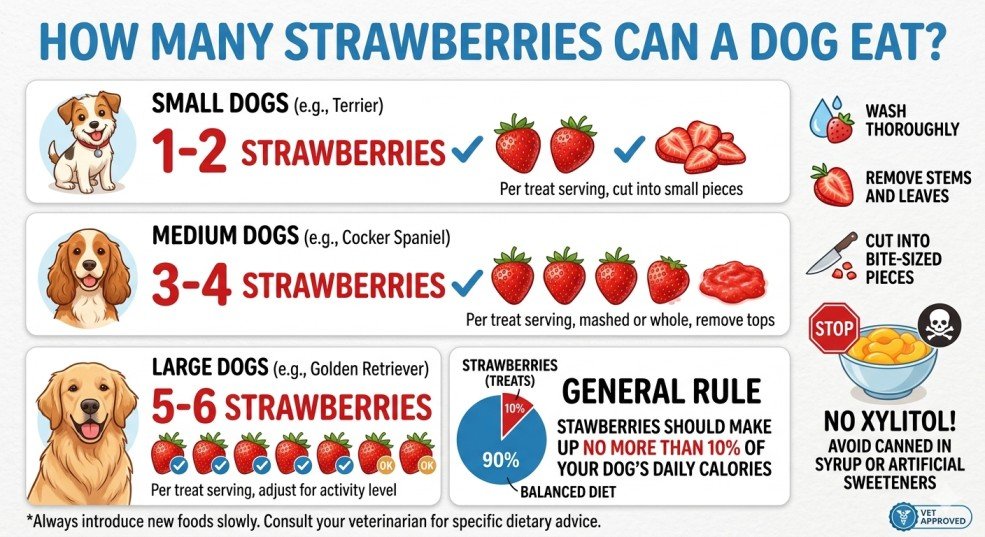
There is no universally established safe dose, but veterinary nutritionists generally follow the 10 percent rule for treats: treats should make up no more than 10 percent of your dog’s daily caloric intake. Using that framework as a guide:
- Small dogs (under 20 lbs, e.g., Chihuahua, Shih Tzu): 1 strawberry per day maximum
- Medium dogs (20 to 50 lbs, e.g., Beagle, Cocker Spaniel): 3 to 4 strawberries per day maximum
- Large dogs (50 to 90 lbs, e.g., Labrador, Golden Retriever): 5 to 6 strawberries per day maximum
- Giant breeds (90 lbs and above, e.g., Great Dane): up to 7 to 8 strawberries, but monitor for digestive response
These are maximum occasional amounts, not daily targets. Strawberries are a treat, not a dietary staple. Offering them a few times a week rather than every day is a smarter approach, especially until you know how your individual dog responds.
Dogs with diabetes, pancreatitis, obesity, or known food sensitivities should only eat strawberries with explicit veterinary approval and possibly not at all.
Can Dogs Eat Strawberry Tops (Leaves and Stems)?
Strawberry tops the green leafy cap and stem are not toxic to dogs, but they are not easy to digest and can cause mild gastrointestinal irritation in some dogs. There is no reason to leave them on when serving strawberries to your dog. Remove the tops, rinse the strawberry thoroughly, and slice it appropriately for your dog’s size. The extra 10 seconds of preparation eliminates a potential stomach ache.
Can Dogs Eat Dried Strawberries?
No, not safely. Dried strawberries are essentially concentrated strawberries: all the sugar in a fraction of the volume. A single small dried strawberry has roughly the same sugar content as 3 to 4 fresh strawberries. Beyond the sugar concentration, many commercial dried strawberry products contain added sugar, preservatives, or sulfites that are not safe for dogs. Avoid them entirely.
Can Dogs Eat Strawberry Jam or Strawberry Syrup?
No. Jam and syrup are made almost entirely of sugar, and many commercial varieties also contain artificial sweeteners including xylitol, which is severely toxic to dogs. Even jam made without xylitol is too high in sugar to be safe for dogs. A single teaspoon of strawberry jam contains more sugar than your dog should consume in several days of treats. Never share jam, syrup, or strawberry preserves with your dog.
Can Dogs Eat Strawberry Ice Cream?
No. Strawberry ice cream combines multiple ingredients that are problematic for dogs: dairy (which many adult dogs digest poorly), very high sugar content, artificial flavors, and in some products, xylitol. Dogs are often lactose intolerant as adults, meaning ice cream can cause bloating, gas, diarrhea, and stomach cramps even in small amounts.
If you want to give your dog a cold, strawberry-flavored treat in summer, blend fresh strawberries with plain water and freeze in an ice cube tray. That is genuinely safe, refreshing, and dog-appropriate.
Can Dogs Eat Frozen Strawberries?
Frozen fresh strawberries meaning strawberries that were frozen without added sugar or syrup are safe for dogs, but with one important preparation step. Do not give frozen strawberries whole: the hard, frozen texture makes them a choking hazard, especially for small dogs. Thaw them first, or partially thaw and slice before serving. Check the ingredients if you are buying commercially frozen strawberries: many contain added sugar, which brings them into unsafe territory.
What to Do If My Dog Ate Strawberries
Stay calm. What matters is what type of strawberry product was eaten and how much.
Step 1: Identify What Was Eaten
- Fresh strawberries, small amount: No action needed. Monitor for loose stools or vomiting for 24 hours.
- Fresh strawberries, large amount: Call your vet for guidance on managing potential sugar overload or digestive upset.
- Strawberry jam, syrup, or flavored candy: Check the label for xylitol immediately. If xylitol is present, go to an emergency vet right away. If no xylitol, call your vet.
- Strawberry ice cream: Monitor for GI upset. If your dog is small or the amount was large, call your vet.
- Strawberry leaves or stems, small amount: Monitor for mild vomiting or diarrhea. Usually resolves on its own.
Step 2: Watch for These Symptoms
If your dog ate strawberries and you are monitoring at home, watch for these signs within 24 hours:
- Vomiting or gagging
- Diarrhea or very loose stools
- Lethargy or unusual tiredness
- Excessive drooling
- Loss of appetite
- Tremors or collapse (emergency go to vet immediately if xylitol was consumed)
Step 3: Who to Call
- Your vet: First point of contact for any concern about what your dog ate.
- ASPCA Animal Poison Control: (888) 426-4435 available 24/7 (consultation fee may apply).
- Pet Poison Helpline: (855) 764-7661 24/7 toxicology support.
Are Strawberries Good for Dogs? The Honest Answer
Strawberries are one of the more genuinely dog-friendly fruits, and they do offer real nutritional value: antioxidants, vitamin C, fiber, and hydration. But good for dogs is not the same as a beneficial dietary staple. Dogs get complete nutrition from a properly formulated diet. Treats, including healthy ones like strawberries, are additions not improvements.
Think of strawberries the way you would think of a healthy snack for a child. An apple slice is a better choice than a cookie. But apples do not replace meals, and eating too many apples still adds excess sugar to a child’s diet. Strawberries for dogs work the same way.
Safe Fruit Alternatives to Strawberries for Dogs
If you want to rotate your dog’s fruit treats or if your dog does not love strawberries, these options are equally or more dog-friendly:
- Blueberries: Low sugar, very high in antioxidants, and the perfect bite-size for most dogs.
- Watermelon (seedless, no rind): High water content and low calorie great for summer.
- Sliced apple (no seeds or core): Good source of fiber and vitamins A and C.
- Banana: Higher in sugar than berries but very well-tolerated in small amounts.
- Mango (no skin or pit): Rich in vitamins A, B6, C, and E.
- Pineapple (fresh, not canned): Contains bromelain, which supports protein digestion.
Frequently Asked Questions: Dogs and Strawberries
Are strawberries safe for dogs?
Yes, fresh strawberries are safe for dogs in moderation. They are not toxic, and most healthy adult dogs handle them well. The main concern is their natural sugar content, which should be limited, especially for diabetic or heavy dogs.
How many strawberries can a dog eat per day?
The amount depends on your dog’s size. As a general guideline: 1 strawberry for small dogs, 3 to 4 for medium dogs, and 5 to 6 for large dogs but only as occasional treats, not daily amounts. Always introduce them gradually to check for digestive sensitivity.
Can dogs eat strawberry leaves?
Strawberry leaves are not toxic, but they can cause mild GI irritation in some dogs. It is best to remove the tops before serving strawberries to your dog.
Can dogs eat dried strawberries?
No. Dried strawberries are too concentrated in sugar and often contain additives that are not safe for dogs. Stick to fresh or plain frozen strawberries.
Can dogs eat strawberry jam?
No. Strawberry jam contains far too much sugar for dogs, and many commercial brands include xylitol, which is severely toxic to dogs. Never give jam, syrup, or preserves to your dog.
What happens if a dog eats too many strawberries?
Eating too many strawberries can cause vomiting, diarrhea, and gastrointestinal upset from the sugar load. In dogs with diabetes, it can cause dangerous blood sugar spikes. If your dog ate a large quantity, contact your vet.
Can puppies eat strawberries?
Yes, but with extra caution. Puppies have smaller, more sensitive digestive systems. Offer only a tiny piece (a quarter of a small strawberry) and monitor closely. If your puppy shows any signs of stomach upset, discontinue and consult your vet.
Are strawberries toxic to dogs?
No, fresh strawberries are not toxic to dogs. They do not contain compounds like persin (found in avocado) or the unknown toxin in grapes. The risks associated with strawberries are primarily about sugar content and the potential for processed strawberry products to contain xylitol.
Can dogs eat strawberries?
Yes, dogs can eat fresh strawberries in moderation. They are non-toxic, but portion control matters because too many can cause digestive upset due to natural sugar.
Can dogs have strawberries safely?
Yes, healthy dogs can have washed, fresh strawberries when cut into small pieces. Remove stems and leaves first to reduce choking or mild GI irritation risk.
Are strawberries good for dogs?
Strawberries can be a healthy occasional treat because they provide fiber, antioxidants, and vitamin C, but they should not replace balanced dog food.
Are strawberries safe for dogs?
Fresh strawberries are generally safe for most dogs when served plain and in moderation. Avoid jams, syrups, or products with xylitol.
Can Yorkies eat strawberries?
Yes, Yorkies can eat strawberries in tiny, bite-sized portions due to their small size.
Can Pugs eat strawberries?
Yes, pugs can safely eat strawberries, but moderation is especially important because pugs are prone to weight gain.
Can Pitbulls eat strawberries?
Yes, pitbulls can eat strawberries safely in moderation just like most breeds.
Can Bulldogs eat strawberries?
Yes, bulldogs can have strawberries, but always slice them to reduce choking risk.
Can Dogs Eat Strawberry Jam?
Dogs should not eat strawberry jam because it is high in added sugar and may contain artificial sweeteners like xylitol, which is highly toxic to dogs.
Does PetMD Say Dogs Can Eat Strawberries?
PetMD states that fresh strawberries are generally safe for dogs when served in moderation. They should be washed thoroughly and offered as an occasional treat.
Can Dogs Eat Strawberries?
Yes, dogs can eat fresh strawberries in moderation. They are rich in fiber, antioxidants, and vitamin C, but too many can cause stomach upset due to their natural sugar content.
Can Dogs Eat Strawberry Ice Cream?
No, strawberry ice cream is not a healthy treat for dogs. It often contains high amounts of sugar, dairy, and artificial ingredients that can upset a dog’s stomach.
Can Dogs Eat Strawberry Preserves?
No, strawberry preserves are not recommended for dogs. They contain large amounts of sugar and may include ingredients that are unsafe for canine consumption.
What Should I Do If My Dog Ate a Strawberry?
If your dog ate a fresh strawberry, there is usually no need to worry. Monitor for signs of digestive upset, especially if they consumed a large amount.
Can Dogs Have Strawberry Syrup?
No, dogs should not have strawberry syrup. Most syrups are loaded with sugar and may contain artificial sweeteners or flavors that are unhealthy for dogs.
Can Dogs Eat Strawberry Tops?
Yes, dogs can eat strawberry tops in small amounts. However, the leafy tops can be difficult to digest, so removing them before serving is the safer option.
Can Dogs Have Strawberry Jelly?
No, strawberry jelly is not suitable for dogs. It is high in sugar and may contain xylitol or other ingredients that can be harmful.
Can Dogs Eat Strawberry Jelly?
No, dogs should avoid strawberry jelly because it offers little nutritional value and can contain excessive sugar or toxic sweeteners that may put your dog’s health at risk.
Final Word: Should You Feed Your Dog Strawberries?
Yes with appropriate limits. Fresh strawberries are a genuinely safe, low-calorie, nutrient-rich treat for most healthy adult dogs. They are one of the better fruit options available, and most dogs enjoy them.
The rules are simple: fresh or plain frozen only, remove the tops, slice appropriately for your dog’s size, and keep portions within the size-based limits above. Avoid all processed strawberry products: jam, syrup, ice cream, dried strawberries, and anything that might contain xylitol.
If your dog is diabetic, heavy, has pancreatitis, or has known food sensitivities, check with your vet before adding strawberries to their treat rotation. For healthy dogs with no dietary restrictions, a couple of fresh strawberries a few times a week is a treat you can both feel good about.
When in doubt, reach for a blueberry instead. Your dog will be just as happy and you will have a lot less to worry about.
Reviewed & Recommended by Dr. Ubaidur Rahman, DVM
Veterinary Review: Dr. Ubaidur Rahman, DVM, reviewed this guide for veterinary accuracy, food safety, and the recommendations about feeding strawberries to dogs.
Dr. Ubaidur Rahman’s Recommendation: Strawberries are generally safe for dogs when offered in moderation. They contain fiber, vitamin C, and other nutrients, but their natural sugar content means they should be given as an occasional treat rather than a regular part of a dog’s diet. Wash strawberries thoroughly, remove the stems and leaves, and serve them plain.
Sources and References
- Merck Veterinary Manual: Toxicosis in Small Animals. merckvetmanual.com
- ASPCA Animal Poison Control Center: People Foods to Avoid Feeding Your Pets. aspca.org
- PetMD: Can Dogs Eat Strawberries? (Updated 2025). petmd.com
- American Kennel Club: Can Dogs Eat Strawberries? akc.org
- Purina: Can Dogs Eat Strawberries? A Guide to Safety. purina.com
- VCA Animal Hospitals: Xylitol Toxicity in Dogs. vcahospitals.com
- Pet Poison Helpline: Xylitol Toxicity. petpoisonhelpline.com
Discover More:-
- Dogs Fruits: A Complete Vet-Backed Guide to Safe and Unsafe Fruits for Dogs (2026)
- Dogs Vegetables: Safe & Toxic Veggies, Complete Vet-Backed Guide (2026)

Dr. Ubaid Ur Rehman, DVM is a qualified veterinarian with expertise in pet health, nutrition, and preventive care. He is passionate about helping pet owners make informed decisions through accurate, research-based, and practical advice. As a veterinary professional, he reviews and contributes content to ensure reliable information for dog and pet owners.