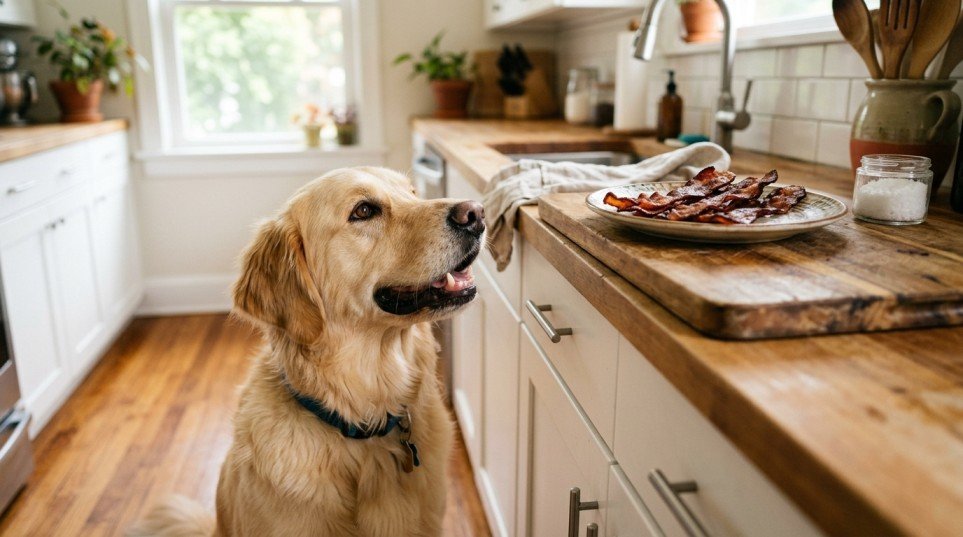
Is Bacon Bad for Dogs or Safe in Small Amounts?
Quick Ans: A small piece of plain bacon given once in a blue moon is unlikely to send a healthy adult dog to the emergency vet. However, bacon fed regularly or in large quantities can cause pancreatitis, salt toxicity, and long-term obesity. It should never be a treat, a reward, or a training food.
Your dog is sitting at your feet, staring up at you while you cook breakfast. You drop a strip of bacon and they snap it up before you can stop them. Now you are wondering: is bacon actually bad for dogs, or is this one of those pet myths that gets blown out of proportion online?
The answer is more nuanced than most articles will tell you. Bacon is not acutely toxic to dogs the way chocolate or xylitol is. But that does not make it safe. This guide walks through every angle dog owners search for: what bacon does to a dog’s body, how much is too much, which types are most dangerous, and what to do if your dog already ate some.
Is Bacon Bad for Dogs? The Short Answer
Yes, bacon is bad for dogs as a regular food or in large amounts. It is not an immediate poison, but it is one of the worst processed foods you can regularly feed a dog. The combination of extreme fat content, very high sodium, and added preservatives makes bacon a serious health risk with repeated exposure.
The reason this question keeps circulating is that bacon smells irresistible to dogs, it is not immediately toxic, and many owners have slipped their dog a strip with no obvious ill effect. But short-term tolerance is not the same as safety. The damage from high-fat, high-salt foods in dogs tends to be cumulative and can appear suddenly when it crosses a threshold.
What Makes Bacon Dangerous for Dogs?
1. Extremely High Fat Content
A single strip of cooked bacon contains roughly 3 to 5 grams of fat, depending on thickness and preparation. That may sound small, but it is concentrated saturated fat that a dog’s pancreas must process all at once. Dogs that consume high-fat foods are at significant risk of pancreatitis, an inflammation of the pancreas that ranges from uncomfortable to life-threatening.
Unlike humans, dogs have no meaningful evolutionary adaptation to processed, high-fat foods. Their digestive systems are designed for lean proteins. When the pancreas is suddenly overwhelmed with fat, it can become inflamed and begin digesting itself using its own enzymes. Severe pancreatitis can be fatal and almost always requires hospitalization.
2. Very High Sodium Levels
Bacon is one of the saltiest foods in a typical kitchen. A single strip can contain anywhere from 130 to 200 milligrams of sodium. For reference, the recommended daily sodium intake for an average-sized dog is only about 100 milligrams per day total. One strip of bacon can exceed a dog’s entire daily sodium allowance in a single bite.
High sodium intake causes excessive thirst and urination in the short term. In larger doses or in dogs with kidney or heart conditions, salt toxicity becomes a real risk. Symptoms of sodium poisoning in dogs include vomiting, diarrhea, tremors, seizures, and in severe cases, coma.
3. Nitrates, Preservatives, and Additives
Commercial bacon is cured with nitrates, nitrites, and various chemical preservatives that allow it to stay shelf-stable. These compounds are not harmless in dogs. Nitrites have been associated with methemoglobinemia in animals, a condition that reduces the blood’s ability to carry oxygen. While this would require a significant amount, it adds another layer of concern to bacon beyond just fat and salt.
Added smoke flavoring, spices, and sugar-curing compounds in certain bacons add further risk for dogs with sensitive digestion.
4. Turkey Bacon and Other Alternatives: Still Not Safe
Many owners assume turkey bacon is a healthier option for dogs. It is lower in fat, but it is still very high in sodium and often contains the same preservatives as pork bacon. Turkey bacon is marginally less dangerous from a fat standpoint, but it is still not a safe or appropriate treat for dogs.
Uncured or low-sodium bacon options are better, but still not recommended. The fat content alone is enough to make any type of bacon an inappropriate regular treat for dogs.
Can Bacon Kill Dogs?
In a single sitting and in a healthy adult dog, a small amount of bacon is unlikely to be directly fatal. But the answer becomes more complicated in specific scenarios:
- Pancreatitis from high-fat intake: Severe pancreatitis triggered by a large amount of bacon can be life-threatening and requires emergency veterinary care.
- Salt toxicity: Large amounts of bacon consumed quickly can push sodium levels to dangerous thresholds, particularly in smaller dogs.
- Dogs with pre-existing conditions: Dogs with kidney disease, heart disease, diabetes, or a history of pancreatitis face dramatically elevated risk from even a small amount of bacon.
- Bacon grease: Dogs that drink or eat bacon grease are at even higher risk of pancreatitis than those eating the strips. Grease is essentially pure fat in liquid form, and the pancreas has no buffer against it.
The bottom line: bacon will not typically kill a dog from a single accidental exposure, but it can trigger life-threatening pancreatitis, and repeated exposure causes long-term damage to the pancreas, kidneys, and cardiovascular system.
How Much Bacon Is Too Much for a Dog?
There is no established safe dose of bacon for dogs. Veterinary nutritionists and organizations like the ASPCA consistently recommend against feeding bacon to dogs at all.
If your dog snatched a piece before you could stop it, here is a rough risk framework based on size:
- A small dog under 20 lbs (e.g., a Shih Tzu or Dachshund): even one full strip of bacon can be a meaningful fat and sodium load. Monitor closely.
- A medium dog between 20 and 50 lbs (e.g., a Beagle or Cocker Spaniel): one strip is unlikely to cause an emergency, but watch for vomiting, lethargy, or loss of appetite.
- A large dog over 50 lbs (e.g., a Labrador or German Shepherd): one strip poses lower immediate risk, but that does not make it appropriate to give intentionally.
Any dog that consumes multiple strips, a large amount of bacon grease, or entire pieces of cured meat should be monitored carefully and assessed by a vet if symptoms develop.
Bacon Risk by Type and Preparation: Quick Reference Table
| Type of Bacon | Fat Level | Sodium Level | Additional Risk | Verdict |
| Regular pork bacon (cooked) | Very High | Very High | Nitrates, preservatives | Never give |
| Turkey bacon | Moderate | Very High | Same preservatives | Still unsafe |
| Raw bacon | Very High | High | Salmonella, listeria risk | Never give |
| Bacon grease / drippings | Extreme | Very High | Pure fat load | Never give |
| Uncured / low-sodium bacon | High | Moderate | Still high fat | Not recommended |
| Bacon-flavored dog treats | Low | Low-Moderate | Formulated for dogs | Generally safe in moderation |
Can Dogs Eat Raw Bacon?
No, raw bacon is more dangerous than cooked bacon in almost every way. In addition to all the fat and sodium risks, raw pork carries a significant risk of bacterial contamination including Salmonella and Listeria, both of which can cause severe gastrointestinal illness in dogs and can potentially be passed to humans in the household.
Raw pork also carries the risk of Trichinella spiralis, a parasitic worm that causes trichinosis, a potentially serious muscle and nerve disease. While cooking kills this parasite, raw bacon provides no such protection.
If your dog ate raw bacon, monitor for signs of gastrointestinal distress including vomiting, diarrhea, fever, and lethargy, and contact your vet for guidance.
Is Bacon Grease Bad for Dogs?
Yes, bacon grease is arguably the most dangerous form of bacon for dogs. It is essentially concentrated saturated fat with no dilution. A dog that laps up a bowl of bacon drippings is at immediate risk of pancreatitis, even if they are a large breed that tolerates other foods well.
Some owners believe that a small amount of grease added to kibble will improve palatability and add healthy fat to the diet. This is a myth. The fat in bacon grease is not a nutritional benefit for dogs. It is a direct pathway to inflammation of the pancreas.
Do not pour bacon grease into your dog’s bowl, add it to their food as a topping, or leave a pan of drippings anywhere accessible. If your dog consumed a significant amount, contact your vet.
Bacon and Pancreatitis in Dogs: What You Need to Know
Pancreatitis is the most common and most serious medical consequence of dogs eating bacon. It is worth understanding because it can escalate quickly and is frequently misread as a minor stomach issue in its early stages.
When a dog consumes a high-fat meal, the pancreas releases digestive enzymes. In pancreatitis, those enzymes activate while still inside the pancreas, causing it to begin digesting its own tissue. This leads to severe abdominal pain, vomiting, loss of appetite, and systemic inflammation.
Signs of pancreatitis in dogs include:
- Vomiting, sometimes repeatedly
- Hunched or “praying” posture (front legs down, rear end up)
- Severe abdominal pain when touched
- Loss of appetite or complete food refusal
- Lethargy and weakness
- Fever in some cases
- Diarrhea with or without blood
If you see these signs after your dog ate bacon, do not wait to see if it improves on its own. Go to a vet. Pancreatitis diagnosed early is much more manageable than pancreatitis that has been allowed to progress.
What to Do If Your Dog Ate Bacon
Stay calm and assess the situation. What you do next depends on how much they ate and what form it was in.
Step 1: Figure Out What and How Much
- One small strip or a bite: Monitor at home for 24 to 48 hours for vomiting, diarrhea, or lethargy.
- Multiple strips or a large amount: Call your vet for guidance on what to watch for.
- Bacon grease or drippings: Contact your vet immediately, even without symptoms yet.
- Raw bacon: Call your vet to discuss bacterial exposure and monitoring.
- Dog has a known condition (pancreatitis, kidney disease, heart disease): Contact your vet regardless of amount.
Step 2: Watch for These Symptoms
Within 6 to 24 hours of eating bacon, watch for:
- Vomiting or dry heaving
- Diarrhea or soft, greasy stools
- Loss of appetite or refusal to drink water
- Hunched posture or signs of belly pain
- Unusual lethargy or reluctance to move
- Excessive thirst or urination (salt response)
Step 3: Who to Call
- Your vet: First point of contact for any significant bacon ingestion.
- ASPCA Animal Poison Control: (888) 426-4435, available 24 hours a day, 7 days a week (consultation fee may apply).
- Pet Poison Helpline: (855) 764-7661, 24/7 toxicology support.
What About Bacon-Flavored Dog Treats?
This is a question most competitor articles skip entirely. Bacon-flavored dog treats are not the same as real bacon. They are typically formulated with artificial or natural bacon flavor in small amounts, with fat and sodium levels calibrated to be safe for dogs. Many are AAFCO-compliant and produced by veterinary nutritionists.
If you want to give your dog something with a bacon-like taste as a reward, commercially produced bacon dog treats from reputable brands are the appropriate option. Look for treats with a clear ingredient list, no artificial dyes, and sodium levels listed on the label.
Never use real bacon as a substitute for treats, even in training. The salt and fat load from repeated exposure, even in small amounts per session, adds up quickly.
Safe High-Reward Treat Alternatives to Bacon
If you use bacon to motivate your dog during training or as a special reward, these alternatives deliver the same enthusiasm without the health risks:
- Cooked plain chicken breast: Low fat, high protein, and most dogs go absolutely wild for it.
- Cooked plain turkey: Similar to chicken, with a slightly different flavor that many dogs find exciting.
- Freeze-dried liver treats: Available at most pet stores, these are intensely flavored and excellent for training.
- Small pieces of cooked salmon (boneless): Rich in omega-3 fatty acids and protein.
- Baby carrots: Crunchy, low-calorie, and loved by many dogs.
- Blueberries: Antioxidant-rich and low in calories, great as a training reward.
- Commercial low-sodium bacon-flavor treats: The only appropriate bacon-adjacent option for dogs.
Frequently Asked Questions: Dogs and Bacon
Is bacon bad for dogs?
Yes. Bacon is bad for dogs due to its extremely high fat content, very high sodium levels, and chemical preservatives. It is not immediately toxic the way chocolate is, but repeated exposure causes real cumulative damage to the pancreas, kidneys, and cardiovascular system. It should not be used as a treat, reward, or food topping.
Can dogs eat bacon occasionally?
A single small bite on a rare occasion is unlikely to seriously harm a healthy adult dog with no pre-existing conditions. But there is no veterinary recommendation that supports giving bacon to dogs even occasionally. The risk of triggering pancreatitis from a high-fat meal is real, and there are no nutritional benefits that cannot be obtained from safer foods.
Can dogs eat turkey bacon?
Turkey bacon is lower in fat than pork bacon, but it is still very high in sodium and contains the same preservatives. It is not a safe alternative. Dogs with kidney or heart conditions should especially avoid it. If you want a lower-risk treat, choose options specifically formulated for dogs rather than human-grade processed meats.
Is bacon grease bad for dogs?
Bacon grease is one of the most dangerous things you can give a dog from a pancreatitis risk standpoint. It is concentrated saturated fat in liquid form. Even a small amount can overwhelm the pancreas. Never add it to food, use it as a flavor enhancer, or leave it in a pan where your dog can reach it.
My dog ate a whole strip of bacon. What should I do?
For a healthy, average-sized adult dog, one strip is unlikely to be a medical emergency, but monitor them for 24 to 48 hours for vomiting, diarrhea, lethargy, or loss of appetite. If your dog is small, has a history of pancreatitis, or ate multiple strips or grease, call your vet for guidance. Do not wait for symptoms to worsen before reaching out.
Can puppies eat bacon?
No. Puppies have developing digestive systems and are more sensitive to fat and sodium overloads than adult dogs. Pancreatitis in puppies is particularly dangerous. Never give bacon to a puppy, even a very small amount.
What are signs of pancreatitis in dogs after eating bacon?
Signs typically appear within 6 to 24 hours and include vomiting, hunched posture, abdominal pain, loss of appetite, lethargy, and diarrhea. If your dog shows these symptoms after eating bacon, go to a vet. Pancreatitis can escalate quickly from uncomfortable to life-threatening.
Are bacon-flavored dog treats safe?
Yes, commercially formulated bacon-flavored dog treats from reputable brands are generally safe in moderation. They are made with safe fat and sodium levels and are not the same as giving your dog real bacon. Always check the ingredient label and choose brands with AAFCO adequacy statements.
Final Word: Should You Feed Your Dog Bacon?
The simple answer is no. Bacon is one of the worst processed foods you can give a dog on a regular basis. The combination of high saturated fat, very high sodium, and chemical preservatives makes it a real health risk, not just an overhyped internet concern.
A healthy adult dog that steals a single strip is unlikely to need emergency care. But using bacon as a treat, a training reward, or a food topper is a pattern that leads to pancreatitis, weight gain, high blood pressure, and kidney stress over time.
If your dog ate bacon grease, multiple strips, or any form of bacon and now shows signs of vomiting, abdominal pain, or unusual lethargy, contact your vet or an animal poison control line right away. When in doubt, err on the side of caution.
There are better ways to make your dog happy at mealtime. Choose treats that love them back.
Reviewed & Recommended by Dr. Ubaidur Rahman, DVM
Veterinary Review: Dr. Ubaidur Rahman, DVM, reviewed this guide for the potential health risks of bacon in dogs, including its high fat and sodium content and the risk of digestive problems.
Dr. Ubaidur Rahman’s Recommendation: Bacon is not a good regular treat for dogs. Its high fat and salt content can cause stomach upset and may contribute to more serious problems such as pancreatitis when dogs eat large amounts or consume it frequently. If your dog eats a small piece of cooked bacon occasionally, it is unlikely to cause a problem in most healthy dogs, but lower-fat, dog-safe treats are a better choice.
Sources and References
- Merck Veterinary Manual: Pancreatitis in Small Animals. merckvetmanual.com
- ASPCA Animal Poison Control Center: Foods to Avoid Feeding Your Pet. aspca.org
- PetMD: Can Dogs Eat Bacon? (Updated 2025). petmd.com
- American Kennel Club: Can Dogs Eat Bacon? akc.org
- Purina: Is Bacon Safe for Dogs? purina.com
- VCA Animal Hospitals: Pancreatitis in Dogs. vcahospitals.com
- Pet Poison Helpline: High Fat Foods and Dogs. petpoisonhelpline.com
Discover More:-
- Is Watermelon Safe for Dogs? Vet-Backed Guide 2026
- Can Dogs Eat Sausage? A Complete Vet-Backed Guide 2026

Dr. Ubaid Ur Rehman, DVM is a qualified veterinarian with expertise in pet health, nutrition, and preventive care. He is passionate about helping pet owners make informed decisions through accurate, research-based, and practical advice. As a veterinary professional, he reviews and contributes content to ensure reliable information for dog and pet owners.