
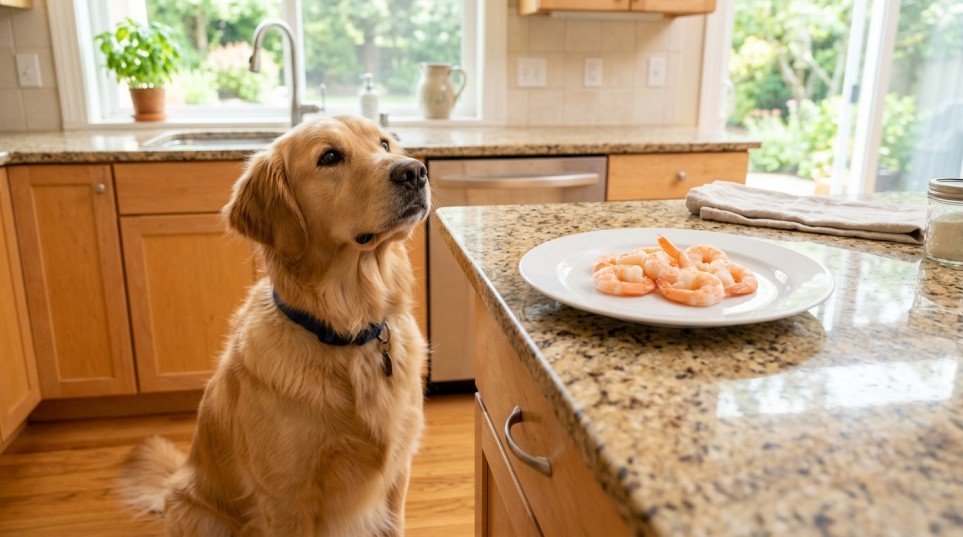
Can Dogs Eat Shrimp? Benefits, Side Effects & Feeding Tips
Quick Answer: A few pieces of plain, peeled, deveined, cooked shrimp are unlikely to harm a healthy adult dog. However, raw shrimp, fried shrimp, shrimp with shells on, and shrimp cooked with garlic, onion, or salt are all unsafe. Shrimp cocktail and garlic butter shrimp are dangerous and should never be shared.
Your dog is staring at your shrimp dinner with those irresistible eyes. Before you toss one over, you need the full picture. The answer is not a flat yes or no, and most of what you find online either skips critical details or repeats oversimplified takes that leave dog owners confused.
This guide covers everything dog owners actually search for: whether shrimp is safe for dogs, which forms are dangerous, how much is too much, what happens if your dog eats raw shrimp, and why shrimp cocktail and garlic butter shrimp are a completely different story.
Can Dogs Eat Shrimp? The Short Answer
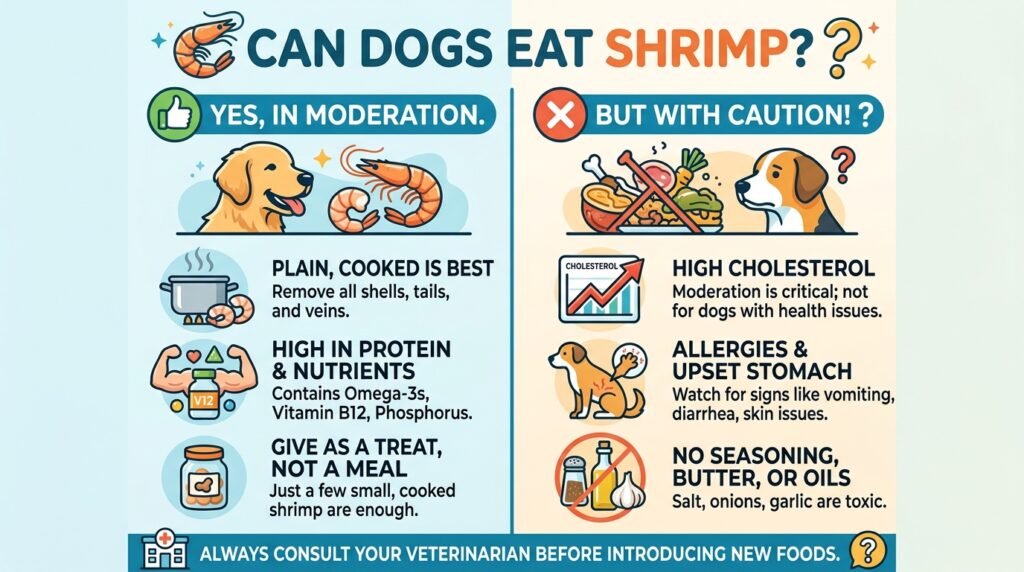
Yes, dogs can eat plain, fully cooked shrimp in small amounts as an occasional treat. The key word here is plain. Shrimp that is steamed or boiled, with the shell and tail fully removed, and served without any seasoning, butter, garlic, or sauce is the only form that is safe.
The reason shrimp sits in a gray area is that it does offer real nutritional value for dogs, including high-quality protein, B vitamins, and antioxidants like astaxanthin. But it also comes with meaningful concerns: high cholesterol, potential for shells to cause blockages, and the near-constant risk that shrimp served to humans comes loaded with seasonings that are toxic to dogs.
What Makes Shrimp Potentially Dangerous for Dogs?
1. Raw Shrimp: Bacteria and Parasites
Raw shrimp can carry harmful bacteria including Salmonella and Listeria, as well as intestinal parasites. Dogs are not immune to these pathogens. A dog that eats raw shrimp may develop vomiting, diarrhea, fever, and lethargy. The risk is especially high for puppies, senior dogs, and any dog with a compromised immune system.
This is not a theoretical concern. The FDA includes raw shellfish in its list of foods that carry elevated bacterial contamination risk. Cooking shrimp to an internal temperature of 145 degrees Fahrenheit kills these pathogens. Raw shrimp does not make this cut, regardless of how fresh it is.
2. Shrimp Shells, Tails, and Legs: A Physical Hazard
Shrimp shells are stiff, sharp-edged when bitten, and do not digest easily. Swallowing pieces of shell can scratch the lining of the esophagus and stomach, and larger pieces can become lodged in the intestines. The tail is equally problematic. Even a single sharp tail piece can perforate soft tissue if swallowed quickly.
Always remove every part of the shell, including the tail and legs, before giving shrimp to your dog. This is not optional.
3. High Cholesterol: The Overlooked Risk
Shrimp is naturally high in dietary cholesterol. A single 3-ounce serving of shrimp contains around 166 milligrams of cholesterol. For a small or medium dog, even a few shrimp represent a meaningful cholesterol load. Dogs with a history of hyperlipidemia, pancreatitis, or cardiovascular conditions should not eat shrimp at all.
For healthy dogs, occasional small amounts are unlikely to cause cholesterol problems. But feeding shrimp regularly, or in large amounts, puts dogs at real risk over time.
4. Seasonings, Butter, and Sauces: The Biggest Threat
The way humans cook shrimp is the most dangerous factor of all. Most shrimp dishes served to people contain at least one of the following, all of which are harmful to dogs:
- Garlic: Highly toxic to dogs. Damages red blood cells, causing hemolytic anemia. Effects can be delayed by several days.
- Onion: Same mechanism as garlic. Both raw and cooked forms are toxic.
- Salt: Causes sodium ion toxicity. Symptoms include excessive thirst, vomiting, tremors, and seizures in larger amounts.
- Butter: Very high fat content triggers gastrointestinal upset and risks pancreatitis, especially in smaller dogs.
- Lemon juice: Citric acid and essential oils are irritating to dogs and toxic in larger amounts.
- Chili, paprika, pepper: Capsaicin irritates the gastrointestinal tract and mucous membranes.
Even a small amount of garlic butter or seasoning is enough to make shrimp unsafe. When in doubt, do not share your shrimp with your dog.
Can Shrimp Kill Dogs?
Shrimp itself, in small plain cooked amounts, is very unlikely to kill a healthy dog. But specific scenarios can become life-threatening:
- Swallowing sharp shell fragments: Can puncture or perforate the intestinal wall, which is a surgical emergency.
- Eating shrimp cooked with garlic or onion: Hemolytic anemia caused by allium toxicity can be fatal if untreated.
- Salt toxicity from heavily seasoned shrimp: High sodium ingestion can cause seizures, kidney damage, and in severe cases, death.
- Pancreatitis in susceptible dogs: Dogs with existing pancreatic conditions that eat buttered or fried shrimp can develop life-threatening pancreatitis flare-ups.
The bottom line: plain cooked shrimp is not dangerous in small amounts for healthy dogs. But shrimp shells, raw shrimp, and any shrimp cooked with garlic, onion, or butter can create genuine emergencies. Never dismiss the risk based on size of portion alone.
How Much Shrimp Can a Dog Eat?
There is no universally established maximum dose of shrimp for dogs. Veterinary nutritionists generally treat shrimp as an occasional treat rather than a regular part of the diet, and recommend keeping it to a small fraction of daily caloric intake.
A practical guideline used by many veterinarians:
No more than 1 to 2 small shrimp per serving, no more than once or twice a week, for medium to large dogs. Toy breeds and small dogs should get half a shrimp or less per serving.
To put that in context:
- A dog under 10 lbs (e.g., a Chihuahua or Yorkie): half of one small plain shrimp, occasionally
- A dog of 20 to 40 lbs (e.g., a Beagle or Cocker Spaniel): 1 to 2 small shrimp, occasionally
- A dog over 50 lbs (e.g., a Labrador or Golden Retriever): 2 to 3 small shrimp, occasionally
Dogs with a history of pancreatitis, high cholesterol, or digestive sensitivity should not eat shrimp at all, regardless of size.
Shrimp Safety by Type: Quick Reference Table
| Type of Shrimp | Safe for Dogs? | Main Concern | Verdict |
| Plain cooked shrimp (peeled, deveined) | Yes, in moderation | High cholesterol | Safe as occasional treat |
| Raw shrimp | No | Bacteria and parasites | Never give raw |
| Shrimp with shell or tail | No | Choking and GI blockage | Always remove shells |
| Fried shrimp | No | High fat, pancreatitis | Avoid completely |
| Shrimp with garlic or onion | No | Toxic — red blood cell damage | Dangerous, avoid |
| Shrimp cocktail | No | Salt, spices, horseradish | Unsafe — avoid |
| Shrimp chips / crackers | No | Salt, additives, fat | Not recommended |
| Frozen plain shrimp (cooked) | Yes, if thawed and plain | Same as cooked | OK if no seasonings |
Can Dogs Eat Raw Shrimp?
No. Raw shrimp is not safe for dogs. The bacterial contamination risk alone is significant enough to make this a firm no. Salmonella, Listeria, and Vibrio bacteria are all found in raw shellfish. These bacteria can cause serious gastrointestinal illness in dogs and, in severe cases, can spread to other organs.
Beyond bacteria, raw shrimp can carry intestinal parasites that require cooking to kill. No breed of dog is resistant to these risks, and no dog has a digestive system that safely neutralizes raw shellfish pathogens the way that some larger wild predators might.
If your dog grabbed a raw shrimp off the counter, monitor them closely for 24 to 48 hours for vomiting, diarrhea, lethargy, or fever. If symptoms appear, call your vet.
Can Dogs Eat Shrimp Shells and Tails?
No. Shrimp shells and tails must always be fully removed before giving shrimp to a dog. Here is why each part is problematic:
- Shell: Hard, brittle, and can splinter into sharp edges when bitten or swallowed. Fragments can scratch the esophagus, stomach lining, or intestines.
- Tail: The pointed tip of a shrimp tail is stiff enough to perforate soft tissue if swallowed without chewing. Even chewed tail pieces present a risk.
- Legs and vein: The digestive vein (the dark line running through the body) should also be removed. Though not toxic, it contains waste material and can cause stomach upset.
If you suspect your dog swallowed a shrimp shell or tail whole, watch for signs of difficulty swallowing, gagging, pawing at the mouth, or abdominal pain. If any of these appear, contact your vet promptly.
Can Dogs Eat Fried Shrimp?
No. Fried shrimp is not safe for dogs for several reasons stacked on top of each other. The breading absorbs large amounts of cooking oil during frying, making fried shrimp significantly higher in fat than plain cooked shrimp. That fat load alone can trigger gastrointestinal upset and increases the risk of pancreatitis, especially in smaller dogs or dogs with sensitive stomachs.
On top of that, the breading and batter almost always contain salt and spices. Some fried shrimp recipes include garlic powder in the coating. Even a small amount of garlic powder is enough to begin damaging red blood cells in a dog.
Fried shrimp is also frequently served with dipping sauces: cocktail sauce with horseradish, tartar sauce with onion or pickle, or aioli with garlic. None of these are safe for dogs.
Can Dogs Eat Shrimp Cocktail?
No. Shrimp cocktail is among the least safe ways to give shrimp to a dog, even though the shrimp itself is typically cooked. The problem is the cocktail sauce. Standard cocktail sauce contains horseradish, which is a strong irritant to a dog’s gastrointestinal tract, along with salt, lemon juice, and sometimes garlic or onion.
Horseradish specifically causes a burning sensation in the mouth, throat, and stomach of dogs. It can trigger drooling, pawing at the mouth, vomiting, and significant discomfort. If your dog licked a small amount of cocktail sauce, monitor them. If they consumed a meaningful quantity, call your vet.
What to Do If Your Dog Ate Shrimp
Stay calm. What you do next depends entirely on what type of shrimp your dog ate and how much.
Step 1: Identify What Was Eaten
- Plain cooked shrimp, small amount, no shell: Monitor at home for 24 to 48 hours.
- Plain cooked shrimp, larger amount: Call your vet for guidance on monitoring or intervention.
- Raw shrimp: Monitor closely for bacterial illness symptoms. Call your vet if symptoms appear within 24 hours.
- Shrimp with shell or tail: Watch for choking, gagging, or signs of blockage. Contact your vet if any appear.
- Shrimp cooked with garlic or onion: Call your vet immediately. Do not wait for symptoms.
- Fried shrimp or heavily seasoned shrimp: Call your vet for guidance.
- Shrimp cocktail: Call your vet. Horseradish and salt are both concerning.
Step 2: Watch for These Symptoms
If your dog ate shrimp and you are monitoring at home, watch for these signs within 24 to 48 hours:
- Vomiting
- Diarrhea or loose stools
- Reduced appetite
- Lethargy or unusual fatigue
- Abdominal pain, bloating, or hunching
- Drooling excessively
- Pale gums (possible sign of anemia from allium toxicity)
- Difficulty swallowing or breathing (emergency — seek care immediately)
Step 3: Who to Call
- Your vet: First point of contact for any shrimp ingestion involving shells, seasonings, or concerning quantities.
- ASPCA Animal Poison Control: (888) 426-4435, available 24 hours a day, 7 days a week. A consultation fee may apply.
- Pet Poison Helpline: (855) 764-7661, 24/7 toxicology support.
Is Shrimp Good for Dogs? Nutritional Value
Plain cooked shrimp does contain real nutritional benefits for dogs when given appropriately:
- High-quality protein: Shrimp is a lean, complete protein source that supports muscle maintenance.
- Vitamin B12: Supports healthy nerve function and red blood cell formation.
- Niacin (B3): Important for fat metabolism and energy production.
- Phosphorus: Supports bone and kidney health.
- Astaxanthin: A carotenoid antioxidant that gives shrimp its pink color and may support immune function and reduce inflammation.
- Low in fat and calories: Plain shrimp is lower in fat than many other proteins, making it a reasonable occasional treat for weight-conscious feeding.
However, these benefits need to be weighed against the high cholesterol content and the very real risks that come with improper preparation. Most dogs get sufficient nutrients from a balanced commercial diet, making shrimp a treat rather than a necessity.
Safe Alternatives to Shrimp for Dogs
If you want to give your dog a high-protein seafood treat or a nutrient-rich snack with similar nutritional benefits, these options are generally safer and easier to prepare correctly:
- Plain cooked salmon (boneless): Rich in omega-3 fatty acids, excellent for coat and joint health. Always cooked, never raw.
- Plain cooked tuna (canned in water, no salt added): Good protein source for occasional treats. Limit frequency due to mercury.
- Plain cooked chicken breast: Lean protein without the cholesterol concerns of shrimp.
- Plain cooked cod or whitefish: Mild, low-fat, and easy to digest.
- Blueberries: High in antioxidants including anthocyanins, and very low in fat.
- Plain pumpkin (not pie filling): Supports digestion and is gentle on sensitive stomachs.
Frequently Asked Questions: Dogs and Shrimp
Can dogs eat shrimp tail?
Yes, dogs can eat plain, fully cooked shrimp in small amounts as an occasional treat. It must be peeled, deveined, and served without any seasoning, butter, garlic, or sauce. Raw shrimp, shrimp with shells on, and shrimp cooked with garlic or onion are not safe.
Can dogs eat cooked shrimp?
Yes, as long as it is plain. Steamed or boiled shrimp with no seasonings, no butter, and no shell is the only form that qualifies as safe. Even a small amount of garlic, onion, or salt used during cooking makes shrimp unsafe to share.
Can dogs eat raw shrimp?
No. Raw shrimp carries a significant risk of bacterial contamination from Salmonella and Listeria, as well as intestinal parasites. Always cook shrimp fully before considering giving any to your dog.
Can dogs eat shrimp tails and shells?
No. Always remove the shell, tail, and legs completely. Shell fragments can scratch or puncture the digestive tract. The pointed tail is a particular concern for small dogs.
Can dogs eat fried shrimp?
No. Fried shrimp is high in fat, typically seasoned with salt and spices, and often uses coatings that contain garlic powder. All of these make fried shrimp unsafe for dogs.
Can dogs eat shrimp cocktail?
No. The cocktail sauce contains horseradish, salt, and often lemon juice. Horseradish is a strong gastrointestinal irritant for dogs and can cause vomiting and significant discomfort.
How much shrimp can a dog eat?
Veterinary guidelines suggest 1 to 2 small plain cooked shrimp per serving, no more than once or twice a week, for medium and large dogs. Toy breeds should get half a shrimp or less. Dogs with pancreatitis, high cholesterol, or digestive conditions should not eat shrimp at all.
What should I do if my dog ate seasoned shrimp?
If your dog ate shrimp cooked with garlic or onion, call your vet or the ASPCA Animal Poison Control Center (888-426-4435) immediately. Do not wait for symptoms. Garlic and onion toxicity can be delayed by several days.
Can Dogs Eat Grilled Shrimp?
Yes, dogs can eat plain grilled shrimp in moderation as long as it is fully cooked, peeled, and served without butter, garlic, onions, or heavy seasonings. Too much shrimp can cause digestive upset or trigger allergies in some dogs.
Can Dogs Eat Cooked Shrimp?
Yes, dogs can eat cooked shrimp in moderation as long as it is plain, fully cooked, and free from seasonings, butter, garlic, or onions. Too much shrimp may cause digestive upset, so serve it only as an occasional treat.
Can Dogs Have Shrimp?
Yes, dogs can have shrimp in moderation as long as it is fully cooked, plain, and peeled. Avoid feeding raw shrimp or shrimp prepared with butter, garlic, onions, or heavy seasonings, as these can be harmful to dogs.
Final Word: Should You Feed Your Dog Shrimp?
A few pieces of plain, peeled, cooked shrimp are not an emergency for most healthy adult dogs. As an occasional treat, they offer real nutritional value and most dogs enjoy the taste. But shrimp comes with a list of preparation requirements that are easy to get wrong.
Raw shrimp, shells, tails, fried shrimp, shrimp cooked with garlic or onion, and shrimp served with any sauce or seasoning are all unsafe. The risk is not the shrimp itself so much as the way most people eat it.
If you want to share shrimp with your dog, prepare a separate portion: steamed or boiled, fully peeled and deveined, with absolutely nothing added. Keep the serving small and infrequent. And if your dog has any existing health conditions, talk to your vet before introducing any new food, including shrimp.
When in doubt, offer a safer, easier alternative. A piece of cooked chicken or a few blueberries gives your dog a satisfying treat without the preparation risks that come with shellfish.
Reviewed & Recommended by Dr. Ubaidur Rahman, DVM
Veterinary Review: Dr. Ubaidur Rahman, DVM, reviewed this guide for the safety of feeding shrimp to dogs, including preparation methods and potential risks.
Dr. Ubaidur Rahman’s Recommendation: Dogs can eat plain, fully cooked shrimp in moderation. Remove the shell, tail, and digestive tract, and avoid shrimp prepared with butter, garlic, onions, heavy seasoning, or excessive salt. Shrimp can provide protein, but it should remain an occasional treat rather than replace a complete and balanced dog food.
Sources and References
Merck Veterinary Manual: Shellfish and Marine Toxins in Animals. merckvetmanual.com
ASPCA Animal Poison Control Center: Foods to Avoid Feeding Your Pet. aspca.org
PetMD: Can Dogs Eat Shrimp? (Updated 2025). petmd.com
American Kennel Club: Can Dogs Eat Shrimp? akc.org
FDA: Food Safety for Shellfish. fda.gov
Chewy: Can Dogs Have Shrimp? chewy.com
Pet Poison Helpline: Allium Toxicity in Dogs. petpoisonhelpline.comDiscover More:-
- Can Dogs Eat Cucumbers? A Complete Vet-Backed Guide 2026
- Can Dogs Eat Broccoli? A Complete Vet Backed Guide 2026

Dr. Ubaid Ur Rehman, DVM is a qualified veterinarian with expertise in pet health, nutrition, and preventive care. He is passionate about helping pet owners make informed decisions through accurate, research-based, and practical advice. As a veterinary professional, he reviews and contributes content to ensure reliable information for dog and pet owners.