
Can Dogs Eat Pineapple Chunks or Are They Dangerous?
Quick Answer: A few small chunks of fresh, peeled pineapple flesh are generally safe for healthy adult dogs as an occasional treat. The skin, core, crown leaves, and any canned pineapple packed in syrup are all unsafe and should be kept away from your dog entirely.
Your dog is staring at the pineapple chunks on your plate with those pleading eyes. You want to share, but you want to be sure it is safe first. The answer is more nuanced than a simple yes or no, and a lot of what circulates online either overstates the benefits or skips the real warnings. This guide gives you the complete, vet-backed picture.
We cover every angle dog owners actually search for: whether pineapple chunks are safe, which parts are dangerous, how much is too much, what to do if your dog already ate some, and why canned pineapple is an entirely different conversation.
Can Dogs Eat Pineapple Chunks? The Short Answer
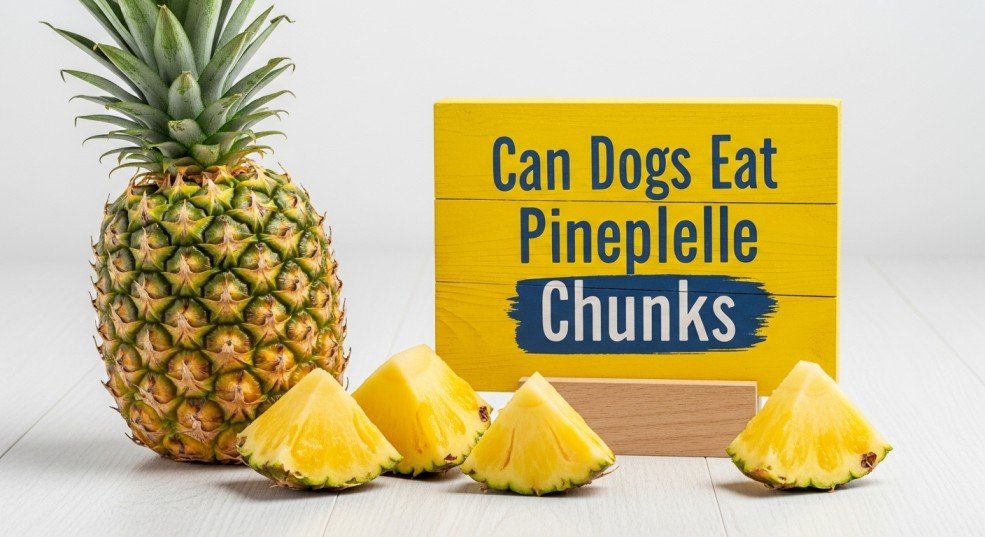
Yes, dogs can eat fresh pineapple chunks in small, controlled amounts. Pineapple flesh is not toxic to dogs, and when served correctly it can even offer a few nutritional benefits. However, several parts of the pineapple plant are unsafe, and the fruit’s naturally high sugar content makes portion control essential.
The reason pineapple occupies a gray zone in pet nutrition is its sugar content. Pineapple is one of the higher-sugar fruits you can give a dog, which means even plain, fresh flesh can cause digestive upset or contribute to weight gain and blood sugar spikes when given too freely.
What Makes Pineapple Potentially Unsafe for Dogs?
1. High Natural Sugar Content The Most Realistic Risk
A single cup of fresh pineapple chunks contains roughly 16 grams of sugar. While this is naturally occurring fructose rather than refined sugar, it is still a significant load for a dog’s digestive system, especially smaller breeds. Too much sugar in one sitting can cause:
- Gastrointestinal upset vomiting, diarrhea, loose stools
- Blood sugar spikes, particularly dangerous for diabetic dogs
- Weight gain and obesity if given frequently over time
- Tooth decay, as the sugars cling to the teeth just as they do in humans
2. Bromelain Beneficial but Potent
Pineapple contains bromelain, a mixture of enzymes that breaks down proteins. In small amounts, bromelain can have mild anti-inflammatory properties. However, in larger quantities it can irritate the mouth, gums, and gastrointestinal lining. Some dogs may experience mouth soreness or drooling after eating significant amounts of pineapple.
Important: Bromelain is most concentrated in the core and stem of the pineapple, not the flesh. This is another reason the core should never be given to dogs.
3. The Core A Physical Hazard
The fibrous center of a pineapple is tough, dense, and difficult to chew properly. It poses a real choking hazard for most dogs, and if swallowed in pieces can cause gastrointestinal blockage. The core should be removed entirely before offering pineapple to your dog no exceptions.
4. The Skin and Rind Indigestible and Sharp
Pineapple skin has a coarse, spiny texture that is indigestible and can lacerate the mouth, throat, and digestive tract. It is not toxic in the same way as some plant toxins, but the physical damage it can cause makes it dangerous. Always peel pineapple completely before giving any to your dog.
Can Pineapple Harm Dogs Seriously?
Fresh pineapple flesh is unlikely to seriously harm a healthy adult dog in small amounts. However, certain scenarios do carry real risk:
- Eating the core: Can cause choking or intestinal blockage, which may require emergency surgery if severe.
- Canned pineapple in heavy syrup: The syrup contains extremely high levels of added sugar and may contain xylitol in some brands, which is acutely toxic to dogs.
- Large quantities of fresh flesh: Can cause significant gastrointestinal distress, and in dogs with diabetes or pancreatitis, even moderate amounts can trigger a dangerous response.
- Pre-existing conditions: Dogs with diabetes, obesity, pancreatitis, or kidney disease face considerably higher risks from pineapple’s sugar and acid content.
The bottom line: pineapple is not in the same danger category as grapes or xylitol for dogs, but the core, skin, canned versions, and overconsumption all carry risks that should not be dismissed.
How Much Pineapple Can a Dog Eat?
There is no single published toxic dose for pineapple in dogs. The concern is primarily about sugar load and physical hazards rather than a specific toxic compound.
What veterinary nutritionists generally recommend as a practical upper limit for fresh pineapple flesh:
No more than 2 to 3 small chunks (roughly 1 inch each) per serving, given only as an occasional treat not daily.
To put that in context:
- A 10 lb dog (e.g., a Chihuahua): 1 small chunk, once or twice a week maximum
- A 30 lb dog (e.g., a Beagle): 2 small chunks as an occasional treat
- A 60 lb dog (e.g., a Labrador): 2 to 3 small chunks, but still not a daily habit
Treats of any kind pineapple included should make up no more than 10 percent of a dog’s daily caloric intake. Exceeding this regularly with a high-sugar fruit like pineapple invites weight problems and digestive issues.
Pineapple Risk by Part: Quick Reference Table
| Part of Pineapple | Sugar Level | Main Risk | Verdict |
| Fresh flesh chunks | Moderate | GI upset if too much; sugar load | Small amounts only |
| Core | Low | Hard, fibrous choking/blockage | Avoid completely |
| Skin / Rind | Low | Choking hazard, indigestible | Never give |
| Leaves / Crown | None | Sharp edges, indigestible fiber | Keep away |
| Canned in syrup | Very High | Sugar overload, xylitol risk | Dangerous avoid |
| Pineapple juice | Very High | Sugar spike, no fiber buffer | Not recommended |
Can Dogs Eat Pineapple Skin?
No. Pineapple skin should never be given to dogs. The outer rind is covered with hard, spiny protrusions that can cut the mouth and throat, and the material itself is fibrous and indigestible. Unlike the flesh, it carries no nutritional benefit and poses only physical risk.
If your dog licks the outside of a pineapple or gets a small piece of rind, monitor them for signs of mouth irritation or GI discomfort. If they eat a meaningful amount of skin, call your vet.
Can Dogs Eat the Pineapple Core?
Never. The pineapple core is dangerous for two separate reasons:
- Physical obstruction risk: The core is hard and fibrous. Dogs often swallow chunks without chewing properly, and a piece of core can become lodged in the esophagus, stomach, or intestines.
- High bromelain concentration: The core contains the highest levels of bromelain in the fruit, which can irritate the GI tract more intensely than the flesh.
If you believe your dog has swallowed a piece of pineapple core, do not wait for symptoms. Contact your veterinarian for guidance, especially if your dog is small.
Can Dogs Eat Canned Pineapple?
This is one of the most important distinctions in this entire guide. Canned pineapple is not the same as fresh pineapple for dogs, and it is generally not safe to give them.
Here is why canned pineapple is more dangerous than fresh:
- Added sugar syrup: Most canned pineapple is packed in heavy or light syrup, which contains enormous amounts of added sugar far more than the fruit naturally contains. This sugar overload can cause immediate GI distress and contributes to diabetes and obesity over time.
- Xylitol risk: Some brands use artificial sweeteners in their syrup. Xylitol, found in some sugar-free canned fruits, is acutely toxic to dogs and can cause liver failure and dangerous drops in blood sugar even in small amounts. Always check the label.
- Preservatives and additives: Canned pineapple often contains citric acid as a preservative, which can irritate a sensitive dog’s stomach.
If you want to give your dog pineapple, always use fresh, plain pineapple flesh with the skin, core, and crown removed. Canned pineapple even packed in juice rather than syrup is not recommended.
Can Dogs Drink Pineapple Juice?
No. Pineapple juice is not safe for dogs. Even fresh-pressed pineapple juice concentrates all the sugar from the fruit with none of the fiber that would otherwise slow absorption. This creates a rapid sugar spike that is harmful to dogs.
Commercial pineapple juice is even worse, frequently containing added sugars, preservatives, and sometimes artificial sweeteners. There is no situation in which pineapple juice is an appropriate treat for a dog.
What to Do If My Dog Ate Pineapple
Stay calm. What you do next depends on what part of the pineapple your dog ate and how much.
Step 1: Identify What Was Eaten
- Fresh flesh, small amount: Monitor at home for 24 to 48 hours.
- Fresh flesh, large amount: Call your vet for guidance on managing potential GI upset.
- The core: Contact your vet risk of blockage, especially in smaller dogs.
- The skin or rind: Call your vet if more than a lick was consumed.
- Canned pineapple in syrup: Call your vet high sugar load. Check label for xylitol immediately.
- Crown leaves: Monitor for GI irritation; contact vet if symptoms develop.
Step 2: Watch for These Symptoms
If your dog ate pineapple and you are monitoring at home, watch for these signs within 24 to 48 hours:
- Vomiting
- Diarrhea or loose stools
- Excessive drooling (can indicate mouth irritation from bromelain or skin)
- Reduced appetite or refusal to eat
- Lethargy or unusual tiredness
- Abdominal bloating or signs of discomfort
- Weakness, tremors, or collapse (seek emergency care immediately possible xylitol ingestion)
Step 3: Who to Call
- Your vet: First point of contact for any pineapple ingestion beyond a small amount of fresh flesh.
- ASPCA Animal Poison Control: (888) 426-4435 available 24/7 (consultation fee may apply).
- Pet Poison Helpline: (855) 764-7661 24/7 toxicology support.
Is Pineapple Actually Good for Dogs?
In small, controlled amounts, fresh pineapple flesh does offer some genuine nutritional value:
- Vitamin C: Supports immune function and acts as an antioxidant, though dogs produce their own vitamin C and do not require it from food.
- Manganese: Supports bone health, enzyme function, and metabolism.
- Bromelain: May offer mild anti-inflammatory effects in small amounts.
- Fiber: Supports healthy digestion, though pineapple’s fiber content is moderate compared to vegetables.
- Hydration: Pineapple has a high water content, making it a mildly hydrating treat in warm weather.
That said, none of these benefits are unique to pineapple. Safer, lower-sugar options provide similar or better nutritional value for dogs. The benefit is real, but so is the sugar risk which is why strict portion control matters.
Does Pineapple Stop Dogs from Eating Their Own Poop?
This is one of the most persistent home remedies you will find online for coprophagia (the habit of dogs eating feces). The theory is that bromelain changes the smell and taste of a dog’s stool, making it unappealing to eat.
The honest answer is that the scientific evidence for this does not exist. No peer-reviewed study has confirmed that pineapple reliably reduces coprophagia in dogs. Anecdotal reports from dog owners are mixed at best.
If your dog has a coprophagia problem, the right approach is to consult your veterinarian. There are underlying behavioral and nutritional causes that should be addressed properly, rather than relying on an unproven food remedy.
What About Dog Foods That Contain Pineapple?
A small number of commercially available dog treats and wet foods include pineapple as an ingredient. These products are generally safe because they are formulated with pineapple in controlled, minimal amounts alongside a complete and balanced diet. The processing involved typically reduces the bromelain activity and concentrates less sugar per serving than fresh fruit.
If you are concerned about a product containing pineapple, look for it listed toward the bottom of the ingredient list, indicating a small quantity, and choose brands with AAFCO nutritional adequacy statements.
Safe Alternatives to Pineapple for Dogs
If you want to give your dog a refreshing, nutrient-rich treat with fewer risks than pineapple, these options are generally safer for most dogs:
- Blueberries: Rich in antioxidants and vitamin C with low sugar and minimal GI risk.
- Watermelon (seedless, no rind): Highly hydrating, low calorie, and naturally sweet a better tropical treat option.
- Sliced apple (no seeds or core): Good source of fiber and vitamins A and C with moderate sugar.
- Banana: Higher in sugar than blueberries but still lower than pineapple, and easy to portion.
- Plain pumpkin (not pie filling): Supports digestion and is low in sugar and calories.
- Cucumber slices: Very low sugar, very low calorie, and hydrating ideal for heavy dogs.
Frequently Asked Questions: Dogs and Pineapple Chunks
Can dogs eat pineapple chunks safely?
Yes, small amounts of fresh, peeled pineapple flesh cut into chunks are safe for most healthy adult dogs as an occasional treat. Remove the skin, core, and crown leaves before serving. Keep portions small due to the high natural sugar content.
How many pineapple chunks can a dog eat?
No more than 2 to 3 small chunks (roughly 1 inch each) per serving, and only as an occasional treat rather than a daily addition to their diet. Adjust down for smaller dogs and dogs with diabetes, obesity, or digestive sensitivities.
Can dogs eat canned pineapple chunks?
No. Canned pineapple is packed in syrup or juice that contains excessive added sugar, and some brands use sweeteners that may include xylitol, which is acutely toxic to dogs. Always use fresh pineapple if you choose to give it at all.
Is pineapple toxic to dogs?
No, fresh pineapple flesh is not classified as toxic to dogs in the way that grapes, chocolate, or xylitol are. However, the core, skin, and leaves carry physical and digestive risks, and the high sugar content of the flesh makes overconsumption harmful.
Can dogs eat frozen pineapple chunks?
Yes, plain frozen pineapple chunks made from fresh flesh (no added sugar or syrup) are generally safe in the same small portions as fresh pineapple. Frozen chunks can be a refreshing summer treat. Avoid any frozen pineapple products that include added sweeteners or syrups.
Can diabetic dogs eat pineapple?
No. Dogs with diabetes should not eat pineapple. The high natural sugar content can cause significant blood sugar spikes that are dangerous for diabetic dogs. Consult your veterinarian before giving any fruit to a dog with diabetes.
Does pineapple stop dogs from eating poop?
This is a popular home remedy, but it has no scientific support. No peer-reviewed study has confirmed that pineapple reliably prevents coprophagia in dogs. If your dog eats feces regularly, speak with your vet about behavioral and nutritional interventions.
What should I do if my dog ate a lot of pineapple?
If your dog ate a large amount of fresh pineapple flesh, monitor for vomiting, diarrhea, or lethargy for 24 to 48 hours and contact your vet for guidance. If they ate the core, skin, or any canned pineapple with syrup, call your vet or ASPCA Animal Poison Control (888-426-4435) immediately.
Final Word: Should You Feed Your Dog Pineapple Chunks?
A few small chunks of fresh, peeled pineapple flesh are not a danger to most healthy adult dogs when given occasionally and in moderation. The fruit is not toxic, and it does offer some minor nutritional value. However, pineapple is not a recommended daily treat, and it is not the best fruit option for dogs given its high sugar content compared to safer alternatives like blueberries or watermelon.
The real dangers lie in the core, skin, and crown leaves, all of which should be removed completely before your dog gets anywhere near the fruit. Canned pineapple, pineapple juice, and any sweetened pineapple product are all off the table entirely.
If your dog ate any part of a pineapple beyond a small amount of flesh particularly the core or any canned variety contact your vet or an animal poison control line right away. When in doubt, reach for a safer fruit. Your dog will be equally delighted with a few blueberries, and you will have far less to worry about.
Reviewed & Recommended by Dr. Ubaidur Rahman, DVM
Veterinary Review: Dr. Ubaidur Rahman, DVM, reviewed this guide for the safety of pineapple chunks for dogs, including appropriate preparation and serving considerations.
Dr. Ubaidur Rahman’s Recommendation: Fresh pineapple chunks can generally be given to healthy dogs in small amounts. Remove the tough outer skin and core, and serve only the soft fruit. Pineapple contains natural sugar, so it is best offered as an occasional treat rather than a regular part of your dog’s diet. Avoid canned pineapple packed in syrup because of its added sugar.
Sources and References
Merck Veterinary Manual: Toxic Plants and Foods for Dogs. merckvetmanual.com
ASPCA Animal Poison Control Center: Foods to Avoid Feeding Your Pets. aspca.org
PetMD: Can Dogs Eat Pineapple? (Updated 2025). petmd.com
American Kennel Club: Can Dogs Eat Pineapple? akc.org
Chewy: Can Dogs Eat Pineapple? (2025). chewy.com
Purina: Can Dogs Eat Pineapple? purina.com
VCA Animal Hospitals: Nutrition General Feeding Guidelines for Dogs. vcahospitals.com
Discover More:-
- Dogs Vegetables: Safe & Toxic Veggies, Complete Vet-Backed Guide (2026)
- Can Dogs Eat Strawberries? A Complete Vet-Backed Guide (2026)

Dr. Ubaid Ur Rehman, DVM is a qualified veterinarian with expertise in pet health, nutrition, and preventive care. He is passionate about helping pet owners make informed decisions through accurate, research-based, and practical advice. As a veterinary professional, he reviews and contributes content to ensure reliable information for dog and pet owners.