
Can Dogs Eat Corn Safely? The Complete Feeding Guide
Quick Answer: A few plain corn kernels are safe for most healthy adult dogs as an occasional treat. The cob is the real danger. It can cause a life-threatening intestinal blockage. Buttered, salted, or seasoned corn is also unsafe.
Your dog is staring at your corn on the cob with those big hopeful eyes. Before you hand it over, you need the full picture. The answer to whether dogs can eat corn is not a simple yes or no, and a lot of what circulates online either overdramatizes the danger or skips the parts that actually matter. This guide gives you the complete, vet-backed picture.
We cover every angle dog owners search for: whether corn is healthy or harmful for dogs, which forms are safe, how much is too much, what to do if your dog already ate corn on the cob, and why certain corn products are a different story altogether.
Can Dogs Eat Corn? The Short Answer

Yes, dogs can eat plain, cooked corn kernels in moderation. Corn itself is not toxic to dogs. However, the way corn is prepared and served makes a major difference. Corn on the cob, buttered corn, corn with seasonings, and processed corn snacks are all a different matter.
Corn is actually a common ingredient in many commercial dog foods, which should tell you that it is not inherently harmful. The concerns around corn are largely about preparation, portion size, and the physical hazard of the cob itself.
What Makes Corn Dangerous for Dogs?
1. The Cob: A Physical Emergency
The corn cob is the number one danger. It is fibrous, indigestible, and perfectly sized to cause a gastrointestinal obstruction. Unlike small food items that pass through the system, corn cobs often lodge in the intestines because they absorb digestive fluids and swell rather than breaking down.
A corn cob obstruction is a surgical emergency. Signs include vomiting, lethargy, loss of appetite, abdominal pain, and inability to defecate. If left untreated, a blockage can be fatal within days.
2. Butter, Salt, and Seasonings
Plain corn is safe. Corn as humans typically eat it is not. Here is what makes seasoned corn unsafe for dogs:
- Salt: Salt toxicity in dogs causes excessive thirst, urination, vomiting, diarrhea, tremors, and in serious amounts, sodium ion poisoning.
- Butter: High in fat and can trigger gastrointestinal upset and pancreatitis, especially in dogs prone to digestive problems.
- Garlic or onion seasoning: Both are highly toxic to dogs, causing red blood cell damage and hemolytic anemia.
- Chili, paprika, or spice blends: These irritate the GI tract and mucous membranes of dogs.
3. High Starch and Sugar Content
Corn is high in simple carbohydrates. For healthy dogs, this is not an immediate toxicity concern, but it does mean corn should be an occasional treat, not a dietary staple. For dogs with diabetes, weight problems, or food sensitivities, even plain corn can be problematic.
Can Corn Kill Dogs?
This question deserves a direct answer. Plain corn kernels will not kill a healthy dog. But certain scenarios involving corn can become life-threatening:
- Swallowing the cob: This is the primary life-threatening scenario. A full intestinal blockage from a corn cob can be fatal if not treated with emergency surgery.
- Eating corn with toxic seasonings: Garlic and onion powder used in corn seasoning blends can cause hemolytic anemia. The effects can be delayed by several days.
- Large amounts in sensitive dogs: Dogs with pancreatitis or diabetes face significantly higher risks from corn due to its fat and starch content.
The bottom line: corn kernels are far less dangerous than many people assume, but the cob is a genuine emergency. Never treat the cob as harmless.
How Much Corn Can Dogs Eat?
There is no established toxic dose of corn for dogs because plain corn is not toxic. The concern is practical rather than toxicological. Veterinary nutritionists generally recommend:
Corn should not make up more than 10 percent of a dog’s daily caloric intake. For most dogs, a small handful of plain kernels as an occasional treat is appropriate.
To put that in context:
- A 10 lb dog (e.g., a Chihuahua): a teaspoon of plain kernels at most
- A 30 lb dog (e.g., a Beagle): a tablespoon of plain kernels at most
- A 60 lb dog (e.g., a Labrador): two tablespoons of plain kernels at most
Dogs with a history of pancreatitis, diabetes, or food allergies should not eat corn without first consulting a veterinarian.
Corn Risk by Type: Quick Reference Table
| Type of Corn | Main Risk | Verdict |
| Plain cooked kernels | High starch, minor GI upset in excess | Safe in small amounts |
| Corn on the cob | GI obstruction (life-threatening) | Never give |
| Buttered or salted corn | Salt toxicity, pancreatitis from fat | Avoid completely |
| Corn with garlic or onion | Hemolytic anemia (blood cell damage) | Dangerous, avoid |
| Popcorn (plain, air-popped) | Minor choking risk, low nutrition | Occasional, tiny amounts only |
| Canned corn (with brine) | High sodium content | Avoid, rinse if given |
| Corn chips or Fritos | Salt, fat, artificial additives | Unsafe, avoid |
| Cornmeal (plain) | High starch, low nutritional value | Not recommended |
Can Dogs Eat Corn on the Cob?
No. This is the most important rule in this entire article. The corn cob is not digestible and is one of the most common causes of intestinal obstruction in dogs. Unlike the kernels, which can pass through the digestive tract, the fibrous structure of the cob expands as it absorbs moisture in the intestines.
Corn on the cob blockages often require emergency surgery. Some dogs do not survive if treatment is delayed. Even small dogs gnawing on pieces of cob are at risk because chunks can break off and lodge in the intestines.
If your dog ate any part of a corn cob, do not wait for symptoms. Contact your vet or an emergency animal clinic immediately.
Can Dogs Eat Popcorn?
Plain, air-popped popcorn is not toxic to dogs and is sometimes given as a low-calorie treat. However, there are important caveats:
- Unpopped kernels: These are a choking hazard and can crack teeth. Always remove them before sharing with your dog.
- Butter and salt: Movie-style popcorn is off-limits. The added fat and sodium create the same risks as seasoned corn.
- Artificial flavors and toppings: Cheese powder, caramel coating, and flavoring additives are unsafe for dogs.
If you want to share popcorn with your dog, a few plain air-popped pieces are fine. It is a low-nutrition treat and should be occasional, not a regular snack.
Can Dogs Eat Canned Corn?
Canned corn that has been packed in brine or salted water is not ideal for dogs because of its high sodium content. A small amount is unlikely to cause serious harm, but it is not recommended as a regular treat.
If you want to give your dog canned corn, drain and rinse the kernels thoroughly under fresh water to reduce the sodium content, and offer only a small amount. Avoid any canned corn with added seasonings, sugar syrup, or preservatives.
What About Corn Chips, Fritos, and Tortilla Chips?
These are all unsafe for dogs. Corn chips and similar snacks are high in salt, fat, and often contain garlic powder, onion powder, or artificial flavoring. A single chip is unlikely to harm a large dog, but these should never be offered intentionally. They provide no nutritional benefit and carry real risks.
If your dog stole a chip off the floor, monitor them for signs of salt or garlic toxicity and contact your vet if they consumed a meaningful quantity.
What About Dog Foods That Contain Corn?
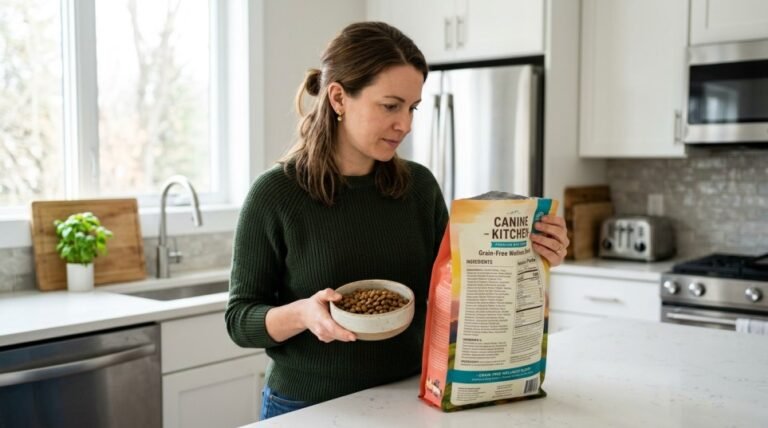
This is something many people find confusing. Corn is a common ingredient in commercially formulated dog foods, and this is generally safe. Commercial dog food manufacturers use corn in a controlled, processed form where it serves as an energy source and provides some essential fatty acids and antioxidants.
Corn in dog food is typically ground into cornmeal or corn gluten meal, which is far more digestible than whole kernels or cob pieces. If your dog’s food lists corn as an ingredient, that alone is not a concern. Look for an AAFCO nutritional adequacy statement on the packaging to ensure the product meets complete and balanced nutrition standards.
The controversy around corn in dog food largely centers on grain-free versus grain-inclusive diets, which is a separate and complex topic. Corn as an ingredient is not inherently harmful to dogs that do not have corn allergies or sensitivities.
Can Dogs Be Allergic to Corn?
Yes. Corn is one of the more common food allergens in dogs, though it is less frequently the culprit than proteins like beef, chicken, or dairy. Signs of a corn allergy or sensitivity include:
- Itchy skin, redness, or recurring hot spots
- Ear infections that keep coming back
- Gastrointestinal issues including vomiting, diarrhea, or excessive gas
- Licking or chewing at paws
If you suspect your dog has a food allergy, a proper elimination diet trial under veterinary supervision is the only reliable way to identify the trigger. Do not attempt to diagnose this at home by removing individual foods one at a time.
What to Do If My Dog Ate Corn
Stay calm. What you do next depends entirely on what form of corn your dog ate and how much.
Step 1: Identify What Was Eaten
- A few plain kernels: Monitor at home for 24 to 48 hours for GI upset.
- Large amount of plain kernels: Call your vet for guidance.
- Corn on the cob or pieces of cob: Go to an emergency vet immediately. Do not wait for symptoms.
- Buttered or salted corn: Call your vet, especially if a large amount was consumed.
- Corn with garlic or onion seasoning: Call your vet. Garlic and onion toxicity can be delayed by days.
- Corn chips or processed snacks: Call your vet if more than a small amount was eaten.
Step 2: Watch for These Symptoms
If your dog ate plain corn kernels and you are monitoring at home, watch for these signs within 24 to 48 hours:
- Vomiting or dry heaving
- Diarrhea or loose stools
- Lethargy or unusual tiredness
- Abdominal pain, bloating, or whining when the belly is touched
- Loss of appetite or refusal to drink
- Inability to defecate or straining (a warning sign of obstruction)
Step 3: Who to Call
- Your vet: First point of contact for any corn ingestion beyond plain kernels.
- ASPCA Animal Poison Control: (888) 426-4435, available 24/7. A consultation fee may apply.
- Pet Poison Helpline: (855) 764-7661, 24/7 toxicology support.
Safe Alternatives to Corn for Dogs
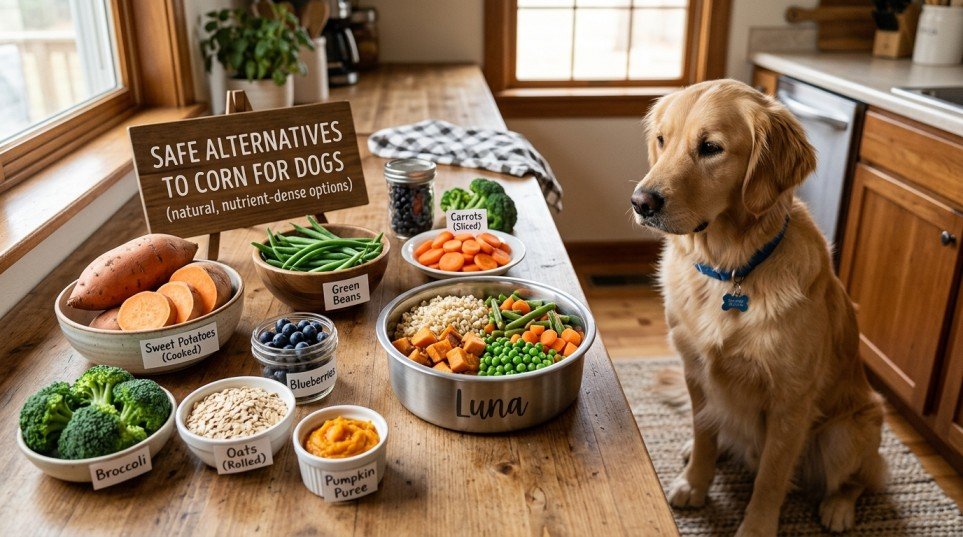
If you want to give your dog a crunchy, satisfying treat without the corn-related risks, these options are safer:
- Carrot sticks: Low calorie, high in fiber and beta-carotene. Most dogs love the crunch.
- Sliced apple (no seeds or core): Good source of fiber, vitamins A and C, and naturally sweet.
- Cucumber slices: Very low calorie and hydrating. Good for dogs on a weight management plan.
- Green beans (plain): Rich in vitamins and fiber with very low caloric density.
- Cooked sweet potato: Excellent source of beta-carotene and dietary fiber, and naturally satisfying.
- Watermelon (seedless, no rind): Hydrating and sweet, with minimal calories.
Frequently Asked Questions: Dogs and Corn
Can dogs eat corn?
Yes, dogs can eat plain, cooked corn kernels in small amounts as an occasional treat. Corn is not toxic to dogs. The danger lies in the cob, added seasonings, salt, and butter. Corn on the cob should never be given to dogs under any circumstances.
Can corn on the cob kill dogs?
Yes, a corn cob can kill a dog if it causes a complete intestinal obstruction that is not treated in time. The cob is indigestible and can swell inside the intestines, blocking the passage of food and fluids. This is a surgical emergency. Do not wait for symptoms if you know your dog swallowed part of a cob.
Is corn in dog food safe?
Yes. Corn in commercially formulated dog food is generally safe and is used as an energy source. It is processed in a form that is digestible, unlike raw whole kernels or cob pieces. Choose products with an AAFCO nutritional adequacy statement to ensure complete and balanced nutrition.
Can dogs eat popcorn?
Plain, air-popped popcorn without butter, salt, or toppings is not toxic to dogs and can be given in very small amounts as an occasional treat. Remove any unpopped kernels first, as these are a choking hazard. Movie-style buttered or flavored popcorn is off-limits.
Can dogs eat canned corn?
Canned corn packed in brine is high in sodium and not recommended. If you want to give your dog canned corn, drain and rinse the kernels thoroughly to reduce salt content and offer only a small amount. Avoid any canned corn with added seasonings or sugar.
What should I do if my dog ate corn on the cob?
Contact your vet or an emergency animal clinic immediately. Do not wait for symptoms like vomiting or lethargy to appear. A corn cob obstruction can deteriorate quickly and may require emergency surgery. Time matters in this situation.
Is corn bad for dogs with allergies?
Corn is a known food allergen in dogs, though it is less common than protein allergies. Signs of a corn allergy include itchy skin, ear infections, GI upset, and paw licking. If you suspect a food allergy, speak with your vet about an elimination diet trial to identify the trigger.
Final Word: Should You Feed Your Dog Corn?
A few plain, cooked corn kernels are not an emergency for most healthy adult dogs and can be offered as an occasional treat. But corn is not a nutritional powerhouse for dogs, and the risks that come with the cob, added salt, butter, and seasoning make it a treat that requires care and preparation.
Corn on the cob should never be given to dogs, even as a chew or leftovers. It is one of the most common causes of intestinal obstruction in dogs seen in emergency clinics.
If your dog got into corn with seasoning, garlic, or onion, or swallowed any part of a cob, contact your vet or an animal poison control line right away. When in doubt, reach for a safer snack. Your dog will enjoy a carrot or apple slice just as much, and you will have nothing to worry about.
Reviewed & Recommended by Dr. Ubaidur Rahman, DVM
Veterinary Review: Dr. Ubaidur Rahman, DVM, reviewed this guide for the safety of corn for dogs, including appropriate preparation, serving size, and potential risks.
Dr. Ubaidur Rahman’s Recommendation: Plain, cooked corn kernels can generally be given to dogs in moderation. Corn itself is not considered toxic to dogs, but it should be served without butter, salt, spices, or other seasonings. Never give a dog a whole corn cob, as the cob can be a choking hazard or cause an intestinal blockage if swallowed.
Sources and References
- Merck Veterinary Manual: Gastrointestinal Obstruction in Small Animals. merckvetmanual.com
- ASPCA Animal Poison Control Center: Corn and Corn Products. aspca.org
- PetMD: Can Dogs Eat Corn? (Updated 2025). petmd.com
- American Kennel Club: Can Dogs Eat Corn? akc.org
- Chewy: Is Corn Safe for Dogs? chewy.com
- Purina: Can Dogs Eat Corn? purina.com
- VCA Animal Hospitals: Food Allergies in Dogs. vcahospitals.com
Discover More:-
- Can Dogs Eat Shrimp? A Complete Vet-Backed Guide 2026
- Can Dogs Eat Shrimp? A Complete Vet-Backed Guide 2026

Dr. Ubaid Ur Rehman, DVM is a qualified veterinarian with expertise in pet health, nutrition, and preventive care. He is passionate about helping pet owners make informed decisions through accurate, research-based, and practical advice. As a veterinary professional, he reviews and contributes content to ensure reliable information for dog and pet owners.