
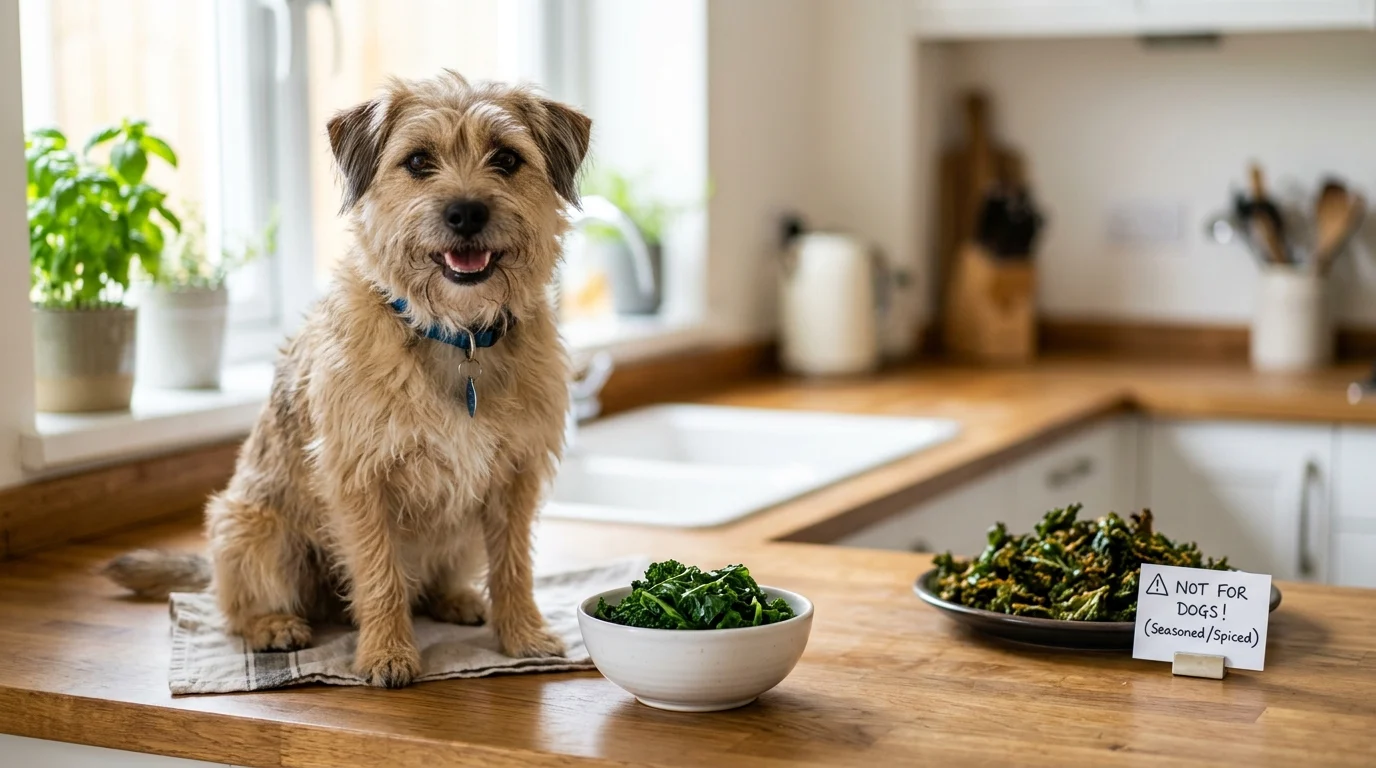
Can Dogs Eat Kale? Vet-Approved Benefits, Risks & Feeding Guide
Quick Ans: Yes, dogs can eat plain, cooked kale in very small amounts as an occasional treat. Kale is not toxic and offers vitamins and antioxidants. However, it contains calcium oxalate and isothiocyanates, which can cause kidney stones and stomach irritation if overfed . Dogs with thyroid issues or a history of bladder stones should avoid it entirely .
Key Takeaways
- Small amounts only – Kale contains calcium oxalate, which can lead to kidney and bladder stones in prone dogs. Keep portions tiny and infrequent .
- Cooked is easier to digest – Lightly steaming or boiling kale makes it gentler on your dog’s stomach than raw .
- Not for some dogs – Dogs with hypothyroidism, kidney disease, or a history of bladder stones should not eat kale .
Kale has earned a reputation as a superfood for humans, packed with vitamins and antioxidants. Your dog might be eyeing that leafy green in your salad bowl, and you may wonder if it’s safe to share. The short answer is yes, with strict rules. While kale offers some nutritional benefits, it also contains compounds that can be problematic for certain dogs. Here’s what you need to know before offering a bite.
Is Kale Good for Dogs?
Kale does offer nutritional benefits when served as an occasional treat. It is rich in vitamins A, C, and K, which support vision, immune function, and proper blood clotting . Kale also provides calcium, magnesium, potassium, fiber, and antioxidants that help combat inflammation and protect cells from damage .
However, dogs are primarily carnivorous, and kale should only be a small supplement to their diet, not a staple . The amounts your dog can safely eat are so small that the nutrients won’t make a meaningful difference in their overall health. Think of kale as a rare crunchy treat, not a nutritional supplement.
What Makes Kale Risky for Dogs?
1. Calcium Oxalate – Kidney and Bladder Stone Risk
Kale contains calcium oxalate, a compound that can bind to other minerals and form stones in the urinary tract . Dogs prone to kidney or bladder stones should avoid kale entirely. Even in healthy dogs, regular feeding of calcium oxalate-rich foods can increase the risk over time .
2. Isothiocyanates – Gastric Irritation
Isothiocyanates are natural compounds found in cruciferous vegetables like kale and broccoli. In large amounts, they can cause mild to severe gastric irritation, leading to vomiting, diarrhea, and stomach pain . Broccoli becomes toxic when it exceeds 25% of a dog’s daily intake, and kale poses similar risks at high quantities .
3. Thyroid Impact – Iodine Absorption Interference
Raw kale contains goitrogens, which can interfere with how your dog’s thyroid gland absorbs iodine . This can lead to improper thyroid function, especially in dogs with hypothyroidism or those taking thyroid medication. While healthy dogs are unlikely to be affected by small amounts, dogs with existing thyroid issues should not eat kale .
4. Heavy Metal Accumulation – Thallium Risk
Kale can absorb thallium, a heavy metal found in soil. Over time, feeding kale regularly could lead to thallium accumulation in your dog’s body . While a dog would need to ingest large amounts to experience acute poisoning, the risk of chronic buildup makes kale a treat best kept infrequent .
5. Digestive Upset – Fiber Overload
Kale is high in fiber, which can cause gas, bloating, constipation, or diarrhea if introduced too quickly or fed in large amounts . Start with a tiny piece and monitor your dog’s reaction.
Kale Safety Comparison Table
How Much Kale Can Dogs Eat?
Kale should be a rare treat, not a regular addition. Follow the 10% treat rule, all treats combined should not exceed 10% of your dog’s daily calories.
Portion guidelines for plain, cooked kale:
| Dog Size | Examples | Starting Portion | Max Portion (per serving) |
|---|---|---|---|
| Extra-small (2–20 lbs) | Chihuahua, Yorkie, Pug | ½ teaspoon | 1 teaspoon |
| Small (21–30 lbs) | Beagle, Miniature Poodle | 1 teaspoon | 2 teaspoons |
| Medium (31–50 lbs) | Cocker Spaniel, Border Collie | 1–2 teaspoons | 1 tablespoon |
| Large (51–90 lbs) | Lab, Golden Retriever | 1 tablespoon | 2 tablespoons |
| Extra-large (91+ lbs) | Great Dane, Mastiff | 1–2 tablespoons | 3 tablespoons |
Feed kale once a week at most. Some veterinarians recommend avoiding it entirely due to the risks, even in small amounts .
What to Do If My Dog Ate Too Much Kale
If your dog sneaks a large quantity of kale, monitor them closely.
Step 1: Assess how much they ate
- A few extra leaves – watch for mild digestive upset.
- A large amount – watch for vomiting, diarrhea, or changes in urination.
Watch for symptoms
- Vomiting or diarrhea
- Gas or bloating
- Difficulty urinating or changes in urination habits (kidney stone signs)
- Symptoms usually appear within 6–12 hours
Call for help if needed
- Your veterinarian – especially if symptoms appear or your dog has a history of bladder stones.
- ASPCA Animal Poison Control: (888) 426-4435 (fee may apply)
- Pet Poison Helpline: (855) 764-7661 (fee may apply)
Do not induce vomiting unless directed by a professional. If your dog has a history of bladder stones, call your vet even if symptoms aren’t immediately obvious.
Can Puppies Eat Kale?
Puppies can eat a tiny piece of plain, cooked kale, but proceed with caution. Their digestive systems are sensitive, and the fiber in kale can cause diarrhea . Wait until your puppy is at least 6 months old and start with just a small shred. Puppies with developing immune systems may be more susceptible to digestive upset. Always consult your vet before introducing new foods to a puppy.
Safe Alternatives to Kale
If you want to give your dog a leafy green or healthy vegetable, these options are safer:
- Green beans – Low-calorie, easy to digest, and free of oxalate concerns.
- Cucumber – Hydrating and gentle on the stomach.
- Celery – Crunchy and low-calorie, but chop into small pieces.
- Carrots – Great for dental health and rich in vitamin A.
- Plain cooked pumpkin – Excellent for digestion and fiber.
Frequently Asked Questions
Can dogs eat raw kale?
Raw kale is harder to digest and contains higher levels of goitrogens that can affect thyroid function. Lightly steaming or boiling kale is safer and gentler on your dog’s stomach .
Can dogs eat kale stems?
No. Kale stems have a high calcium oxalate count and can be tough to chew, posing a choking hazard. Always remove and discard them .
Is kale bad for dogs with kidney disease?
Yes. The calcium oxalate in kale can contribute to kidney and bladder stones, making it unsafe for dogs with kidney disease or a history of urinary stones .
Is kale safe for dogs with hypothyroidism?
No. Kale can interfere with iodine absorption and thyroid function. Dogs with hypothyroidism should avoid kale entirely .
Can dogs eat kale every day?
No. Kale should be a rare treat, not a daily addition. Regular feeding can lead to calcium oxalate buildup, thyroid issues, or gastric irritation .
Can dogs eat cooked kale?
Yes, lightly steamed or boiled kale is the safest way to serve it. Cooking reduces isothiocyanates and makes it easier to digest. Serve plain with no salt, oil, or seasonings .
What should I do if my dog eats seasoned kale?
Monitor for vomiting, diarrhea, or excessive thirst. If the seasoning contains garlic, onion, or high salt, contact your vet or a poison helpline immediately.
Are there safer leafy greens for dogs?
Yes, green beans and cucumbers are safer options for dogs. They don’t carry the same oxalate and thyroid concerns as kale .
Final Word
Can dogs eat kale? Yes, but only in very small amounts and only for healthy dogs. Kale offers vitamins and antioxidants, but the risks from calcium oxalate, isothiocyanates, and thyroid interference mean it should be a rare treat, not a dietary staple. Lightly steam it, serve it plain, and skip the stems. If your dog has kidney issues, bladder stones, or hypothyroidism, skip kale entirely. When in doubt, choose safer green alternatives like green beans or cucumber. And always consult your veterinarian before adding any new food to your dog’s diet.
Veterinary Recommendation — Dr. Ubaidur Rahman, DVM
I recommend treating kale as an occasional vegetable rather than a regular part of a dog’s diet. If you offer it, wash it well, remove tough stems, and serve it plain without garlic, onion, butter, or heavy seasoning. Start with a small portion and watch for vomiting, diarrhea, or other digestive changes. Dogs with existing thyroid or kidney problems should have their diet discussed with their veterinarian before adding kale regularly.
Sources & References
- American Kennel Club. “Can Dogs Eat Kale?” – Dr. Jerry Klein, DVM
- PetLab Co. “Can Dogs Eat Kale?”
- Dogster. “Can Dogs Eat Kale? Vet-Reviewed Facts to Know” – Dr. Paola Cuevas
- Spot Pet Insurance. “Can Dogs Eat Kale?”
- ZIWI US. “Is Kale Good for Dogs? Benefits & Feeding Tips”
- Petco. “What are the benefits and risks of feeding kale to my dog as a treat?” – Andrea M. Brodie, DVM
- The Dodo. “Can Dogs Eat Kale Safely?” – Dr. Michelle Burch
- Adopt a Pet. “Can Dogs Eat Kale?”
- ASPCA Animal Poison Control: (888) 426-4435
- Pet Poison Helpline: (855) 764-7661

Michael Carter, DVM is a veterinarian and pet health writer with a strong interest in canine nutrition, preventive care, and animal wellness. He is dedicated to providing pet owners with accurate, evidence-based information that helps them make informed decisions about their dogs’ health. As an author and content reviewer, Michael combines veterinary knowledge with practical insights to ensure every article is trustworthy, informative, and easy to understand.