Can Dogs Eat Black Beans? Benefits, Risks & Feeding Tips
Quick Answer: Plain boiled black beans are generally safe for healthy dogs. However, canned black beans with added sodium, spicy black bean dishes, refried beans, and recipes containing onions or garlic should be avoided.
You’re making dinner, a few black beans fall on the floor, and your dog quickly scoops them up. Now you’re wondering: can dogs eat black beans safely, or is this something you should worry about?
The good news is that plain, properly cooked black beans are generally safe for most dogs. In fact, they contain several nutrients that can support your dog’s overall health. However, not all black bean dishes are dog-friendly. The way black beans are prepared often matters more than the beans themselves.
This guide covers everything dog owners actually want to know: whether black beans are safe, their nutritional benefits, potential risks, how much dogs can eat, the best ways to serve them, and when to call a veterinarian.
Can Dogs Eat Black Beans? The Short Answer
Yes, dogs can eat plain cooked black beans in moderation. Black beans are non-toxic to dogs and contain protein, fiber, vitamins, and minerals that may support overall health.
The most important thing to remember is that black beans should be an occasional supplement to a balanced diet, not a replacement for your dog’s regular food.
Are Black Beans Safe for Dogs?
1. Black Beans Are Not Toxic
Unlike foods such as chocolate, grapes, onions, and xylitol, black beans do not contain compounds known to be toxic to dogs.
When cooked properly and served plain, they are considered safe for most healthy dogs.
Many commercial dog foods already include legumes and beans as ingredients because of their nutritional value.
2. Preparation Matters
The biggest concern is usually not the beans themselves but what comes with them.
Many black bean recipes contain ingredients that can be harmful to dogs, including:
- Onions
- Garlic
- Excess salt
- Chili powder
- Jalapeños
- Hot sauces
- Excess oil
- Artificial seasonings
A spoonful of plain black beans is very different from a serving of seasoned black bean chili.
3. Some Dogs Have Sensitive Stomachs
Even healthy foods can cause digestive upset when introduced too quickly.
Dogs that are not used to eating beans may experience:
- Gas
- Bloating
- Mild diarrhea
- Stomach discomfort
Starting with small portions helps reduce the risk of digestive problems.
Nutritional Benefits of Black Beans for Dogs
Black beans provide several nutrients that may support canine health.
1. Plant-Based Protein
Protein plays an important role in:
- Muscle maintenance
- Tissue repair
- Immune function
- Overall growth and development
While dogs primarily benefit from animal-based proteins, black beans can provide an additional protein source.
2. Dietary Fiber
Black beans are rich in fiber.
Fiber may help support:
- Healthy digestion
- Regular bowel movements
- Weight management
- Satiety between meals
For some dogs, moderate fiber intake can improve stool quality.
3. Antioxidants
Black beans contain antioxidants that help combat oxidative stress.
Antioxidants support:
- Cellular health
- Immune system function
- Healthy aging
The dark pigmentation of black beans is partly responsible for their antioxidant content.
4. Vitamins and Minerals
Black beans contain nutrients such as:
- Iron
- Magnesium
- Potassium
- Folate
- Phosphorus
These nutrients contribute to various bodily functions, including nerve function, muscle activity, and energy metabolism.
Can Puppies Eat Black Beans?
Yes, puppies can eat small amounts of plain cooked black beans.
However, puppies have more sensitive digestive systems than adult dogs.
If offering black beans to a puppy:
- Serve only a few beans initially
- Monitor for digestive upset
- Avoid seasonings entirely
- Continue feeding a balanced puppy diet
Puppies should receive most of their nutrition from food specifically formulated for growth.
How Much Black Beans Can Dogs Eat?
Moderation is essential.
Black beans should be considered a treat or food topper rather than a primary food source.
Small Dogs (Under 20 lbs)
- 1 to 2 teaspoons
- Occasionally
Medium Dogs (20–50 lbs)
- 1 to 2 tablespoons
- Occasionally
Large Dogs (50–90 lbs)
- 2 to 4 tablespoons
- Occasionally
Giant Breeds (90+ lbs)
- Up to ¼ cup occasionally
Treats and extras should generally make up no more than 10% of a dog’s daily calorie intake.
Best Ways to Serve Black Beans to Dogs
1. Plain Cooked Black Beans
This is the safest option.
Simply boil black beans until soft and serve them plain.
No added ingredients are necessary.
2. Mixed With Regular Dog Food
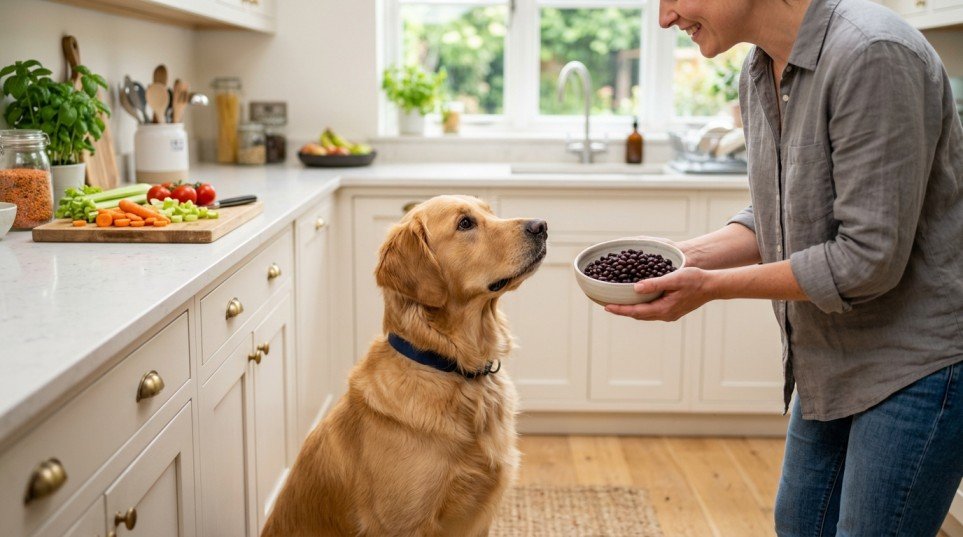
Many owners add a small spoonful of black beans as a topper.
This can:
- Increase fiber intake
- Add variety
- Improve meal interest
Start with small portions to assess tolerance.
3. Homemade Dog Treat Recipes
Plain black beans can be incorporated into homemade dog treats when used alongside dog-safe ingredients.
Always avoid ingredients toxic to dogs.
4. Mashed Black Beans
Some dogs prefer a softer texture.
Mashing cooked beans can make them easier to mix into meals.
Can Dogs Eat Canned Black Beans?
Canned black beans are not ideal.
Many canned products contain:
- High sodium levels
- Preservatives
- Seasonings
- Flavor enhancers
If canned black beans are the only option:
- Choose low-sodium varieties
- Rinse thoroughly before serving
- Check ingredient labels carefully
Plain cooked beans remain the better choice.
Can Dogs Eat Black Bean Soup?
Usually not.
Black bean soups often contain ingredients that can be harmful to dogs, including:
- Onions
- Garlic
- Excess sodium
- Spices
- Creams or oils
Even small amounts of onion or garlic can pose health risks.
Avoid sharing black bean soup unless every ingredient is confirmed dog-safe.
Can Dogs Eat Black Bean Burgers?
Generally not recommended.
Many black bean burgers contain:
- Onion powder
- Garlic powder
- Salt
- Spices
- Artificial ingredients
These products are designed for human tastes rather than canine nutrition.
Stick to plain cooked black beans instead.
Risks of Feeding Black Beans to Dogs
1. Gas and Bloating
The most common side effect is increased gas.
Because black beans contain significant fiber, some dogs may experience:
- Flatulence
- Mild bloating
- Temporary stomach discomfort
This is especially common when large portions are fed.
2. Digestive Upset
Introducing black beans too quickly may cause:
- Diarrhea
- Soft stools
- Vomiting
- Reduced appetite
Gradual introduction helps reduce these risks.
3. Excess Calories
Although nutritious, black beans still contribute calories.
Overfeeding can contribute to:
- Weight gain
- Nutritional imbalance
- Reduced appetite for regular food
Moderation remains important.
4. Food Allergies or Sensitivities
While uncommon, some dogs may react poorly to legumes.
Watch for signs such as:
- Itching
- Ear irritation
- Digestive upset
- Excessive licking
Discontinue feeding if symptoms appear.
Signs Your Dog Ate Too Many Black Beans
Most cases are mild and involve digestive discomfort.
Common signs include:
- Gas
- Abdominal bloating
- Diarrhea
- Soft stools
- Mild vomiting
- Reduced appetite
Symptoms often resolve within a day or two.
Persistent or severe symptoms warrant veterinary attention.
When to Call a Vet
Contact your veterinarian if:
- Vomiting is severe or persistent
- Diarrhea lasts longer than 24–48 hours
- Your dog appears lethargic
- Abdominal swelling becomes significant
- Black beans were consumed with toxic ingredients
- Your dog has an existing digestive condition
The concern is usually not the beans themselves but accompanying ingredients.
Black Beans vs. Other Beans for Dogs
Different beans offer similar nutritional benefits but vary slightly in digestibility.
| Bean Type | Safe for Dogs? | Notes |
|---|---|---|
| Black Beans | Yes | Best served plain and cooked |
| Pinto Beans | Yes | Safe in moderation |
| Kidney Beans | Yes | Must be thoroughly cooked |
| Green Beans | Yes | Popular low-calorie treat |
| Chickpeas | Yes | Safe when plain |
| Lentils | Yes | Often included in dog foods |
| Refried Beans | No | Usually contain harmful ingredients |
Plain preparation is the key factor regardless of bean type.
Frequently Asked Questions About Dogs and Black Beans
Can black beans kill dogs?
No. Plain black beans are not toxic to dogs and are unlikely to cause serious harm when eaten in reasonable amounts.
Can dogs eat black beans every day?
Occasional servings are generally better. Daily feeding may contribute to excessive fiber intake or reduce consumption of a balanced diet.
Are black beans good for dogs?
Black beans provide protein, fiber, antioxidants, vitamins, and minerals. They can be a healthy supplement when fed appropriately.
Can dogs eat rice and black beans?
Plain cooked rice and plain cooked black beans are generally safe together. Avoid seasonings and excessive portions.
What happens if my dog eats seasoned black beans?
Seasoned beans may contain ingredients such as garlic, onion, or excessive salt. Monitor your dog and contact a veterinarian if harmful ingredients were involved.
Can diabetic dogs eat black beans?
Because black beans contain fiber and complex carbohydrates, they may fit into some diabetic diets. However, dietary decisions for diabetic dogs should always be made with veterinary guidance.
Are black beans better than commercial dog food?
No. Black beans can be a healthy addition but do not provide complete and balanced nutrition for dogs.
How to Safely Introduce Black Beans to Your Dog
- Start with a very small portion.
- Serve only cooked beans.
- Avoid salt and seasonings.
- Monitor for digestive upset.
- Increase gradually if tolerated.
- Keep portions moderate.
A slow introduction helps identify any sensitivities before larger servings are offered.
Final Word: Black Beans Can Be a Healthy Treat for Most Dogs
Black beans are generally safe for dogs when they are cooked, plain, and served in moderation. They provide fiber, protein, antioxidants, and important nutrients that may support overall health.
However, not every black bean dish is dog-friendly. Many recipes contain onions, garlic, salt, and spices that can be harmful to dogs. The safest approach is to serve plain cooked black beans as an occasional treat or meal topper.
If your dog accidentally eats seasoned black beans or develops digestive symptoms after eating them, contact your veterinarian for guidance. For most healthy dogs, though, a few plain black beans can be a nutritious and enjoyable addition to their diet.
Reviewed & Recommended by Dr. Ubaidur Rahman, DVM
Veterinary Review: Dr. Ubaidur Rahman, DVM, reviewed this guide for the safety of black beans for dogs, including appropriate preparation and potential digestive concerns.
Dr. Ubaidur Rahman’s Recommendation: Plain, fully cooked black beans can generally be given to dogs in small amounts. They provide fiber and plant-based protein, but too many can cause gas, bloating, or digestive upset. Black beans should be served plain—without salt, spices, onion, garlic, butter, or sauces.
Sources and References
- American Kennel Club (AKC): Human Foods Dogs Can and Cannot Eat
- PetMD: Safe Human Foods for Dogs
- Merck Veterinary Manual: Canine Nutrition
- VCA Animal Hospitals: Feeding Human Foods to Dogs
- World Small Animal Veterinary Association (WSAVA): Nutritional Guidelines
- Association of American Feed Control Officials (AAFCO): Dog Nutrition Standards
- American Veterinary Medical Association (AVMA): Healthy Feeding Practices for Dogs
Discover More:-
- Can Dogs Eat Cat Food? Risks, Safety, and What Happens If They Do 2026
- Can Dogs Eat Lettuce? Benefits, Risks, and Safe Feeding Guide 2026

Michael Carter, DVM is a veterinarian and pet health writer with a strong interest in canine nutrition, preventive care, and animal wellness. He is dedicated to providing pet owners with accurate, evidence-based information that helps them make informed decisions about their dogs’ health. As an author and content reviewer, Michael combines veterinary knowledge with practical insights to ensure every article is trustworthy, informative, and easy to understand.