
Can Dogs Eat Hot Dogs? The Hidden Risks You Shouldn’t Ignore
Quick Answer: A small bite of plain hot dog is unlikely to seriously harm a healthy adult dog. However, hot dogs contain high sodium, nitrates, garlic powder, onion powder, and other additives that can be toxic in larger amounts. Certain varieties, especially those with seasoning or garlic, carry much higher risks.
Your dog is eyeing your hot dog at the backyard barbecue. You are tempted to toss one over. Before you do, you need to know the full picture. The answer is not a clean yes or no, and most of what you find online either dismisses the risks too quickly or overstates them.
This guide covers everything dog owners actually want to know: whether hot dogs are safe for dogs, which ingredients are dangerous, how much is too much, what to do if your dog already ate one, and why some hot dogs are far riskier than others.
Can Dogs Eat Hot Dogs? The Short Answer
Dogs can eat plain, fully cooked hot dog pieces in very small amounts as an occasional treat. However, hot dogs are processed meat loaded with salt, preservatives, and additives that make them a poor choice for regular feeding.
The concern with hot dogs is less about one single ingredient and more about the combination of harmful elements packed into every link. Even a standard grocery store hot dog contains sodium levels that far exceed what a dog should consume in a day.
What Makes Hot Dogs Dangerous for Dogs?
1. High Sodium Content
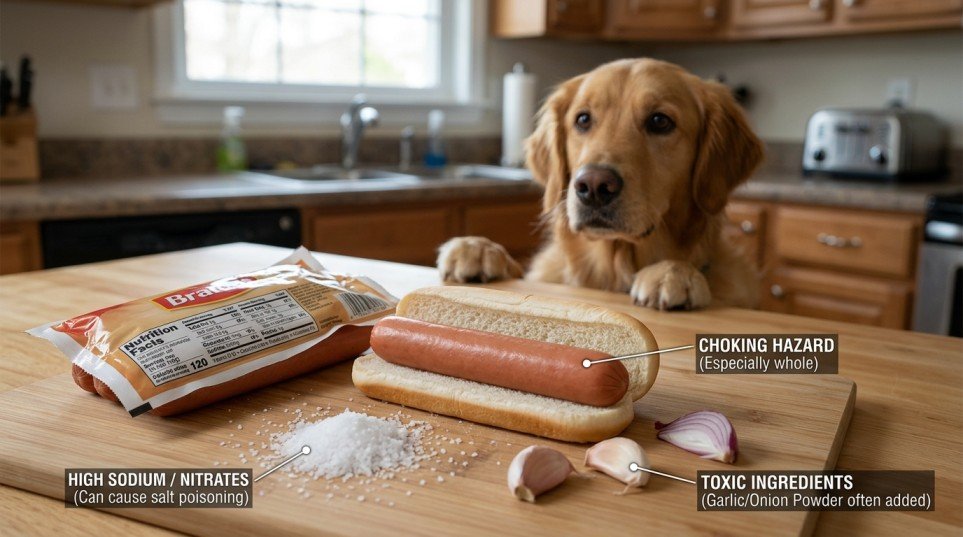
A single standard hot dog contains between 450 and 550 milligrams of sodium. The recommended daily sodium intake for an average adult dog is around 100 milligrams. That means one hot dog delivers four to five times a dog’s entire daily sodium allowance in a single serving.
Important: Sodium toxicity in dogs causes excessive thirst, vomiting, diarrhea, and in serious cases, tremors, seizures, and neurological damage. Dogs with heart disease or kidney issues face life-threatening complications even from moderate sodium intake.
2. Nitrates and Nitrites
Hot dogs are cured processed meats, which means they contain sodium nitrate and sodium nitrite as preservatives. These compounds are used to prevent bacterial growth and give hot dogs their characteristic color and shelf life. In dogs, regular consumption of nitrates has been linked to an increased risk of certain cancers and methemoglobinemia, a condition where the blood loses its ability to carry oxygen effectively.
3. Garlic and Onion Powder
Many hot dog varieties contain garlic powder or onion powder as seasoning. Both are highly toxic to dogs. Even small amounts of these ingredients damage red blood cells, causing hemolytic anemia, a condition where red blood cells are destroyed faster than the body can replace them. Symptoms can be delayed by several days, which makes this particularly dangerous.
4. High Fat Content
A standard beef or pork hot dog contains 13 to 15 grams of fat. This is a significant fat load for a dog’s digestive system. Consuming high-fat foods in a single sitting can trigger:
- Gastrointestinal upset including vomiting, diarrhea, and loose stools
- Pancreatitis, which is inflammation of the pancreas and can become life-threatening
- Weight gain and obesity if fed frequently over time
5. Artificial Additives and Fillers
Commercial hot dogs contain artificial flavors, color agents, fillers, and chemical preservatives beyond just nitrates. Many brands include corn syrup, modified starches, and flavor enhancers. None of these have any nutritional value for dogs and can contribute to digestive irritation.
Can Hot Dogs Kill Dogs?
This question deserves a direct answer. In most cases, a small piece of plain hot dog will not kill a healthy adult dog. But certain scenarios can become serious or life-threatening:
- Eating hot dogs with garlic or onion: Even a small amount of garlic or onion powder can trigger hemolytic anemia, which is potentially fatal if untreated.
- Eating a very large quantity: Extreme sodium ingestion can cause fatal sodium ion poisoning. Dogs who consume multiple hot dogs in a sitting face real risk of neurological damage.
- Dogs with pre-existing conditions: Dogs with kidney disease, heart disease, or pancreatitis face significantly higher risk from the sodium and fat content even in small amounts.
- Choking hazard for small dogs or puppies: A whole hot dog or large pieces can become a choking or blockage hazard for small breeds and young puppies.
The bottom line: hot dogs are far more concerning as a regular dietary addition than as a one-time tiny treat. The combination of sodium, preservatives, and potentially toxic seasonings makes them one of the riskier human foods to share with dogs.
How Much Hot Dog Is Safe for a Dog?
Veterinary nutritionists do not endorse hot dogs as a regular treat. If you choose to use them at all, for example as a high-value training reward, the guideline is:
No more than one or two small pieces the size of a pea, on an occasional basis only, and only from a plain variety with no garlic or onion in the ingredient list.
To put that in context:
- A 10 lb dog (such as a Chihuahua): no more than a pea-sized piece, very occasionally
- A 30 lb dog (such as a Beagle): no more than two pea-sized pieces as an infrequent treat
- A 60 lb dog (such as a Labrador): no more than three to four small pieces on rare occasions
Dogs with a history of pancreatitis, kidney disease, heart conditions, or sodium sensitivity should not eat hot dogs at all, regardless of amount.
Hot Dog Risk by Ingredient: Quick Reference Table
| Ingredient | Risk Level | Main Danger | Verdict |
| Sodium | High | Sodium toxicity, organ stress | Serious concern |
| Nitrates/Nitrites | Moderate-High | Long-term cancer risk, oxygen transport | Avoid regular exposure |
| Garlic Powder | Very High | Hemolytic anemia, red blood cell damage | Toxic, avoid completely |
| Onion Powder | Very High | Hemolytic anemia, red blood cell damage | Toxic, avoid completely |
| Saturated Fat | Moderate | Pancreatitis, obesity, GI upset | Risky in any quantity |
| Artificial Preservatives | Moderate | Digestive irritation, long-term health | Not recommended |
| Plain Cooked Meat Base | Low | Minimal risk in tiny amounts | Tiny amounts only |
Can Dogs Eat Raw Hot Dogs?
No. Raw hot dogs carry additional risks on top of everything else. Despite being labeled as ready to eat for humans after curing, raw or undercooked hot dogs can harbor Listeria monocytogenes and Salmonella. Dogs are not immune to these pathogens. Salmonella infection in dogs causes vomiting, bloody diarrhea, lethargy, and fever, and can be passed to human family members through contact.
Always make sure any hot dog given to a dog is fully and thoroughly cooked. Even then, keep the portion extremely small.
Can Puppies Eat Hot Dogs?
No, puppies should not eat hot dogs. Puppies have developing digestive systems that are far more sensitive than adult dogs. Their kidneys are not yet fully equipped to process the high sodium load in hot dogs. Their smaller body size also means the toxic threshold for garlic, onion, and salt is reached with a much smaller quantity. A seasoned hot dog that might cause mild symptoms in a large adult dog could cause serious harm in a small puppy.
Additionally, a whole hot dog or large pieces are a serious choking hazard for puppies and small breeds. Never give hot dogs to puppies under any circumstances.
Hot Dogs vs. Plain Cooked Meat: What Is the Difference?
This is a distinction many dog owners miss. Plain cooked chicken, turkey, or lean beef is a very different thing from a hot dog. Here is why hot dogs are so much riskier:
- Plain cooked chicken breast contains roughly 70 milligrams of sodium per 100 grams
- A standard hot dog contains 450 to 550 milligrams of sodium in a single link
- Plain chicken has no added preservatives, no nitrates, and no garlic or onion
- Hot dogs are engineered to be shelf stable and flavorful for humans, not nutritionally appropriate for dogs
If you want to use real meat as a high-value training treat, plain cooked chicken or turkey is a far safer choice than hot dogs. The protein benefit you are reaching for with a hot dog is available from much safer sources.
What to Do If My Dog Ate a Hot Dog
Stay calm. What you do next depends on what your dog ate and how much.
Step 1: Identify What Was Eaten
- Plain hot dog, one small piece: Monitor at home for 24 to 48 hours
- Plain hot dog, multiple links: Call your vet for guidance on sodium load
- Hot dog with garlic or onion in the ingredients: Call your vet immediately
- Hot dog with chili, toppings, or condiments: Call your vet, risk of additional toxic ingredients
- A whole hot dog swallowed by a small dog or puppy: Go to an emergency vet, choking or blockage risk
Step 2: Watch for These Symptoms
If your dog ate a hot dog and you are monitoring at home, watch for these signs within 24 to 48 hours:
- Vomiting
- Diarrhea or loose stools
- Excessive thirst or urination (sign of sodium overload)
- Lethargy or unusual tiredness
- Loss of appetite
- Pale or yellowish gums (sign of anemia from garlic or onion toxicity, may appear days later)
- Tremors or seizures (emergency, seek immediate veterinary care)
Step 3: Who to Call
- Your vet: First point of contact for any concerning hot dog ingestion.
- ASPCA Animal Poison Control: (888) 426-4435, available 24/7 (consultation fee may apply).
- Pet Poison Helpline: (855) 764-7661, 24/7 toxicology support.
Are Hot Dog Buns Safe for Dogs?
Plain white hot dog buns are not toxic to dogs in small amounts, but they offer zero nutritional value and are high in refined carbohydrates and sugar. A bite of plain bun is unlikely to cause harm in a healthy dog, but it is essentially empty calories.
However, if the bun contains xylitol, a sugar substitute used in some reduced-calorie breads, it becomes extremely dangerous. Xylitol causes a rapid drop in blood sugar and liver failure in dogs. Always check the ingredient label of any bread product before giving any to your dog.
What About Hot Dog Toppings and Condiments?
This is one of the most overlooked aspects of the hot dog safety question. Even if the hot dog itself is plain, the toppings and condiments most people use are dangerous for dogs:
- Ketchup: Contains high sugar and sometimes onion powder. Avoid.
- Mustard: Contains mustard seeds which are toxic to dogs and can cause vomiting and gastrointestinal inflammation.
- Relish: Often contains onion and spices. Avoid.
- Chili: Contains onion, garlic, spices, and hot peppers. All harmful to dogs.
- Sauerkraut: Extremely high in sodium. Avoid.
- Cheese: High in fat and sodium. Problematic in larger amounts, especially for lactose-sensitive dogs.
A hot dog eaten in a bun with ketchup, mustard, relish, and onions at a cookout is an entirely different situation from a plain, cooked hot dog piece. Never share your prepared hot dog with your dog.
Safe Alternatives to Hot Dogs for Dogs
If you want to give your dog a high-value meaty treat, especially for training, these options are far safer than hot dogs:
- Plain cooked chicken breast: High protein, low sodium, no additives. One of the safest meat treats for dogs.
- Plain cooked turkey: Lean, low-fat, and free of the preservatives found in hot dogs.
- Freeze-dried liver treats: Commercially available, single-ingredient, highly motivating for training.
- Cooked lean beef (no seasoning): A protein-dense treat that is much lower in sodium than processed meats.
- Commercial dog training treats: Specifically formulated to be low in sodium and safe for regular training use.
- Carrot sticks: Low-calorie, crunchy, and genuinely enjoyed by many dogs as a snack.
Frequently Asked Questions: Dogs and Hot Dogs
Can hot dogs kill dogs?
A single small piece of plain hot dog is unlikely to kill a healthy adult dog. However, hot dogs containing garlic or onion powder can cause hemolytic anemia, which is potentially fatal. Very large quantities can cause sodium ion poisoning, which is also life-threatening. Dogs with pre-existing kidney, heart, or pancreatic conditions face much higher risk.
How many hot dogs can a dog eat?
Ideally, none on a regular basis. If used as an occasional training treat, the safe amount is one to two pea-sized pieces for smaller dogs and three to four small pieces for larger dogs, infrequently and only from a plain variety without garlic or onion in the ingredients. No dog should eat a full hot dog in one sitting due to the sodium content alone.
Can dogs eat turkey hot dogs?
Turkey hot dogs have essentially the same concerns as beef or pork hot dogs. The protein source changes, but the sodium, nitrates, and potential for garlic or onion powder remain. Always read the ingredient label. Turkey hot dogs are not significantly safer than conventional hot dogs from a canine health perspective.
Can dogs eat veggie hot dogs?
Veggie hot dogs are not automatically safe for dogs. They often contain garlic powder, onion powder, spices, and high sodium levels comparable to regular hot dogs. Some also contain ingredients like leeks, mushrooms, or legumes that may cause digestive issues in dogs. Always check the ingredient label carefully, and treat veggie hot dogs with the same caution as conventional ones.
Can dogs eat hot dogs as training treats?
Some trainers use tiny pieces of hot dog as high-value rewards because the smell and taste are very motivating for dogs. If you choose to do this, use the smallest possible pieces, choose a variety with no garlic or onion listed in the ingredients, limit the total number of pieces per session, and do not use them daily. Plain cooked chicken is a better alternative that achieves the same training effect without the sodium and preservative load.
What should I do if my dog ate a whole hot dog?
If your dog ate a whole hot dog and it was a plain variety, monitor them for the next 24 to 48 hours for vomiting, diarrhea, excessive thirst, or lethargy, and contact your vet if symptoms appear. If the hot dog contained garlic, onion, or other seasonings, call your vet right away. For small dogs or puppies who swallowed a whole hot dog that could cause a blockage, go to an emergency vet immediately.
Are hot dogs good for dogs at all?
No. Hot dogs provide no nutritional benefit that a dog cannot get from far safer sources. The protein in a hot dog comes packaged with sodium, nitrates, saturated fat, and potentially toxic seasonings. Plain cooked chicken, turkey, or lean beef provides the same protein without any of these concerns. There is no health reason to include hot dogs in a dog’s diet.
Final Word: Should You Feed Your Dog Hot Dogs?
A tiny piece of plain, cooked hot dog is not an emergency for most healthy adult dogs. But that is the ceiling, not an invitation. Hot dogs are one of the worst human foods to share with dogs regularly, combining high sodium, nitrate preservatives, potentially toxic seasonings, and high fat into a single processed product.
If the hot dog has garlic powder, onion powder, or other seasonings in the ingredient list, it is not safe to share at any quantity. If your dog ate a hot dog with these ingredients, contact your vet rather than waiting for symptoms.
When you are reaching for a meaty training treat or a special snack to share, skip the hot dog and go straight to plain cooked chicken or a purpose-made dog treat. Your dog will respond just as enthusiastically, and you will not have to worry about what is in it.
Reviewed & Recommended by Dr. Ubaidur Rahman, DVM
Veterinary Review: Dr. Ubaidur Rahman, DVM, reviewed this guide for the safety of hot dogs for dogs, including their high fat and sodium content and the risks associated with feeding processed meats.
Dr. Ubaidur Rahman’s Recommendation: Hot dogs are not a good regular treat for dogs. While a small piece of a plain, fully cooked hot dog is unlikely to harm a healthy dog, hot dogs are typically high in sodium and fat and may contain seasonings or preservatives that are not ideal for dogs. If offered at all, give only a small amount occasionally and cut it into small pieces to reduce choking risk.
Sources & References
- Merck Veterinary Manual: Sodium Toxicosis and Food Hazards in Dogs. merckvetmanual.com
- ASPCA Animal Poison Control Center: Toxic and Non-Toxic Foods for Dogs. aspca.org
- PetMD: Can Dogs Eat Hot Dogs? (Updated 2025). petmd.com
- American Kennel Club: Human Foods Dogs Can and Cannot Eat. akc.org
- American Veterinary Medical Association: Pet Nutrition and Safe Feeding Guidelines. avma.org
- Pet Poison Helpline: Sodium and Processed Meat Toxicity in Dogs. petpoisonhelpline.com
Discover More:-
- Can Dogs Eat Celery? A Complete Vet-Approved Guide 2026
- Are Oranges Safe for Dogs? A Complete Vet-Backed Guide (2026)

Dr. Ubaid Ur Rehman, DVM is a qualified veterinarian with expertise in pet health, nutrition, and preventive care. He is passionate about helping pet owners make informed decisions through accurate, research-based, and practical advice. As a veterinary professional, he reviews and contributes content to ensure reliable information for dog and pet owners.