Can Dogs Eat Cat Food? Risks, Safety, and What Happens If They Do
Quick Answer: If your dog ate a few bites of cat food, they will likely be fine. The most common result is mild stomach upset. Problems become more likely when dogs eat large amounts, have sensitive stomachs, or regularly consume cat food.
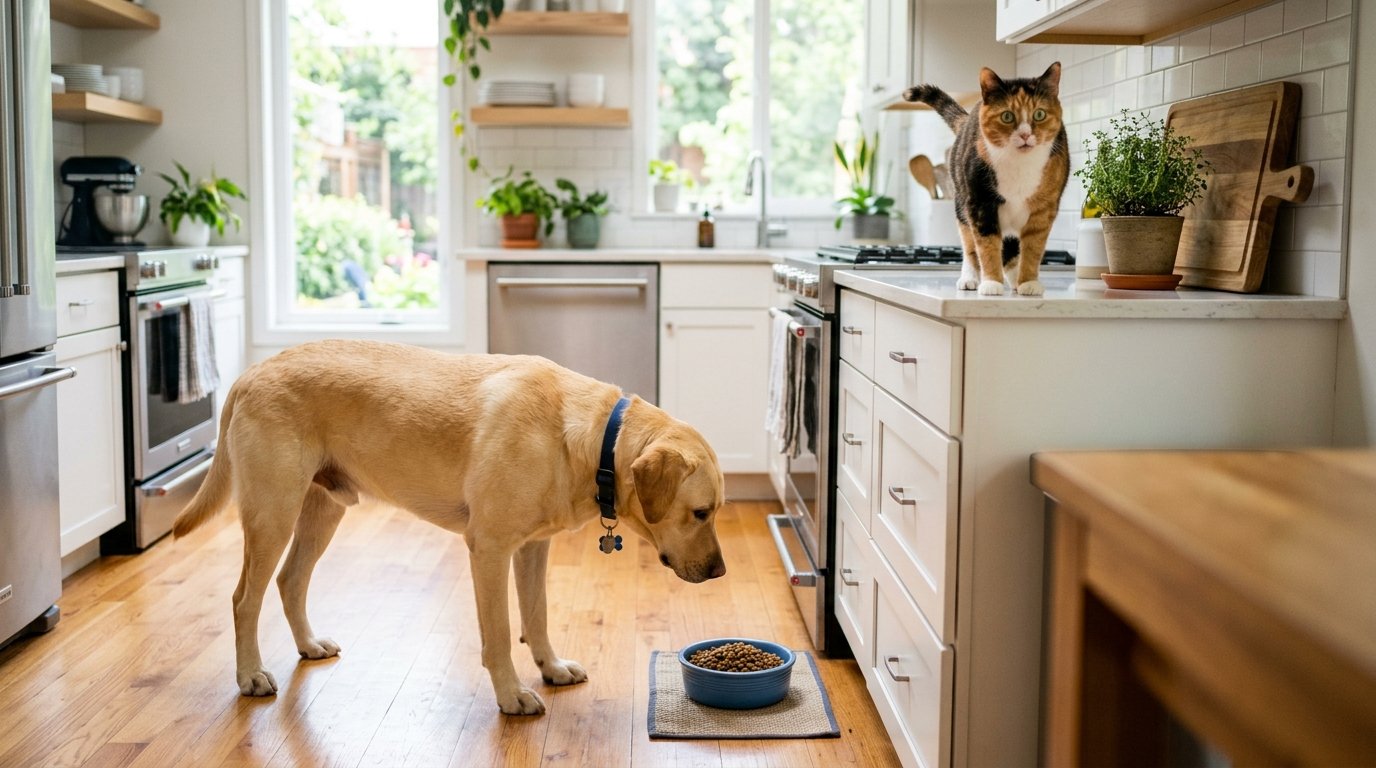
Your dog just raided the cat’s food bowl. Maybe it was a few bites of wet food, maybe they inhaled an entire serving before you could stop them. Now you’re wondering: can dogs eat cat food, or is it dangerous?
The short answer is that cat food is not toxic to dogs, but it is not designed for them either. While an occasional bite usually isn’t an emergency, regularly eating cat food can lead to digestive upset, obesity, pancreatitis, and nutritional imbalances over time.
This guide covers everything dog owners actually search for: whether cat food is safe for dogs, what happens if a dog eats cat food, differences between dog and cat food, when to call a vet, symptoms to watch for, and how to prevent future food theft.
Can Dogs Eat Cat Food? The Short Answer
Most healthy dogs can eat a small amount of cat food without serious harm. However, cat food should not be used as a regular substitute for dog food because it is formulated for the nutritional needs of cats, not dogs.
The biggest concern isn’t toxicity. It’s that cat food contains significantly higher levels of protein and fat than most dog foods, which can stress a dog’s digestive system.
Before you panic, consider three factors:
- How much cat food was eaten
- Whether it was a one-time incident or a regular habit
- Your dog’s size, age, and health status
For most healthy dogs, a single snack from the cat’s bowl is more annoying than dangerous.
Why Is Cat Food Different From Dog Food?
1. Cats and Dogs Have Different Nutritional Needs
Cats are obligate carnivores.
This means they require nutrients found primarily in animal tissues to survive. Their bodies are designed to consume diets rich in animal protein and fat.
Dogs are omnivores.
While dogs benefit from meat, they can also utilize nutrients from grains, vegetables, and other food sources.
Because of these biological differences, cat food and dog food are formulated very differently.
2. Cat Food Contains More Protein
Most cat foods contain significantly higher protein levels than dog foods.
Manufacturers formulate cat food this way because cats require more dietary protein to maintain healthy bodily functions.
For dogs, occasional high-protein meals are usually harmless. However, long-term consumption can create nutritional imbalances and digestive issues.
3. Cat Food Is Higher in Fat
One reason dogs love cat food is that it’s often richer and more flavorful.
Higher fat content improves taste but also increases the risk of:
- Upset stomach
- Vomiting
- Diarrhea
- Weight gain
- Pancreatitis
This is especially concerning for dogs prone to digestive disorders.
4. Cat Food Contains Different Nutrient Ratios
Cat food includes nutrient levels designed specifically for feline requirements.
These include:
- Taurine
- Certain amino acids
- Different vitamin levels
- Different mineral balances
While these nutrients aren’t necessarily harmful to dogs, they don’t provide the balanced nutrition dogs need long-term.
What Happens If a Dog Eats Cat Food?
The outcome depends largely on the amount consumed.
Small Amounts
Most dogs that eat a small portion of cat food experience no symptoms at all.
Possible mild reactions include:
- Temporary gas
- Soft stool
- Mild stomach upset
- Increased thirst
Many dogs show no noticeable effects.
Moderate Amounts
When larger portions are eaten, digestive symptoms become more likely.
Common symptoms include:
- Vomiting
- Diarrhea
- Abdominal discomfort
- Bloating
- Reduced appetite
These symptoms typically resolve within 24 to 48 hours.
Large Amounts
A dog that consumes a large quantity of cat food may develop more significant gastrointestinal distress.
Higher-fat foods increase the risk of:
- Severe vomiting
- Severe diarrhea
- Dehydration
- Pancreatitis
Dogs with underlying medical conditions face greater risks than healthy adults.
Can Dogs Eat Wet Cat Food?
Yes, dogs can eat wet cat food, but the same limitations apply.
Wet cat food is not toxic, but it is generally:
- Higher in fat
- More calorie-dense
- More attractive to dogs
Many dogs prefer wet cat food because of its strong smell and flavor.
A few bites are unlikely to cause problems. Regular feeding, however, may contribute to obesity and digestive issues.
Can Dogs Eat Dry Cat Food?
Dry cat food is also generally safe in small amounts.
Many households discover their dogs sneaking dry kibble from the cat’s bowl.
Occasional consumption usually causes little concern.
Potential issues include:
- Digestive upset
- Excess calorie intake
- Nutritional imbalance if fed regularly
Dry cat food should never replace a dog’s normal diet.
Why Do Dogs Love Cat Food?
This is one of the most common questions pet owners ask.
The answer is simple: cat food is designed to be highly appealing.
Factors include:
- Higher fat content
- Stronger meat aromas
- Greater protein levels
- Richer flavor profile
To many dogs, cat food is the equivalent of fast food or junk food for humans.
Just because they love it doesn’t mean they should eat it regularly.
Is Cat Food Bad for Dogs?
Not necessarily in small amounts.
The real concern is frequent consumption.
Regularly eating cat food may contribute to:
- Weight gain
- Obesity
- Digestive issues
- Nutritional deficiencies
- Pancreatitis
- Poor dietary balance
A healthy dog occasionally stealing cat food is very different from a dog being fed cat food every day.
When Cat Food Can Be Dangerous
Certain dogs face increased risks.
Dogs With Pancreatitis
Pancreatitis is inflammation of the pancreas.
High-fat foods are a common trigger.
Because many cat foods contain elevated fat levels, dogs with a history of pancreatitis should avoid cat food entirely.
Dogs With Sensitive Stomachs
Dogs prone to digestive upset may react strongly even to small amounts.
Possible symptoms include:
- Vomiting
- Diarrhea
- Excessive gas
- Stomach pain
Heavy Dogs
Cat food is often calorie-dense.
Regular access can contribute to:
- Excess weight gain
- Reduced mobility
- Increased health risks
Senior Dogs
Older dogs may have less digestive flexibility and may be more likely to experience gastrointestinal problems after eating rich foods.
When to Call a Vet
Contact your veterinarian if:
- Vomiting continues for more than 24 hours
- Diarrhea is severe
- Blood appears in stool or vomit
- Your dog becomes lethargic
- Abdominal pain develops
- Your dog refuses food
- Signs of dehydration appear
Most dogs recover quickly from minor dietary indiscretions, but persistent symptoms warrant professional evaluation.
Symptoms to Watch For After Eating Cat Food
Mild Symptoms
- Gas
- Soft stool
- Mild diarrhea
- Temporary stomach discomfort
- Increased thirst
Moderate Symptoms
- Repeated vomiting
- Ongoing diarrhea
- Reduced appetite
- Fatigue
Severe Symptoms
- Severe abdominal pain
- Continuous vomiting
- Dehydration
- Weakness
- Collapse
Severe symptoms are uncommon but require immediate veterinary care.
What Should You Do If Your Dog Eats Cat Food?
Step 1: Determine How Much Was Eaten
Estimate:
- Portion size
- Type of cat food
- Time of ingestion
The more information you have, the easier it will be to assess risk.
Step 2: Monitor for Symptoms
Watch for:
- Vomiting
- Diarrhea
- Lethargy
- Abdominal discomfort
Most mild cases improve without treatment.
Step 3: Provide Fresh Water
Ensure your dog remains hydrated.
Fresh water can help offset fluid losses if mild digestive upset develops.
Step 4: Resume Normal Feeding
Unless instructed otherwise by your veterinarian, return to your dog’s regular diet.
Avoid offering additional rich foods or treats.
Can Puppies Eat Cat Food?
Puppies can eat small amounts of cat food without immediate danger.
However, puppy food is specifically formulated to support healthy growth and development.
Regularly feeding cat food to puppies can interfere with balanced nutrition.
Puppies are also more sensitive to digestive upset than adult dogs.
Can Cat Food Ever Be Beneficial for Dogs?
There are rare situations where veterinarians may recommend cat food temporarily.
Examples include:
- Extremely picky eaters
- Dogs recovering from illness
- Certain medical situations requiring increased calorie intake
These recommendations should only occur under veterinary supervision.
Cat food should never be used as a long-term feeding strategy without professional guidance.
Frequently Asked Questions: Can Dogs Eat Cat Food?
Can a dog die from eating cat food?
Cat food is not considered toxic to dogs. Death from eating cat food is extremely unlikely. Complications, if they occur, are usually related to pancreatitis or severe digestive problems in vulnerable dogs.
How long after eating cat food will a dog get sick?
If symptoms occur, they usually appear within a few hours. Most digestive issues develop within the first 24 hours after consumption.
Can dogs eat cat food every day?
No. Cat food does not provide the balanced nutrition dogs require and should not replace dog food as a daily diet.
What if my dog ate an entire can of cat food?
Many dogs will experience only mild digestive upset. Monitor closely for vomiting, diarrhea, or abdominal pain, especially if your dog is small or has health conditions.
Is wet cat food worse than dry cat food for dogs?
Wet cat food is often higher in fat and calories, which may increase the likelihood of stomach upset. Both should be considered occasional accidental treats rather than regular food sources.
Why does my dog prefer cat food?
Dogs are attracted to the richer flavor, stronger aroma, and higher fat content commonly found in cat food.
Can dogs eat cat treats?
Most cat treats are not toxic to dogs, but they should not become a regular part of a dog’s diet for the same reasons cat food should not.
How to Prevent Your Dog From Eating Cat Food
- Feed cats in elevated locations.
- Use baby gates if necessary.
- Remove food bowls after meals.
- Feed pets in separate rooms.
- Store pet food securely.
- Train a reliable “leave it” command.
- Monitor feeding times when possible.
Preventing access is often easier than dealing with repeated digestive upset.
Final Word: A Few Bites Usually Aren’t a Problem
The most important thing to remember is that cat food is not poisonous to dogs. If your dog sneaks a few bites from the cat’s bowl, serious problems are unlikely.
However, cat food is formulated for cats, not dogs. Its higher fat and protein content can cause digestive upset, and long-term consumption may lead to nutritional and health issues.
If your dog eats cat food occasionally, monitor for symptoms and return to their normal diet. If large amounts were consumed or your dog develops vomiting, diarrhea, abdominal pain, or lethargy, contact your veterinarian for guidance.
For everyday nutrition, dog food remains the safest and healthiest choice.
Reviewed & Recommended by Dr. Ubaidur Rahman, DVM
Veterinary Review: Dr. Ubaidur Rahman, DVM, reviewed this guide for the nutritional differences between cat food and dog food, including the potential risks of dogs eating cat food regularly.
Dr. Ubaidur Rahman’s Recommendation: A small amount of cat food is generally not toxic to a healthy dog, and accidentally eating a few bites is usually not a reason for concern. However, cat food is formulated to meet cats’ nutritional needs and is typically richer in protein and fat than dogs need. Regularly feeding cat food to a dog can contribute to digestive upset, excess weight, and other nutritional problems.
Sources and References
- American Kennel Club (AKC): Dog Nutrition and Cat Food Safety
- Merck Veterinary Manual: Nutritional Requirements of Dogs and Cats
- American Veterinary Medical Association (AVMA): Pet Nutrition Resources
- PetMD: Can Dogs Eat Cat Food?
- VCA Animal Hospitals: Why Dogs Should Not Eat Cat Food Regularly
- World Small Animal Veterinary Association (WSAVA): Nutrition Guidelines
- Association of American Feed Control Officials (AAFCO): Pet Food Standards
Discover More:-
- Can Dogs Eat Beans? Safe Types, Benefits, Risks, and Feeding Guide 2026
- Can Dogs Eat Yogurt? Benefits, Risks, Safe Types & Vet Advice 2026

Dr. Ubaid Ur Rehman, DVM is a qualified veterinarian with expertise in pet health, nutrition, and preventive care. He is passionate about helping pet owners make informed decisions through accurate, research-based, and practical advice. As a veterinary professional, he reviews and contributes content to ensure reliable information for dog and pet owners.