
What to Do If Your Dog Eats Chocolate Before It’s Too Late 2026
Quick Answer: Small amounts of milk chocolate may only cause an upset stomach in a large dog, but even a small amount of dark chocolate or baker’s chocolate can be a genuine emergency. There is no universally safe home remedy for chocolate poisoning. The most important first step is always a phone call to a professional, not a Google search for what to feed your dog.
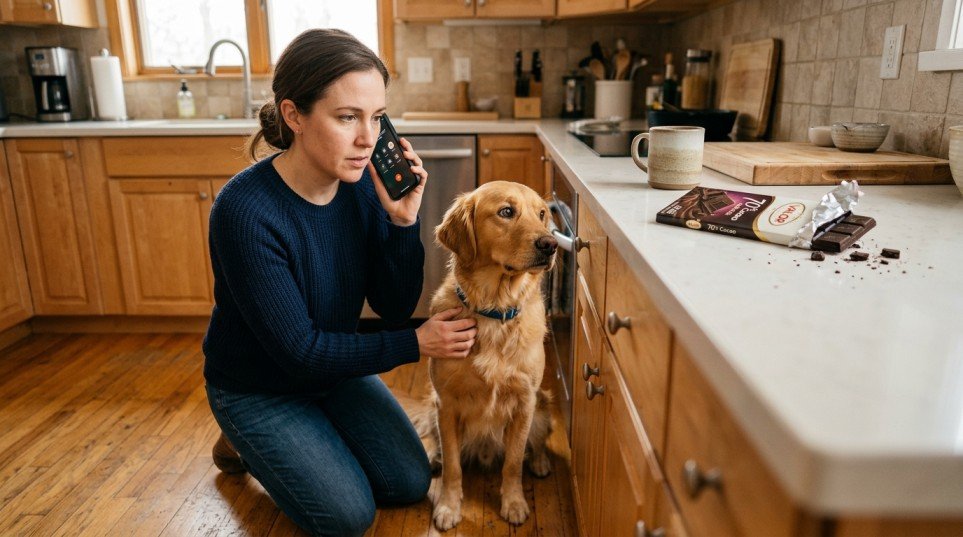
Your dog just got into the chocolate. Your heart is racing. Before you spiral into panic, here is what you actually need to know: the outcome depends entirely on what type of chocolate they ate, how much, and how fast you act. This guide gives you the complete, vet-backed picture.
We cover every question dog owners actually search for: what makes chocolate toxic, how much is dangerous by dog size, what home remedies genuinely help, when to call a vet, and what symptoms to watch for. No fluff. No vague advice. Just actionable information that can help you right now.
What to Do If Your Dog Eats Chocolate: The Short Answer
Do not induce vomiting at home unless a veterinarian specifically instructs you to. Call your vet or the ASPCA Animal Poison Control Center immediately and be ready to report the type of chocolate, the amount eaten, and your dog’s weight.
Chocolate is toxic to dogs because it contains theobromine, a compound that dogs metabolize far more slowly than humans. What feels like a small indulgence to you can overwhelm your dog’s system, especially depending on the type of chocolate and your dog’s size.
What Makes Chocolate Dangerous for Dogs?
1. Theobromine: The Main Toxin
Theobromine is a methylxanthine alkaloid found in cacao beans. It is the same compound that gives chocolate its stimulant effect. In humans, theobromine is metabolized quickly and harmlessly. In dogs, the liver processes it much more slowly, causing it to build up to toxic levels in the bloodstream.
As theobromine accumulates, it acts as a stimulant on the heart and nervous system. This is what causes the classic signs of chocolate toxicity: rapid heart rate, muscle tremors, seizures, and in severe cases, cardiac arrest.
2. Caffeine: The Secondary Concern
Chocolate also contains caffeine, which compounds the stimulant effects of theobromine on a dog’s cardiovascular and nervous system. While theobromine is the primary toxic agent, caffeine adds to the total toxic load and makes the situation more serious than theobromine alone.
3. Fat and Sugar: The Slower Risk
Even in small amounts that do not trigger theobromine toxicity, chocolate is high in fat and sugar. Eating chocolate can trigger vomiting, diarrhea, and pancreatitis, a painful and potentially serious inflammation of the pancreas. Dogs with a history of pancreatitis face even higher risks from the fat load in chocolate, separate from the theobromine concern.
How Much Chocolate Is Toxic to Dogs?
This is the most important variable. Toxicity depends on three factors: the type of chocolate, the amount consumed, and the dog’s body weight. The darker and more concentrated the chocolate, the more theobromine it contains per ounce.
Here is a reference table based on published theobromine content data:
| Type of Chocolate | Theobromine per oz | Danger Level | How Much is Toxic (30 lb dog) |
| White chocolate | 0.25 mg | Low (fat toxicity risk) | Large amounts needed |
| Milk chocolate | 44-64 mg | Moderate | 1 oz can cause symptoms |
| Dark chocolate | 130-450 mg | High | Less than 0.5 oz |
| Baker’s chocolate | 390-450 mg | Very High | A few small pieces |
| Cocoa powder | 400-737 mg | Extremely High | Even a teaspoon is dangerous |
| Cocoa mulch | 56-900 mg | Variable but High | Treat as emergency |
Key takeaway: A 10-pound dog can show serious symptoms from less than one ounce of dark chocolate. A 70-pound Labrador might tolerate a small piece of milk chocolate with only mild stomach upset but could be in serious danger from the same amount of baker’s chocolate.
Home Remedies: What Actually Helps and What to Avoid
This section answers what most dog owners are searching for, but the answer requires important context first. There is no home remedy that reverses theobromine toxicity. What you can do at home is either support mild cases or take steps that prevent the situation from getting worse while you contact a vet.
1 What You Can Do at Home (With Vet Guidance)
- Call first, act second: Before doing anything, call your vet or ASPCA Animal Poison Control at (888) 426-4435. They will tell you whether home monitoring is appropriate or whether you need to come in immediately.
- Offer fresh water: Keeping your dog well-hydrated supports their kidneys as they work to process and eliminate theobromine. Do not force water, but make sure it is available.
- Monitor closely in a calm environment: For very mild cases in large dogs who ate a small amount of milk or white chocolate, your vet may advise monitoring at home. Keep your dog calm, cool, and resting.
- Withhold food temporarily if instructed: Your vet may recommend withholding food for a few hours to reduce further GI irritation. Follow their specific advice.
2 What NOT to Do at Home
- Do not induce vomiting with hydrogen peroxide without vet instruction: Inducing vomiting at the wrong time, with the wrong method, or with too much hydrogen peroxide can cause serious esophageal damage, pulmonary aspiration, or worsen your dog’s condition. This step should only be taken if a vet tells you to, within a specific timeframe, with a specific dose.
- Do not give milk: A common myth is that milk neutralizes chocolate toxicity. It does not. Milk adds fat and lactose to an already stressed digestive system and offers no detoxifying benefit.
- Do not give activated charcoal at home: Activated charcoal can bind to toxins, but the dose, timing, and administration method matter enormously. Giving it incorrectly can cause aspiration pneumonia or electrolyte imbalances. This is a vet-administered treatment, not a home remedy.
- Do not wait and see if symptoms are already present: Vomiting, trembling, rapid breathing, or restlessness are signs that theobromine has already entered the bloodstream. At that point, home monitoring is not enough.
When to Call a Vet vs. When to Monitor at Home
This is the decision most dog owners struggle with. Here is a clear breakdown based on veterinary guidance:
Call a Vet or Go to Emergency Clinic Immediately If:
- Your dog ate dark chocolate, baker’s chocolate, cocoa powder, or cocoa mulch in any amount
- Your dog ate milk chocolate and weighs under 20 pounds
- Your dog is already showing symptoms: vomiting, diarrhea, trembling, rapid breathing, pacing, or seizures
- You do not know what type of chocolate was eaten or how much
- Your dog has a pre-existing heart condition, liver disease, or history of pancreatitis
- Your dog is a puppy, senior dog, or has a compromised immune system
You May Monitor at Home (With Vet Phone Guidance) If:
- Your dog is a large breed (over 40 lbs) and ate only a small piece of milk or white chocolate
- Your vet has confirmed based on the weight and amount that theobromine levels are below the toxic threshold
- Your dog is showing no symptoms and is behaving normally
- You have a callback plan in place if symptoms develop
Important: Even in low-risk scenarios, you should still call your vet before deciding to monitor at home. Do not make that call on your own based solely on internet information, including this article.
Symptoms of Chocolate Poisoning in Dogs
Theobromine symptoms typically appear within 6 to 12 hours of ingestion, though they can begin as early as 1 to 2 hours in severe cases. The symptoms progress with the severity of toxicity.
Mild to Moderate Symptoms (GI and Early Stimulant Effects):
- Vomiting
- Diarrhea
- Excessive thirst and urination
- Restlessness or pacing
- Excessive drooling
- Bloating or abdominal discomfort
Moderate to Severe Symptoms (Cardiovascular and Neurological):
- Rapid or irregular heartbeat
- Muscle tremors or twitching
- High body temperature
- Elevated blood pressure
- Stiff muscles
- Difficulty breathing
Severe Symptoms (Emergency):
- Seizures
- Collapse
- Loss of consciousness
- Cardiac arrhythmia or arrest
Note: Symptoms can worsen rapidly. A dog who appears mildly restless at hour two can deteriorate significantly by hour six if left untreated. Do not assume mild initial symptoms mean the situation will resolve on its own.
What a Vet Will Actually Do for Chocolate Poisoning
Understanding what treatment looks like helps you make the decision to go in without hesitation. Veterinary treatment for chocolate toxicity typically involves:
- Inducing vomiting: If the ingestion occurred within the last 1 to 2 hours and no symptoms are present, vets will induce vomiting to remove as much chocolate as possible from the stomach.
- Activated charcoal administration: This is given orally to bind remaining theobromine in the gastrointestinal tract before it is absorbed into the bloodstream.
- IV fluids: Intravenous fluid therapy supports kidney function, helps flush theobromine out of the system, and maintains hydration if the dog has been vomiting.
- Medications: Depending on symptoms, the vet may administer anti-seizure medications, heart rate regulators, or medications to control vomiting.
- Monitoring: Dogs with significant ingestion may be kept for several hours or overnight for cardiac monitoring and repeat bloodwork.
With prompt treatment, the prognosis for chocolate poisoning in dogs is generally good. Deaths from chocolate toxicity, while possible, typically occur in cases where treatment was delayed or the dog consumed an extremely large amount of highly concentrated chocolate.
Chocolate Toxicity by Dog Size: Quick Reference
Theobromine toxicity is dose-dependent, which means body weight matters enormously. Here is a practical guide for common dog sizes:
- Small dogs under 10 lbs (Chihuahua, Yorkie, toy breeds): Even a single square of dark chocolate or a few chocolate chips can cause toxicity. These dogs should be seen by a vet for any chocolate ingestion beyond a lick.
- Medium dogs 11 to 30 lbs (Beagle, Corgi, Cocker Spaniel): One ounce of milk chocolate warrants monitoring; anything more, or any dark chocolate, requires a vet call.
- Large dogs 31 to 60 lbs (Labrador, Border Collie, Husky): A small piece of milk chocolate may only cause mild GI upset. Dark chocolate is still dangerous. Always call your vet to confirm.
- Giant breeds over 60 lbs (Great Dane, Saint Bernard, Mastiff): More tolerant of small amounts of milk chocolate due to body mass, but not immune. Dark chocolate and concentrated cocoa products remain dangerous at any size.
Frequently Asked Questions: Dog Ate Chocolate
Can chocolate kill dogs?
Yes, in sufficient quantities, chocolate can be fatal to dogs. Death from chocolate toxicity is most often caused by cardiac arrhythmia or seizures in untreated cases. However, with prompt veterinary treatment, most dogs recover fully. The risk is highest with dark chocolate, baker’s chocolate, and cocoa powder, and for small dogs.
How long after eating chocolate will a dog get sick?
Symptoms typically begin within 6 to 12 hours of ingestion. In cases of large amounts or very concentrated chocolate, early symptoms like vomiting and restlessness can appear within 1 to 2 hours. Theobromine has a half-life of approximately 17 hours in dogs, meaning it stays in their system for a long time.
Can dogs eat white chocolate?
White chocolate contains very little theobromine, so it does not pose the same level of toxicity risk as dark or milk chocolate. However, it is extremely high in fat and sugar, which can cause pancreatitis and severe gastrointestinal upset. White chocolate is still not safe for dogs and should be kept away from them.
What if my dog only licked chocolate?
A lick or two of milk chocolate is unlikely to cause serious harm in a medium or large dog. However, if the dog licked dark chocolate, cocoa powder, or a concentrated chocolate product, even a small amount can be significant. When in doubt, call your vet and describe exactly what was licked and estimate the amount as best you can.
Is there a safe amount of chocolate for dogs?
No amount of chocolate is recommended as a treat for dogs. While small trace amounts may not cause acute poisoning in large dogs, there is no benefit to giving a dog chocolate, and the risks of toxicity, pancreatitis, and habit formation are real. The answer to this question is always: zero.
Do home remedies work for chocolate poisoning in dogs?
No home remedy reverses theobromine toxicity. Offering water supports hydration. Keeping your dog calm reduces additional cardiovascular stress. But there is no food, supplement, or at-home treatment that will neutralize or speed up elimination of theobromine. The only effective interventions, including induced vomiting and activated charcoal, must be administered by or under the guidance of a veterinarian.
How do I know if my dog had enough chocolate to be dangerous?
Use the theobromine content table in this article as a rough guide, then call your vet or ASPCA Animal Poison Control (888-426-4435) with your dog’s weight and the type and amount of chocolate eaten. They will tell you whether the dose crosses the toxic threshold for your dog’s size.
How to Prevent Future Chocolate Incidents
- Store all chocolate products in sealed containers in high cabinets or pantries with latching doors.
- Educate children in your household that chocolate is never a treat for dogs, no matter how much the dog begs.
- Be vigilant during holidays: Halloween, Easter, Valentine’s Day, and Christmas see a dramatic spike in dog chocolate poisoning cases.
- Check the ingredients of products before letting your dog near them. Cocoa powder is used in protein bars, baked goods, hot chocolate mixes, and some dog-safe-looking treats that are not actually safe.
- Consider dog-proof trash cans. Chocolate wrappers still carry residue that dogs will try to lick and chew.
Final Word: When in Doubt, Call the Vet
The most important thing this guide can tell you is this: there is no home remedy that replaces professional advice when your dog has eaten chocolate. The type of chocolate, the amount, and your dog’s weight determine everything. What sounds like a small incident can be a serious emergency, and what sounds like an emergency might be manageable with monitoring in some cases. You cannot reliably make that call without speaking to a professional.
Call your vet, call ASPCA Animal Poison Control at (888) 426-4435, or call the Pet Poison Helpline at (855) 764-7661. Do it before you try anything else. Fast action is the single most effective thing you can do for your dog.
Sources and References
- Merck Veterinary Manual: Methylxanthine (Theobromine and Caffeine) Toxicosis in Animals. merckvetmanual.com
- ASPCA Animal Poison Control Center: Chocolate. aspca.org
- PetMD: Chocolate Poisoning in Dogs (Updated 2025). petmd.com
- American Kennel Club: Can Dogs Eat Chocolate? akc.org
- VCA Animal Hospitals: Chocolate Toxicity in Dogs. vcahospitals.com
- Pet Poison Helpline: Chocolate Toxicity. petpoisonhelpline.com
- Preventive Vet: Chocolate Toxicity Calculator for Dogs. preventivevet.com
Discover More:-
- Air Dried Dog Food: A Complete Vet-Approved Guide 2026
- Rachael Ray Dog Food: A Complete Honest Review 2026

Dr. Ubaid Ur Rehman, DVM is a qualified veterinarian with expertise in pet health, nutrition, and preventive care. He is passionate about helping pet owners make informed decisions through accurate, research-based, and practical advice. As a veterinary professional, he reviews and contributes content to ensure reliable information for dog and pet owners.