Dogs Vegetables Guide: What Vegetables Can Dogs Eat Safely? 2026
Quick Answer: Vegetables like carrots, green beans, peas, broccoli, and cucumber are safe and healthy for dogs in moderation. Onions, garlic, leeks, chives, and raw potatoes are toxic and should never be given. Corn, mushrooms, and spinach fall into a middle zone that requires more nuance.
You want to share your food with your dog it is natural. But when it comes to vegetables, the line between healthy treat and genuine hazard is not always obvious. Carrots and broccoli are fine. Onions and garlic can destroy your dog’s red blood cells. Knowing which is which could save your dog’s life.
This guide covers every vegetable dog owners actually search about: the safe ones and how to feed them, the dangerous ones and exactly why they are dangerous, how much is too much, and what to do if your dog ate something they should not have. We have organized it so you can find what you need fast whether you are planning a healthy snack or dealing with an emergency right now.
Can Dogs Eat Vegetables? The Short Answer
Yes many vegetables are safe for dogs and genuinely beneficial. Some provide fiber, vitamins, and antioxidants that complement a balanced diet. But a meaningful number of vegetables are outright toxic to dogs, and several others cause problems in specific circumstances.
The safest approach is always to know before you feed. Dogs process many foods differently from humans, and what is a nutrient-dense health food for you can be a blood toxin for them.
Why Some Vegetables Are Dangerous for Dogs
Dogs lack certain metabolic pathways that allow humans to safely process specific plant compounds. Understanding the main mechanisms of vegetable toxicity helps you make better decisions:
1. Thiosulfate and Organosulfur Compounds The Onion Family Threat
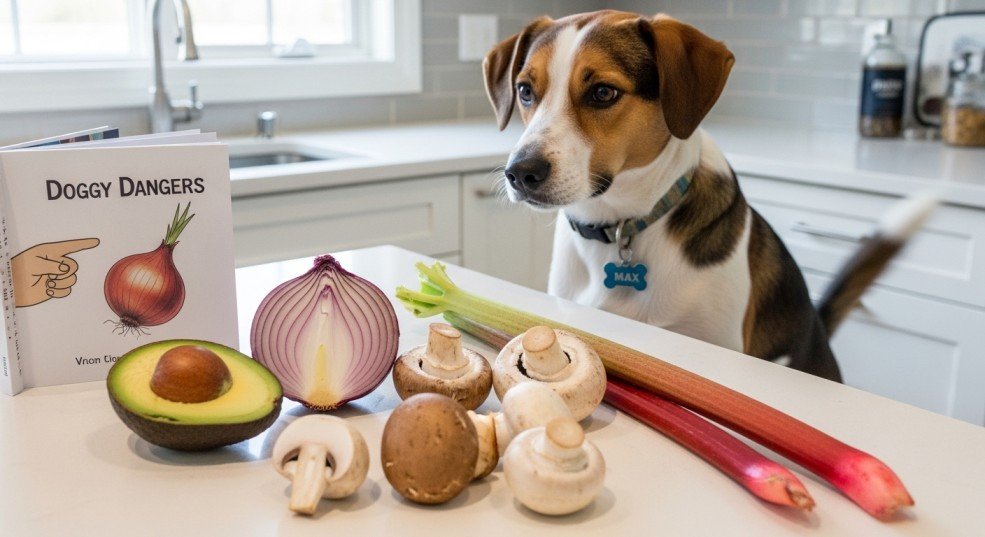
Allium vegetables onions, garlic, leeks, chives, and shallots contain organosulfur compounds that dogs cannot metabolize safely. These compounds damage red blood cells, causing hemolytic anemia. The damage can occur from a single large dose or from repeated small exposures over time. Cooked, raw, dried, and powdered forms are all toxic. Garlic powder is particularly concentrated and dangerous.
Symptoms of allium toxicity include lethargy, pale or yellowish gums, rapid breathing, vomiting, diarrhea, and collapse. Symptoms can be delayed by several days after ingestion making these vegetables especially insidious.
2. Solanine The Nightshade Family Risk
Raw potatoes, unripe tomatoes, and other members of the nightshade family (Solanaceae) contain solanine, a glycoalkaloid that is toxic to dogs. Solanine concentrates in green areas, sprouts, and the skin of potatoes. Ripe tomatoes have very low solanine content and are generally tolerated, but the leaves and stems of tomato plants are toxic regardless of ripeness.
3. Oxalic Acid The Kidney Stone Risk
Vegetables high in oxalic acid including spinach, beet greens, and rhubarb can interfere with calcium absorption and contribute to kidney stone formation in dogs that are prone to oxalate uroliths. Spinach is not acutely toxic in small amounts, but regular feeding to susceptible dogs can cause real harm over time. Rhubarb is significantly more dangerous and should be avoided entirely.
4. Persin The Avocado Risk
While not a traditional vegetable, avocado (sometimes treated as one) contains persin, a fungicidal compound that is toxic to many animals. In dogs, the primary risks are the pit (physical obstruction) and the high fat content of the flesh (pancreatitis risk). For a complete breakdown, see our dedicated avocado guide.
Safe Vegetables for Dogs: Complete Guide
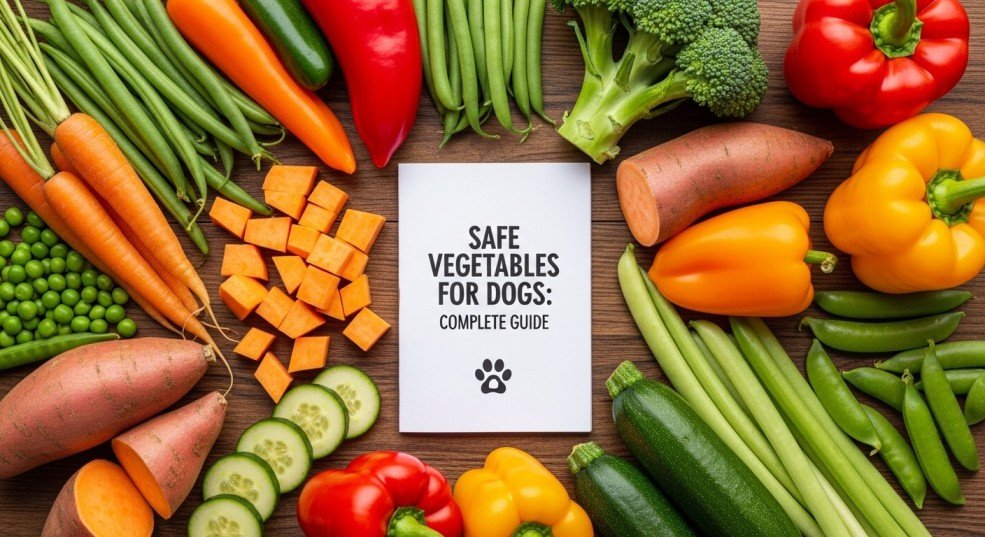
These vegetables are safe for most healthy adult dogs when prepared correctly. “Safe” means the vegetable itself is not toxic always introduce any new food gradually and in small amounts first.
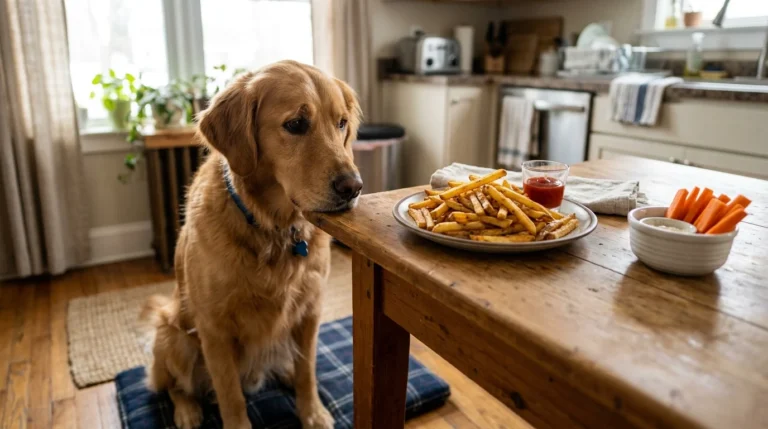
Carrots
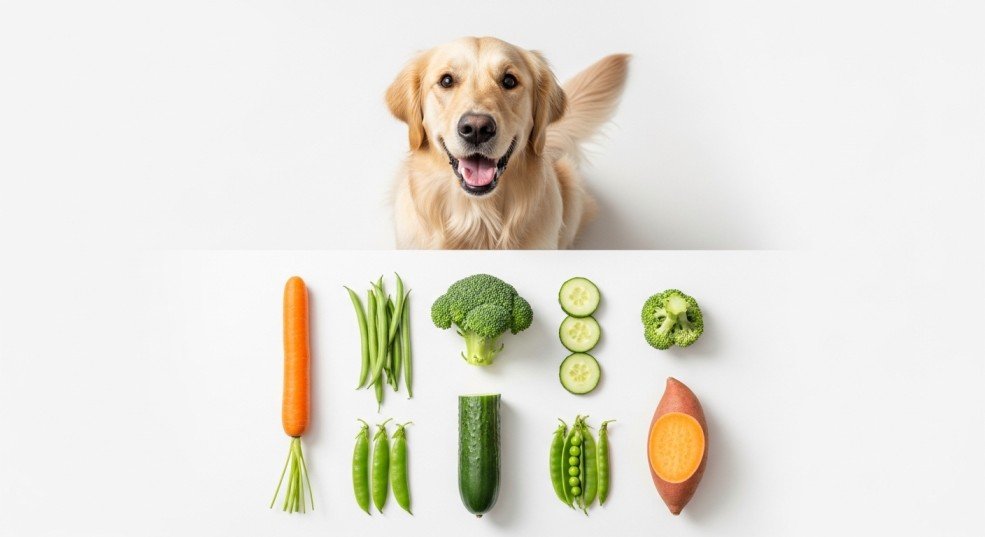
One of the best vegetables you can give a dog. Carrots are low in calories, high in fiber, and rich in beta-carotene (which converts to vitamin A). They are also a natural dental chew the firm texture helps scrub teeth as dogs bite down.
- Raw or cooked: Both are safe. Raw carrots provide dental benefits; cooked carrots are easier to digest.
- Portion: A few baby carrots or a couple of carrot sticks per day for most dogs.
- Caution: Cut into appropriate sizes for your dog’s breed to prevent choking.
Green Beans
Plain green beans are an excellent low-calorie treat and are often recommended by vets as a diet food substitute for bulky dogs. They provide vitamins C, K, and B6, plus manganese and fiber.
- Raw, steamed, or frozen: All are safe. Avoid canned green beans with added salt.
- Portion: Green beans can make up to 10% of daily caloric intake as a treat.
- Caution: Never give green beans cooked with onion, garlic, or seasoning.
Broccoli
Broccoli is safe for dogs in small amounts and provides vitamins C and K, folate, and fiber. However, broccoli contains isothiocyanates in the florets, which can cause gastric irritation in some dogs particularly in larger quantities.
- Raw or cooked: Both are safe in small amounts.
- Portion: Keep broccoli to under 10% of daily food intake. Large amounts can cause stomach upset.
- Caution: Broccoli stalks can be a choking hazard for small dogs. Cut them into small pieces.
Peas
Green peas, snow peas, and sugar snap peas are safe for dogs and provide protein, fiber, vitamins A, B, and K, and minerals including iron, zinc, and potassium. Avoid canned peas, which contain high sodium.
- Raw or cooked: Both are fine. Frozen peas are a good treat option.
- Portion: A small handful as an occasional treat.
- Caution: Dogs with kidney disease should avoid peas they are high in purines, which can stress the kidneys.
Cucumber
Cucumbers are one of the lowest-calorie vegetables you can give a dog they are about 96% water. They provide vitamins K, C, and B1, plus potassium, copper, and magnesium, with virtually no fat or carbohydrates.
- Raw: Best served raw and sliced.
- Portion: Freely given as a low-calorie snack ideal for bulky dogs.
- Caution: Remove seeds for small dogs, and do not give pickled cucumber (pickle) the vinegar, salt, and spices are harmful.
Sweet Potato
Cooked sweet potato is one of the most nutrient-dense vegetables for dogs rich in dietary fiber, beta-carotene, vitamins B6 and C, potassium, and manganese. It is a common ingredient in high-quality commercial dog foods and treats.
- Cooked only: Always cook sweet potato before giving it to your dog. Raw sweet potato is difficult to digest and can cause intestinal blockage in large pieces.
- Portion: A few tablespoons for most dogs. High in carbohydrates, so moderate for bulky or diabetic dogs.
- Caution: Plain only never give sweet potato casserole or sweet potato with butter, sugar, or spices.
Celery
Celery is safe for dogs and provides vitamins A, C, and K plus folate and potassium. It is low in calories and has a high water content, making it a hydrating snack. It is also known to freshen dog breath.
- Raw: Best served raw, cut into bite-sized pieces to prevent choking.
- Portion: A few pieces as an occasional treat.
- Caution: The stringy texture can be a choking hazard for small dogs. Cut into very small pieces.
Spinach
This is a nuanced case. Spinach is not toxic to healthy dogs in small amounts and provides iron, vitamins A, B6, B9, C, and K. However, spinach is very high in oxalic acid, which can interfere with calcium absorption and contribute to kidney stone formation with repeated feeding.
- Occasional only: A small amount occasionally is not harmful to healthy dogs.
- Avoid if: Your dog has kidney disease, a history of urinary stones, or is prone to calcium oxalate uroliths.
- Caution: Not recommended as a regular treat due to oxalic acid content.
Zucchini (Courgette)
Zucchini is safe, very low in calories, and provides vitamins B6 and C, potassium, and manganese. It has a mild flavor that most dogs accept readily. Both raw and cooked are safe.
- Raw or cooked: Both are fine.
- Portion: Can be given freely as a low-calorie snack.
- Caution: Avoid giving dogs zucchini cooked with garlic, onion, or oil.
Brussels Sprouts
Brussels sprouts are safe for dogs and rich in vitamins K, C, and B1, fiber, and antioxidants. However, they contain isothiocyanates the same compound found in broccoli which can cause significant gas. Feeding too many Brussels sprouts to your dog will result in flatulence.
- Cooked: Steam or boil without seasoning. Raw Brussels sprouts are harder to digest.
- Portion: One to three sprouts depending on your dog’s size not a daily treat.
- Caution: Too many Brussels sprouts cause gastrointestinal upset and excessive gas.
Cauliflower
Cauliflower is safe for dogs in small amounts and provides vitamins C, K, and B6, folate, and fiber. Like broccoli and Brussels sprouts, it belongs to the cruciferous family and can cause gas in larger quantities.
- Raw or cooked: Both are safe in small amounts.
- Portion: A small floret or two as an occasional treat.
- Caution: Gas-producing in larger amounts. Plain only no cheese sauce or seasoning.
Asparagus
Asparagus is not toxic to dogs, but it is not an ideal treat either. It is very tough when raw (making it a choking risk and difficult to chew), and cooking it sufficiently to make it safe removes most of its nutritional value. There are better vegetable options for dogs.
- Cooked only: If you give asparagus, always cook it first to soften it.
- Portion: Small pieces as an occasional treat.
- Caution: Asparagus fern (the ornamental plant) is toxic to dogs only the edible vegetable is safe.
Dogs and Vegetables: Complete Safety Reference Table
| Vegetable | Safe? | Preparation | Key Benefit / Caution |
| Carrot | Yes | Raw or cooked | Great dental chew; cut to size |
| Green Beans | Yes | Plain, no salt | Low-calorie diet food; avoid canned |
| Broccoli | Yes (small amounts) | Raw or cooked | Isothiocyanates cause GI upset in large doses |
| Peas | Yes | Fresh or frozen | Avoid in kidney disease high purines |
| Cucumber | Yes | Raw, sliced | Ultra-low calorie; avoid pickles |
| Sweet Potato | Yes (cooked) | Cooked only | Never raw; high in carbs moderate for diabetics |
| Celery | Yes | Raw, cut small | Freshens breath; stringy chop well |
| Spinach | Yes (occasional) | Small amounts only | High oxalic acid avoid with kidney issues |
| Zucchini | Yes | Raw or cooked | Very low calorie; plain only |
| Brussels Sprouts | Yes (small amounts) | Cooked, no seasoning | Causes significant gas |
| Cauliflower | Yes (small amounts) | Raw or cooked | Gas-producing in large amounts |
| Asparagus | Yes (cooked) | Cooked only | Tough raw; asparagus fern is toxic |
| Onion | NEVER | All forms toxic | Destroys red blood cells hemolytic anemia |
| Garlic | NEVER | All forms toxic | More toxic than onion by weight avoid all forms |
| Leeks | NEVER | All forms toxic | Same allium toxicity as onion and garlic |
| Chives | NEVER | All forms toxic | Concentrated allium compounds toxic even in small amounts |
| Raw Potato | NEVER | Cooked potato is lower risk | Contains solanine toxic; green potato is especially dangerous |
| Rhubarb | NEVER | All parts toxic | Very high oxalic acid kidney failure risk |
| Wild Mushrooms | NEVER | All wild varieties dangerous | Many species are fatal even in small amounts |
| Corn (on cob) | Caution | Kernels only no cob | Cob causes intestinal blockage; kernels are safe |
| Tomato (ripe) | Caution | Ripe flesh only | Stems and leaves are toxic; ripe fruit is generally tolerated |
Vegetables Dogs Should Never Eat
This section covers the most dangerous vegetables in detail. These are not borderline cases they are outright toxic and should never be given to dogs in any form.
Onions Most Commonly Fed Toxic Vegetable
Onions are one of the most dangerous foods for dogs and, tragically, one of the most commonly fed by accident. All forms are toxic: raw onion, cooked onion, dried onion, and onion powder. The toxic dose is approximately 5 grams of onion per kilogram of body weight which means a medium onion could seriously harm a medium-sized dog.
The mechanism is thiosulfate toxicity, which damages red blood cells and causes hemolytic anemia. Symptoms lethargy, pale gums, rapid breathing, vomiting may not appear for several days after ingestion, making onion particularly dangerous.
If your dog ate onion in any meaningful quantity, call your vet immediately do not wait for symptoms to appear.
Garlic More Toxic Than Onion by Weight
Garlic is approximately five times more potent than onion as an allium toxin per gram of body weight. The Garlic powder is even more concentrated than fresh garlic, meaning even a small sprinkle of garlic powder on shared food can be genuinely dangerous for small dogs.
There is a persistent myth that small amounts of garlic are beneficial for dogs, sometimes promoted in natural pet health circles. This claim is not supported by veterinary toxicology. The ASPCA, Merck Veterinary Manual, and major veterinary organizations all classify garlic as toxic to dogs regardless of quantity.
Leeks, Chives, and Shallots
All members of the Allium family carry the same thiosulfate toxicity as onions and garlic. Leeks, chives, shallots, and spring onions are all dangerous. Chives are particularly concentrated and are toxic even in small quantities which matters because chives are a common herb used as garnishes and in cooked dishes that might be shared with dogs.
Raw Potato
Raw potatoes contain solanine, a glycoalkaloid that causes gastrointestinal distress, neurological symptoms, and in large amounts, more serious toxicity. Green potatoes, potato sprouts, and potato skin have the highest solanine concentrations. Fully cooked, plain potato (no salt, butter, or toppings) is significantly lower risk and is tolerated by most dogs, but it provides little nutritional value and has a high glycemic index.
Potato leaves and stems are also toxic. Never let dogs chew on potato plants in the garden.
Rhubarb
Rhubarb contains very high levels of oxalic acid throughout the plant, with the leaves being the most concentrated. Oxalic acid binds calcium in the blood, causing hypocalcemia (low blood calcium), and can cause kidney failure. Even a small amount of rhubarb leaves can be fatal to dogs.
Wild Mushrooms
This is a category requiring extreme caution. While some commercially grown mushrooms (plain white button mushrooms, portobello) are not toxic to dogs, wild mushrooms are a completely different risk. Many wild mushroom species contain toxins that cause liver failure, kidney failure, or neurological damage, and several species are fatal even in very small quantities Amanita phalloides (death cap) being the most notorious.
The problem is that identification of wild mushrooms is not reliable even for experts, and dogs encounter them on walks and in yards. If your dog eats a wild mushroom, treat it as an emergency and bring a sample of the mushroom to the vet if possible.
The Middle Ground: Vegetables That Require Nuance
Corn
Corn kernels are not toxic to dogs. They are a common ingredient in many commercial dog foods. The danger with corn is entirely the cob a dog that swallows a corn cob or a large portion of one will almost certainly develop an intestinal obstruction, which is a surgical emergency.
- Safe: Plain corn kernels fresh, frozen, or cooked (no salt or butter).
- Never: Corn on the cob the cob does not digest and causes blockage.
Tomatoes
Ripe tomato flesh is generally tolerated by dogs in small amounts. The concern is solanine content, which is highest in unripe (green) tomatoes and in the stems and leaves of the tomato plant both of which are toxic. A small piece of ripe tomato is unlikely to harm a healthy adult dog, but it should never be a regular treat, and the plants must be kept out of reach.
- Generally safe: Small amounts of ripe red tomato flesh.
- Toxic: Unripe tomatoes, stems, and leaves of all tomato plants.
Bell Peppers
Red, yellow, and orange bell peppers are safe for dogs and rich in vitamins A, C, and E and antioxidants. Green bell peppers are safe too but contain more solanine than the ripe varieties though not enough to cause toxicity in normal amounts. Remove the seeds and core, which can cause mild digestive upset.
- Safe: Red, yellow, orange, and green bell pepper flesh no seeds, no core.
- Caution: Spicy peppers (chili peppers, jalapenos) are not toxic but cause significant GI irritation. Avoid.
How to Safely Feed Vegetables to Your Dog
Even safe vegetables can cause problems if fed incorrectly. Follow these principles for any vegetable you give your dog:
- Start small: Introduce any new vegetable in a small amount and wait 24–48 hours before feeding more. Watch for vomiting, diarrhea, or unusual behavior.
- Plain preparation only: Never feed vegetables cooked with onion, garlic, butter, oil, salt, or spices. Many vegetable dishes intended for humans are unsafe for dogs because of these additions.
- Appropriate sizing: Cut vegetables into pieces appropriate for your dog’s size. What is a safe piece for a Labrador is a choking hazard for a Chihuahua.
- 10% rule: All treats, including vegetables, should make up no more than 10% of your dog’s total daily caloric intake.
- Know your dog’s conditions: Dogs with kidney disease, diabetes, pancreatitis, or food sensitivities have different tolerances. Consult your vet before adding any new food.
- Remove seeds and cores: Seeds from cucumbers, peppers, and other vegetables can cause mild digestive upset. Cores and tough stems can be choking hazards.
What to Do If My Dog Ate a Dangerous Vegetable
Stay calm. What you do next depends on what was eaten and how much.
Step 1: Identify What Was Eaten
- Onion, garlic, leeks, or chives: Call your vet immediately do not wait for symptoms. Time matters with allium toxicity.
- Raw potato or green potato: Call your vet. Monitor for neurological symptoms and GI upset.
- Rhubarb leaves: Go to an emergency vet immediately this is a serious toxicological emergency.
- Wild mushroom: Go to an emergency vet immediately. Bring a sample or photo of the mushroom if possible.
- Corn cob (or partial): Go to a vet promptly obstruction risk is high and may require imaging.
- Safe vegetable, large amount: Monitor at home for GI upset. Call your vet if symptoms persist beyond 24 hours.
Step 2: Watch for These Symptoms
After any vegetable ingestion you are uncertain about, watch for these signs:
- Vomiting or diarrhea
- Lethargy or weakness
- Pale, white, or yellowish gums (serious seek emergency care)
- Rapid or labored breathing
- Excessive drooling
- Abdominal bloating or signs of pain
- Neurological signs: tremors, disorientation, seizures
Step 3: Who to Call
- Your vet: First contact for any concerning ingestion.
- ASPCA Animal Poison Control: (888) 426-4435 available 24/7 (consultation fee may apply).
- Pet Poison Helpline: (855) 764-7661 24/7 toxicology support.
Best Vegetables for Dogs With Specific Health Conditions
Not all vegetables are appropriate for every dog. Here is a condition-specific guide:
Bulky Dogs
Best choices: Cucumber, zucchini, celery, green beans. These are very low in calories and can replace some of the dog’s regular treats without adding significant caloric load.
Dogs With Diabetes
Best choices: Green beans, cucumber, zucchini, celery. Low in sugar and carbohydrates. Avoid sweet potato, peas, corn, and carrots in large amounts all have meaningful glycemic impact. Always check with your vet before changing treats for a diabetic dog.
Dogs With Kidney Disease
Avoid: Spinach, beet greens, rhubarb (high oxalic acid), and peas (high purines). Best choices: Green beans, cucumber, zucchini low in phosphorus and potassium. Dietary management of kidney disease is complex. Always consult your veterinarian before changing diet.
Dogs With Sensitive Stomachs
Introduce any vegetable gradually. Best first choices: Cooked sweet potato (excellent for digestive health), cooked green beans, cooked carrot. Avoid raw vegetables with high fiber content initially, and always start with small amounts.
Frequently Asked Questions: Dogs and Vegetables
What vegetables can dogs eat?
Dogs can safely eat carrots, green beans, peas, cucumber, zucchini, broccoli (small amounts), sweet potato (cooked), celery, cauliflower, and Brussels sprouts (small amounts). These should be plain, with no salt, butter, oil, garlic, or onion added, and cut into appropriate sizes for your dog’s breed.
What vegetables are bad for dogs?
Onions, garlic, leeks, chives, and shallots are all toxic to dogs and can cause hemolytic anemia. Raw potatoes contain solanine and are toxic. Rhubarb (especially the leaves) is highly toxic due to oxalic acid. Wild mushrooms are potentially fatal. These should never be given to dogs in any form.
Can dogs eat raw vegetables?
Many raw vegetables are safe: carrots, cucumber, zucchini, celery, green beans, and broccoli (in small amounts) can all be given raw. However, sweet potato and asparagus should always be cooked before feeding. Raw potatoes are toxic. Raw Brussels sprouts and cauliflower are harder to digest and cause more gas than cooked.
Can dogs eat cooked vegetables?
Yes, cooked vegetables are generally easier to digest than raw ones. The key requirement is that they must be plain cooked without garlic, onion, salt, butter, or oil. Sweet potato is one of the most nutritious cooked vegetables for dogs. Avoid any vegetable dish prepared as human food, as it almost certainly contains seasonings that are harmful to dogs.
How many vegetables can I give my dog per day?
Apply the 10% rule: all treats, including vegetables, should make up no more than 10% of your dog’s total daily caloric intake. For most dogs, this means a few pieces of vegetable as a snack not a plate of vegetables as a meal replacement. Vegetables supplement a balanced diet; they do not replace it.
Can dogs eat canned vegetables?
Most canned vegetables should be avoided due to high sodium content. A diet with too much sodium causes excessive thirst, urination, and in larger amounts, sodium ion poisoning. If you give canned vegetables, look specifically for no-salt-added varieties and rinse them before serving. Fresh or frozen vegetables are always a better option.
Can dogs eat frozen vegetables?
Yes plain frozen vegetables without added sauce, salt, or seasoning are safe and nutritious. Frozen peas, frozen green beans, and frozen carrots are all fine. Avoid frozen vegetable mixes that include onion or garlic. Frozen vegetables can be given thawed or partially frozen as a cool treat in warm weather.
Can puppies eat vegetables?
Puppies can eat the same safe vegetables as adult dogs, but in smaller amounts and cut into very small pieces to prevent choking. Introduce any new vegetable gradually. Because puppies have more sensitive digestive systems, start with easily digestible options like cooked sweet potato or steamed carrot before offering raw, high-fiber vegetables.
Final Word: Are Vegetables Good for Dogs?
Yes for most dogs, certain vegetables are a genuinely healthy addition to their diet. Carrots, green beans, cucumber, and sweet potato in particular offer real nutritional value as occasional treats. They provide fiber, vitamins, and antioxidants that complement a balanced commercial diet, and many dogs enjoy them.
The critical caveat is knowing which vegetables to avoid entirely. Onions, garlic, leeks, and chives are the most dangerous because they are so commonly found in everyday cooking and can be fed accidentally in small quantities over time. Raw potatoes, rhubarb, and wild mushrooms are also genuinely hazardous.
The golden rules: plain preparation, appropriate portion sizes, and always check before introducing a new vegetable. When in doubt, your vet is the best resource for guidance tailored to your specific dog’s health, breed, size, and existing conditions.
Reviewed & Recommended by Dr. Ubaidur Rahman, DVM
Veterinary Review: Dr. Ubaidur Rahman, DVM, reviewed this guide for the safety and nutritional considerations of feeding vegetables to dogs, including which vegetables are appropriate and how they should be prepared.
Dr. Ubaidur Rahman’s Recommendation: Many vegetables can be healthy, low-calorie treats for dogs when served plain and in appropriate portions. Options such as carrots, green beans, peas, and cooked sweet potato can provide useful nutrients and fiber. Vegetables should be introduced gradually, washed properly, and served without ingredients such as onions, garlic, excess salt, butter, or seasonings.
Sources & References
- Merck Veterinary Manual: Allium spp. (Onion, Garlic, Leek) Toxicosis in Animals. merckvetmanual.com
- Merck Veterinary Manual: Solanine and Chaconine (Nightshade) Toxicosis. merckvetmanual.com
- ASPCA Animal Poison Control Center: Toxic and Non-Toxic Plants and Foods. aspca.org
- PetMD: Safe and Toxic Vegetables for Dogs (Updated 2025). petmd.com
- American Kennel Club: Vegetables Dogs Can and Cannot Eat. akc.org
- Chewy: What Vegetables Can Dogs Eat? (2025). chewy.com
- Purina: Vegetables That Are Good for Dogs. purina.com
- VCA Animal Hospitals: Nutrition Vegetables for Dogs. vcahospitals.com
- Pet Poison Helpline: Allium Toxicity in Dogs. petpoisonhelpline.com
Discover More:-
- Can Dogs Eat Apples? Vet-Backed Guide to Safe Serving (2026)
- Can Dogs Eat Shrimp? Benefits, Side Effects & Feeding Tips 2026

Dr. Ubaid Ur Rehman, DVM is a qualified veterinarian with expertise in pet health, nutrition, and preventive care. He is passionate about helping pet owners make informed decisions through accurate, research-based, and practical advice. As a veterinary professional, he reviews and contributes content to ensure reliable information for dog and pet owners.