Can Dogs Eat Syrup and Pancakes? Read This Before You Share
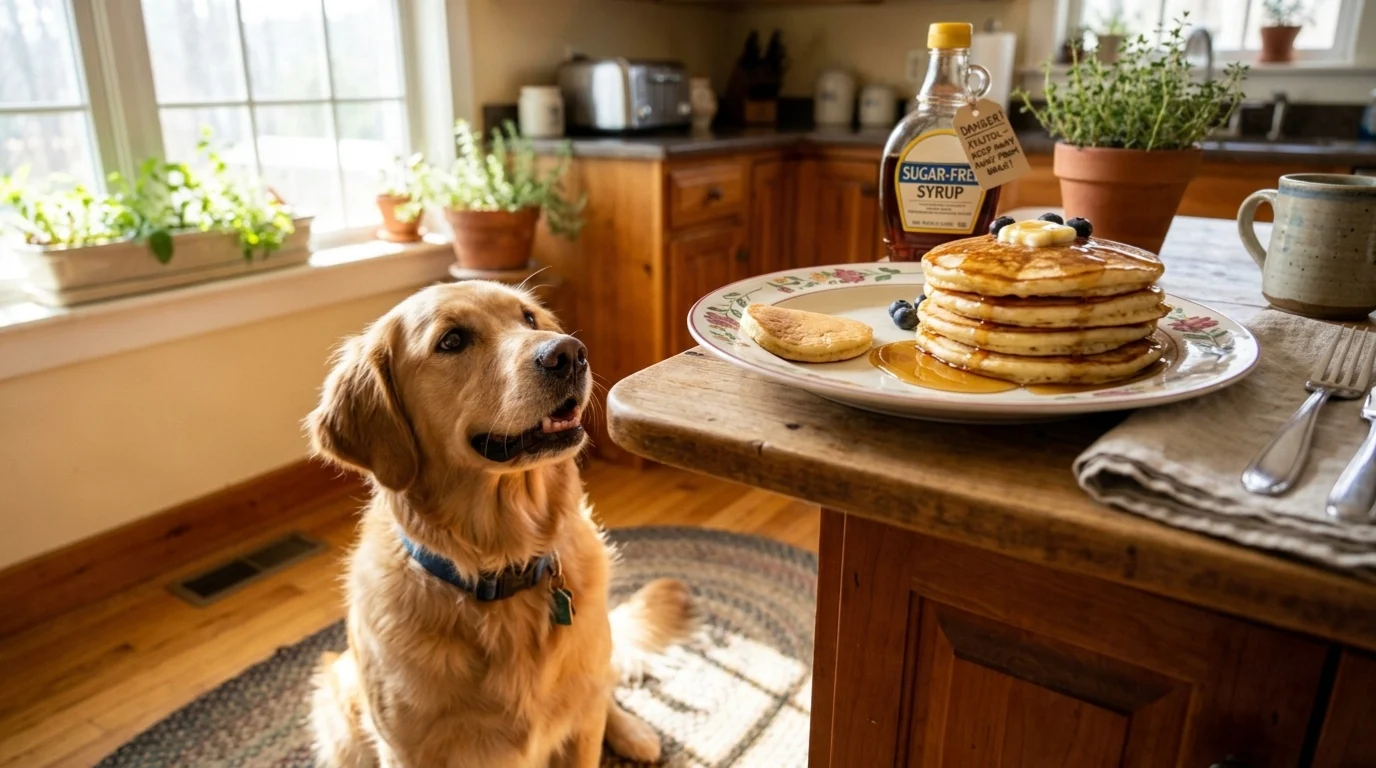
Quick Ans: No to syrup, yes to a small bite of plain pancake. Plain, fully cooked pancakes without toppings are safe for most dogs in tiny amounts . But pancake syrup—especially sugar-free varieties—can be dangerous or even deadly due to high sugar content and the artificial sweetener xylitol, which is highly toxic to dogs . Never share pancakes with syrup, chocolate, raisins, or other toppings.
Key Takeaways
- Plain pancake only – A small bite of plain pancake without butter, syrup, or toppings is safe as an occasional treat. No nutritional value, so keep portions tiny .
- Syrup is the danger – Regular syrup is high in sugar; sugar-free syrups often contain xylitol, which is highly toxic to dogs . Pure maple syrup is not toxic but still unhealthy .
- Xylitol is an emergency – Even a small amount of xylitol can cause life-threatening low blood sugar and liver failure in dogs. If your dog eats sugar-free syrup, call your vet or poison control immediately .
Pancakes are a breakfast favorite, and it’s tempting to share a bite with your dog. The pancake itself isn’t the problem—it’s what goes on top. Syrup, butter, chocolate chips, and raisins can turn a harmless treat into a veterinary emergency. Before you slide a piece off your plate, here’s exactly what’s safe and what’s not.
Is Pancake Safe for Dogs?
Plain pancakes are not toxic to dogs. A small bite of a fully cooked, unseasoned pancake won’t poison your dog . But they’re essentially empty calories with no meaningful nutritional value . Pancakes are made from refined flour, eggs, milk, and sugar—ingredients that offer little benefit for a carnivore’s diet .
The real issue is portion size. A 6-inch pancake has about 175 calories, which is over a third of a 20-pound dog’s daily calorie needs . Treats of any kind should stay under 10% of daily calories, so only offer a bite or two, not a whole pancake.
What Makes Syrup Risky for Dogs?
1. Xylitol – Deadly Artificial Sweetener
This is the most serious danger. Sugar-free or “lite” pancake syrups often contain xylitol, an artificial sweetener that’s safe for humans but highly toxic to dogs . Xylitol causes a rapid release of insulin in dogs, leading to dangerous low blood sugar (hypoglycemia). A tablespoon of sugar-free syrup can contain enough xylitol to cause hypoglycemia and even liver failure in a medium-sized dog . Symptoms like vomiting, weakness, tremors, and seizures can appear within 30–60 minutes .
2. High Sugar Content – Obesity and Diabetes Risk
Regular maple syrup is made from tree sap and is mostly sugar. It’s not toxic, but it’s unhealthy for dogs. Two tablespoons of syrup add about 100 empty calories—more than half the daily calorie needs of a 20-pound dog . Over time, sugar contributes to obesity, dental problems, and blood sugar spikes that can be dangerous for diabetic dogs .
3. Artificial Syrups – Hidden Additives
Imitation pancake syrups often contain preservatives, artificial colors, and sometimes xylitol or other sweeteners. Even if they don’t have xylitol, they’re still high in sugar with no nutritional value .
4. Butter and Fat – Pancreatitis Risk
Butter is a common pancake topping that adds saturated fat. Rich, fatty foods can trigger pancreatitis—a painful and potentially life-threatening inflammation of the pancreas—especially in dogs that are prone to it .
Syrup and Pancake Safety Comparison Table
| Food | Toxic? | Main Risk | Verdict |
|---|---|---|---|
| Plain pancake | No | Empty calories, carbs | Safe in tiny amounts |
| Pancake with butter | No (but harmful) | Pancreatitis, obesity | Avoid |
| Pure maple syrup | No (but harmful) | High sugar, obesity | Avoid |
| Sugar-free syrup (xylitol) | Yes | Hypoglycemia, liver failure | Never feed – emergency |
| Artificial syrup | No (but harmful) | High sugar, additives | Avoid |
| Pancake with chocolate | Yes | Chocolate toxicity | Never feed |
| Pancake with raisins/grapes | Yes | Kidney failure | Never feed |
| Pancake batter (raw) | No (but harmful) | Salmonella risk, bloating | Never feed |
How Much Pancake Can Dogs Eat?
If you decide to share plain pancake, keep it small and infrequent. Treats of any kind should stay under 10% of your dog’s daily calories.
Portion guidelines for plain pancake only (no syrup/toppings):
| Small (2–20 lbs) | Chihuahua, Yorkie, Pug | One 1-inch piece |
| Medium (20–50 lbs) | Cocker Spaniel, Border Collie | Two 1-inch pieces |
| Large (50+ lbs) | Lab, Golden Retriever, German Shepherd | ¼ of a pancake |
Feed pancakes rarely—once a week at most. They should never be part of a regular diet .
What to Do If My Dog Ate Syrup or Pancake With Toppings
If your dog ate a pancake with syrup, your next step depends on what kind of syrup and what other toppings were on it.
Step 1: Identify what they ate
- Plain pancake, no toppings – monitor for mild stomach upset, but likely fine.
- Pure maple syrup – high sugar; watch for vomiting or diarrhea.
- Sugar-free syrup or any syrup labeled “lite” or “low sugar” – likely contains xylitol. This is an emergency.
- Pancake with chocolate chips, raisins, or grapes – this is an emergency.
Watch for symptoms
Xylitol symptoms appear within 30–60 minutes :
- Vomiting
- Lethargy or weakness
- Tremors or seizures
- Pale gums
- Loss of coordination (ataxia)
Call for help immediately if xylitol is involved
- Your veterinarian – for emergency appointment.
- ASPCA Animal Poison Control: (888) 426-4435 (fee may apply)
- Pet Poison Helpline: (855) 764-7661 (fee may apply)
Do not wait for symptoms. Xylitol poisoning can progress rapidly. If your dog ate sugar-free syrup or any product containing xylitol, call a professional immediately .
Can Puppies Eat Pancakes?
Puppies can have a tiny piece of plain pancake, but it’s not recommended. Their digestive systems are developing, and the dairy, fat, and refined carbs can cause diarrhea or vomiting . Wait until your puppy is at least 6 months old and start with an even smaller piece than the adult portion. Always consult your vet before introducing new foods to a puppy.
Safe Alternatives to Pancakes and Syrup
If your dog wants a breakfast treat, try these healthier options:
- Plain scrambled eggs – High in protein, easy to digest.
- Plain cooked oatmeal – Good source of soluble fiber.
- Small pieces of banana or blueberries – Natural sweetness without processed sugar.
- Plain cooked pumpkin – Excellent for digestion and fiber.
- Carrot sticks – Crunchy and low-calorie.
Frequently Asked Questions
Can dogs eat pancakes with syrup?
No. Syrup adds too much sugar and may contain xylitol, which is highly toxic to dogs . If the syrup is sugar-free, it’s a veterinary emergency.
Can dogs eat plain pancakes?
Yes, a small bite of plain pancake without butter, syrup, or toppings is safe for most dogs. But it’s empty calories, so keep portions tiny and infrequent .
Is maple syrup toxic to dogs?
Pure maple syrup is not toxic, but it’s high in sugar and calories, which can contribute to obesity, diabetes, and digestive upset . Sugar-free syrups often contain xylitol, which is toxic.
Can dogs eat pancakes with butter?
No. Butter adds saturated fat that can trigger pancreatitis and contribute to obesity . Serve plain pancake without any spread.
Can dogs eat pancake batter?
No. Raw batter contains raw flour and eggs, which can carry bacteria like Salmonella. Raw batter can also expand in the stomach, causing bloating .
Can dogs have sugar-free syrup?
No. Sugar-free syrups almost always contain xylitol, which is deadly to dogs. Even a small amount can cause severe low blood sugar and liver failure .
Are pancakes good for dogs with diabetes?
No. Pancakes and syrup are high in sugar and carbohydrates, which can dangerously spike blood glucose in diabetic dogs. Avoid entirely .
What should I do if my dog ate syrup?
If it’s pure maple syrup, monitor for stomach upset. If it’s sugar-free, “lite,” or low-calorie syrup, treat it as an emergency and call your vet or poison control immediately .
Final Word
So, can dogs eat syrup and pancakes? Give your dog a tiny piece of plain pancake now and then, and it won’t hurt them. But syrup is a different story. Regular syrup is high in sugar and empty calories, and sugar-free syrup can be deadly due to xylitol. Skip the toppings, keep the pancake bite small, and think of it as a rare treat rather than a regular addition. If your dog ever gets into sugar-free syrup, call your vet or poison control immediately—time matters. When in doubt, there are plenty of healthier treats your dog will love just as much.
Veterinary Recommendation — Dr. Ubaidur Rahman, DVM
I would not recommend giving dogs regular pancakes with syrup. The pancake itself may be tolerated in a small portion, but common toppings can turn a simple treat into a poor choice. Syrup adds a significant amount of sugar without providing meaningful nutritional value for dogs.
If your dog accidentally ate a small amount of pancake with regular syrup, it will usually be more appropriate to monitor for digestive upset than to panic. However, sugar-free syrup requires extra caution because some products may contain xylitol, which is highly toxic to dogs and can cause a medical emergency. Always check the ingredient label before giving any human food to a dog.
Sources & References
- Purina. “Can Dogs Eat Pancakes? A Guide to Safety.”
- The Dodo. “Check Your Labels: Xylitol’s A Common Ingredient That’s Toxic To Dogs.”
- PetMD. “Can Dogs Eat Pancakes?” – Sandra C. Mitchell, DVM, DABVP
- The Dodo. “Can Dogs Eat Pancakes?” – Dr. Sada Grieve, DVM
- Spot Pet Insurance. “Can Dogs Eat Pancakes and Waffles?”
- Wales Online. “Dog owners warned over ‘life-threatening’ pancake ingredients.”
- YuMOVE. “Preparing for a dog-friendly Pancake Day!”
- MasterClass. “Can Dogs Eat Pancakes? 6 Dog-Safe Pancake Toppings.”
- Plymouth Live. “People eating pancakes on Shrove Tuesday warned of dog danger.”
- Petful. “Can Dogs Eat Pancakes? Vet-Reviewed Safety Guide.”
- Favor.Pet. “Maple Syrup Pancake Burgers and Dogs.”
- ASPCA Animal Poison Control: (888) 426-4435
- Pet Poison Helpline: (855) 764-7661
Michael Carter, DVM is a veterinarian and pet health writer with a strong interest in canine nutrition, preventive care, and animal wellness. He is dedicated to providing pet owners with accurate, evidence-based information that helps them make informed decisions about their dogs’ health. As an author and content reviewer, Michael combines veterinary knowledge with practical insights to ensure every article is trustworthy, informative, and easy to understand.