
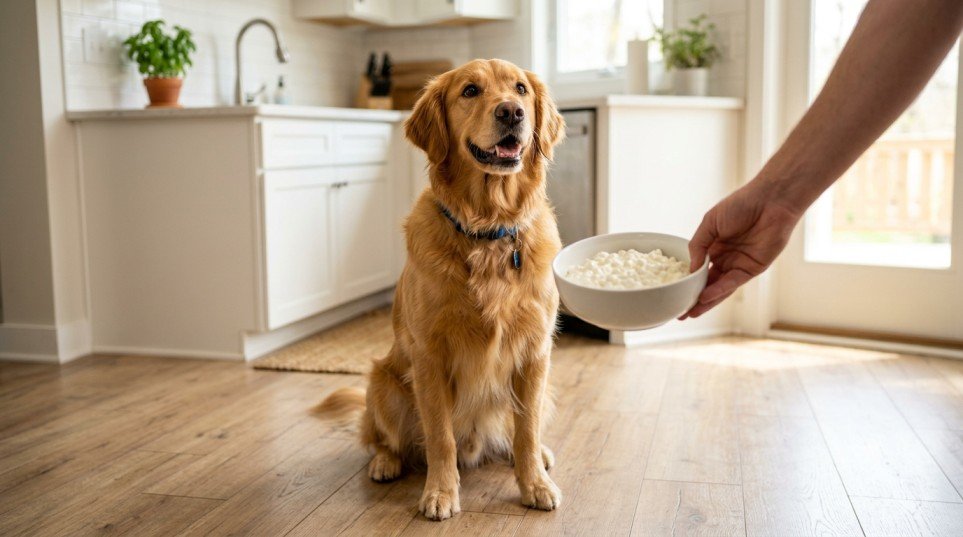
Can Dogs Eat Cottage Cheese? A Complete Vet Approved Guide
Quick Answer: A small spoonful of plain cottage cheese is safe for most dogs and can even help settle an upset stomach. The real concerns are lactose sensitivity, sodium content, fat in larger amounts, and flavored tubs that contain garlic, onion, chives, or sweeteners.
Your dog just finished off a spoonful of cottage cheese that fell on the kitchen floor, or maybe you are thinking about adding it to their dinner as a topper. Good news right away: this is one of the rare human foods that veterinarians actually recommend rather than warn against. Still, “generally safe” is not the same as “no rules apply,” and a few small details decide whether cottage cheese helps your dog or causes a messy night.
We cover everything dog owners actually search for: whether cottage cheese is genuinely good for dogs, how much to feed based on your dog’s weight, why lactose matters, which flavors and add ins to avoid, how it fits into a bland diet for an upset stomach, and what to do if your dog eats more than planned.
Can Dogs Eat Cottage Cheese? The Short Answer
Yes. Plain, unsweetened cottage cheese in small amounts is one of the few dairy products that veterinarians regularly approve for dogs. It is not a toxic food in the way chocolate, grapes, or onions are, and most healthy adult dogs can handle a spoonful with no issue at all.
Unlike harder, aged cheeses, cottage cheese goes through a short culturing process that breaks down much of the natural milk sugar (lactose), leaving a soft, mild curd that tends to be gentler on a dog’s stomach. The things to watch are not hidden toxins, but portion size, salt content, and whatever has been mixed into the tub before it reached your fridge.
What Makes Cottage Cheese Good (and Sometimes Risky) for Dogs?

1. Protein and Calcium: The Real Benefit
Cottage cheese is built mainly from casein protein, along with calcium, phosphorus, selenium, and B vitamins such as B12. Many varieties also contain live cultures that act as natural probiotics, which can support a healthy gut. For dogs recovering from illness, building muscle, or carrying a little less weight than they should, a small serving can be a useful nutritional boost.
Important: Veterinary sources describe cottage cheese as one of the more tolerable cheeses for dogs, noting that it tends to be lower in fat and less processed than many other cheese varieties, which is part of why it shows up so often in vet recommended bland diets.
2. Lactose: The Main Digestive Concern
Many dogs lose much of their ability to break down lactose once they are weaned, in much the same way that lactose intolerant humans do. Cottage cheese naturally contains less lactose than milk because of the culturing process, which is why most dogs tolerate it better than a bowl of milk would. Even so, particularly sensitive dogs can react to even this reduced amount, with gas, loose stools, or vomiting showing up within a few hours of eating it.
3. Sodium and Fat: The Numbers That Matter
Standard cottage cheese can carry a noticeable amount of sodium, and full fat versions add a meaningful fat load for a small body. For dogs with heart, kidney, or pancreas conditions, these two numbers matter far more than the cheese itself. Choosing a lower sodium, lower fat cottage cheese and keeping portions small avoids most of this concern entirely.
Is Cottage Cheese Bad for Dogs?
This question deserves a direct answer. In almost every case, plain cottage cheese will not seriously harm a dog. A few specific situations, however, can turn this otherwise gentle snack into a real problem:
- Lactose intolerant dogs: A dog that is particularly sensitive to dairy can develop vomiting, diarrhea, or significant gas even from a small serving of cottage cheese.
- Dogs with pancreatitis or fat sensitive stomachs: Full fat cottage cheese adds extra fat that can trigger painful inflammation of the pancreas in dogs prone to it.
- Flavored or seasoned tubs: Chive, onion, and garlic and herb cottage cheese are common on grocery shelves, and onion and garlic are toxic to dogs even in small amounts.
- “Lite” or sugar free varieties: Some reduced sugar cottage cheese products are sweetened with xylitol or other sugar alcohols, and xylitol is extremely dangerous for dogs.
- Dogs with a true dairy allergy: This is different from lactose intolerance and involves an immune reaction to milk proteins, which can cause itching, skin issues, or digestive upset.
The bottom line: cottage cheese itself is one of the gentler dairy foods for dogs, but the seasoning, sweeteners, and portion size around it can turn a healthy snack into an unplanned vet visit. Always check the ingredient label before sharing any flavored or “lite” product.
How Much Cottage Cheese Can a Dog Eat?
There is no official toxic dose for cottage cheese the way there is for chocolate or xylitol, because plain cottage cheese is not a poison. The limiting factors are calories, fat, sodium, and how much lactose a particular dog can comfortably handle.
A commonly suggested starting portion is about 1 teaspoon of cottage cheese for every 10 pounds of body weight, offered as an occasional topper rather than a daily habit.
To put that in context:
- A 10 lb dog (for example, a small terrier): about 1 teaspoon of cottage cheese
- A 30 lb dog (for example, a Border Collie): about 1 tablespoon of cottage cheese
- A 60 lb dog (for example, a Labrador): about 2 tablespoons of cottage cheese
Feeding noticeably more than this in one sitting raises the chance of loose stools from the combined lactose and fat load, even in dogs that normally handle cottage cheese well. Dogs already on a prescription diet for kidney, heart, or pancreas issues should only get cottage cheese with their vet’s approval, since the added sodium and fat can work against the goals of that diet.
Cottage Cheese Risk by Type: Quick Reference Table
| Type of Cottage Cheese | Lactose Level | Main Concern | Verdict |
| Plain, low fat | Low | Minimal, generally well tolerated | Best everyday choice |
| Plain, full fat | Low | Extra fat and calories | Small amounts only |
| Lactose free | Very low | Little to none | Good alternative |
| Chive, onion, or garlic flavored | Low | Onion and garlic toxicity | Avoid completely |
| Fruit flavored with added sugar | Low | Extra sugar, possible raisins | Check ingredients first |
| “Lite” or sugar free with sweeteners | Low | Possible xylitol content | Avoid unless confirmed sweetener free |
Can Dogs Eat Flavored Cottage Cheese?
No, not the seasoned varieties. Chive, onion and garlic, and herb flavored cottage cheese are common in grocery store dairy sections, and onion and garlic are both toxic to dogs even in powder form. These ingredients damage red blood cells and can lead to a condition called hemolytic anemia, with symptoms sometimes appearing days after the dog ate the food.
If your dog licks a small amount of flavored cottage cheese off a plate, keep an eye out for vomiting, diarrhea, weakness, or pale gums over the following day or two. If they ate a real serving rather than a lick, call your vet to ask whether the amount of onion or garlic powder involved needs treatment.
Can Dogs Eat Cottage Cheese With Sugar or Sweeteners?
Never give your dog cottage cheese that contains xylitol or other sugar alcohols. Some “lite,” reduced sugar, or flavored cottage cheese products use these sweeteners, and xylitol in particular is one of the most dangerous substances for dogs, even in very small amounts.
- Xylitol exposure: Even a small amount can cause a rapid drop in blood sugar, leading to weakness, vomiting, wobbliness, and collapse, sometimes within 30 to 60 minutes.
- Reading labels matters: The front of the tub rarely mentions sweeteners, so check the full ingredient list before sharing any flavored or “lite” dairy product with your dog.
If you believe your dog ate cottage cheese containing xylitol, do not wait for symptoms to appear. Contact an emergency vet or an animal poison control line immediately.
Can Dogs Eat Cottage Cheese Every Day?
This is one of the most searched questions about cottage cheese, and the honest answer is that occasional is better than daily. Cottage cheese is not dangerous in small regular amounts, but a few things add up over time:
- Sodium adds up: Even a modest daily amount of cottage cheese contributes ongoing sodium intake on top of what is already in a complete dog food.
- Extra calories: A spoonful every day can quietly contribute to weight gain over weeks and months, especially in smaller or less active dogs.
- It can crowd out balanced nutrition: A complete dog food is already formulated to meet your dog’s needs, so daily extras should stay a small share of total calories.
- It can hide a slow building sensitivity: A dog that tolerates cottage cheese once a week may start showing soft stools if the same amount becomes a daily habit.
Treating cottage cheese as an occasional extra rather than a daily addition is the simplest way to enjoy the benefits without running into any of these issues.
Is Cottage Cheese Good for Dogs With an Upset Stomach?
Often, yes. Veterinarians sometimes recommend a temporary bland diet of boiled chicken, plain white rice, and a small amount of plain cottage cheese for dogs with mild diarrhea or a generally unsettled stomach. The mild flavor, easy to digest protein, and any live cultures present can help support normal digestion while the gut settles.
A simple approach is to mix a small spoonful of plain cottage cheese into the rice and chicken for a day or two, then gradually transition your dog back to their normal food. If diarrhea continues beyond 24 to 48 hours, or your dog becomes lethargic, vomits repeatedly, or shows blood in the stool, stop the home approach and contact your vet, since ongoing digestive issues can point to something that needs proper treatment.
What to Do If My Dog Ate Too Much Cottage Cheese
Stay calm. What you do next depends mainly on what kind of cottage cheese your dog ate and how much.
Step 1: Identify What Was Eaten
- Small amount of plain cottage cheese: Monitor at home, nothing else is usually needed.
- Large amount of plain cottage cheese in one sitting: Watch for loose stools over the next 24 to 48 hours.
- Chive, onion, or garlic flavored: Call your vet and describe the amount eaten, since onion and garlic exposure depends on the amount eaten.
- Contains xylitol or another sweetener: Go to an emergency vet immediately, do not wait for symptoms.
- Dog has a history of pancreatitis or dairy allergy: Call your vet regardless of the amount eaten.
Step 2: Watch for These Symptoms
If your dog ate plain cottage cheese and you are monitoring at home, watch for these signs over the next 24 to 48 hours:
- Vomiting
- Diarrhea or loose stools
- Gas or bloating
- Reduced appetite
- Lethargy or low energy
- Pale gums, weakness, or wobbliness (seek emergency care immediately, possible toxin exposure)
Step 3: Who to Call
- Your vet: First point of contact for any concerning amount or ingredient.
- ASPCA Animal Poison Control: (888) 426 4435, available 24/7 (a consultation fee may apply).
- Pet Poison Helpline: (855) 764 7661, 24/7 toxicology support.
Is Cottage Cheese Better Than Yogurt for Dogs?
Both are commonly recommended dairy options, and the better choice often depends on what you are using it for. Plain yogurt with live cultures tends to offer a higher concentration of probiotics per spoonful, while cottage cheese generally provides more protein and calcium for a similar serving size.
Whichever you choose, look for plain, unsweetened versions with no xylitol, chocolate, or fruit mixes containing grapes or raisins. Greek yogurt is often higher in protein but can also be more concentrated, so smaller portions make sense. Some owners simply alternate between the two, or offer a small amount of each, which is fine as long as the total stays small.
Can Dogs Eat Cottage Cheese With Fruit?
It depends entirely on the fruit. Plain cottage cheese on its own is fine in small amounts, but many fruit flavored cottage cheese cups include added sugar, syrup, or fruit pieces that are not all dog friendly.
- Pineapple, blueberries, or sliced banana: Generally fine in small amounts if you mix them into plain cottage cheese yourself.
- Grapes or raisins: Extremely dangerous for dogs and linked to kidney failure even in small amounts, so never feed a cottage cheese mix that contains either.
- Added sugar or syrup: Not toxic, but unnecessary calories that can add up if given often.
If your dog gets into a store bought fruit cottage cheese cup, check the ingredient list specifically for grapes, raisins, or sweeteners such as xylitol before assuming it was a harmless treat.
What About Dog Treats and Foods That Contain Cottage Cheese?
Many commercial dog foods, toppers, and treats now list cottage cheese or dairy proteins as an ingredient, formulated in controlled amounts alongside balanced nutrition. These products are generally fine, since the cottage cheese portion is small and the rest of the formula is built specifically for dogs.
If you would rather add cottage cheese yourself, choose plain options with short ingredient lists, treat it as an occasional topper rather than a meal replacement, and keep the rest of your dog’s diet built around a complete food that meets recognized nutritional guidelines.
Does the Type of Cottage Cheese Matter?
Yes, more than most people expect. Full fat, low fat, fat free, small curd, large curd, and lactose free versions all behave a little differently once they reach your dog’s stomach.
- Full fat: The richest flavor, but also the highest fat load, so best kept to very small amounts.
- Low fat or reduced fat: A reasonable middle ground for most healthy dogs.
- Fat free: The lowest calorie option, useful for dogs managing their weight, though some dogs find it less appealing.
- Small curd versus large curd: Mainly a texture difference, with no meaningful safety difference between the two.
- Lactose free: A helpful option for dogs that show gas or loose stools after eating regular cottage cheese.
For most healthy dogs, plain, low fat cottage cheese with no added flavors strikes the best balance between nutrition and safety.
Safe Alternatives to Cottage Cheese for Dogs
If your dog does not tolerate cottage cheese well, or you simply want some variety, these options are commonly used as toppers or treats:
- Plain, unsweetened yogurt with live cultures: Offers similar probiotic benefits and is often easier to digest than milk.
- Lactose free cottage cheese or milk: Provides similar nutrients without the usual digestive trigger.
- Cooked plain chicken or turkey: A lean protein with no dairy related concerns at all.
- Plain pumpkin (not pie filling): Supports digestion and is low in calories.
- Small pieces of cooked sweet potato: A good source of fiber and vitamins for an occasional treat.
- Goat’s milk (plain, unsweetened): Naturally lower in lactose than cow’s milk for some dogs, though it should still be given in moderation.
Frequently Asked Questions: Dogs and Cottage Cheese
Is cottage cheese good for dogs?
Yes, in small amounts. Plain cottage cheese provides protein, calcium, and sometimes probiotics, and many vets consider it one of the gentler dairy options for dogs. It should still be an occasional addition rather than a daily staple.
How much cottage cheese can a dog eat in a day?
A common starting point is about 1 teaspoon per 10 pounds of body weight, given occasionally rather than every day. Dogs with kidney, heart, or pancreas conditions should only have cottage cheese with veterinary approval, since the sodium and fat content matter more for those dogs.
Can dogs eat cottage cheese every day?
It is not dangerous in small amounts, but daily feeding can quietly add sodium, calories, and fat over time, and may eventually trigger loose stools in sensitive dogs. Most vets suggest treating cottage cheese as an occasional extra rather than a daily habit.
Can dogs eat flavored cottage cheese?
No, not safely. Chive, onion, garlic, and herb flavored varieties contain ingredients that are toxic to dogs, and “lite” or sugar free versions may contain xylitol. Only plain, unflavored cottage cheese should be shared with dogs.
Is cottage cheese good for a dog’s upset stomach?
It can be. Plain cottage cheese is sometimes included in a short term bland diet alongside boiled chicken and rice for dogs with mild digestive upset. If symptoms last more than a day or two, or your dog seems unwell in other ways, see your vet rather than continuing home care.
Can cottage cheese hurt a dog?
Plain cottage cheese rarely causes serious harm, though dogs with lactose intolerance, dairy allergies, or pancreatitis can react poorly even to small amounts. The bigger risks come from flavored varieties containing onion, garlic, or sweeteners such as xylitol, which can be genuinely dangerous.
What should I do if my dog ate cottage cheese with onion or garlic?
Note roughly how much your dog ate and call your vet or an animal poison control line such as ASPCA Animal Poison Control at (888) 426 4435. Onion and garlic toxicity depends on the amount eaten relative to your dog’s size, and symptoms can take a day or two to appear, so do not assume everything is fine just because your dog seems normal right away.
Can puppies eat cottage cheese?
In small amounts, yes, once a puppy is eating solid food and has been checked by a vet for any food sensitivities. Puppies can be even more sensitive to lactose and rich foods than adult dogs, so start with a very small taste and watch for loose stools before offering it again.
Can Dogs Eat Moldy Cheese?
No, dogs should not eat moldy cheese. Moldy cheeses can contain substances that may cause vomiting, diarrhea, tremors, seizures, or other serious health problems in dogs, so it’s safest to avoid them completely.
can dogs have cottage cheese?
Yes, dogs can safely eat plain, low-fat cottage cheese in moderation. It provides protein, calcium, and probiotics, making it a great occasional treat or food topper. Always verify your dairy products do not contain toxic flavorings like onion or garlic.
Is Cottage Cheese Safe for Dogs?
Yes, plain cottage cheese is generally safe for most dogs when served in moderation. Choose a low-fat, low-sodium variety and avoid products with added seasonings or sweeteners.
Can Dogs Eat Cottage Cheese?
Dogs can eat plain cottage cheese as an occasional treat. It provides protein and calcium but should only be offered in small amounts to prevent digestive upset.
Can Dogs Have Cottage Cheese?
Yes, dogs can have cottage cheese if they are not lactose intolerant. Start with a small serving to see how your dog reacts before feeding more.
Is Cottage Cheese Good for Dogs?
Cottage cheese can be a healthy snack because it contains protein, calcium, and essential nutrients. However, it should complement a balanced diet rather than replace regular dog food.
Can My Dog Eat Cottage Cheese?
Yes, your dog can eat plain cottage cheese in moderation. If your dog has a sensitive stomach or dairy intolerance, consult your veterinarian before feeding it.
Is Cottage Cheese Healthy for Dogs?
Cottage cheese can be healthy for dogs when fed occasionally and in small portions. Low-fat, plain varieties are the best choice for maintaining a healthy diet.
Does Cottage Cheese Settle a Dog’s Stomach?
Plain cottage cheese may help some dogs with mild stomach upset because it is easy to digest for dogs that tolerate dairy. However, it is not suitable for every dog and should not replace veterinary care.
Can Dogs Eat Cottage Cheese with Pineapple?
Yes, dogs can eat plain cottage cheese with small amounts of fresh pineapple as an occasional treat. Avoid canned pineapple packed in syrup because of its high sugar content.
Is Cottage Cheese Good for Dogs with Diarrhea?
Plain cottage cheese may be included in a bland diet for some dogs if they tolerate dairy. However, many veterinarians recommend easily digestible foods like boiled chicken and rice instead.
How Much Cottage Cheese Can a Dog Have Per Day?
Most dogs should only have 1–2 tablespoons of plain cottage cheese per day as an occasional treat, depending on their size. Treats, including cottage cheese, should make up no more than 10% of a dog’s daily calorie intake.
Final Word: Should You Feed Your Dog Cottage Cheese?
Plain cottage cheese is one of the more forgiving human foods you can share with a dog, and in small amounts it can be a genuinely useful source of protein, calcium, and probiotics. That said, “safe in small amounts” is the operative phrase. Large portions, daily habits, and dogs with pancreatitis or dairy sensitivities all change the picture.
Flavored, “lite,” and sweetened varieties deserve real caution, since onion, garlic, and xylitol can turn a gentle snack into an emergency. If your dog gets into one of these products, check the label and call your vet or an animal poison control line if anything other than plain cottage cheese was involved.
When in doubt, keep it plain, keep it small, and keep it occasional. Used that way, cottage cheese can be a simple, vet friendly addition to your dog’s routine without much to worry about.
Reviewed & Recommended by Dr. Ubaidur Rahman, DVM
Veterinary Review: Dr. Ubaidur Rahman, DVM, reviewed this guide for the safety of cottage cheese for dogs, including its fat, sodium, and lactose content.
Dr. Ubaidur Rahman’s Recommendation: Cottage cheese can be given to most healthy dogs in small amounts, especially plain, low-fat varieties without added salt or seasonings. It provides protein and calcium, but some dogs may have difficulty digesting lactose and could develop gas, diarrhea, or an upset stomach.
Sources & References
- PetMD: Can Dogs Eat Cheese? petmd.com
- American Kennel Club: Human Foods Dogs Can and Cannot Eat. akc.org
- Merck Veterinary Manual: Nutrition and Dietary Management of Dogs. merckvetmanual.com
- ASPCA Animal Poison Control Center: People Foods to Avoid Feeding Your Pets. aspca.org
- Purina: Can Dogs Eat Cheese? purina.com
- Chewy: Can Dogs Eat Cottage Cheese? chewy.com
- Pet Poison Helpline: Xylitol. petpoisonhelpline.com
- PetMD: Xylitol Poisoning in Dogs. petmd.com
Discover More:-
- Can Dogs Eat Papaya? Benefits, Risks, and Safe Serving Guide 2026
- Can Dogs Eat Fish? Safe Types, Benefits, Risks, and Feeding Guide 2026

Michael Carter, DVM is a veterinarian and pet health writer with a strong interest in canine nutrition, preventive care, and animal wellness. He is dedicated to providing pet owners with accurate, evidence-based information that helps them make informed decisions about their dogs’ health. As an author and content reviewer, Michael combines veterinary knowledge with practical insights to ensure every article is trustworthy, informative, and easy to understand.