Can Dogs Eat Raw Meat? Pros, Cons & Safe Feeding Tips
Quick Answer: While dogs can eat raw meat, veterinarians remain divided on whether it is the safest option. The biggest concerns are bacterial contamination, parasites, nutritional deficiencies, and risks to humans in the household.
Your dog would probably choose a raw steak over kibble every single time. After all, dogs descended from wolves, right? So feeding raw meat must be natural and healthy.
Not so fast.
The reality is more complicated than many dog owners realize. While dogs can physically eat raw meat, that doesn’t automatically mean it’s the safest or healthiest choice. The benefits often promoted by raw feeding advocates must be weighed against real risks, including bacterial contamination, nutritional imbalances, and foodborne illness.
This guide covers everything dog owners are searching for: whether dogs can eat raw meat safely, the potential benefits and risks, which meats are safest, what veterinarians say, and how to decide whether raw feeding is right for your dog.
Can Dogs Eat Raw Meat? The Short Answer
Yes, dogs can eat raw meat. Their digestive systems are capable of processing raw animal protein, and many dogs consume raw meat without immediate problems.
For healthy adult dogs, occasional raw meat may not cause issues. However, puppies, senior dogs, immunocompromised dogs, and households with young children require extra caution.
The most important question is not whether dogs can eat raw meat. The more important question is whether the potential benefits outweigh the risks for your specific dog.
Why Do People Feed Dogs Raw Meat?
1. The Ancestral Diet Argument
Many raw feeding advocates believe dogs should eat similarly to their wild ancestors.
The argument is straightforward:
- Wolves eat raw prey.
- Dogs descended from wolves.
- Therefore, dogs should eat raw meat.
While there is some logic to this idea, modern dogs have evolved alongside humans for thousands of years and are not nutritionally identical to wolves.
Today’s dogs digest carbohydrates more efficiently and often have different nutritional requirements than wild canids.
2. Claims of Better Coat and Skin Health
Many owners report improvements such as:
- Shinier coats
- Reduced shedding
- Healthier skin
- Less itching
These improvements may occur because high-quality raw diets are often rich in protein and healthy fats.
However, similar benefits can often be achieved through well-formulated commercial diets.
3. Improved Appetite
Some picky eaters become enthusiastic about meals when raw meat is introduced.
The smell, texture, and taste can be highly appealing to dogs that ignore traditional kibble.
4. Smaller Stools
Raw-fed dogs often produce smaller stools.
This happens because high-protein diets are generally more digestible and may leave less waste material behind.
Smaller stools are not necessarily evidence that the diet is healthier, but many owners appreciate the difference.
What Are the Risks of Feeding Raw Meat?
1. Bacterial Contamination
This is the biggest concern among veterinarians.
Raw meat can contain harmful bacteria such as:
- Salmonella
- E. coli
- Listeria
- Campylobacter
Dogs may become sick from these bacteria, but they can also carry and spread them without showing symptoms.
This creates a potential risk for:
- Children
- Aged family members
- Individuals with weakened immune systems
Even healthy dogs can occasionally develop severe illness from bacterial contamination.
2. Nutritional Imbalances
A common mistake among raw feeders is assuming that feeding meat alone creates a complete diet.
It does not.
Dogs require:
- Protein
- Fat
- Vitamins
- Minerals
- Essential fatty acids
- Calcium
- Phosphorus
An improperly balanced raw diet can lead to serious deficiencies over time.
Growing puppies are especially vulnerable to nutritional mistakes.
3. Parasites
Raw meat can contain parasites depending on its source and handling.
Potential concerns include:
- Tapeworms
- Roundworms
- Protozoan parasites
Proper sourcing and storage reduce risk but do not eliminate it entirely.
4. Bone Injuries
Many raw diets include raw bones.
While some owners use them successfully, bones can create risks such as:
- Choking
- Dental fractures
- Intestinal blockages
- Gastrointestinal perforation
Bone-related injuries can become medical emergencies.
Is Raw Meat Better Than Cooked Meat?
There is no clear scientific consensus showing that raw meat is universally superior to properly cooked meat.
Cooked meat offers several advantages:
- Reduced bacterial risk
- Lower parasite exposure
- Improved food safety
- Easier handling
Meanwhile, raw meat enthusiasts argue that cooking may reduce certain nutrients and alter proteins.
For most dogs, both raw and cooked meat can be healthy when included in a balanced diet.
The quality and nutritional balance of the diet matter more than whether the meat is raw or cooked.
Which Raw Meats Can Dogs Eat?
Raw Beef
Raw beef is one of the most commonly fed raw proteins.
Potential benefits:
- High-quality protein
- Rich in iron
- Contains zinc and B vitamins
Choose fresh, high-quality cuts from reputable sources.
Raw Chicken
Raw chicken is popular but carries a higher risk of bacterial contamination than some other meats.
Special attention should be paid to:
- Storage
- Hygiene
- Cross-contamination prevention
Many veterinary professionals express particular concern regarding raw poultry.
Raw Turkey
Turkey provides lean protein and can be a suitable option for some dogs.
As with chicken, proper handling is essential.
Raw Lamb
Lamb is often used for dogs with food sensitivities.
It provides:
- Protein
- Healthy fats
- Essential minerals
Some dogs tolerate lamb particularly well.
Raw Venison
Venison is considered a novel protein for many dogs and may be useful in certain elimination diets.
It is generally lean and nutrient-dense.
What Raw Meats Should Dogs Avoid?
Certain raw products carry higher risks.
Avoid:
- Spoiled meat
- Meat with unknown origins
- Highly seasoned meat
- Marinated meat
- Processed meats
- Raw meat containing onions or garlic
- Moldy meat
Never feed meat that you would consider unsafe for human consumption.
Can Puppies Eat Raw Meat?
Puppies require extra caution.
Their developing immune systems make them more vulnerable to:
- Bacterial infections
- Nutritional deficiencies
- Growth abnormalities
Puppies have very specific nutritional requirements.
Even small dietary mistakes can affect bone development and overall growth.
If a raw diet is being considered for a puppy, consultation with a veterinary nutrition professional is strongly recommended.
Can Senior Dogs Eat Raw Meat?
Senior dogs may face increased risks from raw feeding.
Older dogs are more likely to have:
- Weakened immune systems
- Kidney disease
- Liver disease
- Digestive sensitivities
For many senior dogs, cooked diets may represent the safer option.
Individual health status matters more than age alone.
Signs Your Dog May Not Be Tolerating Raw Meat
Monitor for symptoms such as:
- Vomiting
- Diarrhea
- Excessive gas
- Loss of appetite
- Lethargy
- Abdominal discomfort
- Weight loss
These symptoms may indicate dietary intolerance, bacterial infection, or another health issue.
Persistent symptoms require veterinary evaluation.
What Veterinarians Actually Say About Raw Feeding
Veterinary opinions vary.
Some veterinarians acknowledge that carefully balanced raw diets can work for certain dogs.
Others discourage raw feeding because of concerns regarding:
- Foodborne pathogens
- Nutritional imbalances
- Public health risks
The strongest consensus among veterinary professionals is that any diet—raw or cooked—must be nutritionally complete and balanced.
A poorly formulated raw diet is far riskier than a properly formulated commercial diet.
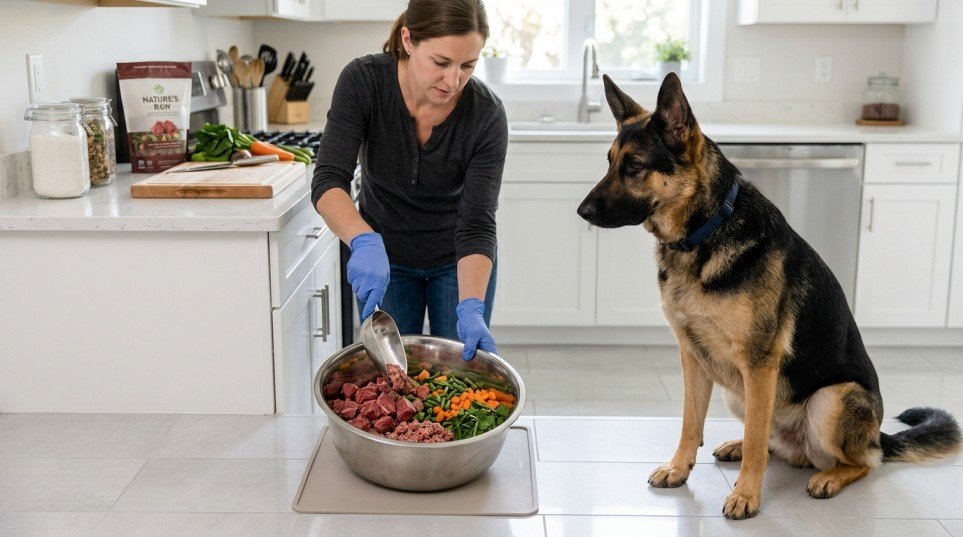
How to Feed Raw Meat More Safely
If you choose to feed raw meat, safety becomes critical.
Follow these guidelines:
- Buy meat from reputable sources.
- Keep meat refrigerated or frozen.
- Wash bowls immediately after feeding.
- Clean food preparation surfaces thoroughly.
- Wash hands after handling raw meat.
- Discard spoiled food immediately.
- Prevent cross-contamination with human food.
Food safety practices protect both your dog and your household.
Raw Meat vs Commercial Dog Food
| Factor | Raw Meat Diet | Commercial Dog Food |
|---|---|---|
| Protein Quality | Often high | Varies by brand |
| Convenience | Lower | Higher |
| Food Safety | Higher risk | Lower risk |
| Nutritional Balance | Must be managed carefully | Usually balanced |
| Cost | Often expensive | Wide price range |
| Storage Requirements | Significant | Minimal |
Neither approach is automatically superior.
Success depends on proper formulation and responsible feeding practices.
Frequently Asked Questions About Dogs and Raw Meat
Can dogs eat raw beef?
Yes. Healthy dogs can generally eat raw beef, but bacterial contamination and nutritional balance remain important considerations.
Can dogs eat raw chicken?
Dogs can eat raw chicken, but poultry often carries bacteria such as Salmonella and Campylobacter, making food safety a major concern.
Is raw meat healthier than kibble?
Not necessarily. A balanced diet is more important than whether food is raw or processed.
Can raw meat kill a dog?
While uncommon, bacterial infections, nutritional deficiencies, choking incidents, and bone injuries associated with raw diets can become serious or even life-threatening.
Do dogs naturally prefer raw meat?
Many dogs find raw meat highly appealing because of its smell and texture.
Preference does not automatically mean it is the healthiest choice.
Can dogs get worms from raw meat?
Yes. Depending on the source and handling, raw meat can contain parasites capable of infecting dogs.
Should I switch my dog to a raw diet?
That decision depends on your dog’s age, health status, household environment, and ability to maintain proper nutritional balance and food safety practices.
Can Dogs Eat Salami Regularly?
No, dogs should not eat salami regularly. Frequent consumption can lead to obesity, pancreatitis, high sodium intake, and other long-term health issues.
How to Decide Whether Raw Feeding Is Right for Your Dog
Consider these questions:
- Is your dog healthy?
- Can you maintain strict food safety practices?
- Are there young children in the home?
- Do you understand canine nutritional requirements?
- Can you source quality ingredients consistently?
If the answer to several of these questions is no, a balanced commercial diet may be the safer and more practical option.
Final Word: Can Dogs Eat Raw Meat Safely?
Yes, dogs can eat raw meat, and many do so without immediate problems. However, the decision involves more than simply asking whether dogs are capable of digesting raw food.
Raw feeding comes with potential benefits, but it also carries legitimate risks involving bacteria, parasites, nutritional imbalances, and food safety concerns.
For some owners, a carefully planned raw diet may be a workable option. For others, a high-quality commercial diet or cooked homemade diet may provide similar benefits with fewer risks.
The safest approach is to evaluate your dog’s individual needs and consult a veterinarian before making major dietary changes. Long-term health depends not on whether food is raw, but on whether the diet is complete, balanced, and appropriate for your dog.
Reviewed & Recommended by Dr. Ubaidur Rahman, DVM
Veterinary Review: Dr. Ubaidur Rahman, DVM, reviewed this guide for the safety risks associated with feeding raw meat to dogs, including bacterial contamination and potential digestive concerns.
Dr. Ubaidur Rahman’s Recommendation: Dogs can eat some types of raw meat, but I generally recommend caution because raw meat can carry bacteria such as Salmonella and E. coli that may make dogs or people in the household sick. Raw meat diets can also become nutritionally unbalanced if they are not properly formulated.
Sources and References
- American Veterinary Medical Association (AVMA): Raw Pet Food Diets
- U.S. Food and Drug Administration (FDA): Raw Pet Food Safety
- World Small Animal Veterinary Association (WSAVA): Global Nutrition Guidelines
- Merck Veterinary Manual: Nutrition in Dogs
- American Animal Hospital Association (AAHA): Nutritional Assessment Guidelines
- Centers for Disease Control and Prevention (CDC): Pet Food and Salmonella
- Tufts University Veterinary Nutrition Service: Raw Diet Research
Discover More:-
- Can Dogs Eat Yogurt? Benefits, Risks, Safe Types & Vet Advice 2026
- Can Dogs Eat Peas? Benefits, Risks, Serving Sizes & Safety Guide 2026

Dr. Ubaid Ur Rehman, DVM is a qualified veterinarian with expertise in pet health, nutrition, and preventive care. He is passionate about helping pet owners make informed decisions through accurate, research-based, and practical advice. As a veterinary professional, he reviews and contributes content to ensure reliable information for dog and pet owners.