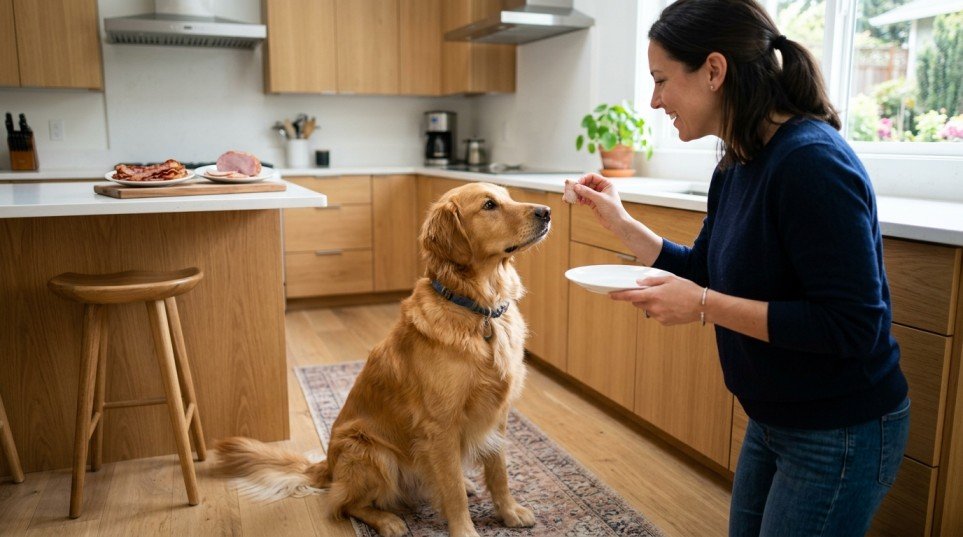
Can Dogs Eat Pork? Vet-Approved Safety Guide for Dog Owners 2026
Quick Answer: Plain cooked pork without seasoning, garlic, onion, sauces, or excess fat is generally safe for most healthy dogs. However, bacon, ham, sausage, pork bones, and heavily seasoned pork products should be avoided.
You are finishing dinner when your dog gives you that look. A piece of pork falls from your plate, and suddenly you’re wondering whether it’s safe to let them have it.
The short answer is yes, dogs can eat pork, but only under certain conditions. The type of pork, how it’s prepared, and how much your dog eats all matter. While plain cooked pork can be a source of protein for dogs, some pork products can cause digestive upset, pancreatitis, or even serious health complications.
This guide covers everything dog owners actually search for: whether pork is safe for dogs, the benefits and risks, which pork products to avoid, how much dogs can eat, symptoms of pork-related problems, and when to call your veterinarian.
Can Dogs Eat Pork? The Short Answer
Yes, dogs can eat plain, fully cooked pork in moderation. Lean pork provides protein, vitamins, and minerals that can be part of a healthy canine diet.
The most important thing to understand is that pork itself is not usually the problem. The way pork is prepared is what often creates health risks for dogs.
Is Pork Safe for Dogs?
1. Pork Is a High-Quality Protein Source
Pork contains essential amino acids that help support:
- Muscle development
- Tissue repair
- Immune function
- Healthy skin and coat
- Overall body maintenance
Like chicken, turkey, and beef, pork can provide valuable protein when properly prepared.
Many commercial dog foods even use pork as a primary protein ingredient.
2. Pork Contains Important Nutrients
Lean pork contains several nutrients beneficial to dogs, including:
- Protein
- Thiamine (Vitamin B1)
- Niacin
- Zinc
- Phosphorus
- Selenium
- Vitamin B6
These nutrients support energy production, metabolism, and overall health.
3. Preparation Matters More Than the Meat
The biggest concern with pork is not the meat itself but the ingredients often added to it.
Many pork dishes contain:
- Garlic
- Onion
- Salt
- Spices
- Sauces
- Marinades
- Excess fat
Several of these ingredients can be harmful or toxic to dogs.
Benefits of Pork for Dogs
When fed appropriately, pork may offer several benefits.
1. Excellent Protein Source
Protein is one of the most important nutrients in a dog’s diet.
Lean pork helps support:
- Strong muscles
- Healthy organs
- Recovery after activity
- Normal growth in puppies
2. Rich in B Vitamins
Pork is especially high in thiamine.
B vitamins help support:
- Energy metabolism
- Nervous system function
- Brain health
- Cellular function
3. May Be Useful for Some Food Sensitivities
Some dogs cannot tolerate common proteins such as chicken or beef.
Under veterinary guidance, pork may sometimes serve as an alternative protein source in elimination diets or specialized feeding plans.
Risks of Feeding Pork to Dogs
While pork can be safe, there are important risks every dog owner should understand.
1. High Fat Content
Many cuts of pork contain significant amounts of fat.
Too much dietary fat can cause:
- Vomiting
- Diarrhea
- Stomach upset
- Weight gain
- Pancreatitis
Pancreatitis is a painful and potentially serious inflammation of the pancreas that often occurs after dogs consume fatty foods.
Dogs with a history of pancreatitis face an especially high risk.
2. Seasonings and Additives
Many pork products contain ingredients that are unsafe for dogs.
Common examples include:
- Garlic
- Onion powder
- Excess salt
- Spicy seasonings
- Barbecue sauce
- Artificial sweeteners in sauces
Even small amounts of these additives may cause health problems.
3. Raw Pork Risks
Raw pork carries risks that cooked pork does not.
Potential concerns include:
- Salmonella
- E. coli
- Other bacterial contamination
- Parasites in improperly sourced meat
Proper cooking significantly reduces these risks.
4. Digestive Upset
Even healthy dogs can experience digestive problems if they eat too much pork.
Symptoms may include:
- Gas
- Vomiting
- Diarrhea
- Abdominal discomfort
- Reduced appetite
Dogs unfamiliar with pork should receive only small amounts initially.
Can Dogs Eat Different Types of Pork?
Not all pork products are equally safe.
| Pork Product | Safe for Dogs? | Notes |
|---|---|---|
| Plain cooked pork | Yes | Best option in moderation |
| Lean pork loin | Yes | Lower fat choice |
| Pork tenderloin | Yes | One of the leanest cuts |
| Bacon | No | Extremely high in fat and salt |
| Ham | No | High sodium content |
| Sausage | No | Seasonings and fat make it risky |
| Pepperoni | No | Excessive salt and spices |
| Raw pork | Not recommended | Bacterial and parasite risks |
| Pork bones | No | Choking and injury hazard |
Can Dogs Eat Pork Bones?
This is one of the most common questions dog owners ask.
The answer is no.
Cooked pork bones can:
- Splinter easily
- Cause choking
- Damage teeth
- Injure the mouth
- Perforate the intestines
- Create dangerous blockages
Even large dogs can suffer serious injuries from bone fragments.
The safest choice is to avoid pork bones entirely.
Can Dogs Eat Bacon?
Many dogs love bacon, but it is not a healthy treat.
Bacon contains:
- Extremely high fat levels
- Excess sodium
- Preservatives
- Seasonings
Potential consequences include:
- Stomach upset
- Vomiting
- Diarrhea
- Pancreatitis
- Dehydration
A tiny piece may not cause problems in a large healthy dog, but bacon should never become a regular treat.
Can Dogs Eat Ham?
Ham presents similar concerns.
Most ham products contain:
- High sodium levels
- Preservatives
- Added sugar
- Flavor enhancers
Excess sodium may contribute to:
- Increased thirst
- Increased urination
- Digestive upset
- Salt-related complications in sensitive dogs
Plain cooked pork is generally a much better choice than ham.
How Much Pork Can Dogs Eat?
Moderation is critical.
Treats and supplemental foods should generally make up no more than 10% of a dog’s daily calories.
General serving guidelines:
Small Dogs (Under 20 lbs)
- 1 to 2 small bite-sized pieces
Medium Dogs (20–50 lbs)
- Several small pieces
- Approximately 1 to 2 ounces
Large Dogs (Over 50 lbs)
- Up to a few ounces occasionally
Individual needs vary based on:
- Age
- Weight
- Activity level
- Existing medical conditions
When introducing pork, start with a very small amount and monitor for digestive changes.
Signs Your Dog Ate Too Much Pork
Overeating pork may lead to digestive upset.
Common symptoms include:
- Vomiting
- Diarrhea
- Gas
- Loss of appetite
- Lethargy
- Abdominal pain
These signs often develop within several hours after consumption.
Most mild cases improve with supportive care, but severe symptoms warrant veterinary attention.
When Pork Becomes an Emergency
Seek veterinary care immediately if your dog experiences:
- Persistent vomiting
- Severe diarrhea
- Difficulty breathing
- Collapse
- Significant abdominal swelling
- Signs of choking
- Suspected bone ingestion
- Symptoms of pancreatitis
Emergency symptoms should never be managed solely with home remedies.
Can Puppies Eat Pork?
Puppies can eat small amounts of plain cooked pork, but caution is important.
Puppies have:
- More sensitive digestive systems
- Smaller body size
- Different nutritional requirements
Their primary nutrition should come from a balanced puppy food.
Pork should be treated as an occasional supplement rather than a dietary staple.
Frequently Asked Questions About Dogs and Pork
Can dogs eat cooked pork?
Yes. Plain, fully cooked pork without seasoning is generally safe in moderation.
Can dogs eat raw pork?
Raw pork is not recommended due to potential bacterial and parasite risks.
Can dogs eat pork every day?
Pork can be included in some balanced diets, but feeding pork daily should only occur as part of a properly formulated nutrition plan.
Can dogs eat pork chops?
Only the plain meat portion may be safe. The bone, seasoning, and fatty portions should be avoided.
Is pork better than chicken for dogs?
Neither protein is universally better. Individual dogs may respond differently based on allergies, sensitivities, and nutritional needs.
Why does pork sometimes upset dogs’ stomachs?
The fat content is often responsible. Rich foods can be difficult for some dogs to digest.
Can pork cause pancreatitis?
Yes. Fatty pork products can trigger pancreatitis, particularly in susceptible dogs.
Can Dogs Have Pork Rib Bones?
No, dogs should not have pork rib bones. Cooked pork rib bones can splinter easily, increasing the risk of choking, mouth injuries, or serious damage to the digestive tract.
Can Dogs Eat Pork Rib Bones?
No, dogs should not eat pork rib bones. Cooked pork rib bones can splinter easily, increasing the risk of choking, mouth injuries, or serious intestinal damage.
Can Dogs Eat Pork Chop Bones?
No, pork chop bones are not safe for dogs. Whether cooked or raw, they can crack, splinter, and cause choking, digestive blockages, or internal injuries.
Can Dogs Eat Pork Rinds?
Dogs should not eat pork rinds regularly. They are high in fat and salt, which can lead to digestive upset, pancreatitis, or other health problems, especially in large amounts.
How to Safely Feed Pork to Your Dog
Follow these guidelines:
- Use only fully cooked pork.
- Choose lean cuts whenever possible.
- Remove excess fat.
- Avoid seasonings and sauces.
- Never feed pork bones.
- Introduce gradually.
- Feed in moderation.
- Monitor for digestive issues.
Simple preparation is usually the safest preparation.
Final Word
The answer to “Can dogs eat pork?” is yes, but only when it is plain, fully cooked, and served in moderation. Lean pork can provide high-quality protein and valuable nutrients that support your dog’s health.
The biggest risks come from fatty cuts, processed pork products, seasonings, and bones. Foods such as bacon, ham, sausage, and pork bones create far more problems than benefits.
When in doubt, stick to small portions of plain cooked pork and contact your veterinarian if your dog consumes a large amount of fatty pork or develops concerning symptoms afterward.
Reviewed & Recommended by Dr. Ubaidur Rahman, DVM
Veterinary Review: Dr. Ubaidur Rahman, DVM, reviewed this guide for veterinary accuracy, pork safety, preparation methods, and the risks associated with feeding pork to dogs.
Dr. Ubaidur Rahman’s Recommendation: Plain, fully cooked, unseasoned pork can generally be given to healthy dogs in small amounts as an occasional treat. Pork should be served without bones, excess fat, salt, garlic, onion, or other seasonings. Raw or undercooked pork is best avoided because it can carry harmful pathogens and may pose additional health risks.
Sources and References
- American Kennel Club (AKC): Human Foods Dogs Can and Cannot Eat
- Merck Veterinary Manual: Canine Nutrition Guidelines
- VCA Animal Hospitals: Safe Human Foods for Dogs
- PetMD: Can Dogs Eat Pork?
- American Veterinary Medical Association (AVMA): Pet Nutrition Guidance
- World Small Animal Veterinary Association (WSAVA): Global Nutrition Guidelines
- Pet Poison Helpline: Fatty Foods and Pancreatitis Risks in Dogs
Discover More:-
- Can Dogs Eat Yogurt? Benefits, Risks, Safe Types & Vet Advice 2026
- Can Dogs Eat Peas? Benefits, Risks, Serving Sizes & Safety Guide 2026

Dr. Ubaid Ur Rehman, DVM is a qualified veterinarian with expertise in pet health, nutrition, and preventive care. He is passionate about helping pet owners make informed decisions through accurate, research-based, and practical advice. As a veterinary professional, he reviews and contributes content to ensure reliable information for dog and pet owners.