Can Dogs Eat Cauliflower? Health Benefits & Gas Risk
Quick Ans: Yes, dogs can eat plain cauliflower in small amounts. This non-toxic vegetable is low in calories and packed with fiber, vitamins C and K, and antioxidants . Serve it raw or cooked but always plain, without butter, salt, garlic, or onion.
Key Takeaways
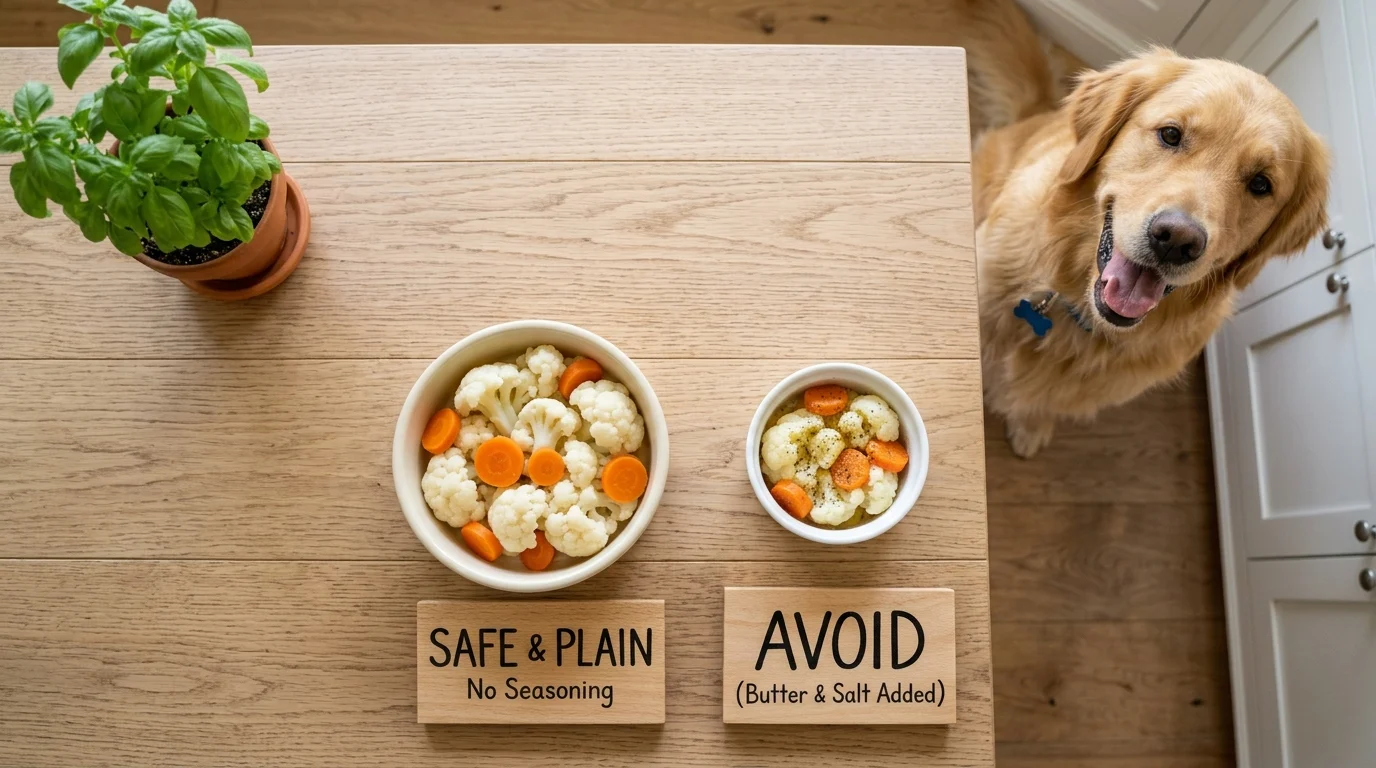
- Plain only – Cauliflower must be served without butter, oil, salt, or seasonings. Garlic and onion are toxic to dogs and often added to cooked cauliflower dishes .
- Moderation matters – Too much cauliflower causes gas, bloating, and stomach upset due to its high fiber content .
- Size it right – Chop into small, bite-sized pieces to avoid choking. Stems are tougher and harder to digest than florets .
You’re chopping cauliflower for dinner, and your dog’s giving you that hopeful look from the kitchen floor. Good news you can share a piece. But before you toss them a floret, know this: cauliflower is safe and healthy, but how you serve it matters just as much as how much you give.
Is Cauliflower Good for Dogs?
Cauliflower is packed with nutrients that can support your dog’s health as long as you stick to small portions .
Per serving, cauliflower provides:
- Fiber – Supports digestion and helps with weight management by promoting a feeling of fullness .
- Vitamin C – Boosts immune function and acts as an antioxidant .
- Vitamin K – Supports bone health and proper blood clotting .
- Vitamin B6 and folate – Aid metabolism and nervous system function .
- Potassium and manganese – Support heart health and cellular energy .
- Antioxidants (including sulforaphane) – May help reduce inflammation and lower disease risk .
- Choline – Supports liver health, brain development, and cardiovascular function .
Cauliflower is also low in calories, making it a smart treat for heavy dogs but always check with your vet before starting a weight-loss plan .
That said, your dog’s regular diet already provides all the nutrition they need. Think of cauliflower as a bonus snack, not a health supplement .
What Makes Cauliflower Risky for Dogs?
1. Gas and Digestive Upset
Cauliflower is a cruciferous vegetable high in fiber and complex sugars. In large amounts, it ferments in the gut, causing gas, bloating, and stomach discomfort . Some dogs are more sensitive than others start with a tiny piece to gauge tolerance .
2. Choking Hazard
Raw cauliflower stems and large florets can be tough and hard to chew. Dogs that gulp their food without chewing risk choking or, in rare cases, intestinal blockage. Always chop cauliflower into small, bite-sized pieces especially for small dogs .
3. Seasonings Are the Real Danger
Plain cauliflower is safe, but the butter, oil, salt, garlic, and onion often added to human recipes are not. Garlic and onion are toxic to dogs and can damage red blood cells . Butter and oil add unnecessary fat that can trigger pancreatitis in sensitive dogs .
4. Thyroid Concerns (Rare but Real)
Cauliflower contains goitrogens compounds that can interfere with thyroid hormone production by blocking iodine uptake. This is only a concern with large, frequent servings. Dogs with hypothyroidism should avoid cauliflower, or you should consult your vet first .
Cauliflower Safety Comparison Table
How Much Cauliflower Can Dogs Eat?
Treats including healthy ones like cauliflower should make up no more than 10% of your dog’s daily calories .
General portion guidelines (plain, cooked or raw, chopped):
Start with a single piece the first time and watch for gas or stomach upset. If your dog tolerates it well, you can offer cauliflower once a week or less not daily .
What to Do If My Dog Ate Seasoned Cauliflower
If your dog snagged some cauliflower that had butter, salt, garlic, or onion, act quickly.
1: Assess what they ate
- How much cauliflower did they eat?
- What was on it? (Butter? Garlic? Onion powder? Salt?)
- How big is your dog?
2: Watch for these symptoms
- Vomiting or diarrhea
- Excessive thirst or urination (salt overload)
- Lethargy, weakness, or pale gums (possible garlic/onion toxicity can appear 24–72 hours later)
- Abdominal pain or bloating
3: Call your vet or a poison helpline
- Your regular veterinarian – they know your dog’s health history.
- ASPCA Animal Poison Control: (888) 426-4435 (fee may apply)
- Pet Poison Helpline: (855) 764-7661 (fee may apply)
Small amounts of butter or salt may only cause mild upset. But garlic and onion are toxic even small amounts can add up over time. Don’t wait for symptoms to appear; call for advice .
Can Puppies Eat Cauliflower?
Yes, but with extra caution. Puppies have sensitive digestive systems. A tiny piece of plain, cooked cauliflower is unlikely to harm a healthy puppy, but their developing guts are more prone to gas, diarrhea, and stomach upset .
Puppy guidelines:
- Start with a piece no larger than a pea.
- Cook it (steamed or boiled) to make it easier to digest.
- Stick to once a week or less.
- Never give raw stems they’re a choking risk for small mouths .
If your puppy shows any digestive distress, stop feeding cauliflower and stick to a balanced puppy diet.
Safe Alternatives to Cauliflower
If your dog turns their nose up at cauliflower or if you just want to mix things up try these vet-approved veggies:
- Broccoli – Similar nutrients; feed in small amounts. Too much can also cause gas .
- Green beans – Low-calorie, crunchy, and dogs love them. Fresh or frozen (no salt) .
- Carrots – Great for teeth, rich in beta-carotene. Serve raw or cooked .
- Courgette (zucchini) – Safe, easy to digest, low in calories .
- Peas – Good source of protein and fiber; avoid if your dog has kidney issues .
Always serve plain no salt, butter, oil, or seasonings.
Frequently Asked Questions
Can dogs eat raw cauliflower?
Yes, but raw cauliflower is harder to digest and more likely to cause gas. Chop it into tiny pieces to avoid choking. Steaming or boiling makes it gentler on the stomach .
Is cauliflower toxic to dogs?
No. Cauliflower is non-toxic and safe for dogs in moderation. The risks are gas, bloating, and choking not toxicity .
Can dogs eat cauliflower leaves and stems?
Yes, but stems are tough and fibrous cook them and chop small. Leaves are safe but bitter and less nutritious than florets .
Can dogs eat cauliflower rice?
Only if it’s plain and homemade. Store-bought cauliflower rice often contains garlic, onion, or salt. Even plain, feed in small amounts to avoid gas .
Can dogs eat frozen cauliflower?
Technically yes, but it’s hard and a choking hazard if swallowed whole. Defrost and chop or better yet, cook it .
Can dogs eat cauliflower cheese?
No. Most dogs are lactose intolerant, and cheese can cause diarrhea, gas, and stomach pain. Stick to plain cauliflower .
Can dogs eat cauliflower every day?
No. Cauliflower should be an occasional treat once a week or less. Too much fiber leads to digestive upset .
Can cauliflower help my dog lose weight?
Yes cauliflower is low in calories and high in fiber, making it a filling treat for heavy dogs. But always check with your vet before starting any weight-loss plan .
Final Word
So, can dogs eat cauliflower? Yes plain, cooked or raw, in small pieces, and without any seasonings. It’s a healthy, low-calorie treat that offers fiber, vitamins, and antioxidants. But moderation is everything. Too much cauliflower means gas, bloating, and an uncomfortable pup. And never forget: butter, salt, garlic, and onion turn a safe snack into a risky one. When in doubt especially if your dog has thyroid issues or a sensitive stomach ask your vet first.
Reviewed & Recommended by Dr. Ubaidur Rahman, DVM
Veterinary Review: Dr. Ubaidur Rahman, DVM, reviewed this guide for the safety of cauliflower for dogs, including appropriate preparation, serving amounts, and potential digestive concerns.
Dr. Ubaidur Rahman’s Recommendation: Cauliflower is generally safe for dogs when offered plain and in moderation. It provides fiber and several nutrients, but too much can cause gas or digestive upset. Serve it cooked or raw in small, bite-sized pieces, and avoid cauliflower prepared with butter, salt, garlic, onion, or other seasonings that may be harmful to dogs.
Sources & References
- PetMD. “Can Dogs Eat Cauliflower?” – Victoria Lynn Arnold
- AKC. “What to Add to Your Dog’s Diet to Boost Gut Health”
- Adopt a Pet. “Can Dogs Eat Cauliflower?” – Dr. Alycia Washington, DVM, MS
- Wag!. “Can Dogs Eat Cauliflower?” – Reviewed by Dr. Linda Simon, MVB MRCVS
- ManyPets. “Can dogs or cats eat cauliflower?”
- PetLab Co. “Can Dogs Eat Broccoli And Cauliflower?”
- Everypaw. “What Can Dogs Eat… Part Three” – Vetstream
- ASPCA Animal Poison Control: (888) 426-4435
- Pet Poison Helpline: (855) 764-7661
Discover More:-

Dr. Ubaid Ur Rehman, DVM is a qualified veterinarian with expertise in pet health, nutrition, and preventive care. He is passionate about helping pet owners make informed decisions through accurate, research-based, and practical advice. As a veterinary professional, he reviews and contributes content to ensure reliable information for dog and pet owners.