Can Dogs Eat Carrots? A Healthy Treat Guide
Quick Ans: Yes, dogs can eat carrots safely. Raw or cooked carrots are a healthy, low-calorie treat that most dogs enjoy. They offer vitamins, fiber, and a satisfying crunch that may even help clean teeth. Always cut them into bite-sized pieces to prevent choking and serve plain no seasonings, butter, or sauces .
Key Takeaways
- Always cut into small pieces – Whole or large chunks pose a choking hazard, especially for small breeds and gulpers .
- Moderation is crucial – Treats (including carrots) should be under 10% of daily calories. Too much can cause gas or loose stool .
- Plain preparation only – Never serve carrots with onion, garlic, salt, butter, or sugar. Canned carrots often contain added sodium .
You’re chopping carrots for dinner, and your dog is waiting patiently at your feet, hoping for a crunchy morsel to fall. Good news this bright orange veggie is one of the safest and healthiest human foods you can share. Here’s why carrots are a fantastic treat and exactly how to serve them without worry.
Are Carrots Good for Dogs?
Yes, carrots pack a nutritious punch. Per medium carrot, here’s what your dog gets from this low-calorie snack :
- Beta-carotene – Converts to vitamin A, supporting eye health, immune function, and healthy skin .
- Fiber – Aids digestion and helps regulate bowel movements, and the soluble fiber can support the gut microbiome .
- Vitamin K, potassium, and vitamin B6 – Support blood clotting, nerve function, and energy metabolism .
- Lutein and antioxidants – Help protect cells from damage and may contribute to long-term health .
Dental health bonus: Chewing raw carrots creates a mild abrasive action that can help scrape away plaque and tartar . While they’re not a replacement for brushing, they make a fun, natural toothbrush. Large frozen carrots can also double as edible chew toys .
What Makes Carrots Risky for Dogs?
1. Choking and Blockage Hazard
Whole carrots or large chunks can get lodged in your dog’s throat or esophagus, especially in small dogs or dogs that gulp food . Always cut carrots into thin, bite-sized slices or small sticks. Supervision is non-negotiable, even with larger dogs .
2. Natural Sugars and Weight Gain
Carrots contain natural sugars. While fine in moderation, too many can add up, contributing to weight gain and potentially affecting blood glucose in diabetic dogs . Stick to the 10% treat rule all snacks combined should stay within that limit.
3. Digestive Upset and Gas
Introducing carrots too quickly or feeding too many can cause gas, bloating, vomiting, or diarrhea . The high fiber content is beneficial but needs a gradual approach. Start with a tiny piece and watch for 24 hours .
4. Seasoned, Canned, or Glazed Carrots
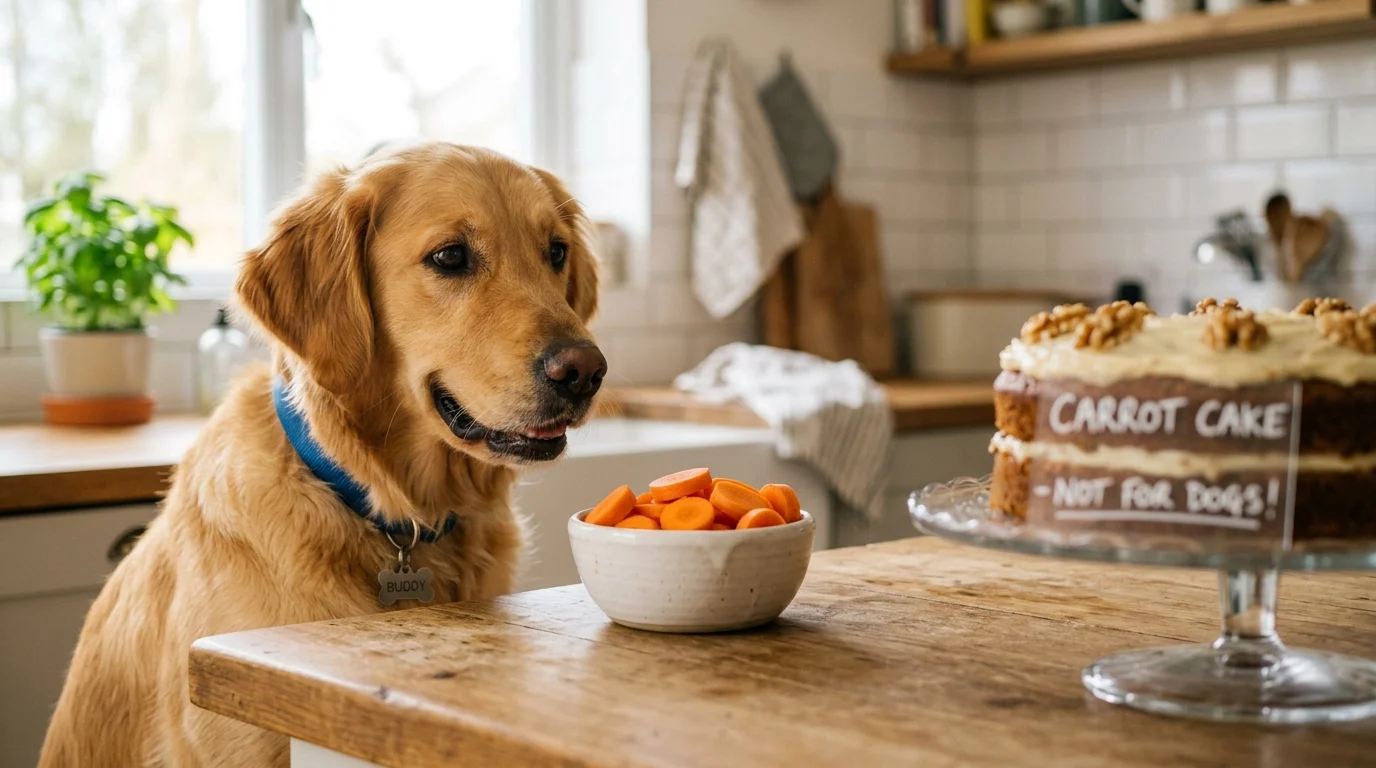
Canned carrots often contain added salt. Seasoned carrots may include garlic, onion, butter, or sugar all harmful or toxic to dogs. Carrot cake is especially dangerous due to raisins, nuts, sugar, and spices .
5. Pesticide Residue
Non-organic carrots can carry pesticide residue. Wash thoroughly or peel before serving . Organic carrots are a safer option, though not essential.
Carrot Safety Comparison Table
How Many Carrots Can Dogs Eat?
Treats including carrots should make up no more than 10% of your dog’s daily calorie intake . For a typical adult dog, that’s about 2–3 baby carrots or equivalent pieces per day, but adjust based on size and activity.
Portion guidelines for plain carrots (raw or cooked):
How often? 2–3 times per week is a safe target to prevent overdoing sugars or fiber . Start with a single small piece to check tolerance.
What to Do If My Dog Ate Too Many Carrots
If your dog sneaks an entire bag of baby carrots or a large whole carrot, follow these steps:
Step 1: Assess what was eaten
- How many? (A few extra is usually fine.)
- Whole or chopped? (Whole large carrots pose a blockage risk.)
- Were they seasoned or from a dish with onion/garlic? (If yes, call poison control immediately.)
Watch for symptoms
- Vomiting, diarrhea, excessive gas, or abdominal discomfort
- Signs of choking: gagging, pawing at the mouth, difficulty breathing
- Blockage signs: lethargy, vomiting, lack of appetite, straining to poop
Call for help if needed
- Your veterinarian – for personalized guidance.
- ASPCA Animal Poison Control: (888) 426-4435 (fee may apply)
- Pet Poison Helpline: (855) 764-7661 (fee may apply)
Do not induce vomiting unless directed by a professional especially if your dog is choking or showing signs of blockage .
Can Puppies Eat Carrots?
Yes, puppies can eat carrots too and they’re especially helpful for teething .
Key puppy tips:
- Cut into tiny pieces to prevent choking even smaller than for adult dogs .
- Cold or frozen carrot pieces can soothe sore gums .
- Introduce in moderation puppy diets are precisely formulated for growth, so treats should be minimal .
- Wait until 12–16 weeks before offering solid pieces, and always supervise.
Safe Alternatives to Carrots
If your dog isn’t a fan of carrots, try these dog-safe crunchy or soft snacks:
- Plain green beans – Low-calorie, high-fiber, and often loved raw or cooked.
- Plain cucumber slices – Cool, hydrating, and low in calories.
- Plain cooked sweet potato – Soft, digestible, rich in vitamin A and fiber.
- Plain apple slices (no seeds) – Sweet, crunchy, and packed with vitamins.
- Plain steamed broccoli – In small amounts; may cause gas in larger portions.
Frequently Asked Questions
Can dogs eat raw carrots?
Yes, raw carrots are safe and offer the best dental benefits. Always wash and cut them into small pieces to prevent choking .
Can dogs eat cooked carrots?
Yes, cooked carrots are safe and easier to digest. Steam or boil plain no oil, salt, or seasoning .
Can dogs eat carrot cake?
No. Carrot cake often contains raisins, nuts (like walnuts), sugar, butter, and spices some toxic, others high-fat and sugary .
Are carrots good for dogs’ teeth?
Raw carrots can help scrape away plaque and tartar with their crunchy texture. They’re a helpful supplement to dental care but not a replacement for brushing .
Can dogs eat carrot greens?
Yes, carrot greens are non-toxic and contain nutrients, but many dogs dislike the earthy taste. Chop them finely if you offer them .
Are carrots bad for diabetic dogs?
Carrots contain natural sugars that can affect blood glucose. Diabetic dogs can have small amounts, but check with your vet for a safe portion .
How many carrots can a small dog eat?
A small dog (under 20 lbs) can safely have 1–2 baby carrots or equivalent small slices per day, 2–3 times per week .
Can frozen carrots hurt my dog’s teeth?
Frozen carrots can be hard and may damage teeth, especially in smaller dogs. Soften them slightly, or only offer under supervision .
Final Word
So, can dogs eat carrots? Absolutely they’re a safe, healthy, and versatile treat that most pups love. Whether raw, cooked, or frozen, carrots offer vitamins, fiber, and even a little dental support. The golden rules: chop them into bite-sized pieces, serve plain, and keep portions within the 10% daily treat limit. If your dog has diabetes, pancreatitis, or a sensitive stomach, run it by your vet first. For most healthy dogs, carrots are a guilt-free, wallet-friendly way to add crunch and nutrition to snack time.
Reviewed & Recommended by Dr. Ubaidur Rahman, DVM
Veterinary Review: Dr. Ubaidur Rahman, DVM, reviewed this guide for the safety of feeding carrots to dogs, including appropriate preparation, portions, and potential digestive concerns.
Dr. Ubaidur Rahman’s Recommendation: Carrots are generally safe for dogs and can be a healthy, low-calorie treat when offered in moderation. They provide fiber and nutrients and can be served raw or cooked, but large pieces can be a choking risk, especially for small dogs. Cut carrots into appropriately sized pieces and avoid serving them with added salt, butter, or seasonings.
Sources & References
- PetMD. “Can Dogs Eat Carrots? Benefits, Risks, and Feeding Tips.”
- Chewy. “Can Dogs Eat Carrots?”
- American Kennel Club (AKC). “Can Dogs Eat Carrots?”
- Purina. “Can Dogs Eat Carrots?”
- PetSmart. “Can Dogs Eat Carrots?”
- Adopt-a-Pet. “Can Dogs Eat Carrots?”
- Dog Food Advisor. “Can Dogs Eat Carrots?”
- Dogo App. “How Many Carrots Can a Dog Eat?” (Veterinary perspective)
- Spot Pet Insurance. “Can Dogs Eat Carrots? Benefits, Risks, and How to Serve Them Safely.”
- ASPCA Animal Poison Control: (888) 426-4435
Discover More:-
- Can Dogs Eat Rib Bones? Deadly Risks & What to Do 2026
- Can Dogs Eat Chia Seeds? Benefits & Safety Guide 2026

Michael Carter, DVM is a veterinarian and pet health writer with a strong interest in canine nutrition, preventive care, and animal wellness. He is dedicated to providing pet owners with accurate, evidence-based information that helps them make informed decisions about their dogs’ health. As an author and content reviewer, Michael combines veterinary knowledge with practical insights to ensure every article is trustworthy, informative, and easy to understand.