Can Dogs Eat Rib Bones? Deadly Risks & What to Do
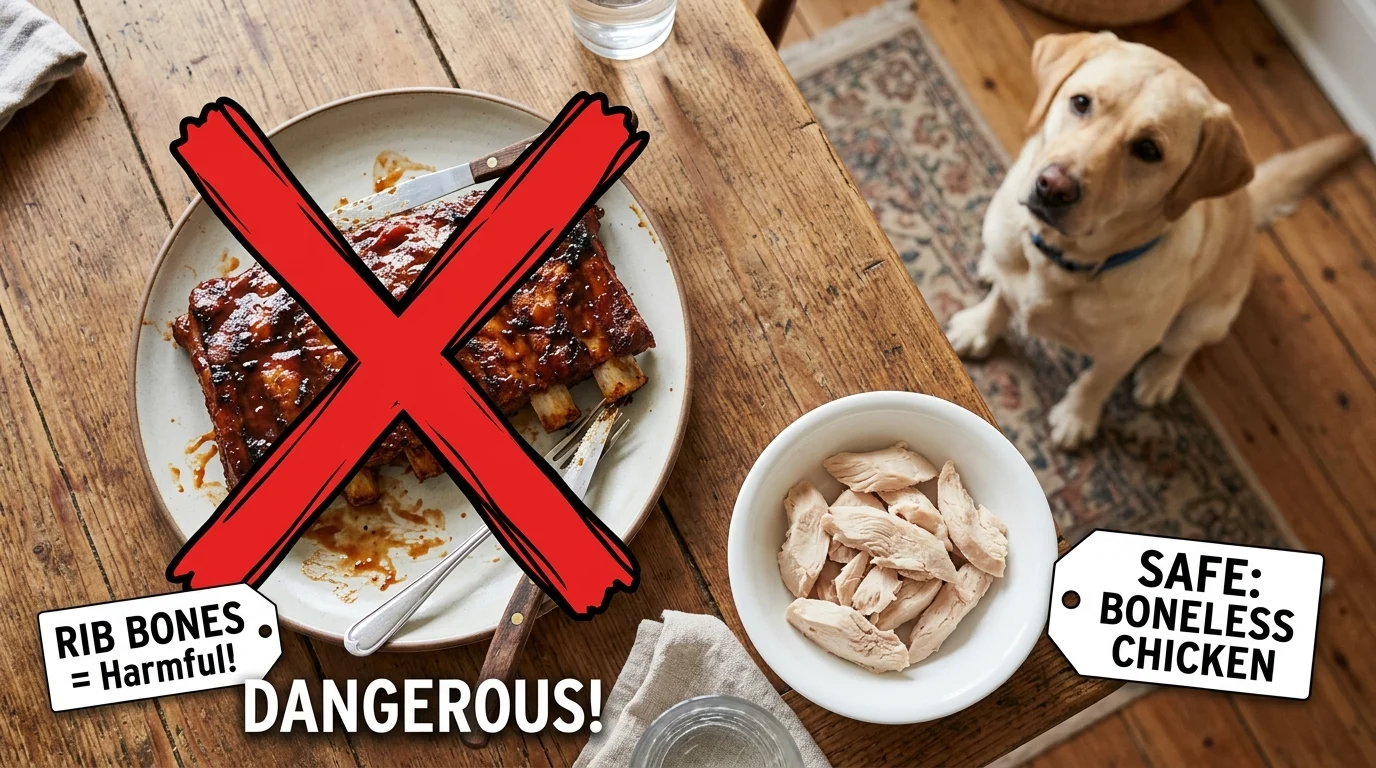
Quick Ans: No. Rib bones whether beef, pork, cooked, or raw are never safe for dogs. They splinter into sharp shards that can choke your dog, puncture their digestive tract, or cause life-threatening intestinal blockages. There is no safe way to give your dog a rib bone .
Key Takeaways
- Never feed any rib bone – Cooked bones splinter easily; raw bones carry bacteria and still pose blockage risks .
- Choking and blockage are emergencies – Bone fragments can lodge in the throat, stomach, or intestines, often requiring surgery .
- High-fat meat also risks pancreatitis – Even the rib meat itself is fatty and often seasoned with toxic garlic or onion .
You’re enjoying a rack of BBQ ribs, and your dog is giving you that look. Before you toss them a bone, stop. Despite the old saying, rib bones are one of the most dangerous things your dog can eat. Here’s why you should never share them and exactly what to do if your dog steals one anyway.
Is Rib Meat Good for Dogs?
The meat itself if plain, fully cooked, and removed from the bone can be safe in small amounts. Pork and beef rib meat provide protein, but they are also some of the fattiest cuts available .
However, the risks usually outweigh the benefits. Rib meat is often prepared with butter, salt, sugar, garlic, and onion all of which are unhealthy or toxic to dogs . If you want to give your dog a bite, it must be a tiny piece of unseasoned meat only, with absolutely no bone attached.
What Makes Rib Bones Dangerous for Dogs?
1. Splintering – The #1 Danger
Cooked rib bones become brittle and soft. When your dog chews them, they shatter into sharp, needle-like fragments . These shards can cut your dog’s mouth, throat, stomach, and intestines. This can cause internal bleeding and a life-threatening condition called peritonitis (infection in the abdominal cavity) .
2. Choking Hazard
Bone fragments can easily lodge in your dog’s throat, blocking their airway. This is a medical emergency that requires immediate intervention . Signs include gasping, pawing at the mouth, frantic behavior, and blue gums .
3. Intestinal Blockage (Obstruction)
Swallowed bone pieces can get stuck in the stomach or intestines. This prevents food and water from passing through, cutting off blood supply to the gut tissue. Blockages almost always require emergency surgery and can be fatal if untreated .
4. Pancreatitis from Fat
The meat left on rib bones is very high in fat. Eating too much fat can trigger pancreatitis a painful, potentially deadly inflammation of the pancreas . Symptoms include vomiting, severe abdominal pain, diarrhea, and lethargy.
5. Broken Teeth and Mouth Injuries
Chewing on hard bones is a common cause of fractured teeth in dogs. Broken teeth are painful and often require extraction or root canal treatment .
Rib Bone Safety Comparison Table
| Part of Rib | Toxic? | Main Risk | Verdict |
|---|---|---|---|
| Cooked rib bone | No (but structurally dangerous) | Splintering, choking, blockage, perforation | Never feed |
| Raw rib bone | No (but bacteria risk) | Blockage, perforation, Salmonella/E. coli | Never feed |
| Plain, unseasoned rib meat | No | High fat, pancreatitis risk | Occasional tiny bite only |
| Seasoned rib meat (garlic/onion) | Yes (garlic/onion) | Toxicity, pancreatitis, salt poisoning | Never feed |
| Rib bone fragments/shavings | No | Mouth cuts, esophageal tears | Never feed |
How Much Rib Bone Can Dogs Eat?
Zero. There is no safe portion size for rib bones. Even a small piece can splinter and cause fatal internal injuries .
If you’re asking about the meat: a tiny, unseasoned bite the size of a fingernail is the absolute maximum and only for healthy adult dogs with no history of pancreatitis. But honestly? It’s easier and safer to skip ribs altogether.
What to Do If My Dog Ate a Rib Bone
If your dog swallowed a rib bone, time matters. Follow these steps exactly.
Step 1: Do NOT induce vomiting
Never try to make your dog throw up a rib bone. The sharp fragments can tear the esophagus on the way back up, making things worse . Also, do not reach into their throat to pull it out unless they are actively choking and you can clearly see the object .
Step 2: Call your vet immediately
Contact your regular vet or the nearest emergency animal hospital right away. They may recommend X-rays to see where the bone is located . Depending on the size of the bone and your dog, they may suggest:
- Monitoring – if the bone is small and your dog is large
- Endoscopy – to remove the bone from the stomach without surgery
- Emergency surgery – if the bone is stuck in the intestines
Step 3: Monitor for emergency signs
Even if the vet says to watch at home, keep an eye out for:
- Vomiting (especially repeated or bloody)
- Lethargy or weakness
- Loss of appetite
- Abdominal pain (whining, panting, hunched posture)
- Straining to poop or no bowel movements
- Bloody or black, tarry stool
If any of these signs appear, go to the vet immediately .
Step 4: Call a poison helpline if your vet isn’t available
- ASPCA Animal Poison Control: (888) 426-4435 (fee applies)
- Pet Poison Helpline: (855) 764-7661 (fee applies)
What about helping them pass it? Some vets suggest feeding canned pumpkin (plain, not pie filling) to add fiber and help the bone move through . But do not give laxatives, mineral oil, or enemas at home these can cause more harm . Always check with your vet first.
Can Puppies Eat Rib Bones?
Absolutely not. Puppies have smaller, more delicate digestive tracts and are even more prone to blockages from bones . Their teeth are also softer and more likely to fracture. Keep all rib bones and any bones completely out of reach of puppies.
Safe Alternatives to Rib Bones
Your dog wants something to chew. Give them these safe options instead:
- Veterinary-approved dental chews – Safe for teeth and digestion
- Nylabone or KONG toys – Stuff with peanut butter or plain yogurt for long-lasting fun
- Bully sticks or raw-hide alternatives – Choose digestible, single-ingredient chews (supervise at all times)
- Plain cooked chicken or turkey breast – Lean protein, no bones, no seasoning
- Carrot or apple slices – Crunchy, low-calorie, and safe
A good rule: if you wouldn’t want to swallow it yourself, don’t give it to your dog .
Frequently Asked Questions
Can dogs eat cooked rib bones?
No. Cooked rib bones are more dangerous than raw ones because cooking makes them brittle. They splinter easily into sharp shards that can choke your dog or puncture their intestines .
Can dogs eat raw rib bones?
No. Raw bones carry harmful bacteria like Salmonella and E. coli, and they still pose a blockage or choking risk if swallowed . Some raw feeders give raw bones, but most veterinarians strongly advise against rib bones specifically due to their shape and density.
Can dogs eat pork rib bones?
No. Pork rib bones are just as dangerous as beef rib bones. They splinter, block intestines, and the fatty meat can trigger pancreatitis .
Can dogs eat beef rib bones?
No. Even though beef rib bones are larger, they still splinter and can cause choking, perforation, or blockage. Size does not make them safe .
Can dogs eat rib meat?
Yes, but only if it’s plain, fully cooked, and completely removed from the bone and even then, only in tiny amounts due to high fat content. Seasoned or sauced rib meat is toxic .
What happens if a dog eats a rib bone?
They can choke, suffer cuts to their mouth or esophagus, develop an intestinal blockage, or experience a perforated gut. All of these are medical emergencies that can be fatal if untreated .
My dog ate a rib bone and seems fine should I still worry?
Yes. Bones can take days to cause blockages. Even if your dog seems normal, the bone could be stuck or slowly causing damage. Call your vet for advice .
How long after eating a bone will a dog show symptoms?
Symptoms can appear within minutes (choking) or take 24–72 hours (blockages, perforations, or pancreatitis). Monitor closely for several days .
Can Dogs Eat Bones?
Dogs can eat some raw bones under proper supervision, but cooked bones should never be given because they can splinter and cause choking, internal injuries, or digestive blockages.
Can Dogs Eat Chicken Bones?
No, dogs should not eat cooked chicken bones because they can splinter easily and cause choking, mouth injuries, or serious damage to the stomach and intestines. If your dog swallows one, monitor them closely and contact your veterinarian if any symptoms develop.
Final Word
So, can dogs eat rib bones? The short, simple, life-saving answer is no in any form, cooked or raw. The risks of choking, intestinal perforation, and blockage are too high. Even the fatty meat on ribs can cause pancreatitis. If your dog eats a rib bone, don’t wait for symptoms call your vet immediately. When it comes to bones, the safest bone is the one in the trash securely out of reach of your four-legged counter-surfer.
Reviewed & Recommended by Dr. Ubaidur Rahman, DVM
Veterinary Review: Dr. Ubaidur Rahman, DVM, reviewed this guide for the safety risks associated with feeding rib bones to dogs, including choking, broken teeth, and gastrointestinal injury.
Dr. Ubaidur Rahman’s Recommendation: I do not recommend giving dogs rib bones, particularly cooked rib bones. Cooked bones can become brittle and splinter into sharp pieces that may cause choking, mouth injuries, intestinal blockage, or damage to the digestive tract. Raw rib bones may also carry risks, including bacterial contamination, broken teeth, and choking.
Sources & References
- PetMD. “Can Dogs Eat Rib Bones?” – Reviewed by Jo Cornett, DVM. November 2024
- San Francisco SPCA. “What Bones Can Dogs Eat?” November 2025
- Dogster. “My Dog Ate a Rib Bone, What Should I Do? Our Vet Explains.” – Dr. Kim Podlecki, DVM. June 2026
- American Kennel Club (AKC). “Can Dogs Eat Rib Bones?”
- JustAnswer. “My Dog Ate Pork Rib Bones Four Days Ago.” – Dr. Ivana, DVM. April 2025
- Adopt a Pet. “Can Dogs Eat Rib Bones?” – Dr. Amy Fox, DVM. May 2024
- JustAnswer. “My Dog Ate a Baby Back Rib Bone.” – Dr. Jill, DVM. September 2024
- The Dodo. “Can Dogs Eat Rib Bones?” – Dr. Michelle Burch, DVM & Dr. Sara Ochoa, DVM
- Dogster. “Can Dogs Eat Ribs? Vet-Verified Nutrition Facts.” – February 2025
- ASPCA Animal Poison Control: (888) 426-4435
- Pet Poison Helpline: (855) 764-7661
Discover More:-
- Can Dogs Eat Okra? Vet-Approved Benefits, Risks & Safe Feeding Guide 2026
- Can Dogs Eat Jackfruit? The Truth Every Dog Owner Needs to Know 2026

Michael Carter, DVM is a veterinarian and pet health writer with a strong interest in canine nutrition, preventive care, and animal wellness. He is dedicated to providing pet owners with accurate, evidence-based information that helps them make informed decisions about their dogs’ health. As an author and content reviewer, Michael combines veterinary knowledge with practical insights to ensure every article is trustworthy, informative, and easy to understand.