
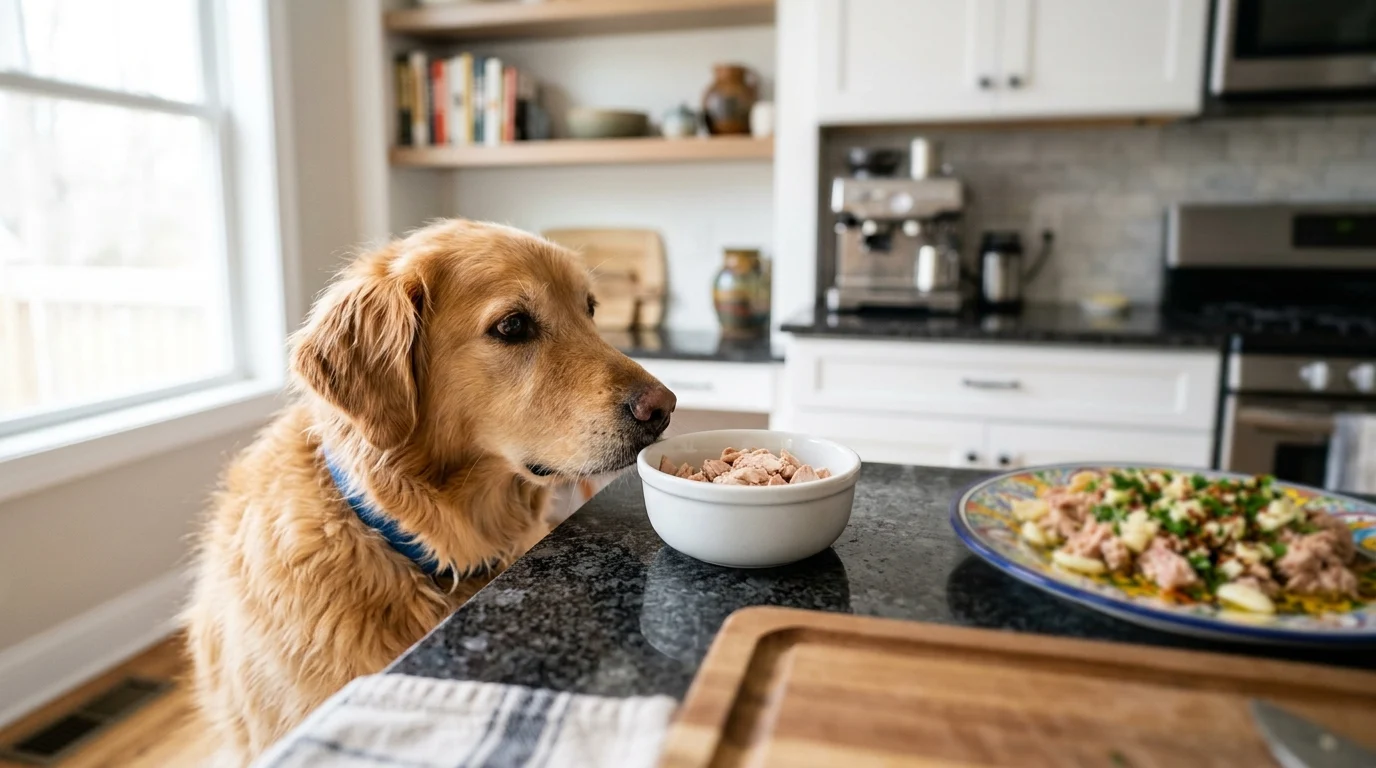
Can Dogs Eat Tuna? Safety & Mercury Risks
Quick Ans: Yes, but only in very small amounts as an occasional treat. Tuna is not toxic, but it contains high mercury levels that can build up over time . Feed only plain, water-packed canned tuna or fully cooked fresh tuna. Avoid albacore, oil-packed, or seasoned tuna entirely .
Key Takeaways
- Mercury is the main concern – Tuna is a large, long-living fish that accumulates mercury. Too much can cause neurological damage .
- Choose skipjack or light tuna – These have lower mercury than albacore or yellowfin. Never feed bigeye or bluefin tuna .
- Tiny portions only – A few flakes for small dogs, up to a tablespoon for large dogs. Once a week maximum, if at all .
Tuna is a pantry staple in many homes, and its strong, fishy scent can make even the pickiest dog beg. It’s packed with protein and omega-3s, so it must be good for them, right? Not exactly. While a tiny bite won’t hurt, there are serious risks to consider before sharing your tuna sandwich. Here’s what every dog owner needs to know.
Is Tuna Good for Dogs?
Tuna does offer some nutritional benefits. It’s a lean protein source rich in omega-3 fatty acids, which support healthy skin, a shiny coat, and joint function . It also contains essential vitamins and minerals like vitamin B12, selenium, and niacin .
However, these benefits come with a catch. Your dog already gets all the nutrients they need from high-quality commercial dog food . The nutritional boost from a tiny piece of tuna is negligible, while the risks can be significant. Think of tuna as a “sometimes food” with very strict rules.
What Makes Tuna Risky for Dogs?
1. Mercury Poisoning – The Biggest Threat
This is the number one reason to be cautious. Tuna are large, predatory fish that live a long time, sometimes up to 40 years . As they age, they accumulate mercury from the fish they eat. Mercury is a heavy metal that is toxic to the nervous system and kidneys . Because dogs are smaller and metabolize substances differently than humans, they are more sensitive to mercury . Even small amounts can be dangerous if fed regularly.
Signs of mercury poisoning in dogs include :
- Tremors or seizures
- Loss of coordination
- Vomiting (possibly with blood)
- Watery diarrhea
- Lethargy or anxiety
- Loss of vision
- Kidney damage
2. High Sodium Content – Especially in Canned Tuna
Canned tuna is often packed in brine (salt water) or has added salt for flavor. Too much salt can cause excessive thirst, vomiting, diarrhea, and in severe cases, salt toxicosis, which can be fatal . Always choose tuna canned in spring water with no added salt .
3. Seasonings and Oil – Digestive Upset and Pancreatitis
Tuna prepared for humans often contains butter, oil, garlic, onion, or spices. Garlic and onion are toxic to dogs and can cause anemia . Oil and butter add unnecessary fat that can trigger pancreatitis, a painful and potentially fatal inflammation of the pancreas .
4. Parasites and Bacteria – Raw Tuna Risk
Never feed raw tuna. Raw fish can carry harmful bacteria like Salmonella, Listeria, and parasites that can cause severe food poisoning . The American Veterinary Medical Association does not recommend feeding raw animal products to dogs .
5. Bones – Choking Hazard
Fresh tuna steaks may contain small bones that can get stuck in your dog’s throat, mouth, or digestive tract. Always check thoroughly and remove any bones before serving cooked tuna .
Tuna Safety Comparison Table
| Form of Tuna | Toxic? | Main Risk | Verdict |
|---|---|---|---|
| Light/Skipjack (canned in water) | No | Mercury | Safe in tiny amounts, occasionally |
| Albacore tuna | No (but high mercury) | Mercury poisoning | Avoid |
| Bluefin/Bigeye tuna | No (but very high mercury) | Mercury poisoning | Never feed |
| Tuna in oil | No (but harmful) | Pancreatitis, stomach upset | Avoid |
| Tuna in brine/salt | No (but harmful) | Salt poisoning | Avoid |
| Tuna with garlic/onion | Yes | Anemia, toxicity | Never feed |
| Raw tuna | No (but pathogens) | Salmonella, parasites | Never feed |
| Tuna mayo | No (but harmful) | Pancreatitis, high fat | Avoid |
How Much Tuna Can Dogs Eat?
The answer is very little, and as rarely as possible. Use the 10% treat rule for all treats combined.
Portion guidelines for plain, cooked tuna or water-packed skipjack:
| Dog Size | Examples | Max Portion (per serving) | Frequency |
|---|---|---|---|
| Extra-small (2–20 lbs) | Chihuahua, Yorkie, Pug | 1 teaspoon | Once a week max |
| Small (21–30 lbs) | Beagle, Miniature Poodle | 1–2 teaspoons | Once a week max |
| Medium (31–50 lbs) | Cocker Spaniel, Border Collie | 1 tablespoon | Once a week max |
| Large (51–90 lbs) | Lab, Golden Retriever | 2 tablespoons | Once a week max |
| Extra-large (91+ lbs) | Great Dane, Mastiff | ¼ cup | Once a week max |
Many veterinarians recommend not feeding tuna at all due to the risks . If you choose to offer it, err on the side of less.
What to Do If My Dog Ate Too Much Tuna
If your dog snagged a small piece of plain tuna from your plate, don’t panic. A tiny amount will not cause mercury poisoning . However, if they ate a large amount, especially of albacore or seasoned tuna, monitor them closely.
Step 1: Assess what they ate
- Type of tuna (skipjack vs. albacore vs. raw)
- Quantity consumed
- Seasonings or oil involved
Watch for symptoms
- Vomiting, diarrhea, lethargy
- Excessive thirst or urination (from salt)
- Tremors, incoordination, or anxiety
- Signs of mercury poisoning can take time to appear but watch for the first 24–48 hours
Call for help if needed
- Your veterinarian – if symptoms appear or a large amount was consumed.
- ASPCA Animal Poison Control: (888) 426-4435 (fee may apply)
- Pet Poison Helpline: (855) 764-7661 (fee may apply)
Can Puppies Eat Tuna?
Never feed tuna to puppies. Puppies and young dogs are smaller and still developing. They are much more sensitive to the effects of mercury . Mercury poisoning can have severe developmental consequences. Stick to puppy-formulated food and avoid any unnecessary risks .
Safe Alternatives to Tuna
If you want to give your dog a fishy treat, choose a type with much lower mercury levels:
- Salmon – Rich in omega-3s, lower in mercury. Always cook thoroughly.
- Sardines (canned in water) – Small fish, much lower in mercury. Mash or chop to avoid choking.
- Whitefish – Lean and safe. Common in many commercial dog foods.
- Herring – Excellent omega-3 source and low in mercury.
- Flounder or Cod – Easy to digest and low in mercury.
Frequently Asked Questions
Can dogs eat canned tuna?
Yes, but choose tuna packed in spring water with no added salt. Avoid tuna in oil or brine. Even then, limit portions to a rare treat .
Can dogs eat albacore tuna?
No. Albacore has higher mercury levels than skipjack or light tuna. It’s best to avoid it entirely .
Can dogs eat raw tuna?
No. Raw tuna can contain harmful bacteria, parasites, and has even higher mercury levels than cooked tuna. Always cook it thoroughly .
Is tuna good for dogs with kidney disease?
No. Tuna’s mercury and potassium content can be harmful to dogs with kidney issues. Consult your vet before offering any fish to a dog with kidney disease .
Can dogs eat tuna with mayonnaise?
No. Mayonnaise adds unnecessary fat and calories that can trigger pancreatitis or stomach upset. Stick to plain tuna .
How much tuna can a dog eat per week?
A small dog might have one teaspoon once a week. A larger dog might have up to a tablespoon. However, many vets recommend against feeding it at all .
What are the signs of mercury poisoning in dogs?
Signs include tremors, loss of coordination, vomiting, diarrhea, lethargy, and in severe cases, blindness or kidney failure. Contact your vet immediately if you see these symptoms .
Is tuna safe for dogs with pancreatitis?
No. The fat content, especially from oil-packed tuna, can trigger painful pancreatitis flare-ups. Avoid tuna entirely for dogs with a history of pancreatitis,
Can Dogs Eat Canned Tuna in Water?
Yes, dogs can eat canned tuna in water in small amounts as an occasional treat. Choose plain tuna packed in water with no added salt, seasonings, or oils, and avoid feeding it regularly because of its mercury content.
Can Dogs Eat Tuna in Water?
Yes, plain tuna in water is generally safe for dogs when served in moderation. It should only be an occasional snack and not a regular part of your dog’s diet due to the risk of mercury buildup.
Final Word
Can dogs eat tuna? The safest answer is “just skip it.” While a tiny, plain piece of skipjack tuna once in a blue moon isn’t likely to cause harm, the risks of mercury poisoning simply aren’t worth it. There are many other safer fish options like salmon or sardines that offer similar omega-3 benefits without the same concern. If you do share a bite, keep it microscopic, avoid all seasonings and oil, and never offer it regularly. For peace of mind, stick to vet-approved dog treats and a complete, balanced diet.
Veterinary Recommendation — Dr. Ubaidur Rahman, DVM
Tuna can be safe for dogs in small amounts when it is fully cooked and served plain, but it should be an occasional treat rather than a regular part of their diet. Tuna can contain higher levels of mercury than some other fish, so frequent feeding may increase the risk of mercury exposure.
If you give your dog tuna, choose plain tuna packed in water without added salt, oils, sauces, or seasonings. Avoid raw tuna and carefully check for bones. For regular fish in a dog’s diet, lower-mercury options such as salmon or whitefish may be a better choice.
Sources & References
- Dogster. “Can Dogs Eat Tuna? Vet-Verified Health & Nutrition Facts.”
- Purina. “Can Dogs Eat Tuna? When Can Tuna Be Dangerous?”
- Spot Pet Insurance. “Can Dogs Eat Tuna? A Complete Guide to Benefits, Risks & How to Feed.”
- Adopt a Pet. “Can Dogs Eat Tuna?” – Dr. Gabrielle Fadl, DVM.
- Natures Menu. “Can dogs eat tuna?”
- American Kennel Club. “Can Dogs Eat Tuna?”
- PetCloud. “Can Dogs Eat Tuna?”
- Wag! “Can Dogs Eat Tuna?” – Dr. Linda Simon, MVB MRCVS.
- YuMOVE. “Can Dogs Eat Tuna? Benefits & Advice.”
- ManyPets. “Can dogs or cats eat tuna?”
- PetMD. “Can Dogs Eat Tuna?”
- ASPCA Animal Poison Control: (888) 426-4435
- Pet Poison Helpline: (855) 764-7661

Dr. Ubaid Ur Rehman, DVM is a qualified veterinarian with expertise in pet health, nutrition, and preventive care. He is passionate about helping pet owners make informed decisions through accurate, research-based, and practical advice. As a veterinary professional, he reviews and contributes content to ensure reliable information for dog and pet owners.