
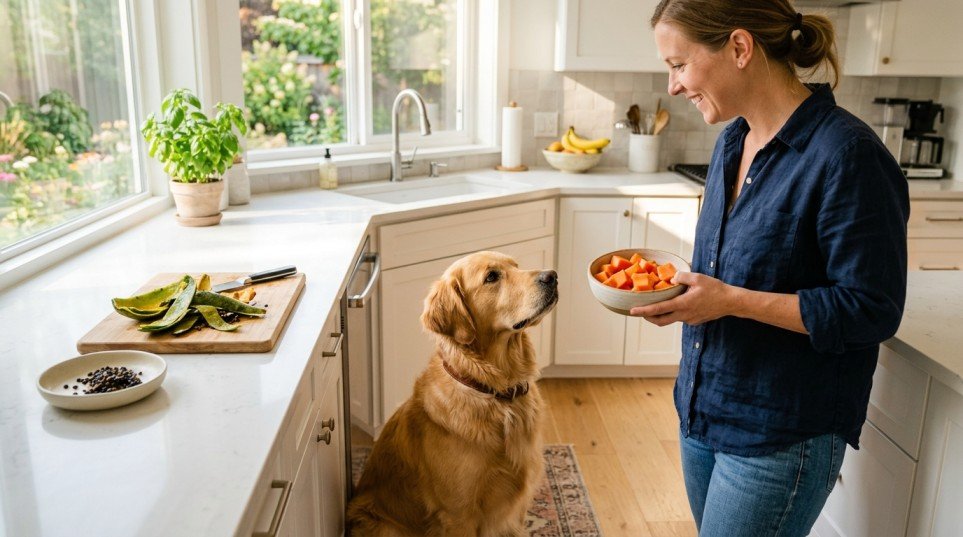
Can Dogs Eat Papaya? Vet-Approved Benefits, Risks & Feeding Guide
Quick Answer: Fresh, ripe papaya flesh is generally safe and can be a healthy occasional treat for most dogs. However, papaya seeds and skin should be removed before feeding because they can create digestive issues and potential choking hazards.
You’re cutting up a fresh papaya and your dog is staring at you with those impossible-to-ignore eyes. Naturally, the question comes up: can dogs eat papaya safely?
The short answer is yes. Papaya is generally safe for dogs when served properly and in moderation. In fact, this tropical fruit contains vitamins, fiber, antioxidants, and digestive enzymes that may offer health benefits for some dogs.
However, not every part of the papaya is safe. The seeds, skin, and large quantities of fruit can create problems ranging from digestive upset to intestinal blockage. Knowing how to prepare and serve papaya correctly is the difference between a healthy treat and an unnecessary trip to the vet.
This guide covers everything dog owners actually search for: whether papaya is safe, nutritional benefits, potential risks, how much dogs can eat, whether puppies can have papaya, and the best ways to serve it.
Can Dogs Eat Papaya? The Short Answer
Yes, dogs can eat ripe papaya in moderation.
Papaya should never replace a complete and balanced dog food diet. Think of it as an occasional treat rather than a daily staple.
The safest option is plain, ripe papaya cut into small bite-sized pieces appropriate for your dog’s size.
Is Papaya Good for Dogs?
Papaya contains several nutrients that can support overall health when fed appropriately.
1. Rich in Vitamin C
Papaya contains significant amounts of vitamin C, an antioxidant that helps combat free radicals within the body.
While dogs naturally produce vitamin C, additional dietary sources may provide extra antioxidant support, particularly for active and senior dogs.
Potential benefits include:
- Immune system support
- Cellular protection
- Healthy aging support
- Antioxidant activity
2. Contains Vitamin A
Vitamin A plays an important role in:
- Vision health
- Skin health
- Immune function
- Cellular growth
Papaya naturally contains beta-carotene, which contributes to its bright orange color and nutritional value.
3. Provides Dietary Fiber
Fiber supports digestive health and can help maintain regular bowel movements.
Moderate fiber intake may help:
- Promote healthy digestion
- Support gut health
- Improve stool consistency
- Increase feelings of fullness
Too much fiber, however, can cause digestive upset.
4. Contains Digestive Enzymes
One of papaya’s most unique features is papain, a natural digestive enzyme.
Papain helps break down proteins and has made papaya popular in many digestive health discussions.
Although research on direct canine benefits is limited, many dog owners report that small amounts of papaya are easy for their dogs to digest.
Nutritional Value of Papaya
Papaya is relatively low in calories while providing valuable nutrients.
Key nutrients include:
| Nutrient | Benefit |
|---|---|
| Vitamin C | Antioxidant support |
| Vitamin A | Vision and immune health |
| Fiber | Digestive support |
| Potassium | Muscle and nerve function |
| Folate | Cellular health |
| Magnesium | Metabolic processes |
| Antioxidants | Cellular protection |
Compared to many commercial treats, fresh papaya can be a lower-calorie option.
Is Papaya Safe for Dogs?
For most healthy dogs, ripe papaya flesh is considered safe.
Safety depends on:
- Proper preparation
- Appropriate portion size
- Individual tolerance
- Existing health conditions
Most problems associated with papaya occur when dogs consume the seeds, skin, or excessive amounts of fruit.
Risks of Feeding Papaya to Dogs
Although papaya is generally safe, there are important risks dog owners should understand.
1. Papaya Seeds Can Be Dangerous
Papaya seeds should always be removed.
Potential concerns include:
- Choking hazard
- Digestive irritation
- Intestinal blockage in smaller dogs
- Difficulty digesting large quantities
A few accidentally swallowed seeds may not cause problems, but intentionally feeding them is not recommended.
2. The Skin Can Cause Digestive Problems
Papaya skin is tough and difficult for dogs to digest.
Potential issues include:
- Choking
- Vomiting
- Digestive discomfort
- Intestinal obstruction in severe cases
Only the soft inner flesh should be offered.
3. Too Much Can Cause Stomach Upset
Even healthy foods can cause problems when overfed.
Excess papaya may lead to:
- Diarrhea
- Gas
- Bloating
- Stomach discomfort
- Loose stools
Moderation is important.
4. Natural Sugar Content
Papaya contains natural sugars.
While lower in sugar than some fruits, large quantities may not be ideal for:
- Diabetic dogs
- Heavy dogs
- Dogs on calorie-restricted diets
Consult your veterinarian if your dog has a medical condition affecting blood sugar regulation.
Can Puppies Eat Papaya?
Yes, puppies can generally eat small amounts of ripe papaya.
However, puppies have more sensitive digestive systems than adult dogs.
If introducing papaya to a puppy:
- Start with a very small amount
- Remove all seeds
- Remove the skin
- Monitor for digestive changes
- Avoid introducing multiple new foods at once
Puppies should receive most of their nutrition from a complete puppy-specific diet.
Treats should make up only a small percentage of daily calorie intake.
How Much Papaya Can Dogs Eat?
The appropriate amount depends on your dog’s size.
Here is a practical guideline:
| Dog Size | Suggested Serving |
|---|---|
| Under 10 lbs | 1–2 small cubes |
| 11–25 lbs | 2–4 small cubes |
| 26–50 lbs | 4–6 small cubes |
| 51–80 lbs | Small handful |
| Over 80 lbs | Moderate handful |
These amounts should be offered occasionally rather than daily.
Remember that treats, including fruit, should generally make up no more than 10% of a dog’s daily calories.
Best Ways to Feed Papaya to Dogs
There are several safe ways to serve papaya.
Fresh Papaya Chunks
This is the simplest option.
Steps:
- Wash thoroughly
- Remove seeds
- Remove skin
- Cut into bite-sized pieces
- Serve fresh
Most dogs enjoy the naturally sweet taste.
Frozen Papaya Treats
Frozen papaya can be refreshing during warm weather.
Benefits include:
- Cooling effect
- Longer chewing time
- Fun enrichment activity
Simply freeze small papaya cubes before serving.
Papaya Mixed With Dog Food
A few small pieces can be mixed into regular meals for variety.
This method may be particularly appealing for picky eaters.
Homemade Fruit Treats
Papaya can be combined with dog-safe fruits such as:
- Blueberries
- Strawberries
- Watermelon
- Apples (without seeds)
Keep portions moderate and avoid adding sugar.
Can Dogs Eat Dried Papaya?
Dried papaya is not the best choice.
Many commercial dried papaya products contain:
- Added sugar
- Preservatives
- Artificial flavorings
- Sweeteners
These ingredients reduce the health benefits and may contribute to weight gain.
Fresh papaya is the healthier option.
Can Dogs Eat Green Papaya?
Ripe papaya is generally preferred.
Unripe green papaya may be harder to digest and can sometimes cause stomach upset.
For maximum safety:
- Choose ripe fruit
- Use soft orange flesh
- Avoid unripe portions
Ripe papaya is easier on the digestive system and usually more appealing to dogs.
Signs Your Dog Ate Too Much Papaya
Most dogs tolerate small servings well.
However, excessive consumption may cause:
- Diarrhea
- Soft stools
- Vomiting
- Gas
- Abdominal discomfort
- Reduced appetite
These symptoms are usually mild and temporary.
Contact your veterinarian if symptoms are severe or persistent.
When to Call a Vet
Seek veterinary advice if:
- Your dog ate a large quantity of papaya seeds
- Your dog consumed significant amounts of skin
- Vomiting becomes severe
- Diarrhea persists longer than 24 hours
- Your dog appears lethargic
- Signs of intestinal blockage develop
- Your dog has underlying medical conditions
Prompt evaluation is especially important for small dogs and puppies.
Papaya vs Other Fruits for Dogs
Many dog owners compare papaya with other popular fruits.
| Fruit | Safe for Dogs? | Notes |
|---|---|---|
| Papaya | Yes | Remove seeds and skin |
| Apple | Yes | Remove seeds and core |
| Blueberries | Yes | Excellent low-calorie treat |
| Watermelon | Yes | Remove seeds and rind |
| Banana | Yes | Higher sugar content |
| Mango | Yes | Remove pit and skin |
| Grapes | No | Toxic to dogs |
Papaya ranks among the safer fruit options when served properly.
Frequently Asked Questions About Dogs and Papaya
Can dogs eat papaya every day?
Occasional servings are generally better than daily feeding. Papaya should remain a treat rather than a regular dietary component.
Can dogs eat papaya seeds?
No. Papaya seeds should be removed before feeding due to choking and digestive risks.
Can dogs eat papaya skin?
No. The skin is difficult to digest and may increase the risk of choking or intestinal blockage.
Is papaya good for dogs with constipation?
The fiber and moisture content may support digestive regularity in some dogs. However, chronic constipation should be evaluated by a veterinarian.
Can diabetic dogs eat papaya?
Possibly, but only under veterinary guidance. Papaya contains natural sugars that may affect blood glucose management.
Can papaya cause diarrhea in dogs?
Yes. Eating too much papaya can lead to loose stools and digestive upset.
What fruits are healthiest for dogs?
Blueberries, apples, watermelon, strawberries, and papaya are generally considered among the safest fruit treats when properly prepared.
How to Safely Introduce Papaya to Your Dog
Follow these steps:
- Start with a very small piece.
- Wait 24 hours before offering more.
- Monitor stool quality.
- Watch for vomiting or digestive upset.
- Increase slowly if tolerated.
- Always remove seeds and skin.
Introducing new foods gradually helps reduce digestive issues.
Final Word: Papaya Can Be a Healthy Treat When Served Correctly
Papaya is one of the many fruits that dogs can safely enjoy in moderation. Its vitamins, antioxidants, fiber, and natural digestive enzymes make it an appealing occasional treat for many dogs.
The key is preparation. Always remove the seeds and skin, serve only ripe fruit, and keep portions appropriate for your dog’s size.
While papaya can be a nutritious addition to your dog’s treat rotation, it should never replace a complete and balanced canine diet. If your dog has diabetes, digestive disorders, food sensitivities, or other medical conditions, consult your veterinarian before introducing new foods.
When served responsibly, papaya can be a safe, refreshing, and healthy snack that many dogs genuinely enjoy.
Reviewed & Recommended by Dr. Ubaidur Rahman, DVM
Veterinary Review: Dr. Ubaidur Rahman, DVM, reviewed this guide for veterinary accuracy, food safety, and the recommendations about feeding papaya to dogs.
Dr. Ubaidur Rahman’s Recommendation: Ripe, plain papaya can generally be given to healthy dogs in small amounts. It contains fiber and nutrients, but too much may cause digestive upset because of its fiber and natural sugar content. Always remove the seeds and tough skin before offering papaya, and cut the flesh into small, manageable pieces.
Discover More:-
- Can Dogs Eat Yogurt? Benefits, Risks, Safe Types & Vet Advice 2026
- Can Dogs Eat Beans? Safe Types, Benefits, Risks, and Feeding Guide 2026

Dr. Ubaid Ur Rehman, DVM is a qualified veterinarian with expertise in pet health, nutrition, and preventive care. He is passionate about helping pet owners make informed decisions through accurate, research-based, and practical advice. As a veterinary professional, he reviews and contributes content to ensure reliable information for dog and pet owners.