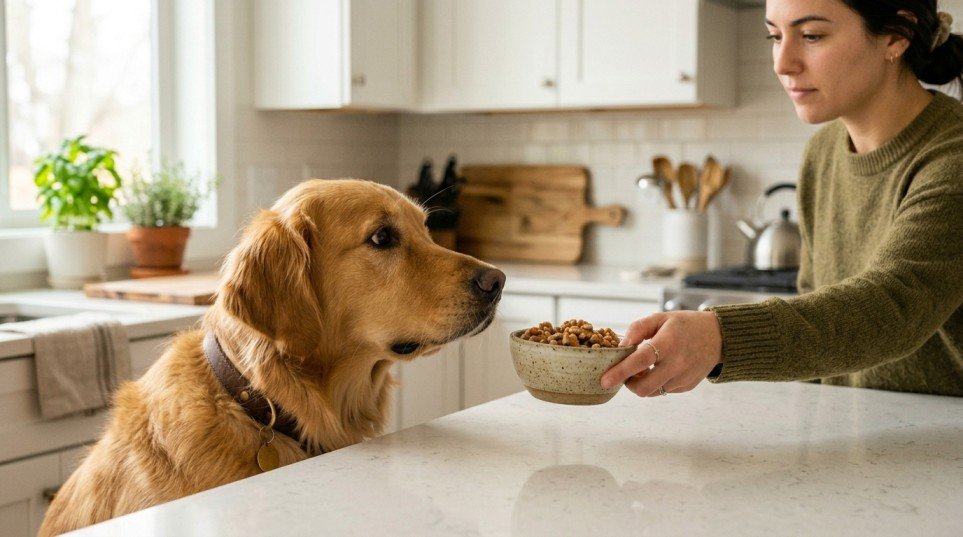
Can Dogs Eat Walnuts Safely? Everything Dog Owners Need to Know
Quick Answer: A single fresh walnut may not cause serious harm in a healthy large dog, but walnuts are not considered a safe snack. They are high in fat, difficult to digest, and may contain molds that produce dangerous toxins. Moldy walnuts can cause severe neurological symptoms and require immediate veterinary attention.
Your dog found a walnut on the floor, snatched one from a snack bowl, or managed to raid a bag of mixed nuts. Now you’re wondering: can dogs eat walnuts, or is this an emergency?
The answer is more complicated than a simple yes or no. While plain fresh walnuts are not considered highly toxic in the same way as some foods, they are not recommended for dogs and can pose several serious risks. Certain walnuts can contain dangerous molds and toxins, while even ordinary walnuts may cause digestive upset, intestinal blockage, or pancreatitis.
This guide covers everything dog owners actually search for: whether walnuts are safe for dogs, what happens if a dog eats walnuts, how many walnuts are dangerous, symptoms to watch for, when to call a vet, and safer alternatives for canine treats.
Can Dogs Eat Walnuts? The Short Answer
Dogs should not eat walnuts.
If your dog ate a walnut, the most important factors are:
- How many walnuts were eaten
- Whether they were fresh or moldy
- Your dog’s size
- Whether symptoms are present
Most veterinarians recommend avoiding walnuts altogether and choosing safer treats instead.
Why Are Walnuts Risky for Dogs?
1. High Fat Content
Walnuts contain large amounts of fat.
While healthy fats can benefit humans, dogs often struggle with sudden high-fat foods.
Eating walnuts may trigger:
- Vomiting
- Diarrhea
- Stomach discomfort
- Pancreatitis
Pancreatitis is a painful inflammation of the pancreas that can become a serious medical emergency.
Dogs with previous digestive issues face even greater risks.
2. Mold Toxicity Is the Biggest Concern
The greatest danger isn’t always the walnut itself.
Walnuts that have been sitting outdoors or stored improperly can develop mold.
Some molds produce tremorgenic mycotoxins, which can affect a dog’s nervous system.
These toxins may cause:
- Tremors
- Muscle twitching
- High fever
- Seizures
- Loss of coordination
Dogs often find fallen walnuts in yards, parks, and gardens, making mold exposure a common concern.
A moldy walnut can be far more dangerous than a fresh one.
3. Choking Hazard
Whole walnuts are relatively large and hard.
Small and medium-sized dogs may have difficulty chewing them properly.
This creates risks such as:
- Choking
- Airway obstruction
- Difficulty swallowing
The danger increases when dogs swallow walnuts whole.
4. Intestinal Blockage
Walnuts are difficult to digest.
Large pieces can become lodged within the digestive tract, particularly in small dogs.
Potential signs of blockage include:
- Vomiting
- Loss of appetite
- Abdominal pain
- Constipation
- Lethargy
Intestinal obstructions often require emergency surgery.
Are Certain Types of Walnuts More Dangerous?
Not all walnuts present the same level of risk.
English Walnuts
English walnuts are the type most commonly sold in grocery stores.
These are generally less dangerous than black walnuts but are still not recommended.
Risks include:
- Digestive upset
- Pancreatitis
- Choking
- Blockage
Black Walnuts
Black walnuts are significantly more concerning.
These walnuts commonly grow in yards and wooded areas.
Black walnuts frequently develop mold that produces neurological toxins.
Dogs that consume black walnuts are more likely to experience:
- Tremors
- Weakness
- Neurological symptoms
- Emergency complications
Veterinarians typically treat black walnut ingestion more aggressively than ordinary walnut ingestion.
What Happens If a Dog Eats a Walnut?
The outcome depends on several factors.
Scenario 1: One Fresh Walnut
Many large healthy dogs may experience no symptoms or only mild stomach upset.
Possible effects:
- Mild nausea
- Soft stool
- Temporary gas
Monitoring is usually recommended.
Scenario 2: Several Walnuts
Multiple walnuts increase the likelihood of:
- Vomiting
- Diarrhea
- Pancreatitis
- Digestive discomfort
Veterinary consultation becomes more important.
Scenario 3: Moldy Walnuts
Mold exposure changes the situation entirely.
Potential symptoms include:
- Tremors
- Fever
- Hyperactivity
- Seizures
- Collapse
This should be treated as an emergency.
Scenario 4: Small Dog Ate Walnuts
Small dogs face greater risks from:
- Choking
- Intestinal blockage
- Toxicity concentration
Even a few walnuts may warrant immediate veterinary advice.
How Many Walnuts Are Dangerous for Dogs?
There is no universally safe number.
Risk depends on:
- Dog size
- Walnut type
- Presence of mold
- Overall health
General guidance:
| Dog Size | Risk Level |
|---|---|
| Under 10 lbs | High risk from even one walnut |
| 10–30 lbs | Several walnuts may cause problems |
| 30–60 lbs | Moderate risk depending on quantity |
| Over 60 lbs | Lower toxicity risk but still vulnerable to digestive complications |
Because mold contamination cannot always be seen, caution is always recommended.
Symptoms to Watch For After Walnut Ingestion
Symptoms may appear within a few hours or develop gradually over a day.
Mild Symptoms
- Upset stomach
- Gas
- Mild diarrhea
- Reduced appetite
- Nausea
Moderate Symptoms
- Repeated vomiting
- Persistent diarrhea
- Abdominal discomfort
- Lethargy
- Excessive drooling
Severe Symptoms
- Tremors
- Muscle twitching
- Difficulty walking
- High fever
- Seizures
- Collapse
Neurological symptoms should always be considered an emergency.
What Should You Do If Your Dog Eats Walnuts?
Step 1: Determine What Type of Walnut Was Eaten
Try to identify:
- English walnut
- Black walnut
- Unknown walnut
If identification is impossible, assume caution.
Step 2: Estimate the Amount
Consider:
- One walnut
- Several walnuts
- Large quantity
The more consumed, the greater the risk.
Step 3: Look for Mold
Signs of mold may include:
- Fuzzy growth
- Dark discoloration
- Musty smell
- Outdoor fallen walnuts
If mold is suspected, contact a veterinarian immediately.
Step 4: Monitor for Symptoms
Watch closely for:
- Vomiting
- Diarrhea
- Tremors
- Weakness
- Changes in behavior
Document the time of ingestion and any symptoms.
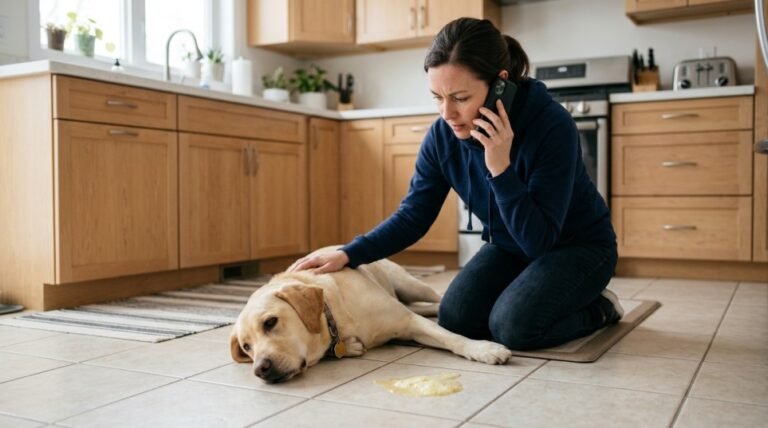
Step 5: Call Your Veterinarian
Contact your veterinarian if:
- Your dog ate multiple walnuts
- Mold may be present
- Your dog is small
- Symptoms appear
- You are unsure what was eaten
When it comes to walnuts, early guidance is always preferable to waiting.
Home Remedies: What Helps and What Doesn’t
Many owners search for home remedies after discovering their dog ate walnuts.
The answer requires important context.
What You Can Do
Provide Fresh Water
Hydration supports digestion and overall health.
Allow your dog free access to water.
Monitor Closely
Observe for:
- Vomiting
- Diarrhea
- Tremors
- Behavior changes
Feed Normal Meals Unless Directed Otherwise
Avoid experimenting with unusual foods or supplements.
Follow veterinary guidance if symptoms develop.
What NOT to Do
Do Not Induce Vomiting Without Veterinary Instruction
Inducing vomiting incorrectly can cause:
- Aspiration pneumonia
- Choking
- Additional complications
Only do so if specifically instructed by a veterinarian.
Do Not Wait If Tremors Develop
Neurological symptoms require immediate treatment.
Do Not Assume Fresh-Looking Walnuts Are Safe
Dangerous mold toxins are not always visible.
When to Call a Vet vs. When to Monitor at Home
Call a Vet Immediately If:
- Black walnuts were eaten
- Moldy walnuts were consumed
- Tremors occur
- Seizures occur
- Your dog is a puppy
- Your dog is very small
- Multiple walnuts were eaten
- Symptoms develop
You May Monitor at Home (With Vet Guidance) If:
- One fresh English walnut was eaten
- Your dog is large and healthy
- No symptoms are present
- A veterinarian confirms monitoring is appropriate
Always consult a professional when uncertain.
What a Vet May Do After Walnut Ingestion
Treatment depends on the circumstances.
Veterinary care may include:
Inducing Vomiting
If ingestion was recent and appropriate.
Activated Charcoal
May be used when toxin exposure is suspected.
IV Fluids
Support hydration and organ function.
Anti-Seizure Medication
Used if neurological symptoms develop.
Hospital Monitoring
Severe cases may require observation and supportive care.
Most dogs recover well when treatment is provided promptly.
Safer Alternatives to Walnuts for Dogs
If you want a healthy snack, there are better choices.
Consider:
- Carrots
- Blueberries
- Apple slices (without seeds)
- Pumpkin
- Green beans
- Commercial dog treats
These options provide nutritional benefits without the risks associated with walnuts.
Frequently Asked Questions About Dogs and Walnuts
Can one walnut hurt a dog?
One fresh walnut may not harm a large healthy dog, but digestive upset is possible. Small dogs face higher risks.
Are black walnuts toxic to dogs?
Yes. Black walnuts are considered significantly more dangerous due to their association with toxic molds and neurological complications.
Can dogs eat walnut shells?
No. Walnut shells present choking and intestinal blockage risks and should never be given to dogs.
What if my dog ate a walnut from outside?
Outdoor walnuts are more concerning because they may contain mold. Contact your veterinarian for guidance.
How quickly do symptoms appear?
Digestive symptoms often appear within a few hours. Neurological symptoms from mold toxins may develop within several hours after ingestion.
Can walnuts cause pancreatitis?
Yes. Their high fat content can trigger pancreatitis, especially in sensitive dogs.
Are walnuts as dangerous as macadamia nuts?
Macadamia nuts are generally considered more toxic. However, walnuts still present significant health risks and should be avoided.
How to Prevent Future Walnut Incidents
- Keep walnuts stored securely.
- Clean up fallen walnuts in your yard.
- Supervise dogs during walks.
- Use sealed food containers.
- Teach reliable “leave it” commands.
- Inspect outdoor areas regularly during walnut season.
Prevention is far safer than treatment.
Final Word: Walnuts Are Not Worth the Risk
While a single fresh walnut may not automatically cause a medical emergency, walnuts are not considered a safe treat for dogs. Their high fat content can trigger digestive issues and pancreatitis, while moldy walnuts can cause severe neurological symptoms that require immediate veterinary care.
If your dog eats walnuts, pay close attention to the type, quantity, and any symptoms that develop. When in doubt, call your veterinarian. Quick action is always the safest choice.
The simplest rule for dog owners is this: walnuts may be healthy for humans, but they are a snack best kept out of your dog’s bowl.
Reviewed & Recommended by Dr. Ubaidur Rahman, DVM
Veterinary Review: Dr. Ubaidur Rahman, DVM, reviewed this guide for the safety of walnuts for dogs, including the risks associated with moldy walnuts, high fat content, and walnut shells.
Dr. Ubaidur Rahman’s Recommendation: Plain, fresh walnuts are not considered a good treat for dogs. Walnuts are high in fat and can cause digestive upset, while moldy walnuts can contain toxins that may cause serious neurological symptoms. Walnut shells can also create a choking or intestinal blockage risk. For these reasons, I recommend choosing safer, dog-friendly treats instead of giving walnuts.
Sources and References
- Merck Veterinary Manual: Nut and Mycotoxin Toxicity in Dogs
- Pet Poison Helpline: Black Walnut Toxicity
- ASPCA Animal Poison Control Center
- American Kennel Club (AKC): Foods Dogs Should Avoid
- VCA Animal Hospitals: Toxic Foods for Dogs
- PetMD: Can Dogs Eat Walnuts?
- American Veterinary Medical Association (AVMA): Pet Poison Prevention
Discover More:-
- Can Dogs Eat Peas? Benefits, Risks, Serving Sizes & Safety Guide 2026
- Can Dogs Eat Coconut? Benefits, Risks, Safe Amounts & Vet Advice 2026

Dr. Ubaid Ur Rehman, DVM is a qualified veterinarian with expertise in pet health, nutrition, and preventive care. He is passionate about helping pet owners make informed decisions through accurate, research-based, and practical advice. As a veterinary professional, he reviews and contributes content to ensure reliable information for dog and pet owners.