Can Dogs Eat Marshmallows? Risks Every Dog Owner Should Know
Quick Answer: A single regular marshmallow is unlikely to harm a healthy medium or large dog. However, marshmallows containing xylitol can be life-threatening and require immediate veterinary attention.
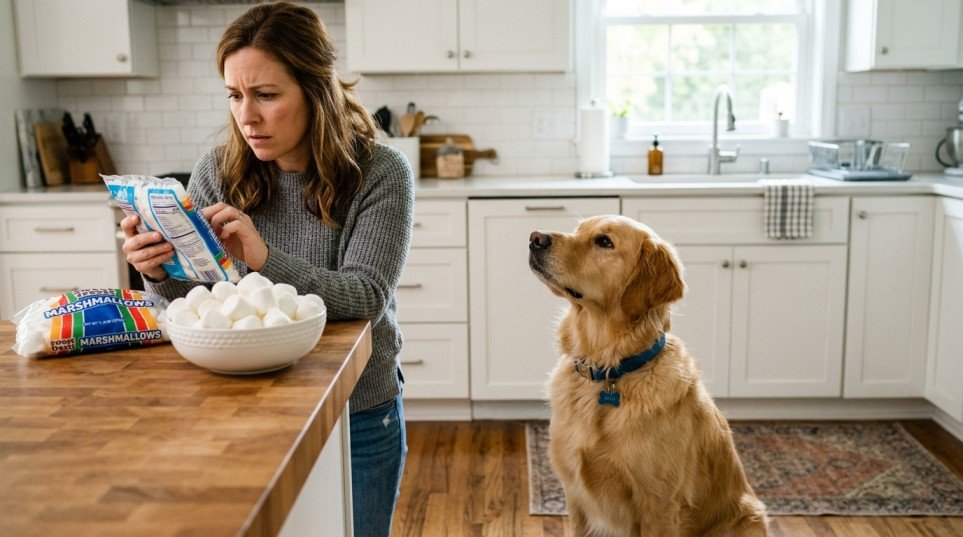
Your dog is staring at you while you’re enjoying a bag of marshmallows around the campfire. Maybe one already fell on the floor and disappeared before you could grab it. Now you’re wondering: can dogs eat marshmallows, or should you be worried?
The answer isn’t as simple as yes or no. Some marshmallows are unlikely to cause serious harm in small amounts, while others contain ingredients that can be extremely dangerous for dogs. The difference often comes down to the type of marshmallow and what ingredients it contains.
This guide covers everything dog owners need to know: whether marshmallows are safe, which ingredients are dangerous, what to do if your dog eats one, symptoms to watch for, healthier alternatives, and when to call a veterinarian.
Can Dogs Eat Marshmallows? The Short Answer
Most plain marshmallows are not toxic to dogs, but they are not healthy and should not be given as a regular treat.
Even when marshmallows don’t contain toxic ingredients, they are loaded with sugar and provide no nutritional benefits for dogs.
The safest answer is simple: dogs do not need marshmallows in their diet.
What Are Marshmallows Made Of?
Understanding the ingredients helps explain why marshmallows can be problematic for dogs.
Traditional marshmallows typically contain:
- Sugar
- Corn syrup
- Water
- Gelatin
- Flavorings
- Starches
While these ingredients are generally not poisonous to dogs, they can still cause digestive upset and contribute to long-term health problems.
The bigger concern is that some sugar-free marshmallows contain artificial sweeteners that may be highly toxic to dogs.
Why Marshmallows Can Be Bad for Dogs
1. High Sugar Content
The average marshmallow contains a large amount of sugar relative to its size.
Dogs do not need added sugar in their diets. Frequent consumption may contribute to:
- Weight gain
- Obesity
- Diabetes risk
- Dental disease
- Digestive upset
A few marshmallows may not seem significant, but regular sugary treats can quickly add unnecessary calories.
2. Empty Calories
Marshmallows offer virtually no nutritional value for dogs.
Unlike healthy treats that provide vitamins, minerals, protein, or fiber, marshmallows are essentially empty calories.
This means your dog gets the calories without receiving meaningful nutritional benefits.
3. Digestive Problems
Some dogs develop gastrointestinal symptoms after eating sugary foods.
Possible reactions include:
- Vomiting
- Diarrhea
- Gas
- Stomach discomfort
- Reduced appetite
Dogs with sensitive stomachs may be particularly prone to these issues.
4. Choking Risk
Large marshmallows can present a choking hazard, especially for:
- Small dogs
- Puppies
- Senior dogs
- Dogs that gulp food
Sticky foods can sometimes become lodged in the throat or create swallowing difficulties.
The Biggest Danger: Xylitol in Sugar-Free Marshmallows
What Is Xylitol?
Xylitol is a sugar substitute commonly found in sugar-free products.
For humans, it is generally safe.
For dogs, it can be extremely toxic.
Even small amounts can trigger a rapid insulin release that causes a dangerous drop in blood sugar.
In severe cases, xylitol poisoning can lead to:
- Seizures
- Liver failure
- Collapse
- Death
Why Sugar-Free Marshmallows Are Dangerous
Many sugar-free marshmallows use artificial sweeteners to reduce calories.
If xylitol is listed among the ingredients, the product should be treated as a veterinary emergency.
The amount needed to cause toxicity can be surprisingly small depending on your dog’s size.
What to Do If Your Dog Eats a Sugar-Free Marshmallow
Take immediate action if:
- The ingredient list contains xylitol
- You are unsure whether xylitol is present
- Your dog ate multiple sugar-free marshmallows
Contact:
- Your veterinarian
- Pet Poison Helpline
- Animal poison control services
Do not wait for symptoms to develop.
Can Puppies Eat Marshmallows?
Puppies should not be given marshmallows.
Young dogs have:
- Smaller bodies
- More sensitive digestive systems
- Different nutritional requirements
Even a small amount of sugary food can cause digestive upset in puppies.
Because puppies are also more vulnerable to choking hazards, marshmallows are best avoided altogether.
What Happens If a Dog Eats a Marshmallow?
The outcome depends on:
- The ingredients
- The amount consumed
- The dog’s size
- Overall health status
One Regular Marshmallow
Most healthy dogs will likely experience no symptoms.
Some may develop mild stomach upset.
Several Marshmallows
Multiple marshmallows increase the likelihood of:
- Vomiting
- Diarrhea
- Excessive thirst
- Hyperactivity
- Stomach discomfort
Large Quantities
Eating an entire bag may lead to:
- Significant digestive upset
- Pancreatitis risk
- Obesity concerns
- Severe diarrhea
- Dehydration
Large amounts warrant a call to your veterinarian.
Symptoms to Watch For After Eating Marshmallows
Most symptoms involve the digestive system.
Mild Symptoms
- Gas
- Mild diarrhea
- Temporary stomach upset
- Reduced appetite
- Soft stools
Moderate Symptoms
- Repeated vomiting
- Persistent diarrhea
- Lethargy
- Abdominal discomfort
- Excessive drooling
Emergency Symptoms
Seek veterinary care immediately if you notice:
- Seizures
- Collapse
- Tremors
- Severe weakness
- Loss of consciousness
- Signs of xylitol poisoning
These symptoms require urgent medical attention.
When to Call a Vet
Contact your veterinarian if:
- The marshmallows contained xylitol
- Your dog ate a large quantity
- Symptoms develop
- Your dog is a puppy
- Your dog has diabetes
- Your dog has pancreatitis
- Your dog has other medical conditions
When in doubt, it’s always safer to call.
What a Vet May Do If Your Dog Eats Marshmallows
Treatment depends on the ingredients and symptoms involved.
Veterinary care may include:
Monitoring
For small amounts of regular marshmallows, observation may be all that’s needed.
Inducing Vomiting
If ingestion was recent and appropriate, your veterinarian may recommend removing the material before it is digested.
Blood Sugar Monitoring
In suspected xylitol cases, blood glucose levels may be monitored closely.
IV Fluids
Fluid therapy may help stabilize dogs experiencing vomiting, diarrhea, or toxicity.
Hospitalization
Severe poisoning cases may require intensive monitoring and supportive care.
Prompt treatment significantly improves outcomes.
Are Marshmallows Ever Safe for Dogs?
Technically, a plain marshmallow without xylitol is unlikely to be toxic in small amounts.
However, “not toxic” does not mean “healthy.”
Marshmallows provide:
- Excess sugar
- Empty calories
- No meaningful nutrition
For this reason, most veterinarians do not recommend offering marshmallows as treats.
Better Alternatives to Marshmallows
If you want to give your dog a special treat, healthier options exist.
Carrots
Benefits include:
- Low calories
- Fiber
- Crunchy texture
- Supports dental health
Apples
Serve without:
- Seeds
- Core
- Stem
Apples provide fiber and hydration.
Blueberries
These contain:
- Antioxidants
- Vitamins
- Natural sweetness
Many dogs enjoy them as bite-sized treats.
Pumpkin
Plain pumpkin can support digestive health and is often recommended by veterinarians.
Frequently Asked Questions About Dogs and Marshmallows
Can dogs eat mini marshmallows?
Mini marshmallows are generally no healthier than regular marshmallows. A small amount is unlikely to harm most dogs, but they still contain excessive sugar and little nutritional value.
Can dogs eat marshmallow fluff?
Marshmallow fluff contains similar ingredients and concerns. It is high in sugar and offers no nutritional benefits for dogs.
Can dogs eat roasted marshmallows?
Roasted marshmallows are not recommended. They remain high in sugar and may contain burned sugars that can irritate sensitive stomachs.
Are homemade marshmallows safer?
Homemade marshmallows may avoid some additives, but they are still high in sugar. Always verify ingredients before offering any human food to your dog.
How many marshmallows can a dog eat safely?
There is no recommended safe serving size because marshmallows are not considered a healthy dog treat. The safest amount is none.
Can marshmallows cause pancreatitis?
Potentially, yes. Dogs prone to pancreatitis may react poorly to sugary and calorie-dense foods, particularly when consumed in large quantities.
What if my dog stole one marshmallow?
Most healthy dogs that eat one regular marshmallow will be fine. Monitor for digestive upset and confirm the product does not contain xylitol.
How to Prevent Marshmallow Accidents
- Store marshmallows in sealed containers.
- Keep camping snacks out of reach.
- Read ingredient labels carefully.
- Avoid giving sugary treats intentionally.
- Teach family members not to share marshmallows with pets.
- Check sugar-free products for xylitol before bringing them home.
A little prevention can eliminate unnecessary risks.
Final Word: Should Dogs Eat Marshmallows?
While plain marshmallows are not usually toxic to dogs, they are far from an ideal treat. They contain large amounts of sugar, offer no meaningful nutrition, and can contribute to digestive upset and weight gain.
The real danger comes from sugar-free marshmallows containing xylitol. These products can become life-threatening emergencies within a short period of time.
If your dog accidentally eats one regular marshmallow, there’s usually little reason to panic. But if the product contains xylitol, if your dog ate a large quantity, or if symptoms develop, contact a veterinarian immediately.
When it comes to treats, healthier dog-safe alternatives are always the better choice.
Reviewed & Recommended by Dr. Ubaidur Rahman, DVM
Veterinary Review: Dr. Ubaidur Rahman, DVM, reviewed this guide for the safety of marshmallows in dogs, including their sugar content and the potential risks of certain ingredients.
Dr. Ubaidur Rahman’s Recommendation: Regular marshmallows are not a good treat for dogs. They are high in sugar and offer little nutritional value, while sugar-free marshmallows may contain xylitol, an ingredient that can be extremely dangerous to dogs. I recommend avoiding marshmallows and choosing a healthier dog-safe treat instead.
Sources and References
- American Kennel Club (AKC): Human Foods Dogs Can and Cannot Eat
- ASPCA Animal Poison Control Center: Xylitol Toxicity in Dogs
- Pet Poison Helpline: Xylitol Poisoning in Dogs
- Merck Veterinary Manual: Companion Animal Toxicology
- VCA Animal Hospitals: Foods That Are Dangerous for Dogs
- PetMD: Can Dogs Eat Marshmallows?
- American Veterinary Medical Association (AVMA): Pet Nutrition and Food Safety
Discover More:-
- Pure Balance Dog Food Review 2026: Ingredients, Pros, Cons and Honest Verdict
- Can Dogs Eat Papaya? Benefits, Risks, and Safe Serving Guide 2026

Dr. Ubaid Ur Rehman, DVM is a qualified veterinarian with expertise in pet health, nutrition, and preventive care. He is passionate about helping pet owners make informed decisions through accurate, research-based, and practical advice. As a veterinary professional, he reviews and contributes content to ensure reliable information for dog and pet owners.