
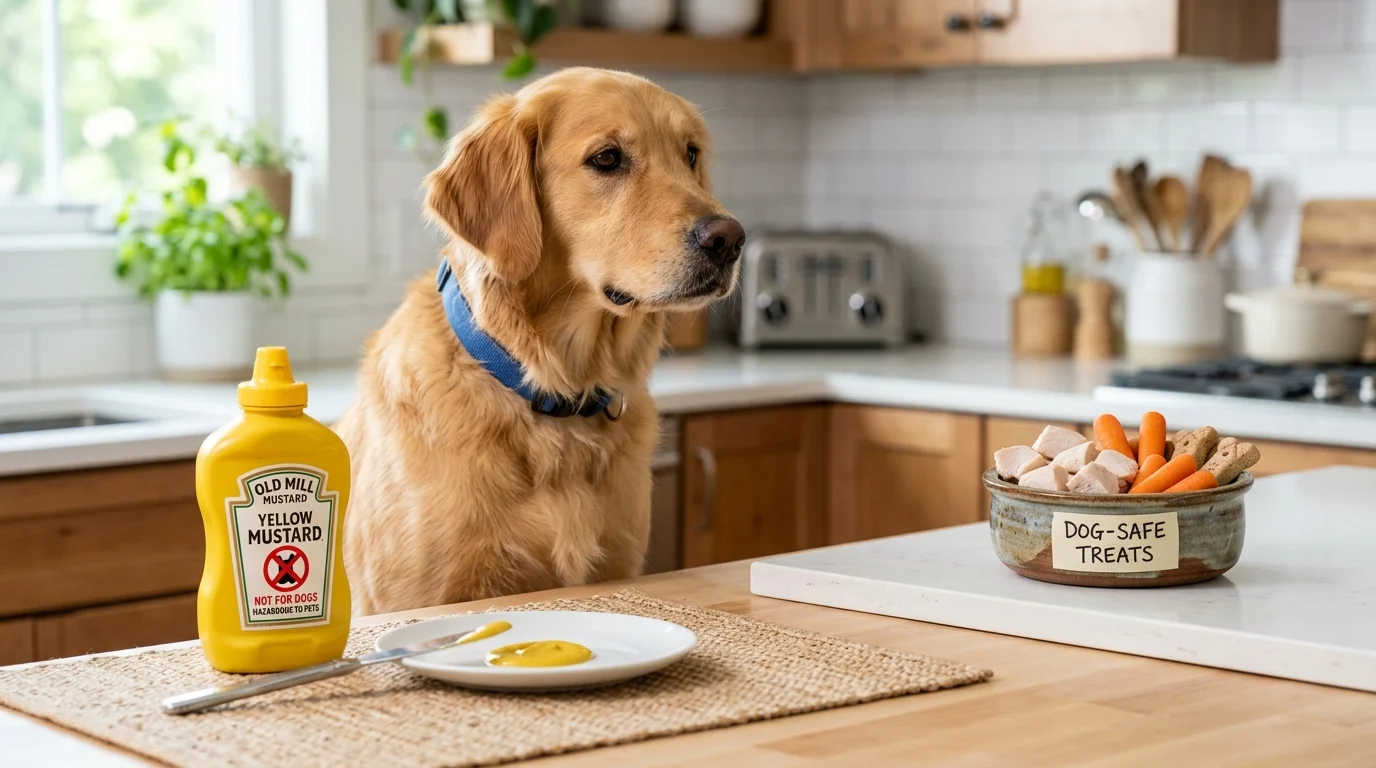
Can Dogs Eat Mustard? Read This Before You Feed It 2026
Quick Ans: No, dogs should never eat mustard in any form. Mustard seeds are toxic to dogs and can cause gastroenteritis, which is inflammation of the stomach and intestinal tract. All types of mustard—yellow, Dijon, honey mustard, mustard powder, and homemade mustard—should be avoided. A small lick likely won’t cause serious harm, but any significant amount requires veterinary attention .
Key Takeaways
- Mustard seeds are toxic – Mustard contains compounds called isothiocyanates that cause stomach and airway inflammation in dogs .
- All forms are dangerous – Yellow mustard, Dijon, honey mustard, English mustard, mustard powder, and sauces are all unsafe for dogs .
- Small dogs are most at risk – A tiny amount can cause serious symptoms in small breeds, though large dogs are also vulnerable .
That yellow squirt bottle on your table might seem harmless, but mustard is one condiment you should never share with your dog. While a tiny lick off your plate is unlikely to cause a crisis, mustard seeds contain compounds that are genuinely toxic to canines. Here’s what you need to know to keep your pup safe.
Why Is Mustard Bad for Dogs?
The problem starts with the mustard seed itself. Mustard seeds contain toxic compounds called isothiocyanates and glucosinolates. These substances are responsible for the pungent flavor in mustard, but in a dog’s digestive system, they trigger severe inflammation of the stomach and intestinal lining, a condition known as gastroenteritis .
Store-bought mustard can also contain other harmful ingredients. Some varieties include garlic powder or onion powder, both of which are toxic to dogs and can damage red blood cells . Added sugars and salts can worsen the situation, especially for small dogs or those with existing health conditions.
The good news is that mustard greens—the leafy part of the plant—are not toxic to dogs, though they’re not a common treat either .
Symptoms of Mustard Toxicity in Dogs
If your dog eats more than a small taste of mustard, watch for these signs. Symptoms typically appear within 30 to 45 minutes after ingestion :
- Vomiting
- Diarrhea
- Loss of appetite
- Abdominal pain
- Excessive drooling
- Lethargy
The severity of symptoms depends on the amount eaten and your dog’s size. Smaller dogs are more vulnerable to toxicity because their bodies can’t tolerate as much of the toxic compounds .
Mustard Safety Comparison Table
| Form of Mustard | Toxic? | Main Risk | Verdict |
|---|---|---|---|
| Yellow mustard | Yes | Gastroenteritis, inflammation | Never feed |
| Dijon mustard | Yes | Toxicity, added ingredients | Never feed |
| Honey mustard | Yes | Sugar, seed toxicity | Never feed |
| Mustard powder | Yes | Concentrated seed compounds | Never feed |
| Homemade mustard | Yes | Seed toxicity, other ingredients | Never feed |
| Mustard greens | No | Low nutritional value | Safe (but not tasty) |
| Wild mustard plant | Seeds only | Toxicity if seeds ingested | Avoid |
What to Do If My Dog Ate Mustard
If your dog eats mustard, the right response depends on how much they consumed.
Step 1: Assess the amount
- A tiny lick from your plate: Monitor for symptoms but the risk is low .
- Any significant amount: Call your veterinarian immediately, regardless of symptoms.
Watch for symptoms
- Vomiting, diarrhea, or abdominal pain
- Loss of appetite or lethargy
- Drooling or signs of mouth irritation
- Symptoms usually appear within 30–45 minutes
Call for help
- Your veterinarian – for personalized advice based on your dog’s size and health.
- ASPCA Animal Poison Control: (888) 426-4435 (fee may apply)
- Pet Poison Helpline: (855) 764-7661 (fee may apply)
Do not induce vomiting unless directed by a professional. If your dog ate a large amount or shows symptoms, get veterinary care. Treatment may include inducing vomiting, fluid therapy, and medications to control nausea and diarrhea .
Can Puppies Eat Mustard?
No. Puppies should never eat mustard. Their smaller size means even a small amount can cause severe symptoms. Their developing digestive systems are also more vulnerable to inflammation and toxicity. Keep all mustard products out of reach of curious puppies .
Safe Alternatives to Mustard
If your dog loves the strong flavor of mustard, skip it entirely and offer these safe seasonings or treats instead:
- Plain cooked chicken or turkey – High-protein treat without seasonings.
- Plain cooked vegetables – Green beans, carrots, or cucumber slices.
- Safe herbs – Parsley, basil, and oregano are safe in small amounts .
- Dog-safe fruits – Blueberries, apple slices (no seeds), or banana pieces.
Frequently Asked Questions
Is mustard toxic to dogs?
Yes, mustard is toxic to dogs. Mustard seeds contain isothiocyanates and glucosinolates, which can cause inflammation of the stomach and intestines, leading to vomiting and diarrhea .
Can dogs have a tiny bit of mustard?
A tiny lick is unlikely to cause serious harm, but any amount carries risk, especially for small dogs. It’s best to avoid giving mustard to your dog entirely .
What happens if a dog eats mustard?
Symptoms of mustard toxicity include vomiting, diarrhea, drooling, loss of appetite, and abdominal pain. In severe cases, it can lead to dehydration or more serious gastrointestinal issues .
Can dogs eat honey mustard?
No. Honey mustard contains mustard seeds and added sugar, making it unsafe for dogs. The sugar can also contribute to obesity and dental issues .
What should I do if my dog ate a lot of mustard?
Contact your veterinarian or an animal poison control line immediately. Do not induce vomiting unless directed by a professional. Treatment may include inducing vomiting, fluids, and anti-nausea medication .
Is mustard powder bad for dogs?
Yes. Mustard powder is made from ground mustard seeds and contains the same toxic compounds as prepared mustard. It should never be given to dogs .
Can dogs eat mustard greens?
Yes, mustard greens are not toxic to dogs because they don’t contain mustard seeds. However, they’re not a common treat and your dog likely won’t find them appealing .
Final Word
Can dogs eat mustard? No. Mustard is toxic to dogs and should never be fed intentionally. The seeds contain compounds that cause inflammation of the stomach and intestines, leading to vomiting, diarrhea, and abdominal pain. All types of mustard—yellow, Dijon, honey mustard, and mustard powder—are unsafe. A small lick off your plate is unlikely to cause serious harm, but if your dog eats any significant amount, call your veterinarian immediately. When it comes to condiments, it’s always better to keep them on your plate and out of your dog’s reach.
Reviewed & Recommended by Dr. Ubaidur Rahman, DVM
Veterinary Review: Dr. Ubaidur Rahman, DVM, reviewed this guide for the safety of mustard and the potential risks it may pose to dogs. Mustard, especially prepared mustard, is not recommended for dogs because it can cause stomach irritation and digestive upset.
Dr. Ubaidur Rahman’s Recommendation: Avoid giving mustard to dogs. If a dog accidentally eats a small amount, it may cause vomiting, diarrhea, or stomach discomfort. Larger amounts or significant symptoms warrant contacting a veterinarian. Also avoid mustard-containing foods because they may contain other ingredients that are unsafe for dogs.
Sources & References
- Purina. “Can Dogs Eat Mustard? A Guide to Safety.” (2024)
- Chewy. “What Seasonings Can Dogs Have?” (2025)
- The Dodo. “Can Dogs Eat Mustard?” – Dr. Sarah Wooten, DVM (2021)
- DogTime. “Can Dogs Eat Mustard? Is Mustard Safe For Dogs?” (2021)
- Maven Pet. “Can Dogs Eat Mustard?” – Reviewed by Melita, Pet Health Content Lead (2023)
- MasterClass. “Can Dogs Have Mustard? What to Do if Your Dog Eats Mustard.” (2022)
- Humane World for Animals. “Plants and foods that can be poisonous to pets.” (2009)
- ASPCA Animal Poison Control: (888) 426-4435
- Pet Poison Helpline: (855) 764-7661

Dr. Ubaid Ur Rehman, DVM is a qualified veterinarian with expertise in pet health, nutrition, and preventive care. He is passionate about helping pet owners make informed decisions through accurate, research-based, and practical advice. As a veterinary professional, he reviews and contributes content to ensure reliable information for dog and pet owners.