Can Dogs Eat Cashews? vet approved & Serving Guide
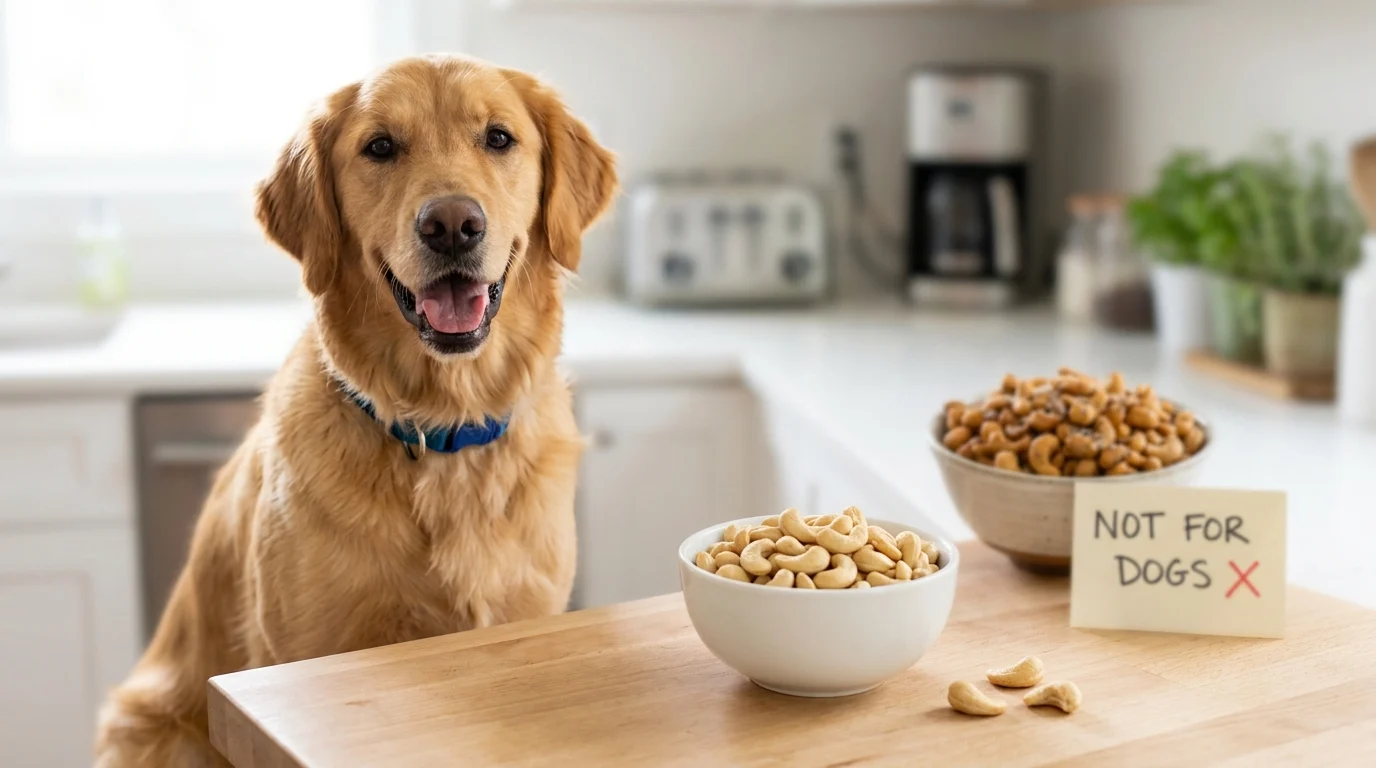
Quick Ans: Yes, dogs can eat plain, unsalted cashews in small amounts as an occasional treat. Cashews are not toxic to dogs like macadamia nuts, but they are high in fat and calories. Limit portions strictly and avoid seasoned or salted varieties to prevent pancreatitis and weight gain.
Key Takeaways
- Plain and unsalted only – No salt, garlic, onion powder, or chili seasoning. These additives can be toxic or harmful to dogs.
- High fat risk – Cashews are fatty and can trigger pancreatitis, especially in sensitive dogs or with regular feeding.
- Portion control – Treats should stay under 10% of daily calories. For most dogs, that means just 1–5 cashews depending on size.
Cashews are creamy, crunchy, and packed with nutrients that make them a popular snack for humans. Your dog might be giving you those pleading eyes while you munch on a handful. The good news is that cashews aren’t toxic to dogs. But before you share, there are some important safety rules to follow. Here’s what you need to know about feeding cashews to your pup.
Are Cashews Good for Dogs?
Cashews offer several nutritional benefits when served correctly in small amounts. They contain protein, fiber, healthy fats, and important vitamins and minerals . Per serving, cashews provide:
- Protein – Supports muscle maintenance and provides long-lasting energy .
- Healthy fats – Include unsaturated fats that support cardiovascular health and brain function .
- Vitamins and minerals – Cashews contain magnesium, zinc, copper, phosphorus, and B vitamins that support immune function, bone health, and energy metabolism .
- Antioxidants – Help reduce inflammation and fight free radicals in the body .
However, cashews are also high in calories and fat. An ounce of cashews contains about 160 calories, which can account for nearly 75% of a small dog’s daily needs . This means cashews should be a rare treat, not a regular addition to your dog’s diet.
What Makes Cashews Risky for Dogs?
1. High Fat Content – Pancreatitis Risk
Cashews are high in fat, which can be difficult for dogs to digest. Regular or large amounts can lead to pancreatitis, a painful and potentially life-threatening inflammation of the pancreas . Symptoms include vomiting, diarrhea, abdominal pain, and lethargy . Dogs with a history of pancreatitis should avoid cashews entirely.
2. Salt and Seasonings – Toxic Additives
Many cashews are sold salted or seasoned with garlic, onion, chili, or sugar. Garlic and onion are toxic to dogs and can damage red blood cells, leading to anemia . High salt content can cause dehydration, excessive thirst, and in severe cases, salt poisoning . Only plain, unsalted cashews are safe.
3. Choking and Blockage Risk
While cashews are softer and more rounded than some other nuts, they can still pose a choking hazard, especially for small dogs . Whole cashews could also cause an intestinal blockage if swallowed without chewing properly .
4. Shell Toxicity
The outer shell of the cashew contains a toxin called urushiol, the same irritant found in poison ivy . Commercially sold cashews are always shelled, so this is not a concern for store-bought nuts. However, if you have a cashew tree on your property, keep your dog away from fallen fruit and shells .
5. Weight Gain and Obesity
Because cashews are calorie-dense, regular feeding can contribute to weight gain and obesity over time . Obesity in dogs leads to other health problems, including joint issues, diabetes, and heart disease.
6. Bladder Stones
Cashews contain phosphorus, which can contribute to the formation of bladder stones in dogs prone to this condition . If your dog has a history of urinary stones, consult your vet before offering cashews.
Cashew Safety Comparison Table
| Form of Cashew | Toxic? | Main Risk | Verdict |
|---|---|---|---|
| Plain, unsalted cashews | No | High fat, pancreatitis | Safe in small amounts |
| Salted cashews | No (but harmful) | Salt poisoning, dehydration | Avoid |
| Seasoned cashews (garlic/onion) | Yes | Anemia, toxicity | Never feed |
| Cashew butter (plain) | No | High fat, added sugars possible | Safe if no xylitol |
| Cashew butter with xylitol | Yes | Xylitol poisoning | Never feed |
| Cashews with shells | Yes | Urushiol toxin, irritation | Never feed |
| Mixed nuts with cashews | May contain toxic nuts | Macadamia toxicity | Avoid |
How Much Cashews Can Dogs Eat?
Cashews should make up no more than 10% of your dog’s daily calorie intake . Due to the high fat content, these nuts should be an occasional treat, not a daily snack.
Portion guidelines for plain, unsalted cashews:
Start with a single cashew to check your dog’s tolerance. If your dog has a sensitive stomach or a history of pancreatitis, skip cashews entirely .
What to Do If My Dog Ate Too Many Cashews
If your dog sneaks a handful of cashews or eats seasoned ones, monitor them closely. A few plain cashews are unlikely to cause serious harm, but larger quantities can be problematic.
Step 1: Assess what they ate
- Plain, unsalted cashews – watch for digestive upset.
- Salted or seasoned cashews – check for garlic, onion, or high sodium content.
- Cashew butter – check ingredients for xylitol.
Watch for symptoms
- Vomiting, diarrhea, abdominal pain (pancreatitis signs)
- Excessive thirst, tremors (salt poisoning)
- Lethargy or weakness (from garlic/onion toxicity)
- Symptoms usually appear within 6–12 hours
Call for help if needed
- Your veterinarian – especially if symptoms appear or xylitol was consumed.
- ASPCA Animal Poison Control: (888) 426-4435 (fee may apply)
- Pet Poison Helpline: (855) 764-7661 (fee may apply)
Do not induce vomiting unless directed by a professional. If your dog shows signs of pancreatitis, seek veterinary care immediately.
Can Puppies Eat Cashews?
Puppies should avoid cashews. Their digestive systems are still developing, and high-fat foods can easily cause vomiting, diarrhea, or pancreatitis . Stick to a balanced puppy-formulated diet and avoid introducing fatty human foods until your dog is fully grown. If you do offer a cashew, wait until your puppy is at least 6 months old and start with a tiny piece. Always consult your vet first.
Safe Alternatives to Cashews
If you want a healthy, low-fat treat for your dog, try these options:
- Plain peanuts – Lower in fat than cashews, but still feed in moderation.
- Carrot sticks – Low-calorie, crunchy, and good for teeth.
- Apple slices (no seeds) – Sweet and satisfying.
- Plain cooked green beans – Low-calorie fiber source.
- Blueberries – Packed with antioxidants, low in calories.
Frequently Asked Questions
Can dogs eat cashews safely?
Yes, plain unsalted cashews are safe in small amounts. They are not toxic to dogs like macadamia nuts .
Are cashews bad for dogs?
Cashews are not toxic, but their high fat content makes them risky. Overfeeding can cause pancreatitis, obesity, and digestive upset .
Can dogs eat salted cashews?
No. Salted cashews can cause dehydration, excessive thirst, and salt poisoning in severe cases. Stick to unsalted varieties .
Can dogs eat cashew butter?
Yes, but only if it’s plain and contains no added sugar, salt, or xylitol. Xylitol is highly toxic to dogs .
Can dogs eat cashews with the shell?
No. The shell contains urushiol, a toxin that can cause skin irritation and gastrointestinal upset. Commercially sold cashews are shelled, so this is only a concern if you have a cashew tree .
How many cashews can dogs eat?
Portions depend on your dog’s size. Small dogs should have 1–2 cashews, while larger dogs may have up to 12–18. Treats should never exceed 10% of daily calories .
Can cashews cause pancreatitis in dogs?
Yes. The high fat content in cashews can trigger pancreatitis, especially in dogs with a history of the condition or those eating fatty foods regularly .
Can dogs eat cashews every day?
No. Cashews should only be an occasional treat. Daily feeding increases the risk of weight gain and pancreatitis .
Final Word
Can dogs eat cashews? Yes, plain and unsalted cashews are safe in very small amounts as an occasional treat. They offer some nutritional benefits, but the risks of high fat, calories, and potential seasonings mean they should never be a regular part of your dog’s diet. Stick to 1-5 cashews based on your dog’s size, and avoid salted, seasoned, or sweetened varieties entirely. If your dog has pancreatitis, kidney disease, or a sensitive stomach, skip cashews altogether and choose a safer treat. When in doubt, ask your vet.
Veterinary Recommendation — Dr. Ubaidur Rahman, DVM
Cashews are not toxic to dogs, but they are high in fat and calories, so they should only be offered occasionally and in small amounts. If you give your dog cashews, choose plain, unsalted cashews and avoid varieties with seasoning, chocolate, garlic, or other added ingredients.
For most healthy dogs, a few plain cashews as an occasional treat are unlikely to cause problems. Dogs with a history of pancreatitis, obesity, or sensitive digestion may be better off avoiding high-fat treats like cashews. Always supervise your dog when offering nuts to reduce the risk of choking.
Sources & References
- Spot Pet Insurance. “Can Dogs Eat Cashews? What to Know.”
- Adopt a Pet. “Can Dogs Eat Cashews?” – Dr. Amy Fox, DVM
- PetMD. “Can Dogs Eat Cashews?” – Victoria Lynn Arnold
- ManyPets. “Can dogs or cats eat cashews?”
- Vets Now. “Can dogs eat nuts?”
- Pawlicy Advisor. “Can Dogs Eat Cashews? Here’s Everything You Need to Know.”
- The Dodo. “Can Dogs Eat Cashews Safely?” – Dr. Ochoa
- ASPCA Animal Poison Control: (888) 426-4435
- Pet Poison Helpline: (855) 764-7661

Dr. Ubaid Ur Rehman, DVM is a qualified veterinarian with expertise in pet health, nutrition, and preventive care. He is passionate about helping pet owners make informed decisions through accurate, research-based, and practical advice. As a veterinary professional, he reviews and contributes content to ensure reliable information for dog and pet owners.