Can Dogs Eat Spanish Rice? Safety & Risks Guide
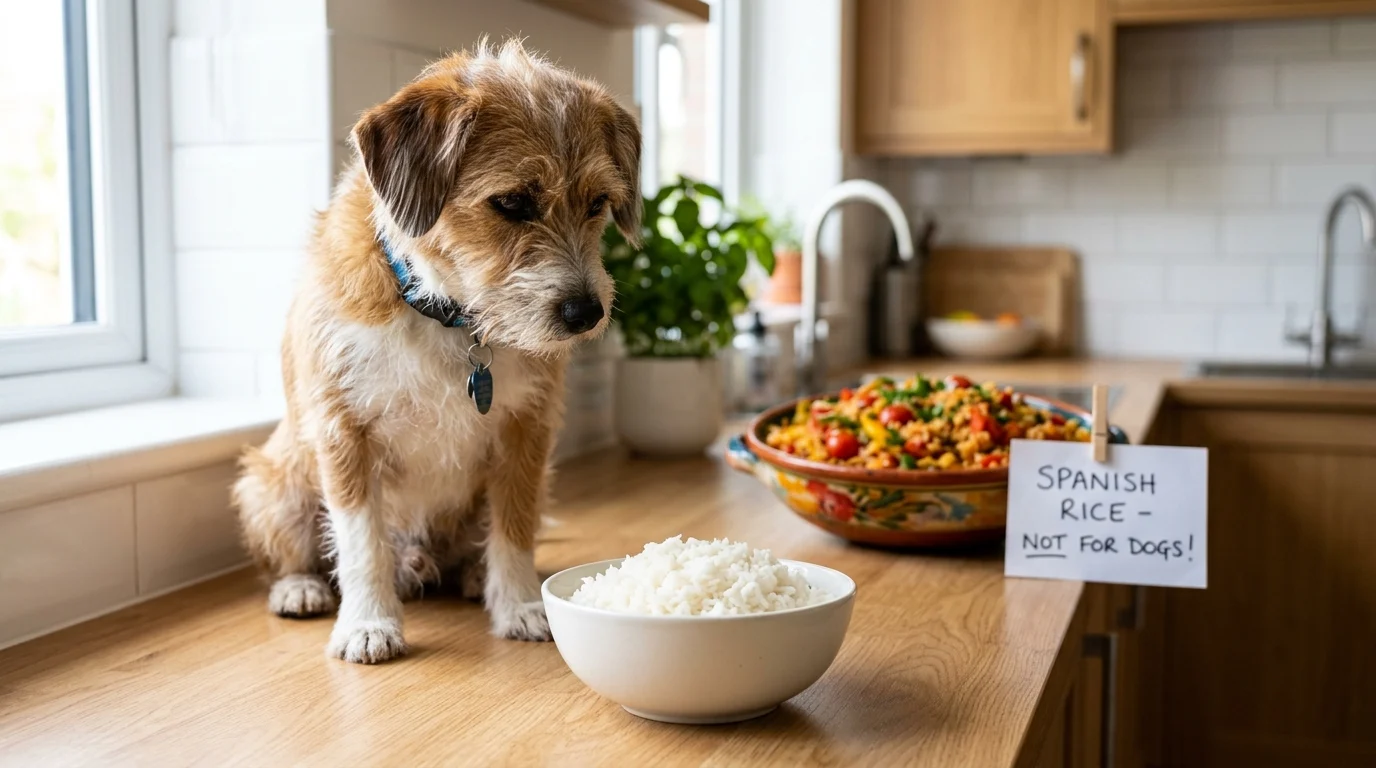
Quick Ans: No, dogs should not eat traditional Spanish rice. While plain white rice is safe, Spanish rice recipes typically contain garlic, onion, chili powder, and high amounts of salt—all of which are harmful or toxic to dogs. Garlic and onion can cause anemia, while chili powder and salt can lead to digestive upset .
Key Takeaways
- Toxic ingredients – Spanish rice almost always includes garlic and onion, which are toxic to dogs and can damage red blood cells .
- Plain rice is safe – The base ingredient (white rice) is safe and digestible. The problem is the seasonings .
- Monitor if ingested – If your dog eats Spanish rice, watch for vomiting, weakness, or pale gums, and contact your vet.
Spanish rice, also known as Mexican rice or red rice, is a flavorful side dish many of us enjoy. It’s a staple in Tex-Mex cuisine, made with white rice, tomatoes, garlic, onions, and spices like chili powder and cumin. If your dog is eyeing your plate, you might wonder if sharing a bite is safe. The short answer is no. While plain rice is perfectly fine for dogs, the additional ingredients in Spanish rice can be dangerous. Here’s what you need to know.
Is Spanish Rice Good for Dogs?
The white rice base is actually a good carbohydrate source for dogs. It’s easily digestible and veterinarians often recommend plain, boiled white rice for dogs with upset stomachs . White rice provides quick energy and is gentle on the digestive system.
However, the problem with Spanish rice isn’t the rice itself, it’s everything else added to it. The typical recipe includes ingredients that are toxic or irritating to dogs, making the dish unsafe overall. The nutritional benefit of the rice is completely overshadowed by the risks posed by the seasonings.
What Makes Spanish Rice Risky for Dogs?
1. Garlic and Onion – Toxic to Dogs
Garlic and onion are the most dangerous ingredients in Spanish rice. Both belong to the allium family and contain compounds called thiosulfates, which can damage a dog’s red blood cells. This leads to hemolytic anemia, a condition where red blood cells burst, causing weakness, pale gums, rapid breathing, and potentially death . Garlic is actually more toxic than onion, and just one teaspoon of garlic powder is equivalent to about eight whole cloves of fresh garlic . Powdered forms are even more concentrated and dangerous .
2. Chili Powder – Digestive Irritation
Chili powder, cumin, and other spices used in Spanish rice are not technically toxic, but they can irritate your dog’s gastrointestinal tract. Dogs may experience stomach pain, vomiting, diarrhea, or a burning sensation after eating spicy foods . Dogs don’t process spicy food well, and it can cause significant discomfort.
3. High Sodium Content
Spanish rice is often cooked with salt or broth, leading to high sodium levels. While a small amount of salt is needed for dogs, too much can lead to excessive thirst, dehydration, and sodium poisoning. Symptoms of salt toxicity include vomiting, diarrhea, tremors, and seizures .
4. Tomatoes – Acidic and Potentially Risky
Spanish rice typically includes tomatoes or tomato sauce. While ripe tomatoes are not toxic, they are acidic and can cause stomach upset in some dogs, especially in large amounts . The solanine in green tomatoes can be more problematic, but the quantity used in rice is usually small .
5. Lard and Oils – Pancreatitis Risk
To prepare Spanish rice, the rice is often toasted in oil, lard, or butter. These added fats are high in calories and can trigger pancreatitis, a painful inflammation of the pancreas, especially in dogs not used to rich foods .
Spanish Rice Safety Comparison Table
How Much Spanish Rice Can Dogs Eat?
None. Traditional Spanish rice should not be fed to dogs at all because of the toxic and irritating ingredients. There is no safe portion .
However, plain white rice itself is safe. If you want to feed your dog rice, it should be plain, cooked without any seasonings, garlic, onion, salt, or spices. Plain rice can make up a small part of your dog’s diet, but treats combined should not exceed 10% of daily calories .
What to Do If My Dog Ate Spanish Rice
If your dog sneaks some Spanish rice, the first step is to determine how much they ate and what ingredients were included . A small taste may cause mild stomach upset, but a larger amount with garlic or onion could be serious.
Step 1: Assess the situation
- How much Spanish rice did they eat?
- Did it contain garlic, onion, or their powders?
- Is your dog showing any symptoms?
Watch for symptoms
- Vomiting, diarrhea, or abdominal pain
- Weakness, pale gums, or lethargy (signs of anemia)
- Excessive thirst or tremors (signs of salt poisoning)
- Symptoms from garlic and onion toxicity can take a few days to appear
Call for help if needed
- Your veterinarian – especially if symptoms appear or your dog ate a large amount.
- ASPCA Animal Poison Control: (888) 426-4435 (fee may apply)
- Pet Poison Helpline: (855) 764-7661 (fee may apply)
Do not induce vomiting unless directed by a professional. Treatment may include induced vomiting, activated charcoal, fluid therapy, and monitoring blood for signs of anemia .
Can Puppies Eat Spanish Rice?
Puppies should not eat Spanish rice at all. Their developing digestive systems are more sensitive, and the toxic effects of garlic and onion can be more severe in smaller bodies. Stick to a balanced puppy food and avoid all seasoned human foods. Always consult your vet before introducing anything new to a puppy’s diet.
Safe Alternatives to Spanish Rice
If you want to share a rice-based treat with your dog, keep it simple:
- Plain cooked white rice – The safest option. Mix a small amount with your dog’s regular food for upset stomachs or as an occasional treat .
- Plain cooked brown rice – Also safe, but harder to digest than white rice .
- Plain cooked quinoa – A complete protein source that’s a healthy alternative .
- Plain pasta (without sauce) – Fine in small amounts, but low in nutritional value .
- Plain cooked sweet potato – Rich in fiber and vitamins, a nutritious treat.
Frequently Asked Questions
Can dogs eat Mexican rice?
No. Mexican rice typically contains garlic, onion, chili powder, and high sodium, all of which are dangerous for dogs. Only plain, unseasoned rice is safe .
Can dogs eat Spanish rice with tomatoes?
No. While tomatoes themselves are not toxic, the garlic, onion, and spices in Spanish rice make it unsafe. Stick to plain rice only .
Can dogs eat plain rice?
Yes, plain cooked white rice is safe for dogs and often recommended by vets for digestive issues .
Can dogs eat Uncle Ben’s Spanish rice?
Most packaged Spanish rice contains garlic and onion powder, which are toxic. Check the label. The quantity may be small, but it’s still unsafe to feed regularly .
Can dogs eat rice seasoned with garlic powder?
No. Garlic powder is more concentrated and toxic than fresh garlic. Even small amounts can damage a dog’s red blood cells .
What happens if a dog eats Spanish rice?
Watch for vomiting, diarrhea, weakness, pale gums, or lethargy. Garlic and onion toxicity can cause anemia, which may take a few days to appear. Contact your vet for guidance .
Can dogs have chicken stock in their rice?
Chicken stock is often high in sodium and may contain garlic or onion. Use low-sodium, allium-free stock or plain water instead .
Is Mexican rice toxic to dogs?
Yes, the garlic and onion in Mexican rice are toxic to dogs and can cause red blood cell damage, anemia, and potentially death if enough is consumed .
Final Word
Can dogs eat Spanish rice? No. While plain white rice is a safe and even beneficial food for dogs, traditional Spanish rice includes garlic, onion, chili powder, and salt—all of which can harm your dog. The risk of anemia from garlic and onion is serious, and the spices can cause painful digestive upset. If your dog accidentally eats Spanish rice, monitor them closely and contact your vet if symptoms appear. For a safe treat, stick to plain, cooked white rice and skip the seasonings. Your dog will still appreciate the taste without the danger.
Veterinary Recommendation — Dr. Ubaidur Rahman, DVM
I would avoid feeding dogs restaurant-style or heavily seasoned Spanish rice because you may not know exactly what ingredients were used. Plain, fully cooked rice without onion, garlic, excessive salt, or spicy seasonings is a safer option. If a dog has eaten Spanish rice containing onion or garlic, monitor them and contact a veterinarian if they consumed a significant amount or develop vomiting, weakness, pale gums, or unusual tiredness.
Sources & References
- Hepper. “Can Dogs Eat Mexican Rice? Vet-Reviewed Facts & FAQ.”
- Butternut Box. “Can Dogs Eat Rice?”
- Pet Care Advisors. “Can Dogs Eat Mexican Rice?”
- JustAnswer. “Dog Ate Uncle Ben’s Spanish Rice.”
- Healthline. “Can My Dog Eat This? Human Foods Dogs Can and Can’t Eat.”
- Pet Dog Planet. “Can Dogs Eat Mexican Rice? Vet-Verified Facts & Tips.”
- Spanish to Go. “Can Dogs Have Spanish Rice?”
- ASPCA Animal Poison Control: (888) 426-4435
- Pet Poison Helpline: (855) 764-7661

Dr. Ubaid Ur Rehman, DVM is a qualified veterinarian with expertise in pet health, nutrition, and preventive care. He is passionate about helping pet owners make informed decisions through accurate, research-based, and practical advice. As a veterinary professional, he reviews and contributes content to ensure reliable information for dog and pet owners.